By Alexander Lanoszka, July 20, 2026
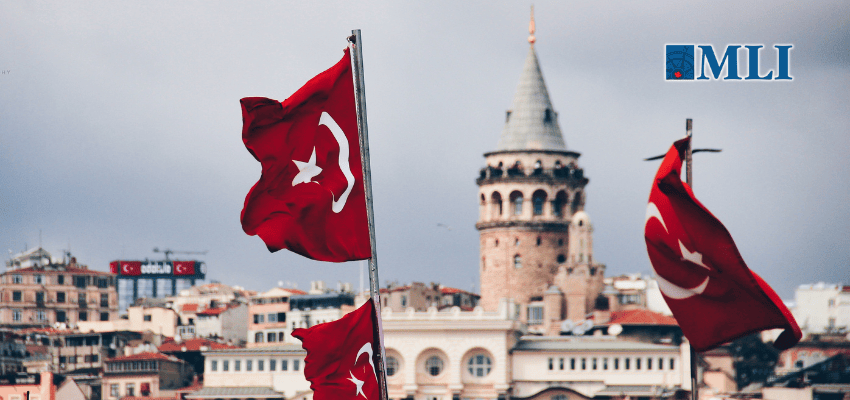
Many NATO members have good reason to be frustrated by Turkey. Under President Recep Tayyip Erdoğan, democratic norms have eroded, political freedoms have narrowed, and Ankara has increasingly pursued policies at odds with many of its allies.
Taken together, these concerns have prompted some to argue that NATO should take the extraordinary step of suspending Turkey’s membership. The problem is that the purported cure might be worse than the disease.
A recent Macdonald-Laurier Institute commentary offers a compelling case for suspension. As author Isabelle Terranova explains, a steady decline in democratic governance and erosion in fundamental freedoms has characterized President Erdoğan’s rule over the past decade. Reported instances of torture, arbitrary detentions, and other flagrant abridgments of political and civil rights have become much more frequent under his leadership. Moreover, in its foreign policy, Ankara has expanded its co-operation with Moscow, Beijing, and various other authoritarian and illiberal actors.
Terranova argues that Turkey’s conduct at home and abroad amount to a material breach to its official commitments to the North Atlantic Treaty. The consequence for such misbehaviour, she writes, should be for the other alliance members to avail themselves of customary international law to suspend Turkey’s participation.
The catalogue of abuses and foreign policy misdeeds that Terranova pulls together is long and troubling. Suspension, however, could trigger a series of unwelcome consequences.
As Terranova acknowledges, the North Atlantic Treaty offers no guidelines on what happens if an ally fails to fulfil any of its pledges. Since the alliance is a consensus-based organization premised on each member exercising its national sovereignty, any formal development of those procedures would be highly controversial, particularly if the intent to do so is to expel a specific ally, whatever its transgressions.
Even in the best of circumstances, allies would be reluctant to engage in such an exercise lest those procedures could one day be used against them. At a time when internal unity is already precarious due to concerns over US disengagement, divergent threat perceptions, and tightening resource constraints, the issue has become a non-starter.
Ankara would not take suspension lightly, and it could push Turkey even further towards the alliance’s key strategic rivals. After all, concerns with Moscow’s influence over the Middle East and intrigues around the Black Sea moved the United States and its Western European allies to support Turkey in the first place.
NATO’s Turkey challenge is not new. Indeed, throughout the Cold War, Turkey’s alliance credentials were often problematic, not least because of several military coups and ugly territorial disputes with fellow ally Greece.
Although often cast as a socially misfit and recalcitrant member, Turkey does contribute to allied activities, particularly along its eastern fringes. Although it could do much more, Turkey has participated in military exercises and pursues co-operation with the other Black Sea littoral states of Romania and Bulgaria, particularly as regards to maritime security. It also hosts NATO infrastructure as well as various command and control assets — most notably, NATO Allied Land Command in Izmir and the NATO Multinational Corps Command in Adana. The radar site located in the southern Turkish city of Kürecik enables NATO’s early warning and missile defence in this corner of the alliance as well. The İncirlik Air Base is even more important considering its logistics and operational roles, to say nothing of the dozens of B61 gravity nuclear bombs hosted there as part of the US-led nuclear-sharing program. Turkey, therefore, is indispensable for the security of NATO’s southeastern flank. Its suspension from the Alliance could push Ankara into expelling those assets, thereby creating even more gaps in NATO’s deterrence and defence posture at a time when European members are already scrambling to make up for their capability deficits.
The alliance nevertheless has given Washington and like-minded allies more leverage with Turkey than not. Turkey clearly does not have the same drive for going about “Westernization” as before, but it still views itself as an integral member of the Euro-Atlantic community. Although Turkey accepts many Russian tourists and has refused to sanction Moscow, Russian military behaviour in the Black Sea does constitute a threat to its interests. An excluded Ankara could choose to deepen its relations with Moscow, marginalize local moderates, intensify its territorial ambitions against Greece, and step up its support for illiberalism in the Middle East and elsewhere beyond what it is already doing. Much more instability would ensue in a region already known for it.

That Erdoğan’s government is reportedly willing to give up the Russian-made S-400 air defence system to placate Washington suggests that NATO membership still retains a meaningful source of influence over Ankara. And indeed, the recent experience of Hungary and its reset with European partners and allies suggests that the possibility of redemption is not one that can be easily dismissed.
None of this is to say that Erdoğan should escape accountability from the rest of NATO. The litany of abuses and abridged freedoms that Terranova provides makes for depressing reading. However, there are other measures short of suspension that could signal disapproval while holding out rewards for better behaviour: naming and shaming transgressions when they happen, reducing military-to-military co-operation, offering fewer opportunities at joint production and defence acquisitions, and holding fewer military exercises.
Alas, Canada does not appear interested in such measures. By announcing on the sidelines of the latest NATO summit its intention to negotiate a free trade agreement with Turkey, the Carney government signalled that alliance stability and commercial opportunity currently trump human rights concerns. Indeed, Canada has a stated national interest to preserve NATO unity and expand trade as much as possible. Whatever we think the consequences for Turkey’s misconduct should be, there is good reason to believe that there will be none.
Alexander Lanoszka is an MLI senior fellow, associate professor in the School of Social, Political, and Historical Research at the University of Waterloo as well as visiting professor at the College of Europe in Natolin, Poland. His research addresses alliance politics and military strategy.