As the United States tightens its blockade to cut off oil from Cuba’s communist regime, some are calling for Canada to step in with aid. These events come at a moment of rapidly shifting geopolitics around the world. Yet Canada’s approach to Cuba remains strikingly unchanged.
For decades, Ottawa has treated Cuba with kid gloves, applying a softer touch than it does with other authoritarian regimes. This more lenient approach extends to sanctions policy, diplomatic posture, and how Canada applies its stated commitments to human rights and democratic accountability.
Meanwhile, nearly one million Canadians each year see Cuba primarily as a vacation destination – sun, beaches, and resorts – not as a strategic actor embedded in an emerging authoritarian alignment that includes Russia, China, and Venezuela.
The question is: in a world increasingly defined by strategic competition and authoritarian coordination, can Canada continue to treat Cuba as an exception? And if not – what are the implications for Canada’s foreign policy, global credibility, and national security?
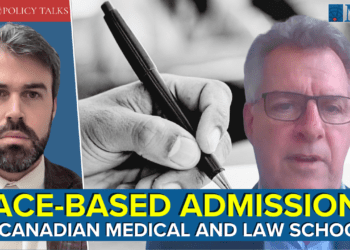
To share their deep understanding of the conditions in Cuba – and how the communist regime factors into the global security context – two leading experts join Inside Policy Talks.
Sarah Teich is an international human rights lawyer, a senior fellow at the Macdonald-Laurier Institute, and co-founder and president of Human Rights Action Group. She has worked extensively on sanctions policy, accountability mechanisms, and foreign interference issues.
Michael Lima is a researcher and director of Democratic Spaces, an NGO advocating for Canadian solidarity with Cuban civil society and human rights defenders. He’s a leading voice on Cuba’s role in authoritarian coordination across Latin America.
Together, they are co-authors (along with Isabelle Terranova) of Cuba and the Authoritarian Nexus: Internal Repression, External Aggression, and Illiberal Partnerships and a newly published MLI commentary titled Canada’s Cuba Blind Spot.
On the podcast, they tell Christopher Coates, director of foreign policy, national defence, and national security at MLI, that Canada’s current approach to Cuba serves neither Canadians nor Cubans.
Teich describes the “collaboration” that takes place between Cuba and other authoritarian regimes like the Chinese and Russian governments, and how Canada leaves itself vulnerable to this bloc by not levying sanctions across the board.
“It creates very clear gaps for the entire authoritarian block to exploit … and they do so very effectively,” says Teich. “Canada’s failure to address Cuba’s human rights abuses and authoritarian links is not only a moral failing, but a strategic one.”
Lima adds that the humanitarian crisis in Cuba is “manufactured” by its government, and any strategy to aid the Cuban people must account for this reality.
“We have to see that the Cuban people are like those that are kidnapped,” he says. “The ultimate goal is that those kidnapped are free.”