Thursday, June 25, 2026
No Result
View All Result
  • Media
Macdonald-Laurier Institute
  • Home
  • About
    • Who We Are
    • Who Makes MLI Work
    • Fifteenth Anniversary
  • Experts
    • Experts Directory
    • In Memoriam
  • Issues
    • Domestic Policy
      • Economic Policy
      • Justice
      • Rights and Freedoms
      • Assisted Suicide (MAID)
      • Health Care
      • COVID-19
      • Gender Identity
      • Canada’s Political Tradition
      • AI, Technology and Innovation
      • Media and Telecoms
      • Housing
      • Immigration
      • Agriculture and Agri-Food
      • Competition Policy
    • Energy Policy
      • Energy
      • Environment
    • Foreign Policy
      • Israel-Hamas War
      • Ukraine
      • Taiwan
      • China
      • Europe and Russia
      • Indo-Pacific
      • Middle East and North Africa
      • North America
      • Foreign Interference
      • National Defence
      • National Security
      • Foreign Affairs
    • Indigenous Affairs
  • Projects
    • CNAPS (Center for North American Prosperity and Security)
    • Justice Report Card
    • The Promised Land
    • Dragon at the door
    • Canada on top of the world
    • Letter to a minister
    • The Great Energy Crisis
    • DisInfoWatch.org
    • Managing Indigenous Prosperity
    • Judicial Foundations
    • Landmark Cases Council
    • Defending The Marketplace of Ideas
    • Reforming the University
    • Digital Policy & Connectivity
    • Past Projects
      • Double Trouble
      • Canada and the Indo-Pacific Initiative
      • The Transatlantic Program
      • COVID Misery Index
        • Provincial COVID Misery Index
        • Beyond Lockdown
        • COVID and after: A mandate for recovery
      • Speak for Ourselves
      • The Eavesdropping Dragon: Huawei
      • Talkin’ in the Free World with Mariam Memarsadeghi
      • An Intellectual Property Strategy for Canada
      • Munk Senior Fellows
      • A Mandate for Canada
      • Confederation Series
      • Fiscal Reform
      • The Canadian Century project
      • Fixing Canadian health care
      • Internal trade
      • From a mandate for change
      • Size of government in Canada
      • Straight Talk
      • Labour Market Report
      • Leading Economic Indicator
      • Centre for Advancing Canada’s Interests Abroad
      • Indigenous Prosperity at a Crossroads
        • Aboriginal Canada and Natural Resources
  • Events
    • Voices that Inspire: The Macdonald-Laurier Vancouver Speaker Series
    • Upcoming Events
    • Past Events
      • MLI Dinners
      • Great Canadian Debates
  • Latest News
  • Libraries
    • Columns
    • Commentary
    • Papers
    • Books
    • Video
  • Donate
  • Home
  • About
    • Who We Are
    • Who Makes MLI Work
    • Fifteenth Anniversary
  • Experts
    • Experts Directory
    • In Memoriam
  • Issues
    • Domestic Policy
      • Economic Policy
      • Justice
      • Rights and Freedoms
      • Assisted Suicide (MAID)
      • Health Care
      • COVID-19
      • Gender Identity
      • Canada’s Political Tradition
      • AI, Technology and Innovation
      • Media and Telecoms
      • Housing
      • Immigration
      • Agriculture and Agri-Food
      • Competition Policy
    • Energy Policy
      • Energy
      • Environment
    • Foreign Policy
      • Israel-Hamas War
      • Ukraine
      • Taiwan
      • China
      • Europe and Russia
      • Indo-Pacific
      • Middle East and North Africa
      • North America
      • Foreign Interference
      • National Defence
      • National Security
      • Foreign Affairs
    • Indigenous Affairs
  • Projects
    • CNAPS (Center for North American Prosperity and Security)
    • Justice Report Card
    • The Promised Land
    • Dragon at the door
    • Canada on top of the world
    • Letter to a minister
    • The Great Energy Crisis
    • DisInfoWatch.org
    • Managing Indigenous Prosperity
    • Judicial Foundations
    • Landmark Cases Council
    • Defending The Marketplace of Ideas
    • Reforming the University
    • Digital Policy & Connectivity
    • Past Projects
      • Double Trouble
      • Canada and the Indo-Pacific Initiative
      • The Transatlantic Program
      • COVID Misery Index
        • Provincial COVID Misery Index
        • Beyond Lockdown
        • COVID and after: A mandate for recovery
      • Speak for Ourselves
      • The Eavesdropping Dragon: Huawei
      • Talkin’ in the Free World with Mariam Memarsadeghi
      • An Intellectual Property Strategy for Canada
      • Munk Senior Fellows
      • A Mandate for Canada
      • Confederation Series
      • Fiscal Reform
      • The Canadian Century project
      • Fixing Canadian health care
      • Internal trade
      • From a mandate for change
      • Size of government in Canada
      • Straight Talk
      • Labour Market Report
      • Leading Economic Indicator
      • Centre for Advancing Canada’s Interests Abroad
      • Indigenous Prosperity at a Crossroads
        • Aboriginal Canada and Natural Resources
  • Events
    • Voices that Inspire: The Macdonald-Laurier Vancouver Speaker Series
    • Upcoming Events
    • Past Events
      • MLI Dinners
      • Great Canadian Debates
  • Latest News
  • Libraries
    • Columns
    • Commentary
    • Papers
    • Books
    • Video
  • Donate
No Result
View All Result
Macdonald-Laurier Institute

Carney may be enamoured, but going all-in on Europe is a mistake for Canada: Richard Shimooka in The Hub

Ottawa’s thinking must be much more agile in how it approaches its alliances. Putting all of its eggs in the European basket is a mistake.
June 25, 2026
in Foreign Affairs, Foreign Policy, Latest News, Columns, In the Media, Europe and Russia, Indo-Pacific, North America, Richard Shimooka
Reading Time: 4 mins read
A A
Carney may be enamoured, but going all-in on Europe is a mistake for Canada: Richard Shimooka in The Hub

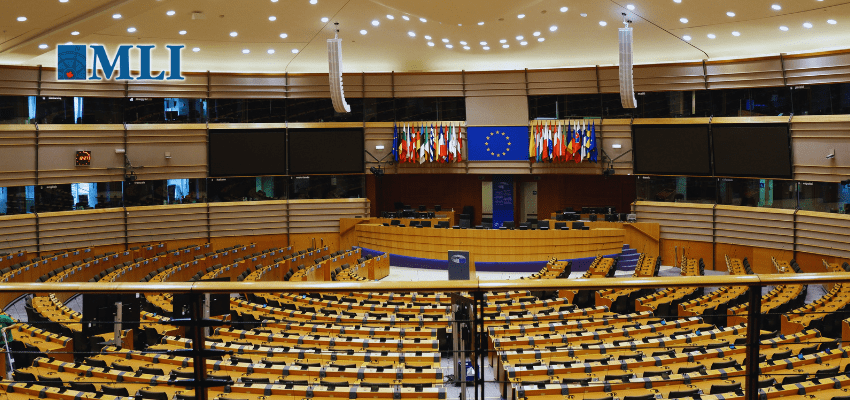
Image via Canva.

This article originally appeared in The Hub.

By Richard Shimooka, June 25, 2026

Last week, during a meeting with European Union Officials, Prime Minister Mark Carney declared that the “next world order will likely be built out of Europe.” This is not a surprising comment from him, as he has made similar statements before and reflects his seemingly Eurocentric vision of international relations.

This predilection, though, calls into question his earlier commitment to a “variable geometry” of Canadian foreign relations that would use multiple overlapping relationships to provide security, rather than rely too heavily on one single alignment with the United States.

But beyond the prime minister’s latest statement, there is plenty of evidence of the government putting this pivot to Europe into practice, including the selection of the Swedish GlobalEye airborne early warning aircraft over the American options and a focus on the Canada-EU SAFE Defence Agreement (despite its limited potential upside), as well as a preponderance of meetings with European leaders over those of other partners—the former Bank of England governor feels more at home in the halls of Westminster and Espace Léopold than in Tokyo or the Blue house in Seoul.

Yet a geopolitical bet on Europe is fraught with challenges, particularly in the realm of collective defence, some of which were on full display in the very week Carney made his speech.

The most dramatic event occurred in the United Kingdom, with the resignation of the minister of defence, John Healey and the armed forces minister, Al Carns, over the underfunding of the military as well as mismanagement within the department. Prime Minister Keir Starmer followed with his own resignation this week.

This reflects an underlying tension within the U.K., a country dealing with a sluggish, post-Brexit economy that is struggling to create growth. The lack of defence spending has imperilled one of the U.K.’s major defence programs: the global combat air program, or GCAP, a multinational sixth-generation fighter program that it leads with Japan and Italy. The underfunding concerns are so serious that Japan, facing acute threats from China, Russia, and North Korea and needing the timely introduction of the aircraft, is reconsidering its participation in the scheme.

Similar tensions and reluctance to prioritize defence are emerging within states across Europe. Earlier in the month, Giorgia Meloni’s government in Italy declined to use EU loans financing to increase defence spending, identifying domestic spending priorities as being more pressing. While it remains publicly committed to meeting NATO’s 5 percent target in 2035, and has increased its budget to past 2.5 percent this year, the long-term implications of this policy make it unlikely that it will reach the objective in a decade’s time.

Finally, there’s the collapse of the Franco-German-Spanish Future Combat Air System project, reportedly over corporate governance and workshare arrangements. While Germany has made substantial increases in defence spending, France’s fiscal situation is highly constrained, and it too has limited ability to increase its defence spending in the coming decade. Moreover, the program continues to illustrate how domestic industrial interests continue to play a dominant influence, even for a marquee European defence program.

These challenges are ones that Canada’s political leadership must be clear-eyed about. They suggest that Europe’s ability to play the role of a global military power is mixed at best, and Ottawa’s thinking must be much more agile in how it approaches its alliances. Putting all of its eggs in the European basket is a mistake.

Given the country’s diverse foreign policy interests, the variable geometry model, where Canada disperses its reliance and partnerships between Asian, European, and American allies, is the better, more secure, more logical path. Those relationships need to be equitable and have tangible effects—it does little good if the agreements fail to produce real-world outcomes, such as the delivery of military capabilities to the Canadian Armed Forces quickly and at reasonable cost to meet the emerging threat that threatens Canada and its interests.

No choice likely better represents this challenge than the upcoming decision for the Victoria class submarine program, which is reportedly to be made in the coming weeks.

The reality is that the South Korean submarine almost certainly remains a significant frontrunner to replace Canada’s ageing fleet. Despite recent eleventh-hour claims made in public by Germany, the South Korean bid likely has a significant edge in cost, delivery dates, and capability. Yet following Carney’s comments and his government’s recent decisions, the worry remains that the cabinet will ignore all of these considerations and base their decision on a deeply flawed miscalculation of Europe’s influence on the international system.

Buying European submarines when the most likely threat vector is in the Pacific with China or in the Arctic approaches through the Bering Strait would be a premier example of misevaluating Canada’s geopolitical position as well as that of its erstwhile allies.

Given the threats and challenges, as well as the country’s limited economic resources, it is absolutely essential that Ottawa correctly evaluates the strengths and weaknesses of each potential partner and ally and invests in each accordingly, whether it be Asia, Europe, or the United States. Failing to do so is a costly, costly mistake.


Richard Shimooka is a Hub contributing writer and a senior fellow at the Macdonald-Laurier Institute who writes on defence policy.

Source: The Hub

Related Posts

The 3 stages of the AI revolution: Joel Bilt and Peter Copeland for Inside Policy Talks
AI, Technology and Innovation

The 3 stages of the AI revolution: Joel Bilt and Peter Copeland for Inside Policy Talks

June 25, 2026
Power and peril – How Chinese EVs, solar systems, and embedded technologies threaten Canada’s national security: Brenda Shaffer
Energy

Power and peril – How Chinese EVs, solar systems, and embedded technologies threaten Canada’s national security: Brenda Shaffer

June 25, 2026
Bank of Canada unapologetic about inflation miss: Philip Cross in the Financial Post
Economic Policy

Bank of Canada unapologetic about inflation miss: Philip Cross in the Financial Post

June 24, 2026
Next Post
Power and peril – How Chinese EVs, solar systems, and embedded technologies threaten Canada’s national security: Brenda Shaffer

Power and peril - How Chinese EVs, solar systems, and embedded technologies threaten Canada’s national security: Brenda Shaffer

Newsletter Signup

  Thank you for Signing Up
  Please correct the marked field(s) below.
Email Address  *
1,true,6,Contact Email,2
First Name *
1,true,1,First Name,2
Last Name *
1,true,1,Last Name,2
*
*Required Fields

Follow us on

Macdonald-Laurier Institute

323 Chapel Street, Suite #300
Ottawa, Ontario, K1N 7Z2 Canada

613.482.8327

info@macdonaldlaurier.ca
MLI directory

Support Us

Support the Macdonald-Laurier Institute to help ensure that Canada is one of the best governed countries in the world. Click below to learn more or become a sponsor.

Support Us

  • Inside Policy Magazine
  • Annual Reports
  • Jobs
  • Privacy Policy

© 2023 Macdonald-Laurier Institute. All Rights reserved.

No Result
View All Result
  • Home
  • About
    • Who We Are
    • Who Makes MLI Work
    • Fifteenth Anniversary
  • Experts
    • Experts Directory
    • In Memoriam
  • Issues
    • Domestic Policy
      • Economic Policy
      • Justice
      • Rights and Freedoms
      • Assisted Suicide (MAID)
      • Health Care
      • COVID-19
      • Gender Identity
      • Canada’s Political Tradition
      • AI, Technology and Innovation
      • Media and Telecoms
      • Housing
      • Immigration
      • Agriculture and Agri-Food
      • Competition Policy
    • Energy Policy
      • Energy
      • Environment
    • Foreign Policy
      • Israel-Hamas War
      • Ukraine
      • Taiwan
      • China
      • Europe and Russia
      • Indo-Pacific
      • Middle East and North Africa
      • North America
      • Foreign Interference
      • National Defence
      • National Security
      • Foreign Affairs
    • Indigenous Affairs
  • Projects
    • CNAPS (Center for North American Prosperity and Security)
    • Justice Report Card
    • The Promised Land
    • Dragon at the door
    • Canada on top of the world
    • Letter to a minister
    • The Great Energy Crisis
    • DisInfoWatch.org
    • Managing Indigenous Prosperity
    • Judicial Foundations
    • Landmark Cases Council
    • Defending The Marketplace of Ideas
    • Reforming the University
    • Digital Policy & Connectivity
    • Past Projects
      • Double Trouble
      • Canada and the Indo-Pacific Initiative
      • The Transatlantic Program
      • COVID Misery Index
      • Speak for Ourselves
      • The Eavesdropping Dragon: Huawei
      • Talkin’ in the Free World with Mariam Memarsadeghi
      • An Intellectual Property Strategy for Canada
      • Munk Senior Fellows
      • A Mandate for Canada
      • Confederation Series
      • Fiscal Reform
      • The Canadian Century project
      • Fixing Canadian health care
      • Internal trade
      • From a mandate for change
      • Size of government in Canada
      • Straight Talk
      • Labour Market Report
      • Leading Economic Indicator
      • Centre for Advancing Canada’s Interests Abroad
      • Indigenous Prosperity at a Crossroads
  • Events
    • Voices that Inspire: The Macdonald-Laurier Vancouver Speaker Series
    • Upcoming Events
    • Past Events
      • MLI Dinners
      • Great Canadian Debates
  • Latest News
  • Libraries
    • Columns
    • Commentary
    • Papers
    • Books
    • Video
  • Donate

© 2023 Macdonald-Laurier Institute. All Rights reserved.