By Brenda Shaffer
June 25, 2026
China continues to find creative ways to infiltrate and influence the West.
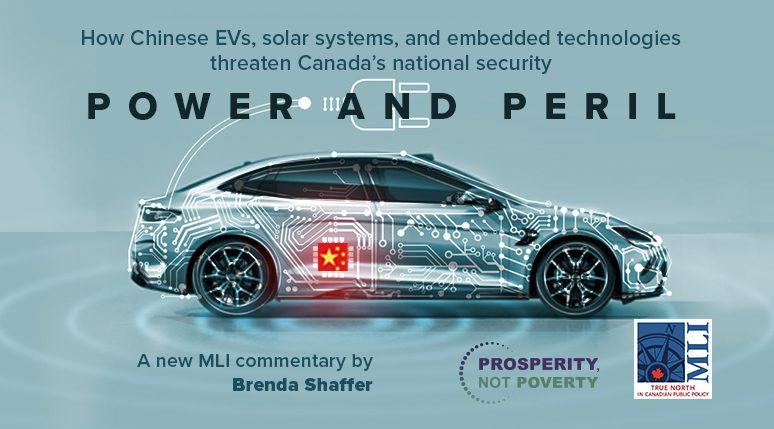
When low-cost Chinese electric vehicles entered Western markets, they were an immediate success and sales soared. Soon after, engineers discovered that Chinese manufacturers could surveil these vehicles (Financial Times 2026). Western engineers also found kill switches in Chinese electric buses that could be used to disrupt transportation (Associated Press 2025; Bryant 2025; Financial Times 2026; Smith 2025). A recently accessed Canadian Government internal Public Safety Canada memo warned of dangers from vehicles imported from “high-risk vendors” (CTV News 2026). Additional scrutiny revealed surveillance and control components embedded in various solar energy components produced in China, including power inverters (Mcfarlane 2025).
China has embedded capabilities in many of its products in use in the West that can surveil citizens, disrupt transportation and ports, and cause electricity blackouts and grid damage. During a political or military confrontation with the West, adversary-embedded capabilities in energy and other strategic Western infrastructure could have a significant impact, including on the outcome of war.
China, Iran, and Russia have all included attacks and disruptions on American and allied domestic energy infrastructure in their war doctrines (Howard, Nussbaum, and Shaffer 2024). Today, the border between the home front and the battle arena in war has been completely blurred, as adversaries of the West plan on targeting the domestic arenas of Western countries, including Canada. Even short-term disruptions to electricity and transportation can trigger public panic in the United States, Canada, and other Western countries, undermining support for a war effort – especially in an overseas conflict such as a defence of Taiwan.
The West has taken only very limited steps to address the threat of these Chinese embedded capacities, focusing mainly on imported electric vehicles. Canada began to receive its first batches of EVs from China in June 2026. With Chinese-produced electric vehicles arriving in Canada relatively late in the game compared to Europe or the United Kingdom, Ottawa has an advantage – it can nip the security threat posed by these vehicles in the bud. Canada must act now to put in place policies and regulations that limit the surveillance and transportation-disruption capacities of Chinese-manufactured vehicles. Canada should also identify risks from additional Chinese goods, such as electricity inverters in solar energy systems and cranes in use in Canada’s ports.
This commentary will discuss several examples of embedded surveillance and control equipment that Western governments have discovered in Chinese products, the steps taken to minimize the risks from these products, and the policy steps Canada can take to minimize the threats posed by Chinese EVs and other products that have already infiltrated Canadian markets (Global News 2026).
Embedded threats
In recent years, Chinese-manufactured electric vehicles (EVs), and solar energy components have taken Western markets by storm. This rapid adoption of Chinese-manufactured goods in strategic sectors such as energy and transportation has generated new threats to national security in the West, including Canada. Recent discoveries in the US and Europe indicate that China has secretly embedded devices in many of these products with the potential to enable surveillance, disrupt transportation and port activity, and interfere with electricity supplies and grids.
China produces around half of the world’s electric vehicles. Western governments and security experts are concerned that even normal operations can expose riders to surveillance and other cyber threats and that Chinese vehicle manufactures share collected data with Chinese government agencies (Financial Times 2026; Ghiretti and Ellis 2026; Miller and Nowak 2026 ).
Moreover, China could cause major transportation disruptions in the West through its capacity to remotely control some of its vehicles. For example, Denmark and Norway recently discovered kill switches embedded in Chinese-made electric buses that could be remotely activated by authorities in China (Associated Press 2025; Bryant 2025; Smith 2025).
China can also disrupt transportation in the West through its presence in transportation components that use solar energy. In August 2025, the US Department of Transportation’s Federal Highway Administration issued an advisory that all solar-powered highway infrastructure should be scanned for the presence of rogue devices such as hidden radios inside batteries and inverters (Winter and Satter 2025). The Department of Transportation advisory specified that solar devices power multiple infrastructure components in US highways, including traffic signs, traffic cameras, and electric vehicle chargers.
China’s potentially most dangerous capacity is the ability to cause major disruptions of electricity supply and damage to grids in Western countries, including Canada. China dominates the global production of power inverters. These devices convert electrical output from solar and wind energy production from direct current to alternating current so that it is compatible with the electric grid (US Department of Energy 2026). Inverters play a critical role in the supply system of renewable energy and their malfunction can severely impact electrical grid operations. American authorities have identified implanted undeclared communication devices in some of the Chinese-manufactured inverters (Mcfarlane 2025). Experts warn: “Using the rogue communication devices to skirt firewalls and switch off inverters remotely, or change their settings, could destabilize power grids, damage energy infrastructure, and trigger widespread blackouts.”
China poses a threat to operations of American, Canadian, and allied ports through Chinese-manufactured equipment (Viswanatha, Lubold, and O’Keeffe 2023). A US Congressional probe found that Chinese-produced cranes used at American major ports contained hidden communications equipment that could be used both for surveillance and to disrupt port activity (Volz 2024). Disruption of port activity during wartime could be especially damaging.
Chinese-manufactured cranes are in wide use in Canadian ports. Following discoveries in the United States of potential stealth Chinese capacities to remotely direct its cranes, Transport Canada worked in 2023 to identify the threats posed from the operations of Chinese cranes at Canada’s ports and address the dangers (Viswanatha, Aruna, Gordon Lubold, and Kate O’Keeffe 2023; Transport Canada 2023). Canadian security experts continue to raise concerns regarding Chinese-produced equipment in use in Canada’s ports (Wood 2024).
Western defences
Several Western countries have taken policy action to address the Chinese threat from embedded capacities in imported products. Most of these efforts have focused on the threat from Chinese EVs, and no significant action has been taken to defend against China’s ability to disrupt electricity supplies in the West through manipulation of inverters.
The United States has taken the most significant action to defend against Chinese infiltration via its manufactured goods. In a bipartisan move, Republicans and Democrats have come together to essentially block the entry of Chinese electric vehicles to the US market through a combination of high tariffs and national security restrictions. In September 2024, the Biden administration imposed 100 per cent tariffs on Chinese electric vehicles and 50 per cent tariffs on Chinese batteries and solar cells (Lawder 2024). Then US President Joe Biden also imposed additional limitations on the use of Chinese software, communication chips, and hardware in vehicles produced in the US (Shepardson 2025, Financial Times 2026). The Trump administration has maintained the 100 per cent tariffs on Chinese EVs.
Recently, members of Congress have initiated several bipartisan bills aimed at fortifying the efforts to block the entry of Chinese-produced EVs to the American market (Colman et al. 2026; Laing 2026). It seems the main motivation of this legislation is the removal of a challenge to the US auto industry on its home turf. However, the result will also block national security threats.
The United Kingdom and the European Union have not erected significant barriers to Chinese EVs. However, Reform UK – the leading political opposition party in the UK – opposes this lenient policy and plans to erect trade barriers if it comes to power (Jenrick 2026).
Chinese EVs are capturing significant market share in Europe and the UK, and it is expected to grow. Chinese EVs currently account for 8 per cent of car sales in the EU (Ciferri 2026). Chinese vehicles comprised 9.7 per cent of UK vehicle registrations in 2025 and 14.6 per cent in the first three months of 2026 (Colman et al. 2026).
Several Western nations, including the UK, Israel, and Poland, have banned Chinese EVs from military bases and sensitive security installations. In addition, the Israel Defense Forces recalled hundreds of Chinese vehicles it had issued to officers (Fabian 2025). The British Ministry of Defence has instructed officers not to connect computers or phones to Chinese-manufactured vehicles (Milmo 2025). The British Ministry of Defence has instituted a unique security policy, calling on officers and other employees not to discuss classified material while riding in Chinese EVs (Cotterill 2025).
Conservative Party Leader Pierre Poilievre’s newly released automobile policy calls for prohibiting Chinese-made vehicles from “proximity to Canadian Forces bases and other sensitive or strategic infrastructure” (Duggan 2026). Security experts in Canada have called on Ottawa to follow the example of Poland and Israel and prevent Chinese EVs from entering Canadian military bases.
Western countries, including Canada, have refrained from taking meaningful action to defend against threats from the use of Chinese-produced inverters. The lack of Western action likely results from the overwhelming dependence on Chinese inverters, which comprise 70 per cent of the global supply.
Chinese inverters often enter countries through backdoor means, such as via solar energy systems produced in Western countries that contain the devices. An example in Canada is the Ontario-based company Canadian Solar, which began operations with most of its production capacity in China (Canadian Solar 2026; USSEC 2006). This can be confusing for consumers, who mistakenly believe they are buying domestically made products.
One of the only countries to ban Chinese inverters in its electricity system is Lithuania (Mcfarlane 2025). For decades, Vilnius has exceptionally defended its energy and other strategic infrastructure from hostile foreign ownership and influence (Shaffer 2015). It seems that in the near future NATO will act to reduce the security threat from Chinese inverters. As one NATO official remarked: “We must identify strategic dependencies and take steps to reduce them” (Mcfarlane 2025).
The EU imports more than 60 per cent of the inverters in use on the continent from China. In May 2026, Brussels announced that solar inverters from China and other “high-risk suppliers” would not be eligible for EU funding (Clark and Martuscelli 2026). In contrast, the Government of Canada has not imposed any special regulatory limits on Chinese-produced inverters.
Canada’s defences
The Strategic Partnership Agreement signed in January 2026 between Canada and China creates an opportunity for China to increase its penetration of Canada through its products.
Canada’s Prime Minister’s Office stated that co-operation with China on energy and climate is central to the strategic partnership signed in January 2026: “Central to this new partnership is an agreement to collaborate in energy, clean technology, and climate competitiveness. Canada and China are both energy superpowers focused on expanding two-way energy co-operation – reducing emissions and scaling up investments in batteries, solar, wind, and energy storage” (Prime Minister of Canada 2026). Accordingly, it is likely that Ottawa and Beijing seek to expand their co-operation in the energy realm, which can facilitate additional Chinese items entering strategic infrastructure in Canada. Canada also aims through the strategic partnership for Chinese companies to set up vehicle manufacturing in Canada (Prime Minister of Canada 2026).
Chinese EVs began arriving in June 2026, facilitated by the strategic partnership with Beijing signed five months earlier by Prime Minister Mark Carney. Ottawa reduced tariffs on Chinese EVs from 100 per cent to 6.1 per cent. The fact that Chinese EVs are entering the Canadian market relatively late in the game, compared to Europe and the UK, offers Canada the opportunity to erect defences that can narrow the security threat posed by Chinese vehicles.
Today, experts predict that Chinese electric vehicles will quickly capture twenty per cent of Canada’s EV market (Colman et al. 2026). As for Carney, he has said that Chinese vehicles will offer Canadians a low-cost option for switching to EVs (Prime Minister of Canada 2026).
Canadian security experts, meanwhile, seem greatly concerned about the national security threats posed by Chinese electric vehicles currently entering the Canadian market (Duggan 2026). An internal Canadian government public safety memo, accessed by journalists through the Access to Information Act, warns of the risks presented by electric vehicles imported from “high-risk vendors” (CTV News 2026): “…opening our markets to new players can amplify the presence of high-risk vendors. Connected vehicles, similar to other smart or internet-connected devices, collect significant amounts of data on Canadians, which can have intelligence value.”
Media reports said the Public Safety memo states that “there are growing security threats presented by connected vehicle technologies, including along the supply chain, which the government is assessing to determine the need for additional tools.”
Meanwhile, it seems that Canada’s national security leadership is doing little to prepare for the Chinese EV threat. When a Canadian Press reporter asked Chief of the Defence Staff General Jennie Carignan and Defence Minister David McGuinty to detail how they will protect Canadians, both officials simply promised to look into the matter (Duggan 2026): “Well, we don’t have a lot of Chinese vehicles so far,” Carignan told reporters at a roundtable in Halifax in February. “I think as this posture changes, the various security regulations will be emitted. But we’ll have to look at this before we make any changes to our current posture.”
In response to press questions on whether Chinese vehicles should be allowed into Canadian military bases, McGuinty responded that he would check the policy with military officers: “That’s a question I’ll raise with the operational folks at our bases.”
Various Canadian officials and Members of Parliament have expressed concern about the threats posed by Chinese EVs and other goods (Parliament of Canada 2026). Ontario Premier Doug Ford recently expressed opposition to what he termed “Chinese spy cars” entering Canada and called on Canadians to boycott Chinese automobiles (Freeman 2026). Like his American counterparts in Michigan, Ford’s opposition is likely motivated by a combination of national security concerns and the desire to protect the local automobile industry.
Policy options
Canada should conduct a thorough assessment of the security threats posed by Chinese-manufactured goods in use in strategic sectors in Canada, such as energy, transportation, and ports. The federal government, in collaboration with opposition parties in Parliament, should assess how increased Chinese imports under the January 2026 Strategic Partnership Agreement will affect Canada’s national security.
Chinese EVs began arriving in Canada in June 2026. Canada should consider limiting the connectivity of the vehicles and Chinese-produced software, cameras, and GPS technology installed in the vehicles (Financial Times 2026). Public Safety Minister Gary Anandasangaree stated that the federal government “must ensure vehicles in Canada do not have the ability to transmit information back to other countries” (Duggan 2026).
A critical and very easily implemented defence is for Canada to ban Chinese EVs from entering military and other government facilities. Many other countries have already implemented this ban. Canada should consider also barring government ministries and agencies from procuring Chinese vehicles. If Canada decides to allow China to establish an EV manufacturing industry in Canada, Ottawa should place limits on the Chinese-made software and limit its ability to communicate with Chinese entities, either by replacing it with Canadian-produced software and hardware or ensuring that no vehicle parts are able to transmit data to China.
Given the discovery of kill switches on Chinese electric buses, and the potential threat they pose for mass disruption of transportation, Canada should consider restricting their import into the country. If Ottawa is unwilling to take that step, then provincial and local authorities should seriously consider abstaining from procuring Chinese-produced buses and other large vehicles for their transportation systems.
The federal and provincial governments should inspect solar-powered devices used in roads and highway infrastructure for embedded Chinese components. Given reports of such devices in solar-powered traffic signs, traffic cameras, and EV chargers in the United States, similar systems likely exist in Canada.
The federal government should also consider banning Chinese-made inverters from Canadian solar energy systems. Indeed, since many Canadians are unaware that “Canadian-made” solar energy systems are actually made in China, the federal government should take action to ensure that “Made in Canada” actually means what it says.
At a minimum, in cases where Chinese inverters are sold as part of Canadian systems, the Chinese origin should be clearly marked to warn potential consumers of the risk. The offshoring of manufacturing by some Canadian solar companies to China should also concern US policymakers given the risks posed by Chinese-made inverters.
Canada should also examine Chinese-manufactured cranes and other heavy equipment in use in Canadian ports to identify remote operation and other embedded capacities that Beijing could use to observe and potentially disrupt Canadian port activity.
Canada can also learn from countries such as Lithuania, which has taken strong steps to protect its strategic infrastructure – especially its electricity system – from hostile foreign threats. Ottawa should also work closely with its NATO partners to identify and defend against foreign threats to its critical energy and other strategic infrastructure.
Opportunity for co-operation with the US?
The need to defend against threats posed by Chinese electric vehicles and other manufactured goods is one of the few major issues in the US that receives bipartisan support. Canada’s recent embrace of Chinese EV imports creates both a new source of disagreement with the US, but also an opportunity for co-operation with the Trump administration to thwart the common threat.
Canada’s decision to open its market to Chinese EVs has certainly been controversial. In response, the Trump administration announced that it will not allow Chinese EVs imported into Canada to subsequently enter the US market (Jogia 2026). US President Donald Trump has called the “China deal a disaster for Canada” and US Secretary of Transportation Sean Duffy stated that “Canada will live to regret the day they let the Chinese Communist Party flood North America with their EVs” (Duffy 2026). Peter Hoekstra, the US ambassador to Canada, stated firmly: “Those cars can come in from China, come into Canada, but they’re not going to cross the border into the US. That ain’t gonna happen. We’re not going to open the floodgates to Chinese cars entering the US from Canada” (Jogia 2026).
Washington is still considering its official response to Canada’s Chinese EV deal, but it is likely to ban the vehicles – including rental cars – from entering US territory, even temporarily.
Despite the current trade friction between Canada and the US, the two countries should seize this opportunity to co-operate in mitigating against the threats posed by Chinese-made EVs, electricity inverters, and other products used in ports and other strategic infrastructure. The Trump administration would likely view Canada’s willingness to co-operate on this common security threat as a sign of Canadian goodwill. Certainly, both sides stand to benefit from the exchange of information and analysis.
About the author
Brenda Shaffer is a faculty member at the US Naval Postgraduate School’s Energy Academic Group and a senior fellow at the Atlantic Council’s Global Energy Center. She is a contributor to both the Macdonald-Laurier Institute and Prosperity, Not Poverty, a North American initiative created to advance common-sense energy policies to foster prosperity and human flourishing in the developing world.
References
Associated Press. 2025. “Norway transport firm steps up controls after tests show Chinese-made buses can be halted remotely.” AP, November 5. Available at https://apnews.com/article/ruter-yutong-china-norway-electric-buses-931f3dbdab3f82402da68cbcb31f856b
Bryant, Miranda. 2025. “Danish authorities in rush to close security loophole in Chinese electric buses.” The Guardian, November 5. Available at https://www.theguardian.com/world/2025/nov/05/danish-authorities-in-rush-to-close-security-loophole-in-chinese-electric-buses.
Canadian Solar. 2026. “About us.” Available at https://www.canadiansolar.com/aboutus/.
Ciferri, Luca. 2026. “Chinese automakers nearly double Europe market share to 8% in February as PHEVs drive growth.” Automotive News Europe. Available at https://www.autonews.com/retail/sales/ane-europe-chinese-february-2026-2-months-0318/.
Clark, Sam, and Carlo Martuscelli. 2026. “Commission blocks EU funding for Huawei solar tech.” Politico, May 4. Available at https://www.politico.eu/article/commission-blocks-eu-funding-for-huawei-solar-tech/.
Colman, Zack, Jordyn Dahl, Sara Schonhardt, and Charlie Cooper. 2026. “‘The only thing that terrifies me is BYD’: Politicians quake at Chinese EVs.” Politico, May 13. Available at https://www.politico.com/news/2026/05/13/trump-xi-summit-chinese-electric-vehicles-00917652?utm_content=politico/magazine/Politics&utm_source=flipboard.
Cotterill, Tom. 2025. “MoD tells staff not to discuss secrets in cars amid China spying fears.” The Telegraph, November 18. Available at https://www.telegraph.co.uk/news/2025/11/17/mod-staff-dont-discuss-secrets-cars-amid-china-spying-fears/.
CTV News. 2026. “Connected vehicle data ‘can have intelligence value’ to adversaries: federal document.” Canadian Press, June 1. Available at https://www.ctvnews.ca/politics/article/connected-vehicle-data-can-have-intelligence-value-to-adversaries-federal-document/.
Duffy, Sean. 2026. X Post. January 25. Available at https://x.com/SecDuffy/status/2015522812551717164?s=20.
Duggan, Kyle. 2026. “Canada should ‘absolutely’ match Poland’s Chinese EV ban at military bases: expert.” City News (The Canadian Press), March 20. Available at https://vancouver.citynews.ca/2026/03/20/canada-should-absolutely-match-polands-chinese-ev-ban-at-military-bases-expert/.
Fabian, Emanuel. 2025. “IDF reportedly recalling 700 senior officers’ Chinese cars due to security fears.” The Times of Israel, November 2. Available at https://www.timesofisrael.com/liveblog_entry/idf-reportedly-recalling-700-senior-officers-chinese-cars-due-to-security-fears/.
Financial Times. 2026. “The cyber security threat inside your car.” Available at https://www.ft.com/content/3e14c4da-2ef9-48bf-bcf8-3035df912be4.
Freeman, Joshua. 2026. “Doug Ford tells Canadians to ‘boycott’ Chinese EVs that will enter Canada as part of Carney’s trade deal.” BNN Bloomberg, January 21. Available at https://www.bnnbloomberg.ca/business/2026/01/21/doug-ford-calls-on-canadians-to-boycott-chinese-evs-after-carneys-deal-to-allow-them/.
Mcfarlane, Sarah. 2025. “Rogue communication devices found in Chinese solar power inverters.” Reuters, May 14. Available at https://www.reuters.com/sustainability/climate-energy/ghost-machine-rogue-communication-devices-found-chinese-inverters-2025-05-14/.
Howard, Alan, Daniel Nussbaum, and Brenda Shaffer. 2024. Operational Energy (De Gruyter: 2024), pages 94–99. Available at https://nps.edu/web/eag/operational-energy-textbook.
Global News. 2026. “Ottawa sends mixed signals surrounding security concerns as Chinese EVs enter country.” June 1. Available at https://globalnews.ca/video/11877058/ottawa-sends-mixed-signals-surrounding-security-concerns-as-chinese-evs-enter-country/.
Ghiretti, Francesca, and Conlan Ellis. 2026. “It’s Time to Treat China’s Connected Energy Systems As a National Security Risk.” Rand (Originally published by The Wire China), January 21. Available at https://www.rand.org/pubs/commentary/2026/01/its-time-to-treat-chinas-connected-energy-systems-as-a.html.
Jenrick, Robert. 2026. X Post. X.com, April 12. Available at https://x.com/RobertJenrick/status/2043439860355088525?s=20.
Jogia, Saajan. 2026. “U.S. Envoy Takes Firm Stance Against Chinese EVs Despite President Trump’s Leniency.” Yahoo Finance. April 4, Available at https://tinyurl.com/bddyu2me.
Laing, Keith. 2026. “Will you ever be able to buy a Chinese EV in the US? DC says no.” USA Today, May 14. Available at https://www.usatoday.com/story/cars/shopping/evs/2026/05/14/americans-block-buying-chinese-evs-congress/90076137007/.
Lawder, David. 2024. “US locks in steep China tariff hikes, some industries warn of disruptions.” Reuters, September 13. Available at https://www.reuters.com/business/us-locks-steep-china-tariff-hikes-many-start-sept-27-2024-09-13/.
Miller, Chris, and Caroline Nowak. 2026. “Connected and Autonomous Cars: Security Risks from Chinese Components.” AEI, May 15. Available at https://www.aei.org/research-products/report/connected-and-autonomous-cars-security-risks-from-chinese-components/.
Milmo, Dan. 2025. “‘Source of data’: are electric cars vulnerable to cyber spies and hackers?” The Guardian, April 29. Available at https://www.theguardian.com/environment/2025/apr/29/source-of-data-are-electric-cars-vulnerable-to-cyber-spies-and-hackers.
Parliament of Canada. 2026. “SRSR Committee Meeting.” April 16. Available at https://www.ourcommons.ca/documentviewer/en/45-1/SRSR/meeting-31/evidence.
Prime Minister of Canada. 2026. “Prime Minister Carney forges new strategic partnership with the People’s Republic of China focused on energy, agri-food, and trade.” January 16. Available at https://www.pm.gc.ca/en/news/news-releases/2026/01/16/prime-minister-carney-forges-new-strategic-partnership-peoples.
Shaffer, Brenda. 2015. “Europe’s natural gas security of supply: Policy tools for single supplied states.” Energy Law Journal (Fall 2015). Available at https://www.eba-net.org/wp-content/uploads/2023/02/7-17-179-201-Shaffer_FINAL-11.10.pdf.
Shepardson, David. 2025. “Biden administration finalizes US crackdown on Chinese vehicles.” Reuters, January 14. Available at https://www.reuters.com/business/autos-transportation/biden-administration-finalizes-us-crackdown-chinese-vehicles-2025-01-14/.
Smith, Alexander. 2025. “Fearing vulnerability to China, Europe has a new worry: Electric buses.” NBC News, November 9. Available at https://www.nbcnews.com/world/europe/china-electric-buses-denmark-norway-investigate-security-loophole-rcna242054.
Transport Canada. 2023. “ TRAN Appearance: Main Estimates 2023–2024 and Supplementary Estimates (C) 2022–2023. Supplemental Material.” Government of Canada, August 11. Available at https://tc.canada.ca/en/binder/64-port-cranes-foreign-interference-1.
US Department of Energy. 2026. “Overview of Trade and Policy Measures for U.S. Solar Manufacturing.” Integrated Energy Systems Office. Available at https://www.energy.gov/cmei/systems/overview-trade-and-policy-measures-us-solar-manufacturing.
United States Securities and Exchange Commission [USSEC]. 2006. “AMENDMENT NO. 3 TO FORM F-1 REGISTRATION STATEMENT UNDER THE SECURITIES ACT OF 1933, Canadian Solar Inc.” November 6. Available at https://www.sec.gov/Archives/edgar/data/1375877/000114554906001563/h00554a3fv1za.htm.
Viswanatha, Aruna, Gordon Lubold, and Kate O’Keeffe. 2023. “Pentagon Sees Giant Cargo Cranes as Possible Chinese Spying Tools.” The Wall Street Journal, March 5. Available at https://www.wsj.com/politics/national-security/pentagon-sees-giant-cargo-cranes-as-possible-chinese-spying-tools-887c4ade.
Volz, Dustin. 2024. “Espionage Probe Finds Communications Device on Chinese Cranes at U.S. Ports.” The Wall Street Journal, March 7. Available at https://www.wsj.com/politics/national-security/espionage-probe-finds-communications-device-on-chinese-cargo-cranes-867d32c0.
Winter, Jana, and Raphael Satter. 2025. “Exclusive: US warns hidden radios may be embedded in solar-powered highway infrastructure.” Reuters, September 10. Available at https://www.reuters.com/legal/government/us-warns-hidden-radios-may-be-embedded-solar-powered-highway-infrastructure-2025-09-10/.
Wood, Graeme. 2024. “Chinese cranes in B.C. ports raise concerns after U.S. security probe.” Vancouver is Awesome. Available at https://www.vancouverisawesome.com/highlights/chinese-cranes-in-bc-ports-raise-concerns-after-us-security-probe-8449667.