OTTAWA, ON (July 16, 2026):
Resource projects in Canada often require engagement with affected Indigenous communities before they can proceed, but what happens when consultation is mishandled or ignored?
The consequences go beyond delays: costly litigation, lost investments, jeopardized employment, and relationships that remain damaged for years, hindering future development.
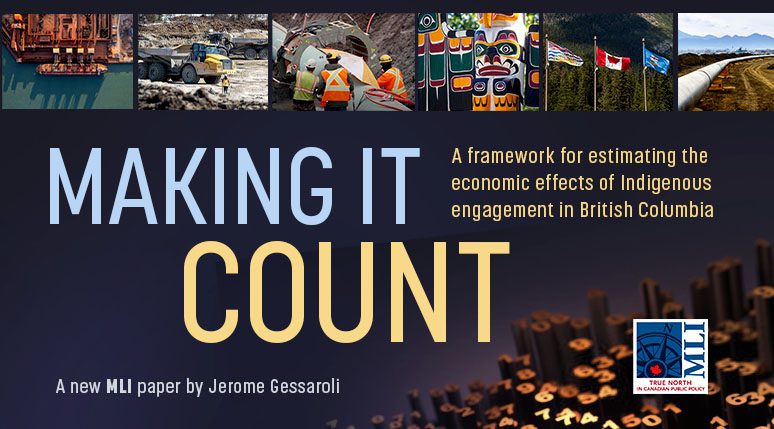
In Making it count: A framework for estimating the economic effects of Indigenous engagement in British Columbia, Senior Fellow Jerome Gessaroli argues that policymakers, investors, and project proponents are currently hamstrung by their inability to quantify how Indigenous engagement can shape project timelines, costs, legal exposure, and overall project economics.
Rather than taking a qualitative approach, Gessaroli provides a practical economic model that policymakers and investors can use to identify where reforms would have the greatest impact.
“It estimates the economic effects of Indigenous engagement using variables that can be tested, compared, and applied to investment decisions,” explains Gessaroli. “It gives investors, policymakers, and Indigenous governments a framework for identifying where costs and risks arise and which parts of the process have the greatest effect on project value.”
In a hypothetical example, Gessaroli applies the framework to a $680-million mining project: it reveals how consultation costs, benefit-sharing obligations, and approval delays reduce the project’s value by 16.8 per cent in British Columbia compared with only 5 per cent in Alberta – in part due to the provinces’ different histories in relation to treaties with Indigenous nations.
Gessaroli notes that the framework does not assess the fairness or legitimacy of consultation, but points policymakers to where they should focus on improving process design and resourcing while respecting the underlying rights of the First Nations involved.
“Beyond reducing the value of projects that do proceed, low approval probability can cause companies to forgo investments entirely, even when a project’s underlying economics are sound” explains Gessaroli. “A workable process must account for Indigenous rights while giving proponents clear and competitive timelines, costs, and decision rules.”
To learn more, read the full paper here:

Jerome Gessaroli is a senior fellow with the Macdonald-Laurier Institute, lead Canadian co-author of Financial Management Theory and Practice, and principal researcher for the Sound Economic Policy Project.
For further information, media are invited to contact:
Skander Belouizdad
Senior Media Relations Officer
(613) 482-8327 x111
Skander.belouizdad@macdonaldlaurier.ca