OTTAWA, ON (July 14, 2026):
Are Western governments underestimating Russia’s long-term ambitions in the Arctic?
Western analyses of Russia’s Arctic strategy are often oversimplified and overshadowed by the personality of President Vladimir Putin and recent geopolitical crises, ignoring the historic roots of Russia’s ambitions.
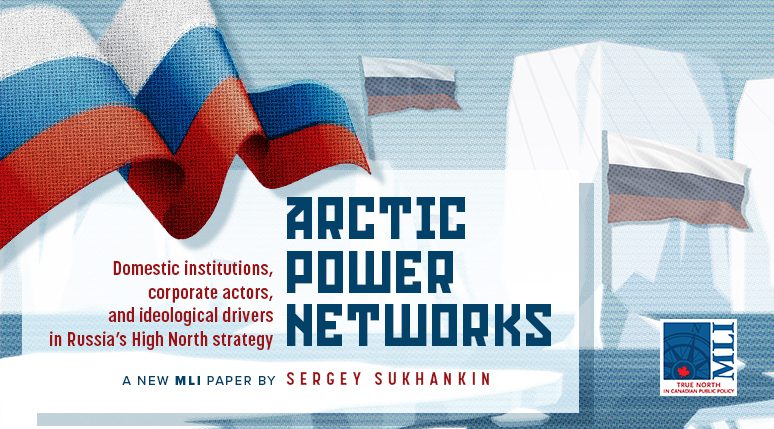
In Arctic power networks: Domestic institutions, corporate actors, and ideological drivers in Russia’s High North strategy, Sergey Sukhankin challenges prevailing opinions on Russia’s Arctic strategy, and explains how it is sustained by a network of actors and interests that persist regardless of changes in leadership.
“The durability and complexity of Russia’s Arctic governance structure extend beyond any single leader,” explains Sukhankin. “By shifting attention away from Moscow as a singular actor and toward the broader domestic configuration underlying Arctic governance, we can create a more durable understanding of how Russian Arctic policy is formed.”
According to Sukhankin, sanctions, economic adaptation, and a pivot to Asia have made the Arctic central to Russia’s grand strategy: the region is rich in resources, plays a critical role in Russia’s system of strategic nuclear deterrence, and crucially, is a symbolic frontier of Russian statehood and civilizational identity.
While sanctions, demographic decline, and technological constraints have hindered Russia’s Arctic plans, Sukhankin notes these challenges have also encouraged Moscow to further centralize decision-making and strengthen co-operation with China.
Sukhankin identifies the state nuclear corporation Rosatom as the dominant institutional force behind Russia’s Arctic ambitions thanks to its control of the country’s nuclear icebreaker fleet and its involvement in the Northern Sea Route and Arctic infrastructure development.
In response, Sukhankin urges Canada and her allies to go beyond viewing Russia’s Arctic strategy as a temporary feature of Putin’s rule, and to expand Arctic intelligence, invest in northern infrastructure, strengthen Indigenous partnerships, address growing Sino-Russian co-operation, and prepare for a more contested Arctic
“While the image Russia projects in the Arctic … exceeds its actual material capacity, this gap does not diminish the Kremlin’s willingness to commit resources to Arctic geopolitical projects,” writes Sukhankin. “The Arctic remains one of the few strategic theatres where Russia retains agency.”
To learn more, read the full paper here:

Sergey Sukhankin is a senior fellow at the Jamestown Foundation and the Saratoga Foundation and a fellow at the North American and Arctic Defence and Security Network.
For further information, media are invited to contact:
Skander Belouizdad
Senior Media Relations Officer
(613) 482-8327 x111
Skander.belouizdad@macdonaldlaurier.ca