By Joe Varner, July 15, 2026
For much of the post-Cold War era, Canadians have taken comfort in the belief that geography remains our greatest strategic asset. Protected by three oceans, sharing a continent with the United States, and sheltered beneath the collective defence guarantees of NATO and NORAD, Canada has long assumed that major military threats occur elsewhere.
The return of great-power competition has fundamentally reshaped homeland defence. A future adversary need not invade Canadian territory or destroy the Canadian Armed Forces to achieve meaningful strategic effects.
Disrupting electricity grids, telecommunications networks, ports, transportation systems, financial institutions, or government services could degrade Canada’s ability to mobilize, support allies, or sustain military operations. Many of these activities would unfold before open hostilities, through cyber intrusions, sabotage, espionage, economic coercion, disinformation, covert action, and the systematic mapping of critical infrastructure. By the time conventional military force is employed, the campaign may already be underway.
Commercial technology, civilian transportation networks, and global supply chains have become instruments of state power, while the distinction between peace and conflict has become progressively more difficult to define. Canada, however, continues to think about national defence through the assumptions of another era. The most troubling aspect of this reality is not simply that the federal government has underinvested in military capability. It is that the country has developed a strategic culture that assumes military threats remain distant, improbable, and largely someone else’s problem. Successive governments have allowed geography and alliances to become a substitute for strategy, while much of the Canadian public believed that our location alone provided enduring protection from a deteriorating international security environment. As our allies debate deterrence, resilience, rearmament, and homeland defence, Canada remains remarkably reluctant to acknowledge that great-power competition has already reached North America.
This strategic complacency is also reflected in Canada’s public discourse. National debates have become increasingly dominated by domestic politics and the state of the Canada–United States relationship, often at the expense of a sober assessment of the external security environment. Concerns about the policies of successive American administrations understandably occupy political attention because of the depth of our economic and political integration. Yet they should not obscure the fact that the principal military and intelligence challenges confronting Canada originate elsewhere: in Russia, China, North Korea, and Iran.
Events unfolding across Europe should serve as a warning. Over the past two years, NATO governments have documented a sustained pattern of unauthorized drone activity over some of the Alliance’s most sensitive military installations. Air bases, naval facilities, ammunition depots, logistics centres, and command headquarters have experienced repeated incursions by unmanned aircraft whose operators have often remained unidentified. Although allied governments have been appropriately cautious in publicly attributing every incident, intelligence services increasingly assess that many form part of Russia’s broader campaign of hybrid warfare directed against NATO. Among the installations affected have been Ramstein Air Base in Germany, RAF Lakenheath and RAF Mildenhall in the United Kingdom, Volkel Air Base in the Netherlands, Kleine Brogel Air Base in Belgium, and France’s Île Longue naval base, home to the French strategic nuclear submarine force. The pattern suggests more than isolated breaches of restricted airspace. It points to a sustained intelligence-gathering effort intended to collect information about NATO facilities, operational readiness, security procedures, and response capabilities. Whether every individual drone can ultimately be attributed to Russia is not the central issue. The strategic significance lies in what these operations accomplish. Every successful flight can reveal radar coverage, patrol patterns, communications procedures, electronic warfare capabilities, response times, and physical vulnerabilities. When accumulated over time, these seemingly minor incursions can produce a detailed intelligence picture of military infrastructure that could prove invaluable during a future crisis.
Intelligence collection has almost always preceded military operations. What has changed is the affordability, accessibility, and deniability of the technology now available to hostile states. Canada should therefore ask itself an uncomfortable question: If drones can repeatedly operate over some of NATO’s most heavily protected military installations — including those with nuclear weapons — and not one is interdicted, how confident are we that Canadian bases would fare any better? Military facilities such as CFB Halifax, CFB Esquimalt, CFB Trenton, CFB Petawawa, CFB Valcartier, CFB Cold Lake, and CFB Bagotville were built during an era when hostile aircraft represented the principal aerial threat. Today’s commercially available unmanned systems fly lower, present much smaller radar signatures, and can be operated from considerable distances using relatively inexpensive technology.
Much of Canada’s military infrastructure remains adjacent to public roads, commercial waterways, and civilian airspace, all of which provide opportunities for surveillance by hostile intelligence services. The same vulnerability extends to ammunition storage sites, fuel depots, command centres, shipyards, radar installations, communications networks, and the North Warning System. Many of these facilities were not designed to withstand persistent low-altitude drone surveillance, electronic reconnaissance, or precision attack by inexpensive unmanned systems.
This distinction between military and civilian targets is itself becoming increasingly obsolete. Modern conflict is no longer fought exclusively between armed forces. It is fought across entire societies. Energy grids, ports, airports, telecommunications networks, financial systems, transportation corridors, cloud computing infrastructure, and public information systems have become integral components of national power. An adversary seeking to weaken Canada may achieve greater strategic effect by disrupting civilian infrastructure than by attacking a military installation directly. The objective is not necessarily battlefield victory but political paralysis, economic disruption, and the erosion of public confidence in the state’s ability to govern and protect its citizens.
This represents one of the defining characteristics of contemporary hybrid warfare. Military installations remain important because they project force, but they are increasingly only one element within a much larger operational environment. Civilian infrastructure enables military mobilization, sustains industrial production, supports alliance reinforcement, and underpins social resilience during a crisis. In many circumstances, it may present the more attractive target because attacks or disruption can impose significant strategic costs while remaining below the threshold likely to trigger a conventional military response. The battlefield has therefore expanded beyond military bases to encompass the broader architecture upon which modern democratic societies depend.
Electrical substations, rail corridors, pipelines, telecommunications networks, government data centres, water treatment plants, fuel storage facilities, ports, and emergency management headquarters all form part of Canada’s critical infrastructure. These assets may not be targeted for immediate destruction, but they are highly attractive for reconnaissance, cyber penetration, intelligence collection, and contingency planning. The objective of hybrid warfare is not always to destroy. More often, it is to understand, infiltrate, and position capabilities that can be exploited when political circumstances change. These activities occur long before the outbreak of open conflict and are designed to remain ambiguous enough to avoid provoking a conventional military response.
The maritime dimension may present an even greater challenge. Russia’s so-called shadow fleet has attracted international attention because of its role in circumventing sanctions imposed on Russian oil exports. Yet European governments have become increasingly concerned that elements of this loosely organized commercial fleet may also support intelligence collection, electronic surveillance, and sabotage activities directed against NATO infrastructure.
Suspicious vessel movements near undersea communications cables, energy infrastructure, and military facilities in the Baltic Sea have demonstrated the strategic potential of merchant shipping operating under opaque ownership structures, flags of convenience, and manipulated identification systems. Commercial vessels can move through ports and coastal waters under entirely legitimate pretexts while conducting electronic surveillance, signals intelligence, underwater reconnaissance, or unmanned aerial operations. This possibility should be of direct concern to Canada. Canada’s Atlantic and Pacific coasts contain major naval facilities, commercial ports, undersea cables, energy infrastructure, and critical transportation links. Merchant vessels routinely approach Halifax, Esquimalt, Vancouver, Prince Rupert, Montreal and Saint John, often with little public attention.
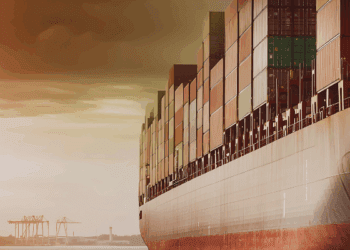
In an era of hybrid competition, commercial shipping must be viewed not only as an instrument of trade but also as a potential platform for hostile intelligence activity or worse. The evolution of containerized weapons systems further complicates the picture. For more than a decade, Russia has publicly promoted the Club-K missile system, which conceals cruise missiles inside what appears to be an ordinary forty-foot shipping container. Iran has similarly demonstrated increasing sophistication in disguising military capabilities within civilian maritime networks and using commercial vessels to support regional military operations. The strategic significance of these systems does not lie in proving that Canada faces an imminent missile attack from a container ship. It lies in the fact that civilian commerce and military capability are becoming increasingly difficult to distinguish. A standard shipping container carrying consumer goods and one concealing drones, electronic warfare systems, or anti-ship missiles may appear externally identical.
The global logistics system that supports international trade can also be exploited by hostile states seeking to move military capabilities discreetly through civilian networks. Canada’s major ports process millions of containers every year, almost all of them entirely legitimate. Yet defence planning has never been based solely on what is statistically most likely. It must also account for what is strategically possible, particularly where the consequences of failure would be severe.
The Iranian example is especially important because it demonstrates how a state facing superior conventional military power can rely on concealment, deception, proxies, civilian infrastructure, and relatively inexpensive precision weapons to offset an adversary’s technological advantages. Iran has spent decades building a military strategy around missiles, drones, maritime disruption, and covert logistics networks. Its support for the Houthis has shown how even a comparatively limited force can threaten major shipping routes, challenge modern warships, and impose substantial economic costs on the international system. The Houthis’ use of anti-ship missiles and drones in the Red Sea has forced commercial shipping to reroute around Africa, disrupted global supply chains, and compelled Western navies to expend costly interceptor missiles against much cheaper weapons.
Ukraine has demonstrated the same principle in another theatre. Ukrainian forces have used low-cost drones to strike strategic bombers, naval vessels, ammunition depots, logistics hubs, and command centres worth billions of dollars. Russia, meanwhile, has integrated drones, cyber operations, sabotage, covert intelligence collection, and commercial infrastructure into a sustained campaign of pressure against NATO without crossing the threshold of declared war.
Canada has begun rebuilding its military after decades of underinvestment, but rebuilding must be measured against the threat environment we face today rather than the one we left behind. New submarines, surface combatants, and fighter aircraft remain essential, yet platforms alone will not solve the problem. They must operate from bases, ports, and logistics networks that are themselves increasingly vulnerable to surveillance, disruption, and attack. Counter-drone capabilities should become standard at every major Canadian Forces installation, naval base, and sensitive government facility. Canada requires stronger low-altitude air surveillance, improved electronic warfare systems, hardened communications networks, and clear legal authorities for detecting and neutralizing hostile unmanned aircraft.
Port security must also be reconsidered. Canadian ports have traditionally focused on customs enforcement, organized crime, smuggling, and commercial regulation. Those remain important responsibilities, but they are no longer sufficient. Port authorities, intelligence agencies, the Canadian Armed Forces, the RCMP, Transport Canada, and the Canada Border Services Agency must develop a far more integrated approach to hostile state activity, suspicious shipping movements, foreign ownership structures, and potential military use of civilian cargo networks. The same principle applies to critical infrastructure, which should increasingly be viewed as the primary battlespace of modern strategic competition rather than merely a supporting component of national defence. Canada’s energy systems, telecommunications networks, ports, railways, airports, financial systems, undersea cables, cloud infrastructure, and government data networks are no longer simply civilian assets.
Canada must therefore do more than increase defence spending to satisfy alliance targets. It must undertake a comprehensive national rearmament suited to the realities of 21st-century competition. That begins with rebuilding the Canadian Armed Forces, addressing personnel shortages, accelerating procurement, and restoring ammunition and equipment stockpiles sufficient to sustain prolonged operations. It requires strengthening Arctic surveillance, modernizing NORAD, investing in integrated air and missile defence, and protecting the military installations from which Canada’s forces would deploy. Rearmament must also include the restoration of Canada’s defence industrial capacity. Modern wars are not won by military platforms alone. They are sustained by economies capable of producing ammunition, repairing equipment, protecting supply chains, and replacing losses over time. The war in Ukraine has demonstrated that industrial resilience is a strategic capability.
Canada possesses abundant natural resources, advanced technology, a highly educated workforce, and close access to the United States defence market. These advantages should be organized with national security in mind. Canada should expand domestic production of ammunition, drones, sensors, secure communications systems, ship components, and critical defence technologies. Procurement policy should support not only the acquisition of equipment but also the creation of a durable national capacity to sustain it.

More fundamentally, Canada must rediscover the habit of strategic thinking. For more than thirty years, the country enjoyed what might best be described as a strategic holiday. Following the collapse of the Soviet Union, successive governments concluded that large-scale military threats had largely disappeared. Defence budgets declined, force structure contracted, ammunition stockpiles were reduced, military infrastructure aged, and the defence industrial base steadily atrophied. Geography was allowed to substitute for strategy, while alliance membership was assumed to compensate for declining national capability. That era is over. Russia’s war against Ukraine, China’s military expansion, Iran’s use of proxy forces and maritime deception, North Korea’s growing missile and nuclear arsenal, and the proliferation of inexpensive precision drones all point to the same conclusion. The international system is becoming more dangerous, more technologically complex, and less predictable. The warning signs are visible across Europe, the Middle East, the Indo-Pacific, and increasingly within North America itself.
Our adversaries have already accepted the return of great-power competition and adapted their strategies accordingly. Much of Canada still behaves as though the strategic environment of the 1990s remains intact. Rearmament should not be interpreted as preparation for inevitable war. Its purpose is precisely the opposite. Deterrence depends on capability, resilience, and political resolve. Weakness invites coercion and opportunism. Preparedness reduces the likelihood that an adversary will conclude that Canada can be intimidated, disrupted, or attacked at acceptable cost.
The lesson for Canada is that homeland defence can no longer be understood simply as protecting military bases. The object of modern conflict is increasingly the resilience of the nation itself. Canada’s strategic holiday has ended. Rearmament, resilience, and preparedness have become the essential foundations of deterrence. The only remaining question is whether Canada’s political leaders and its citizens will recognize that reality before events force us to confront it under far less favourable circumstances.
Joe Varner is a senior fellow at both the Macdonald-Laurier Institute and the Center for North American Prosperity and Security in Washington, DC.