OTTAWA, ON (June 29, 2026):
As the race for the Arctic heats up, Russia is banking on its nuclear icebreaker fleet to freeze out its rivals. Yet mounting economic strain and geopolitical pressure are exposing cracks in the Kremlin’s strategy.
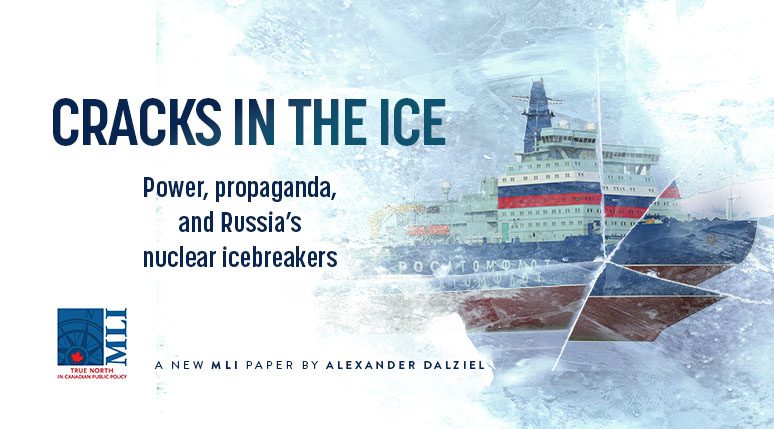
In Cracks in the Ice: Power, propaganda, and Russia’s nuclear icebreakers, Senior Fellow Alexander Dalziel investigates how Russia is using its nuclear icebreaker fleet to advance its Arctic ambitions, strengthen regime legitimacy, and project power. However, Vladimir Putin’s disastrous war against Ukraine is actively undermining his goal of regional dominance.
“Russia’s leaders invoke nuclear icebreakers as symbols of patriotism, national resilience, and part of a coordinated endeavour to mobilize the general populace in favour of Arctic development,” explains Dalziel.
“Touting their accomplishments and announcing plans to build more of them also distracts Russians from the costs in life and money of the disastrous war in Ukraine.”
According to Dalziel, as Canada and the United States accelerate investments in their own icebreaking capabilities, the Kremlin has promoted the Transarctic Transport Corridor (TTK) to reinforce its narrative that Russia is positioned to become the dominant commercial power in the Arctic.
The Kremlin markets itself as the premier Arctic partner for global powers such as China and India, making the case that its nuclear icebreaker fleet gives it a strategic advantage in shaping the region’s economic future.
While the Kremlin seeks to strengthen its control over Arctic shipping and shape the rules governing regional navigation and commerce, the challenge for Canada, the United States, and their allies will not simply be to match Russia’s icebreaker capacity, but to counter its efforts to set the economic and strategic terms of Arctic governance.
“The true way to match Russia’s illusions of Arctic dominance is to shore up our own efforts by building tight co-operation and interoperability across the democratic nations of the Arctic and its peoples,” writes Dalziel.
To learn more, read the full paper here:

Alexander Dalziel is a senior fellow at the Macdonald-Laurier Institute with over 20 years of experience in Canada’s national security community.
For further information, media are invited to contact:
Skander Belouizdad
Senior Media Relations Officer
(613) 482-8327 x111
Skander.belouizdad@macdonaldlaurier.ca