This article originally appeared in The Globe and Mail.
By Rob Huebert, July 16, 2026
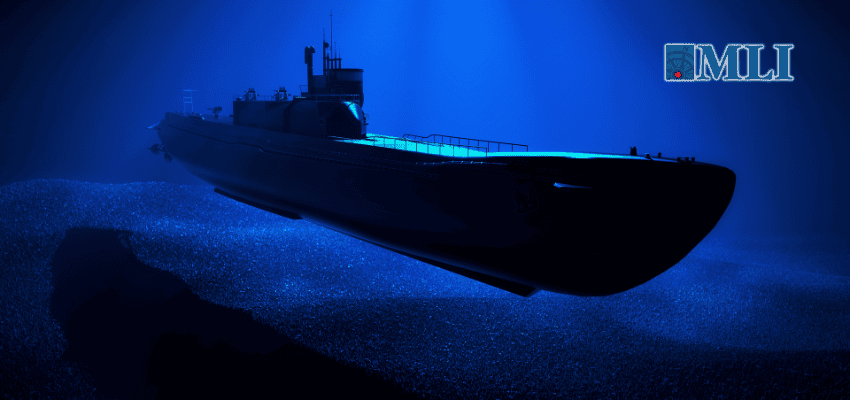
Prime Minister Mark Carney deserves credit for finally moving Canada toward replacing the Royal Canadian Navy’s aging Victoria-class submarines. After years of delay, his announcement that Canada will begin negotiations with Germany’s ThyssenKrupp Marine Systems to acquire up to 12 submarines is an important step forward.
However, the government’s announcement avoided the one question that should determine any submarine purchase: Is this the best war-fighting submarine available to defend Canada?
It’s a striking aspect of the conversation to leave out. While Ottawa must of course balance a variety of fiscal and industrial factors in its decision, effectiveness in combat must also be on the table. Yet the Prime Minister justified the decision largely in terms of economic benefits, industrial co-operation and strengthening Canada’s relationship with Europe.
Those are worthwhile objectives. But they are not why countries buy submarines.
Submarines are the ultimate war-fighting platform. They are not acquired for peacekeeping, showing the flag or routine constabulary duties: They exist to deter an enemy from attacking Canada and its allies. If deterrence fails, they are designed to find, track and sink enemy warships and submarines while remaining hidden. Their combat capability – not their industrial benefits – must therefore be the primary criterion in deciding which submarine Canada acquires.
No military should choose a fighter aircraft, a tank or a frigate without first asking which system offers the greatest combat capability. The same standard should apply to what is arguably the most lethal platform in the Royal Canadian Navy.
Yet that was the one issue the government chose not to discuss. Canadians were given no explanation of how the German submarine compares with competing designs in stealth, endurance, survivability, sensors, weapons, range or under-ice operations. We were not told how the Royal Canadian Navy assessed the competing designs or why the German submarine emerged as the preferred choice, militarily speaking. Instead, Canadians were simply asked to accept that the government has selected the right one without explaining why it is the best submarine for fighting and winning at sea.
There is a second concern that is just as troubling: timing. The strategic environment has deteriorated while Canada debated replacing its submarines. Russia continues to modernize its navy and expand its submarine fleet. China is building the world’s largest navy at remarkable speed. Strategic competition in the Arctic is intensifying. Yet even under the government’s most optimistic timetable, Canada will not begin receiving its new submarines until the early 2030s, and the fleet will not be complete until well into the 2040s. Our adversaries are unlikely to postpone their military ambitions until Canada’s procurement process is finished.
The need for a new submarine fleet is hardly new. Ottawa recognized the requirement long before the Trudeau government’s 2017 defence policy, Strong, Secure, Engaged, formally committed Canada to replacing the Victoria-class submarines. Yet nearly a decade later, Canada is only now beginning negotiations.
It is equally important to understand what was announced. Canada has not decided to buy German submarines; it has decided to negotiate with ThyssenKrupp Marine Systems. According to the Prime Minister, those negotiations could take between six and 18 months. If they fail, Canada will reopen discussions with the South Korean firm Hanwha Ocean. Even if negotiations are successful, the first submarine is expected around 2032.
Mr. Carney has shown that governments can move quickly when they choose to do so. That inevitably raises a difficult question: Has nearly a decade of delay by successive governments left Canada trying to prepare for tomorrow’s wars on yesterday’s timeline?
Beginning negotiations is an important and long-overdue step. But announcements are not enough. Canadians deserve to know not only that the government is buying submarines, but why it believes this design is the most capable war-fighting submarine available – and whether Canada has waited so long that even the best submarine may arrive too late.
Rob Huebert is a senior fellow at the Macdonald-Laurier Institute and professor of political science at the University of Calgary.