Tuesday, July 21, 2026
No Result
View All Result
  • Media
Macdonald-Laurier Institute
  • Home
  • About
    • Who We Are
    • Who Makes MLI Work
    • Fifteenth Anniversary
  • Experts
    • Experts Directory
    • In Memoriam
  • Issues
    • Domestic Policy
      • Economic Policy
      • Justice
      • Rights and Freedoms
      • Assisted Suicide (MAID)
      • Health Care
      • COVID-19
      • Gender Identity
      • Canada’s Political Tradition
      • AI, Technology and Innovation
      • Media and Telecoms
      • Housing
      • Immigration
      • Agriculture and Agri-Food
      • Competition Policy
    • Energy Policy
      • Energy
      • Environment
    • Foreign Policy
      • Israel-Hamas War
      • Ukraine
      • Taiwan
      • China
      • Europe and Russia
      • Indo-Pacific
      • Middle East and North Africa
      • North America
      • Foreign Interference
      • National Defence
      • National Security
      • Foreign Affairs
    • Indigenous Affairs
  • Projects
    • CNAPS (Center for North American Prosperity and Security)
    • The Promised Land
    • Dragon at the door
    • Justice Report Card
    • DisInfoWatch.org
    • Managing Indigenous Prosperity
    • Judicial Foundations
    • Landmark Cases Council
    • Closing Canada’s Border, Policing, and Legal Gaps
    • Reforming the University
    • Digital Policy & Connectivity
    • Defending The Marketplace of Ideas
    • Letter to a minister
    • Past Projects
      • The Great Energy Crisis
      • Canada on top of the world
      • Double Trouble
      • Canada and the Indo-Pacific Initiative
      • The Transatlantic Program
      • COVID Misery Index
        • Provincial COVID Misery Index
        • Beyond Lockdown
        • COVID and after: A mandate for recovery
      • Speak for Ourselves
      • The Eavesdropping Dragon: Huawei
      • Talkin’ in the Free World with Mariam Memarsadeghi
      • An Intellectual Property Strategy for Canada
      • Munk Senior Fellows
      • A Mandate for Canada
      • Confederation Series
      • Fiscal Reform
      • The Canadian Century project
      • Fixing Canadian health care
      • Internal trade
      • From a mandate for change
      • Size of government in Canada
      • Straight Talk
      • Labour Market Report
      • Leading Economic Indicator
      • Centre for Advancing Canada’s Interests Abroad
      • Indigenous Prosperity at a Crossroads
        • Aboriginal Canada and Natural Resources
  • Events
    • Voices that Inspire: The Macdonald-Laurier Vancouver Speaker Series
    • Upcoming Events
    • Past Events
      • MLI Dinners
      • Great Canadian Debates
  • Latest News
  • Libraries
    • Columns
    • Commentary
    • Papers
    • Books
    • Video
  • Donate
  • Home
  • About
    • Who We Are
    • Who Makes MLI Work
    • Fifteenth Anniversary
  • Experts
    • Experts Directory
    • In Memoriam
  • Issues
    • Domestic Policy
      • Economic Policy
      • Justice
      • Rights and Freedoms
      • Assisted Suicide (MAID)
      • Health Care
      • COVID-19
      • Gender Identity
      • Canada’s Political Tradition
      • AI, Technology and Innovation
      • Media and Telecoms
      • Housing
      • Immigration
      • Agriculture and Agri-Food
      • Competition Policy
    • Energy Policy
      • Energy
      • Environment
    • Foreign Policy
      • Israel-Hamas War
      • Ukraine
      • Taiwan
      • China
      • Europe and Russia
      • Indo-Pacific
      • Middle East and North Africa
      • North America
      • Foreign Interference
      • National Defence
      • National Security
      • Foreign Affairs
    • Indigenous Affairs
  • Projects
    • CNAPS (Center for North American Prosperity and Security)
    • The Promised Land
    • Dragon at the door
    • Justice Report Card
    • DisInfoWatch.org
    • Managing Indigenous Prosperity
    • Judicial Foundations
    • Landmark Cases Council
    • Closing Canada’s Border, Policing, and Legal Gaps
    • Reforming the University
    • Digital Policy & Connectivity
    • Defending The Marketplace of Ideas
    • Letter to a minister
    • Past Projects
      • The Great Energy Crisis
      • Canada on top of the world
      • Double Trouble
      • Canada and the Indo-Pacific Initiative
      • The Transatlantic Program
      • COVID Misery Index
        • Provincial COVID Misery Index
        • Beyond Lockdown
        • COVID and after: A mandate for recovery
      • Speak for Ourselves
      • The Eavesdropping Dragon: Huawei
      • Talkin’ in the Free World with Mariam Memarsadeghi
      • An Intellectual Property Strategy for Canada
      • Munk Senior Fellows
      • A Mandate for Canada
      • Confederation Series
      • Fiscal Reform
      • The Canadian Century project
      • Fixing Canadian health care
      • Internal trade
      • From a mandate for change
      • Size of government in Canada
      • Straight Talk
      • Labour Market Report
      • Leading Economic Indicator
      • Centre for Advancing Canada’s Interests Abroad
      • Indigenous Prosperity at a Crossroads
        • Aboriginal Canada and Natural Resources
  • Events
    • Voices that Inspire: The Macdonald-Laurier Vancouver Speaker Series
    • Upcoming Events
    • Past Events
      • MLI Dinners
      • Great Canadian Debates
  • Latest News
  • Libraries
    • Columns
    • Commentary
    • Papers
    • Books
    • Video
  • Donate
No Result
View All Result
Macdonald-Laurier Institute

The West must confront the Muslim Brotherhood: Casey Babb for Inside Policy

Despite the dangers they pose, and the terrorist organizations they support, the Muslim Brotherhood remains one of the most destructive but poorly understood groups in the world.

July 21, 2026
in Back Issues, National Security, Inside Policy, Foreign Policy, Latest News, The Promised Land, Middle East and North Africa, Israel-Hamas War, Casey Babb
Reading Time: 4 mins read
A A
The West must confront the Muslim Brotherhood: Casey Babb for Inside Policy

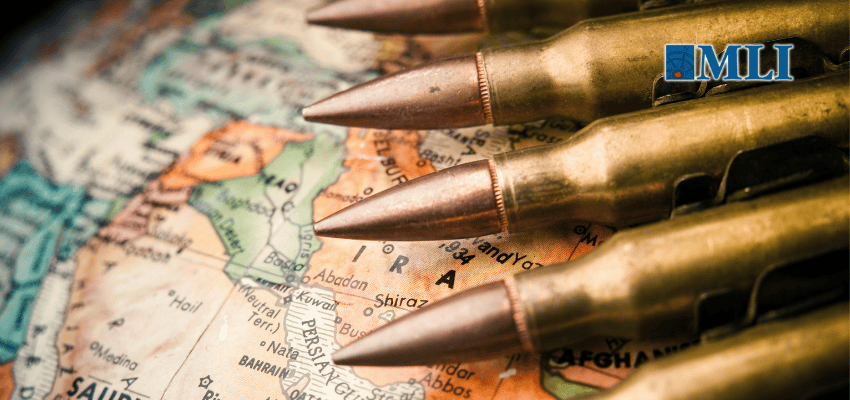
Image via Canva.

By Casey Babb, July 21, 2026

Western governments have spent years targeting terrorist groups while leaving the movement that inspired many of them largely untouched.

For nearly a century, the Muslim Brotherhood has been operating throughout most Western countries, insidiously working to change the social, cultural, political, and religious fabric of nations like the United States, Canada, Great Britain, and Germany. And yet, despite the dangers they pose, and the terrorist organizations they support, the Brotherhood remains one of the most destructive but poorly understood groups in the world. For the sake of Western liberal democracies, more must be done to constrict its operations, and ultimately, to shut it down.

Established in 1928 by Egyptian Imam Hassan al-Banna, the goal of the Muslim Brotherhood has been to establish a global caliphate and to implement Sharia law, not only throughout the Middle East, but globally. Indeed, Dr. Lorenzo Vidino, the world’s foremost expert on the Brotherhood and the director of the Program on Extremism at The George Washington University, has explained that the Brotherhood “… views Islam as a complete and all-embracing system, governing all aspects of private and public life. It advocates a bottom-up, gradual Islamization of society that would eventually lead to the formation of a purely Islamic society and political entity.”

However, from the earliest days of the Brotherhood, the means by which this vision would be achieved were left deliberately ambiguous — a flexibility that has allowed the organization to present itself, in different contexts, as a moderate civil society actor, a political party, a charitable network, or an armed resistance movement, depending on what the moment required. This ideological shape-shifting is not incidental to the Brotherhood’s strategy. It is the strategy.

The organization’s most visible legacy is the network of groups it has spawned or inspired. Hamas, which carried out the October 7, 2023, massacre in Israel — the deadliest attack on Jews since the Holocaust — emerged directly from the Palestinian branch of the Brotherhood. Al-Qaeda’s foundational theorist, Sayyid Qutb, was a Brotherhood member whose prison writings became the intellectual blueprint for jihadist violence worldwide. Ayman al-Zawahiri, who led Al-Qaeda for years following Osama bin Laden’s death, emerged from the Egyptian Islamist milieu the Brotherhood created and cultivated. These, of course, are not coincidences. Rather, they are the predictable products of an organization that consistently generates the ideological conditions in which violence and extremism flourishes.

In the West, the Brotherhood’s operations are subtler and harder to spot, but no less significant. Its network of affiliated mosques, student associations, and advocacy organizations has given it a footprint across North America, Western Europe, and beyond. These institutions do not typically announce their Brotherhood affiliation — the organizational structure is deliberately designed to maintain plausible deniability. What they do, consistently, though, is promote an interpretation of Islam that is hostile to pluralism, critical of Western civic values, and oriented toward the long-term Islamization of the societies in which they operate. This is not the assessment of “Islamophobes.” It is the well-documented conclusion of counterterrorism officials, internationally recognized scholars, investigative journalists, and former Brotherhood members who have spoken publicly about the organization’s internal goals.

Outside of the Middle East and the West, the Brotherhood has been no less destructive.

In Sudan, the Brotherhood’s influence has been among the most catastrophic anywhere in the world. The organization was central to the 1989 coup that brought Omar al-Bashir to power — a regime that went on to commit genocide in Darfur, shelter Osama bin Laden in the early 1990s, and subject its population to decades of brutality justified in the language of Islamic governance. The Brotherhood-aligned National Islamic Front and its successor organization dominated Sudanese politics for thirty years, leaving the country economically devastated, internationally isolated, and ethnically fractured. The civil war that erupted in April 2023 between the Sudanese Armed Forces and the Rapid Support Forces has claimed tens of thousands of lives and displaced millions — a catastrophe with roots that run directly through the political culture the Brotherhood cultivated and exploited.

The people paying the price for the Brotherhood’s decades of influence in Sudan are not just vulnerable, they’re desperate: subsistence farmers, displaced women and children, communities in Darfur that have already survived one genocide and now face another. The situation is catastrophic.

This is the point that tends to get lost in Western debates about the Brotherhood, which often centre narrowly on the threat to Western populations. The Brotherhood’s activities harm the most vulnerable people in the world most acutely. The communities in Egypt, Libya, Tunisia, Sudan, Gaza, and elsewhere that have lived under Brotherhood-influenced governance have not experienced a moderate, pragmatic form of political Islam. They have experienced corruption, repression, the suppression of women and minorities, and the steady erosion of the civic institutions that make decent, human living possible.

So, what should be done about them? Many argue that designating the Brotherhood as a terrorist organization should be the first step. However, evidentiary complexity around its decentralized structure could make formal designation — or at least enforcing designation — nearly impossible. What would make more sense, though, is a serious and sustained effort to understand the Brotherhood’s financial networks, its institutional presence, and the mechanisms by which it exercises influence in communities across the democratic world. This requires intelligence resources, prosecutorial will, and a political culture willing to engage honestly with a threat that some find uncomfortable to name. It means investigating charities. Monitoring the activities, rhetoric, and individuals involved with certain religious institutions known to espouse extremist ideology. It means looking into the backgrounds and business of people, even in positions of power and influence, who may have a nexus to the Brotherhood. Crucially, it means caring more about the future of our societies than about political correctness, or being labelled something.

The Brotherhood has spent a century perfecting the art of operating in the spaces between visibility and invisibility — present enough to build power, obscure enough to avoid accountability. The West has spent much of that century looking the other way. The mounting evidence of where that approach leads — in Gaza, in Darfur, in the counterterrorism files of a dozen Western intelligence services — suggests it is past time for a reckoning.

The Brotherhood isn’t exactly hiding. We just haven’t looked for them hard enough.


Casey Babb is director of The Promised Land Project at the Macdonald-Laurier Institute and a fellow with the Institute for National Security Studies in Tel Aviv.

Related Posts

Chinese EVs are high-risk lightning rods in a metal box. Do we really want them?: Daniel Dorman in The Globe and Mail
Energy

Chinese EVs are high-risk lightning rods in a metal box. Do we really want them?: Daniel Dorman in The Globe and Mail

July 21, 2026
Turkey in NATO is a challenge with no easy solution: Alexander Lanoszka for Inside Policy
Europe and Russia

Turkey in NATO is a challenge with no easy solution: Alexander Lanoszka for Inside Policy

July 20, 2026
Why Canadian courts are striking down mandatory minimum sentences for some of the worst crimes imaginable: Christine Van Geyn in The Hub
Landmark Cases Council

Why Canadian courts are striking down mandatory minimum sentences for some of the worst crimes imaginable: Christine Van Geyn in The Hub

July 20, 2026

Newsletter Signup

  Thank you for Signing Up
  Please correct the marked field(s) below.
Email Address  *
1,true,6,Contact Email,2
First Name *
1,true,1,First Name,2
Last Name *
1,true,1,Last Name,2
*
*Required Fields

Follow us on

Macdonald-Laurier Institute

323 Chapel Street, Suite #300
Ottawa, Ontario, K1N 7Z2 Canada

613.482.8327

info@macdonaldlaurier.ca
MLI directory

Support Us

Support the Macdonald-Laurier Institute to help ensure that Canada is one of the best governed countries in the world. Click below to learn more or become a sponsor.

Support Us

  • Inside Policy Magazine
  • Annual Reports
  • Jobs
  • Privacy Policy

© 2023 Macdonald-Laurier Institute. All Rights reserved.

This site uses cookies. By continuing to browse the site you are agreeing to our use of cookies.

Privacy Preference Center

Consent Management

Necessary

Advertising

Analytics

Other

No Result
View All Result
  • Home
  • About
    • Who We Are
    • Who Makes MLI Work
    • Fifteenth Anniversary
  • Experts
    • Experts Directory
    • In Memoriam
  • Issues
    • Domestic Policy
      • Economic Policy
      • Justice
      • Rights and Freedoms
      • Assisted Suicide (MAID)
      • Health Care
      • COVID-19
      • Gender Identity
      • Canada’s Political Tradition
      • AI, Technology and Innovation
      • Media and Telecoms
      • Housing
      • Immigration
      • Agriculture and Agri-Food
      • Competition Policy
    • Energy Policy
      • Energy
      • Environment
    • Foreign Policy
      • Israel-Hamas War
      • Ukraine
      • Taiwan
      • China
      • Europe and Russia
      • Indo-Pacific
      • Middle East and North Africa
      • North America
      • Foreign Interference
      • National Defence
      • National Security
      • Foreign Affairs
    • Indigenous Affairs
  • Projects
    • CNAPS (Center for North American Prosperity and Security)
    • The Promised Land
    • Dragon at the door
    • Justice Report Card
    • DisInfoWatch.org
    • Managing Indigenous Prosperity
    • Judicial Foundations
    • Landmark Cases Council
    • Closing Canada’s Border, Policing, and Legal Gaps
    • Reforming the University
    • Digital Policy & Connectivity
    • Defending The Marketplace of Ideas
    • Letter to a minister
    • Past Projects
      • The Great Energy Crisis
      • Canada on top of the world
      • Double Trouble
      • Canada and the Indo-Pacific Initiative
      • The Transatlantic Program
      • COVID Misery Index
      • Speak for Ourselves
      • The Eavesdropping Dragon: Huawei
      • Talkin’ in the Free World with Mariam Memarsadeghi
      • An Intellectual Property Strategy for Canada
      • Munk Senior Fellows
      • A Mandate for Canada
      • Confederation Series
      • Fiscal Reform
      • The Canadian Century project
      • Fixing Canadian health care
      • Internal trade
      • From a mandate for change
      • Size of government in Canada
      • Straight Talk
      • Labour Market Report
      • Leading Economic Indicator
      • Centre for Advancing Canada’s Interests Abroad
      • Indigenous Prosperity at a Crossroads
  • Events
    • Voices that Inspire: The Macdonald-Laurier Vancouver Speaker Series
    • Upcoming Events
    • Past Events
      • MLI Dinners
      • Great Canadian Debates
  • Latest News
  • Libraries
    • Columns
    • Commentary
    • Papers
    • Books
    • Video
  • Donate

© 2023 Macdonald-Laurier Institute. All Rights reserved.