Friday, July 10, 2026
No Result
View All Result
  • Media
Macdonald-Laurier Institute
  • Home
  • About
    • Who We Are
    • Who Makes MLI Work
    • Fifteenth Anniversary
  • Experts
    • Experts Directory
    • In Memoriam
  • Issues
    • Domestic Policy
      • Economic Policy
      • Justice
      • Rights and Freedoms
      • Assisted Suicide (MAID)
      • Health Care
      • COVID-19
      • Gender Identity
      • Canada’s Political Tradition
      • AI, Technology and Innovation
      • Media and Telecoms
      • Housing
      • Immigration
      • Agriculture and Agri-Food
      • Competition Policy
    • Energy Policy
      • Energy
      • Environment
    • Foreign Policy
      • Israel-Hamas War
      • Ukraine
      • Taiwan
      • China
      • Europe and Russia
      • Indo-Pacific
      • Middle East and North Africa
      • North America
      • Foreign Interference
      • National Defence
      • National Security
      • Foreign Affairs
    • Indigenous Affairs
  • Projects
    • CNAPS (Center for North American Prosperity and Security)
    • Justice Report Card
    • The Promised Land
    • Dragon at the door
    • Canada on top of the world
    • Letter to a minister
    • The Great Energy Crisis
    • DisInfoWatch.org
    • Managing Indigenous Prosperity
    • Judicial Foundations
    • Landmark Cases Council
    • Closing Canada’s Border, Policing, and Legal Gaps
    • Defending The Marketplace of Ideas
    • Reforming the University
    • Digital Policy & Connectivity
    • Past Projects
      • Double Trouble
      • Canada and the Indo-Pacific Initiative
      • The Transatlantic Program
      • COVID Misery Index
        • Provincial COVID Misery Index
        • Beyond Lockdown
        • COVID and after: A mandate for recovery
      • Speak for Ourselves
      • The Eavesdropping Dragon: Huawei
      • Talkin’ in the Free World with Mariam Memarsadeghi
      • An Intellectual Property Strategy for Canada
      • Munk Senior Fellows
      • A Mandate for Canada
      • Confederation Series
      • Fiscal Reform
      • The Canadian Century project
      • Fixing Canadian health care
      • Internal trade
      • From a mandate for change
      • Size of government in Canada
      • Straight Talk
      • Labour Market Report
      • Leading Economic Indicator
      • Centre for Advancing Canada’s Interests Abroad
      • Indigenous Prosperity at a Crossroads
        • Aboriginal Canada and Natural Resources
  • Events
    • Voices that Inspire: The Macdonald-Laurier Vancouver Speaker Series
    • Upcoming Events
    • Past Events
      • MLI Dinners
      • Great Canadian Debates
  • Latest News
  • Libraries
    • Columns
    • Commentary
    • Papers
    • Books
    • Video
  • Donate
  • Home
  • About
    • Who We Are
    • Who Makes MLI Work
    • Fifteenth Anniversary
  • Experts
    • Experts Directory
    • In Memoriam
  • Issues
    • Domestic Policy
      • Economic Policy
      • Justice
      • Rights and Freedoms
      • Assisted Suicide (MAID)
      • Health Care
      • COVID-19
      • Gender Identity
      • Canada’s Political Tradition
      • AI, Technology and Innovation
      • Media and Telecoms
      • Housing
      • Immigration
      • Agriculture and Agri-Food
      • Competition Policy
    • Energy Policy
      • Energy
      • Environment
    • Foreign Policy
      • Israel-Hamas War
      • Ukraine
      • Taiwan
      • China
      • Europe and Russia
      • Indo-Pacific
      • Middle East and North Africa
      • North America
      • Foreign Interference
      • National Defence
      • National Security
      • Foreign Affairs
    • Indigenous Affairs
  • Projects
    • CNAPS (Center for North American Prosperity and Security)
    • Justice Report Card
    • The Promised Land
    • Dragon at the door
    • Canada on top of the world
    • Letter to a minister
    • The Great Energy Crisis
    • DisInfoWatch.org
    • Managing Indigenous Prosperity
    • Judicial Foundations
    • Landmark Cases Council
    • Closing Canada’s Border, Policing, and Legal Gaps
    • Defending The Marketplace of Ideas
    • Reforming the University
    • Digital Policy & Connectivity
    • Past Projects
      • Double Trouble
      • Canada and the Indo-Pacific Initiative
      • The Transatlantic Program
      • COVID Misery Index
        • Provincial COVID Misery Index
        • Beyond Lockdown
        • COVID and after: A mandate for recovery
      • Speak for Ourselves
      • The Eavesdropping Dragon: Huawei
      • Talkin’ in the Free World with Mariam Memarsadeghi
      • An Intellectual Property Strategy for Canada
      • Munk Senior Fellows
      • A Mandate for Canada
      • Confederation Series
      • Fiscal Reform
      • The Canadian Century project
      • Fixing Canadian health care
      • Internal trade
      • From a mandate for change
      • Size of government in Canada
      • Straight Talk
      • Labour Market Report
      • Leading Economic Indicator
      • Centre for Advancing Canada’s Interests Abroad
      • Indigenous Prosperity at a Crossroads
        • Aboriginal Canada and Natural Resources
  • Events
    • Voices that Inspire: The Macdonald-Laurier Vancouver Speaker Series
    • Upcoming Events
    • Past Events
      • MLI Dinners
      • Great Canadian Debates
  • Latest News
  • Libraries
    • Columns
    • Commentary
    • Papers
    • Books
    • Video
  • Donate
No Result
View All Result
Macdonald-Laurier Institute

The real agenda in Ankara – Managing Trump, spending the money, and minding the gap: Balkan Devlen for the CDA Institute

For the Carney government there is a strong role for Canada to play as the “other North American country” within a more European-led NATO.

July 10, 2026
in Foreign Affairs, National Defence, Latest News, Columns, Foreign Policy, In the Media, Europe and Russia, Middle East and North Africa, Balkan Devlen
Reading Time: 4 mins read
A A
The real agenda in Ankara – Managing Trump, spending the money, and minding the gap: Balkan Devlen for the CDA Institute

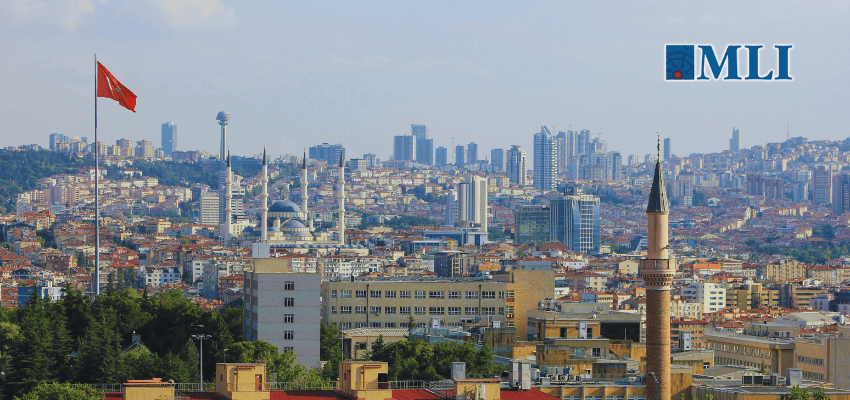
Image via Canva.

This article originally appeared in CDA Institute.

By Balkan Devlen, July 10, 2026

As NATO leaders gathered in Ankara this week for the Alliance’s 36th summit, the official agenda spoke of defence investment, industrial production, and support for Ukraine. The real agenda was different. Three alliance-wide issues shaped this Summit.

First, avoiding open confrontation. The Summit was designed to be short, heavy on announcements, and light on opportunities for public rupture. It is worth being candid about what these gatherings have become. Ever since Donald Trump returned to the White House, the primary purpose of any NATO Summit has been, first and foremost, to avoid a rupture with him. Everything else is secondary: the choreography, the list of deliverables, the carefully calibrated flattery–Secretary General Mark Rutte’s recent catch phrase “The Trump Trillion” being the latest example.

This is not a criticism of Rutte, who faces a delicate balancing act. It is a recognition that alliance management now consumes diplomatic energy that should be spent on deterring Russia. Success in Ankara will be measured less by what is decided than by what is avoided.

The second issue is whether Allies can actually spend the money they committed to at the Hague last year; the much-vaunted 5 per cent of GDP pledge — 3.5 per cent on hard defence, 1.5 per cent on defence-adjacent spending. The debate now is about how fast that money will be spent, and, more importantly, what actual capabilities it will buy. Significant uncertainty remains, however, whether those commitments will be met in time.

Prime Minister Carney, for instance, claimed at CANSEC in May that Canada will reach 4 percent of GDP in total defence spending by the end of the decade. The details are sparse: the government has refused to release the data behind that claim. Europe, for its part, is running into serious problems rapidly expanding its defence industrial capacity, and its flagship programs keep stumbling. Last month, Germany and France finally pulled the plug on the fighter jet at the heart of their Future Combat Air System — Europe’s most ambitious defence project, estimated at €80-100 billion — after nearly a decade of industrial squabbling between Dassault and Airbus. Two weeks later, Berlin cancelled its roughly €10 billion F126 frigate program, the largest surface combatant project in postwar German naval history, after the shipbuilder admitted it could deliver neither on time nor on budget, with cost-to-complete estimates ballooning toward €18 billion.

Unfortunately, these are not isolated procurement mishaps but symptoms of a defence industrial base and a politico-strategic culture that atrophied over three decades of the peace dividend and cannot be rebuilt by communiqué.

The primary constraint is political. ECFR’s latest pan-European poll, conducted in May across 15 countries, found that while Europeans increasingly favour higher defence spending in the abstract, a plurality oppose prioritizing defence when forced to choose against other public spending — with outright majorities against in Germany, Italy, and Spain. Europeans want to be defended; they are far less enthusiastic about trading welfare, health, and education spending for it. It is reasonable to expect similar shifts in public opinion in Canada as the eventual trade-offs become clearer to the public. Any government that ignores this will find populists on both flanks ready to exploit the grievance.

The third issue follows from the second: how fast can European NATO develop the capabilities that reduce its reliance on the United States? The concern — rarely stated this bluntly in public — is that America’s slow conventional decoupling from European defence will create a vulnerability gap. Washington has already announced phased withdrawals of military assets from Europe. If the Americans withdraw faster than the Europeans can fill the gap, there will be a window — perhaps years long — in which Europe is neither defended by America nor able to defend itself against a reconstituting Russian threat.

Everyone in Ankara understands that the future of NATO will be more European — in fielded forces, in command and control, and in leadership. The question is not whether but how fast, and whether the timelines of American withdrawal and European capability development can be synchronized. This is also why non-EU allies, particularly the United Kingdom and Turkey, have become central to the equation. Turkey’s defence industry, manpower, and geography make it indispensable to any serious European defence architecture, whatever discomfort that causes in certain European capitals, and despite its budgetary challenges, the UK remains a key cornerstone of NATO, from deployments in the Eastern Flank to nuclear deterrence.

For the Carney government there is a strong role for Canada to play as the “other North American country” within a more European-led NATO. Canada as a founding member of a European-led capability coalition within NATO, with Canadian industrial content, is the story Carney wants to tell in Ankara.

For that purpose the most important announcement of the week came the day before the Summit, dockside in Halifax, when Prime Minister Carney named TKMS as the preferred supplier for up to 12 new submarines — the largest defence procurement in Canadian history. We can expect Carney to re-announce it in Ankara, and with good reason: choosing the German-Norwegian Type 212CD embeds Canada in a European production line and signals commitment to the defence of the Arctic and the North Atlantic, alongside NATO partners Germany and Norway.

This closer integration with the European defence ecosystem was reinforced on the Summit’s first day, when NATO announced it will negotiate to buy up to 10 Saab GlobalEye early warning aircraft, built on Bombardier jets manufactured in Toronto. This follows Canada’s decision in May to acquire six GlobalEye aircraft..

However, a note of caution is warranted. Both the submarines and the GlobalEye procurements have yet to reach contract negotiations. This process will take months, possibly longer, and there may yet be bumps in the road on price, workshare, technology transfer, and delivery schedules. Potential roadblocks also remain on the American side when it comes to incorporating GlobalEye to NORAD functions. Canada’s procurement history counsels humility. Preferred-supplier announcements are not contracts, and contracts are not capabilities.

The Hague announced commitments. Ankara was about finding ways to turn those commitments into actual policy and capability, all while keeping the president of the United States content. On that last count, at least, success can be declared. As for the rest, the jury will be out for years. That, in the end, was the theme of this entire Summit.


Balkan Devlen is a Senior Fellow at the Macdonald-Laurier Institute and the Montreal Institute for Global Security, and the co-founder of Pendulum Geopolitical Advisory.


Source: CDA Institute

Related Posts

Hamas announced it is stepping down in Gaza. It’s time for Canada to step up: Brian Cox in National Newswatch
The Promised Land

Hamas announced it is stepping down in Gaza. It’s time for Canada to step up: Brian Cox in National Newswatch

July 10, 2026
Canada is finally embracing its energy potential: Heather Exner-Pirot in The Hub
Resources

Canada is finally embracing its energy potential: Heather Exner-Pirot in The Hub

July 10, 2026
Canada’s bail debate suffers from a data deficit: Troy Riddell for Inside Policy
Justice

Canada’s bail debate suffers from a data deficit: Troy Riddell for Inside Policy

July 10, 2026

Newsletter Signup

  Thank you for Signing Up
  Please correct the marked field(s) below.
Email Address  *
1,true,6,Contact Email,2
First Name *
1,true,1,First Name,2
Last Name *
1,true,1,Last Name,2
*
*Required Fields

Follow us on

Macdonald-Laurier Institute

323 Chapel Street, Suite #300
Ottawa, Ontario, K1N 7Z2 Canada

613.482.8327

info@macdonaldlaurier.ca
MLI directory

Support Us

Support the Macdonald-Laurier Institute to help ensure that Canada is one of the best governed countries in the world. Click below to learn more or become a sponsor.

Support Us

  • Inside Policy Magazine
  • Annual Reports
  • Jobs
  • Privacy Policy

© 2023 Macdonald-Laurier Institute. All Rights reserved.

This site uses cookies. By continuing to browse the site you are agreeing to our use of cookies.

Privacy Preference Center

Consent Management

Necessary

Advertising

Analytics

Other

No Result
View All Result
  • Home
  • About
    • Who We Are
    • Who Makes MLI Work
    • Fifteenth Anniversary
  • Experts
    • Experts Directory
    • In Memoriam
  • Issues
    • Domestic Policy
      • Economic Policy
      • Justice
      • Rights and Freedoms
      • Assisted Suicide (MAID)
      • Health Care
      • COVID-19
      • Gender Identity
      • Canada’s Political Tradition
      • AI, Technology and Innovation
      • Media and Telecoms
      • Housing
      • Immigration
      • Agriculture and Agri-Food
      • Competition Policy
    • Energy Policy
      • Energy
      • Environment
    • Foreign Policy
      • Israel-Hamas War
      • Ukraine
      • Taiwan
      • China
      • Europe and Russia
      • Indo-Pacific
      • Middle East and North Africa
      • North America
      • Foreign Interference
      • National Defence
      • National Security
      • Foreign Affairs
    • Indigenous Affairs
  • Projects
    • CNAPS (Center for North American Prosperity and Security)
    • Justice Report Card
    • The Promised Land
    • Dragon at the door
    • Canada on top of the world
    • Letter to a minister
    • The Great Energy Crisis
    • DisInfoWatch.org
    • Managing Indigenous Prosperity
    • Judicial Foundations
    • Landmark Cases Council
    • Closing Canada’s Border, Policing, and Legal Gaps
    • Defending The Marketplace of Ideas
    • Reforming the University
    • Digital Policy & Connectivity
    • Past Projects
      • Double Trouble
      • Canada and the Indo-Pacific Initiative
      • The Transatlantic Program
      • COVID Misery Index
      • Speak for Ourselves
      • The Eavesdropping Dragon: Huawei
      • Talkin’ in the Free World with Mariam Memarsadeghi
      • An Intellectual Property Strategy for Canada
      • Munk Senior Fellows
      • A Mandate for Canada
      • Confederation Series
      • Fiscal Reform
      • The Canadian Century project
      • Fixing Canadian health care
      • Internal trade
      • From a mandate for change
      • Size of government in Canada
      • Straight Talk
      • Labour Market Report
      • Leading Economic Indicator
      • Centre for Advancing Canada’s Interests Abroad
      • Indigenous Prosperity at a Crossroads
  • Events
    • Voices that Inspire: The Macdonald-Laurier Vancouver Speaker Series
    • Upcoming Events
    • Past Events
      • MLI Dinners
      • Great Canadian Debates
  • Latest News
  • Libraries
    • Columns
    • Commentary
    • Papers
    • Books
    • Video
  • Donate

© 2023 Macdonald-Laurier Institute. All Rights reserved.