
Monday, June 29, 2026
No Result
View All Result
  • Media
Macdonald-Laurier Institute
  • Home
  • About
    • Who We Are
    • Who Makes MLI Work
    • Fifteenth Anniversary
  • Experts
    • Experts Directory
    • In Memoriam
  • Issues
    • Domestic Policy
      • Economic Policy
      • Justice
      • Rights and Freedoms
      • Assisted Suicide (MAID)
      • Health Care
      • COVID-19
      • Gender Identity
      • Canada’s Political Tradition
      • AI, Technology and Innovation
      • Media and Telecoms
      • Housing
      • Immigration
      • Agriculture and Agri-Food
      • Competition Policy
    • Energy Policy
      • Energy
      • Environment
    • Foreign Policy
      • Israel-Hamas War
      • Ukraine
      • Taiwan
      • China
      • Europe and Russia
      • Indo-Pacific
      • Middle East and North Africa
      • North America
      • Foreign Interference
      • National Defence
      • National Security
      • Foreign Affairs
    • Indigenous Affairs
  • Projects
    • CNAPS (Center for North American Prosperity and Security)
    • Justice Report Card
    • The Promised Land
    • Dragon at the door
    • Canada on top of the world
    • Letter to a minister
    • The Great Energy Crisis
    • DisInfoWatch.org
    • Managing Indigenous Prosperity
    • Judicial Foundations
    • Landmark Cases Council
    • Defending The Marketplace of Ideas
    • Reforming the University
    • Digital Policy & Connectivity
    • Past Projects
      • Double Trouble
      • Canada and the Indo-Pacific Initiative
      • The Transatlantic Program
      • COVID Misery Index
        • Provincial COVID Misery Index
        • Beyond Lockdown
        • COVID and after: A mandate for recovery
      • Speak for Ourselves
      • The Eavesdropping Dragon: Huawei
      • Talkin’ in the Free World with Mariam Memarsadeghi
      • An Intellectual Property Strategy for Canada
      • Munk Senior Fellows
      • A Mandate for Canada
      • Confederation Series
      • Fiscal Reform
      • The Canadian Century project
      • Fixing Canadian health care
      • Internal trade
      • From a mandate for change
      • Size of government in Canada
      • Straight Talk
      • Labour Market Report
      • Leading Economic Indicator
      • Centre for Advancing Canada’s Interests Abroad
      • Indigenous Prosperity at a Crossroads
        • Aboriginal Canada and Natural Resources
  • Events
    • Voices that Inspire: The Macdonald-Laurier Vancouver Speaker Series
    • Upcoming Events
    • Past Events
      • MLI Dinners
      • Great Canadian Debates
  • Latest News
  • Libraries
    • Columns
    • Commentary
    • Papers
    • Books
    • Video
  • Donate
  • Home
  • About
    • Who We Are
    • Who Makes MLI Work
    • Fifteenth Anniversary
  • Experts
    • Experts Directory
    • In Memoriam
  • Issues
    • Domestic Policy
      • Economic Policy
      • Justice
      • Rights and Freedoms
      • Assisted Suicide (MAID)
      • Health Care
      • COVID-19
      • Gender Identity
      • Canada’s Political Tradition
      • AI, Technology and Innovation
      • Media and Telecoms
      • Housing
      • Immigration
      • Agriculture and Agri-Food
      • Competition Policy
    • Energy Policy
      • Energy
      • Environment
    • Foreign Policy
      • Israel-Hamas War
      • Ukraine
      • Taiwan
      • China
      • Europe and Russia
      • Indo-Pacific
      • Middle East and North Africa
      • North America
      • Foreign Interference
      • National Defence
      • National Security
      • Foreign Affairs
    • Indigenous Affairs
  • Projects
    • CNAPS (Center for North American Prosperity and Security)
    • Justice Report Card
    • The Promised Land
    • Dragon at the door
    • Canada on top of the world
    • Letter to a minister
    • The Great Energy Crisis
    • DisInfoWatch.org
    • Managing Indigenous Prosperity
    • Judicial Foundations
    • Landmark Cases Council
    • Defending The Marketplace of Ideas
    • Reforming the University
    • Digital Policy & Connectivity
    • Past Projects
      • Double Trouble
      • Canada and the Indo-Pacific Initiative
      • The Transatlantic Program
      • COVID Misery Index
        • Provincial COVID Misery Index
        • Beyond Lockdown
        • COVID and after: A mandate for recovery
      • Speak for Ourselves
      • The Eavesdropping Dragon: Huawei
      • Talkin’ in the Free World with Mariam Memarsadeghi
      • An Intellectual Property Strategy for Canada
      • Munk Senior Fellows
      • A Mandate for Canada
      • Confederation Series
      • Fiscal Reform
      • The Canadian Century project
      • Fixing Canadian health care
      • Internal trade
      • From a mandate for change
      • Size of government in Canada
      • Straight Talk
      • Labour Market Report
      • Leading Economic Indicator
      • Centre for Advancing Canada’s Interests Abroad
      • Indigenous Prosperity at a Crossroads
        • Aboriginal Canada and Natural Resources
  • Events
    • Voices that Inspire: The Macdonald-Laurier Vancouver Speaker Series
    • Upcoming Events
    • Past Events
      • MLI Dinners
      • Great Canadian Debates
  • Latest News
  • Libraries
    • Columns
    • Commentary
    • Papers
    • Books
    • Video
  • Donate
No Result
View All Result
Macdonald-Laurier Institute

The case for a Canadian foreign intelligence service: Tobias T. Gibson and Patrick James in National Newswatch

Canada remains one of the few major players without an independent foreign intelligence service (IFIS), underscoring a lack of urgency that is no longer tenable.

June 29, 2026
in National Security, Latest News, Columns, Foreign Policy, In the Media
Reading Time: 5 mins read
A A
The case for a Canadian foreign intelligence service: Tobias T. Gibson and Patrick James in National Newswatch

Image via Canva.

This article originally appeared in National Newswatch.

By Tobias T. Gibson and Patrick James, June 29, 2026

The Arctic, to cite perhaps the most obvious matter of concern, is no longer a distant frontier. It is an emerging theatre of competition where intelligence – on rivals’ capabilities, intentions, and movements – will shape outcomes.

Canada’s chief rivals in the Arctic, Russia and China, are moving aggressively in the region. Ottawa has responded by ramping up Arctic spending – expanding infrastructure, adding icebreakers, and strengthening the Canadian Armed Forces’ presence and capabilities in the North.

Ottawa now acknowledges the need to “[bridge] the intelligence gap” and has begun adding capacity, including the ThothX radio telescope. But sensors are not a strategy. Protecting Canadian interests – and “strengthen[ing] Canadian national resilience to counter malign influence and activities of foreign powers” – requires what Canada still lacks: a capable IFIS.

As we argue in our recent academic paper (currently under review), an independent foreign intelligence service would enhance the defensive and economic efforts already underway. Among these advantages, intelligence collected by such an agency would benefit several areas of Canadian society, including economic sectors and political interests. There are several recent examples of incursions into Canadian private sector interests, including the recent revelation that the Chinese Salt Typhoon group probably targeted Canadian telecommunications. All members of the Five Eyes jointly suggested that China’s effort to access Western intellectual property “goes well beyond traditional espionage.” The CSE warned that China is “the most comprehensive cyber security threat facing Canada today.” Protecting Canadian economic interests would safeguard manufacturing and tourism, among others, which are key to Canada’s economic future. In an effort to protect homegrown IP and manufacturing, an IFIS “would provide Ottawa with earlier, first-hand warning of threats to Canadian citizens abroad or of terrorist plots at home” and “remain one step ahead of such threats by collecting intelligence on foreign industrial intentions, state-sponsored cyber activity, and front company activity against Canadian firms. Such information could shape national policy, inform corporate defences, and prevent costly breaches.”

An IFIS would also have global political benefits and may help inform Canada’s future relations with the UN, EU, NATO, the Arctic Council, and other international bodies – as well as negotiations with individual partners. Creating an IFIS could have offensive benefits. Canada, like Australia, “could use intelligence to support its Indo-Pacific policy, its policy on diversifying trade, and its resource security policies.” Some commentators have suggested that Canada’s decision to create a foreign intelligence service may impact its place globally. “For Canada, the choice is stark. It can be on the fringes of the world of intelligence, or it can build up the capabilities that a G7 economy, Arctic state, and Indo-Pacific player should rightly possess.” We agree.

The need for an IFIS is glaring. As the federal government notes in its recent Canada’s Arctic Foreign Policy, “[a]dversaries and competitors also employ disinformation and influence campaigns, malicious cyber operations, and espionage and foreign interference activities to target Canadians, including northerners.” Competitors are increasingly active in the region, often in ways of genuine concern for Canadian economic and defence interests. For example, “we are seeing greater Russian activity in our air approaches, and a growing number of Chinese vessels and surveillance platforms are mapping and collecting data about the region.” Over time, these efforts could pose a real threat to Canadian sovereignty.

As the Arctic grows hotter – both literally and metaphorically – an IFIS would provide the information needed to navigate future negotiations and potential conflict. The region is drawing sustained attention not only from major powers, but from fellow middle powers as well. Without an IFIS, Canada simply won’t be a leader in a region it calls vital.

Some criticsclaim an IFIS would be too expensive. Certainly, creating an effective IFIS will take time and money. However, the same can also be said about other ongoing efforts to buttress Canadian defence. Since it will take time, beginning now is the best option. And, although it will be expensive, supporting an IFIS is a cost-effective use of state power. If Prime Minister Mark Carney is right, and the global order is ruptured, then having a Canadian IFIS, designed to support its independence, is an imperative, not a luxury.

A new independent foreign intelligence service should be firmly rooted in Canadian values, including a distinct national identity, economic and civic freedom, and a commitment to acting as an “honest broker” abroad. There are models to follow, including the democratic norm of creating a bifurcated intelligence community, with one domestic intelligence agency and one dedicated to foreign intelligence. Examples are found in the United Kingdom, Australia, Israel, Austria, Estonia, France, India, and Romania.

Importantly, we remain optimistic that the “rupture” in the global order can be repaired. Perhaps, like a broken bone, the rupture site can even be rebuilt more strongly than before the schism. If, in this best-case scenario, the Canadian-US alliance can return to a path forward, then the creation of a Canadian IFIS can support all of the “Five Eyes” intelligence sharing pact.


Tobias T. Gibson is a professor of Political Science and Security Studies at Westminster College, located in Fulton, Missouri. 

Patrick James is the Dornsife Dean’s Professor Emeritus of International Relations at the University of Southern California and a visiting professor at the University of Georgia.
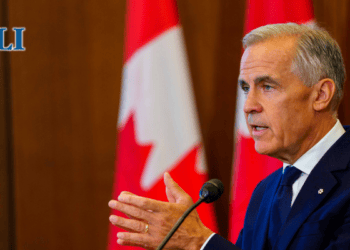

Source: National Newswatch
Tags: Patrick JamesTobias T. Gibson

Related Posts

As U.S.-Iranian relations thaw, Ottawa must remember the Islamic regime is not our friend: Sheryl Saperia and Ches W. Parsons in the National Post
The Promised Land

As U.S.-Iranian relations thaw, Ottawa must remember the Islamic regime is not our friend: Sheryl Saperia and Ches W. Parsons in the National Post

June 29, 2026
Cracks in the ice: Power, propaganda, and Russia’s nuclear icebreakers
Arctic

Cracks in the ice: Power, propaganda, and Russia’s nuclear icebreakers

June 29, 2026
The MAID committee got it right on mental illness. But Parliament must go further?: Ramona Coelho in The Globe and Mail
Domestic Policy

The MAID committee got it right on mental illness. But Parliament must go further?: Ramona Coelho in The Globe and Mail

June 29, 2026
Next Post
Cracks in the ice: Power, propaganda, and Russia’s nuclear icebreakers

Cracks in the ice: Power, propaganda, and Russia’s nuclear icebreakers

Newsletter Signup

  Thank you for Signing Up
  Please correct the marked field(s) below.
Email Address  *
1,true,6,Contact Email,2
First Name *
1,true,1,First Name,2
Last Name *
1,true,1,Last Name,2
*
*Required Fields

Follow us on

Macdonald-Laurier Institute

323 Chapel Street, Suite #300
Ottawa, Ontario, K1N 7Z2 Canada

613.482.8327

info@macdonaldlaurier.ca
MLI directory

Support Us

Support the Macdonald-Laurier Institute to help ensure that Canada is one of the best governed countries in the world. Click below to learn more or become a sponsor.

Support Us

  • Inside Policy Magazine
  • Annual Reports
  • Jobs
  • Privacy Policy

© 2023 Macdonald-Laurier Institute. All Rights reserved.

This site uses cookies. By continuing to browse the site you are agreeing to our use of cookies.

Privacy Preference Center

Consent Management

Necessary

Advertising

Analytics

Other

No Result
View All Result
  • Home
  • About
    • Who We Are
    • Who Makes MLI Work
    • Fifteenth Anniversary
  • Experts
    • Experts Directory
    • In Memoriam
  • Issues
    • Domestic Policy
      • Economic Policy
      • Justice
      • Rights and Freedoms
      • Assisted Suicide (MAID)
      • Health Care
      • COVID-19
      • Gender Identity
      • Canada’s Political Tradition
      • AI, Technology and Innovation
      • Media and Telecoms
      • Housing
      • Immigration
      • Agriculture and Agri-Food
      • Competition Policy
    • Energy Policy
      • Energy
      • Environment
    • Foreign Policy
      • Israel-Hamas War
      • Ukraine
      • Taiwan
      • China
      • Europe and Russia
      • Indo-Pacific
      • Middle East and North Africa
      • North America
      • Foreign Interference
      • National Defence
      • National Security
      • Foreign Affairs
    • Indigenous Affairs
  • Projects
    • CNAPS (Center for North American Prosperity and Security)
    • Justice Report Card
    • The Promised Land
    • Dragon at the door
    • Canada on top of the world
    • Letter to a minister
    • The Great Energy Crisis
    • DisInfoWatch.org
    • Managing Indigenous Prosperity
    • Judicial Foundations
    • Landmark Cases Council
    • Defending The Marketplace of Ideas
    • Reforming the University
    • Digital Policy & Connectivity
    • Past Projects
      • Double Trouble
      • Canada and the Indo-Pacific Initiative
      • The Transatlantic Program
      • COVID Misery Index
      • Speak for Ourselves
      • The Eavesdropping Dragon: Huawei
      • Talkin’ in the Free World with Mariam Memarsadeghi
      • An Intellectual Property Strategy for Canada
      • Munk Senior Fellows
      • A Mandate for Canada
      • Confederation Series
      • Fiscal Reform
      • The Canadian Century project
      • Fixing Canadian health care
      • Internal trade
      • From a mandate for change
      • Size of government in Canada
      • Straight Talk
      • Labour Market Report
      • Leading Economic Indicator
      • Centre for Advancing Canada’s Interests Abroad
      • Indigenous Prosperity at a Crossroads
  • Events
    • Voices that Inspire: The Macdonald-Laurier Vancouver Speaker Series
    • Upcoming Events
    • Past Events
      • MLI Dinners
      • Great Canadian Debates
  • Latest News
  • Libraries
    • Columns
    • Commentary
    • Papers
    • Books
    • Video
  • Donate

© 2023 Macdonald-Laurier Institute. All Rights reserved.