Wednesday, January 14, 2026
No Result
View All Result
  • Media
Macdonald-Laurier Institute
  • Home
  • About
    • Who We Are
    • Who Makes MLI Work
    • Fifteenth Anniversary
  • Experts
    • Experts Directory
    • In Memoriam
  • Issues
    • Domestic Policy
      • Economic Policy
      • Justice
      • Rights and Freedoms
      • Assisted Suicide (MAID)
      • Health Care
      • COVID-19
      • Gender Identity
      • Canada’s Political Tradition
      • AI, Technology and Innovation
      • Media and Telecoms
      • Housing
      • Immigration
      • Agriculture and Agri-Food
      • Competition Policy
    • Energy Policy
      • Energy
      • Environment
    • Foreign Policy
      • Israel-Hamas War
      • Ukraine
      • Taiwan
      • China
      • Europe and Russia
      • Indo-Pacific
      • Middle East and North Africa
      • North America
      • Foreign Interference
      • National Defence
      • National Security
      • Foreign Affairs
    • Indigenous Affairs
  • Projects
    • CNAPS (Center for North American Prosperity and Security)
    • The Promised Land
    • Voices that Inspire: The Macdonald-Laurier Vancouver Speaker Series
    • Dragon at the door
    • Canada on top of the world
    • Letter to a minister
    • Justice Report Card
    • The Great Energy Crisis
    • DisInfoWatch.org
    • Managing Indigenous Prosperity
    • Judicial Foundations
    • Landmark Cases Council
    • Defending The Marketplace of Ideas
    • Reforming the University
    • Past Projects
      • Digital Policy & Connectivity
      • Double Trouble
      • Canada and the Indo-Pacific Initiative
      • The Transatlantic Program
      • COVID Misery Index
        • Provincial COVID Misery Index
        • Beyond Lockdown
        • COVID and after: A mandate for recovery
      • Speak for Ourselves
      • The Eavesdropping Dragon: Huawei
      • Talkin’ in the Free World with Mariam Memarsadeghi
      • An Intellectual Property Strategy for Canada
      • Munk Senior Fellows
      • A Mandate for Canada
      • Confederation Series
      • Fiscal Reform
      • The Canadian Century project
      • Fixing Canadian health care
      • Internal trade
      • From a mandate for change
      • Size of government in Canada
      • Straight Talk
      • Labour Market Report
      • Leading Economic Indicator
      • Centre for Advancing Canada’s Interests Abroad
      • Indigenous Prosperity at a Crossroads
        • Aboriginal Canada and Natural Resources
  • Events
    • Upcoming Events
    • Past Events
      • MLI Dinners
      • Great Canadian Debates
  • Latest News
  • Libraries
    • Columns
    • Commentary
    • Papers
    • Books
    • Video
  • Donate
  • Home
  • About
    • Who We Are
    • Who Makes MLI Work
    • Fifteenth Anniversary
  • Experts
    • Experts Directory
    • In Memoriam
  • Issues
    • Domestic Policy
      • Economic Policy
      • Justice
      • Rights and Freedoms
      • Assisted Suicide (MAID)
      • Health Care
      • COVID-19
      • Gender Identity
      • Canada’s Political Tradition
      • AI, Technology and Innovation
      • Media and Telecoms
      • Housing
      • Immigration
      • Agriculture and Agri-Food
      • Competition Policy
    • Energy Policy
      • Energy
      • Environment
    • Foreign Policy
      • Israel-Hamas War
      • Ukraine
      • Taiwan
      • China
      • Europe and Russia
      • Indo-Pacific
      • Middle East and North Africa
      • North America
      • Foreign Interference
      • National Defence
      • National Security
      • Foreign Affairs
    • Indigenous Affairs
  • Projects
    • CNAPS (Center for North American Prosperity and Security)
    • The Promised Land
    • Voices that Inspire: The Macdonald-Laurier Vancouver Speaker Series
    • Dragon at the door
    • Canada on top of the world
    • Letter to a minister
    • Justice Report Card
    • The Great Energy Crisis
    • DisInfoWatch.org
    • Managing Indigenous Prosperity
    • Judicial Foundations
    • Landmark Cases Council
    • Defending The Marketplace of Ideas
    • Reforming the University
    • Past Projects
      • Digital Policy & Connectivity
      • Double Trouble
      • Canada and the Indo-Pacific Initiative
      • The Transatlantic Program
      • COVID Misery Index
        • Provincial COVID Misery Index
        • Beyond Lockdown
        • COVID and after: A mandate for recovery
      • Speak for Ourselves
      • The Eavesdropping Dragon: Huawei
      • Talkin’ in the Free World with Mariam Memarsadeghi
      • An Intellectual Property Strategy for Canada
      • Munk Senior Fellows
      • A Mandate for Canada
      • Confederation Series
      • Fiscal Reform
      • The Canadian Century project
      • Fixing Canadian health care
      • Internal trade
      • From a mandate for change
      • Size of government in Canada
      • Straight Talk
      • Labour Market Report
      • Leading Economic Indicator
      • Centre for Advancing Canada’s Interests Abroad
      • Indigenous Prosperity at a Crossroads
        • Aboriginal Canada and Natural Resources
  • Events
    • Upcoming Events
    • Past Events
      • MLI Dinners
      • Great Canadian Debates
  • Latest News
  • Libraries
    • Columns
    • Commentary
    • Papers
    • Books
    • Video
  • Donate
No Result
View All Result
Macdonald-Laurier Institute

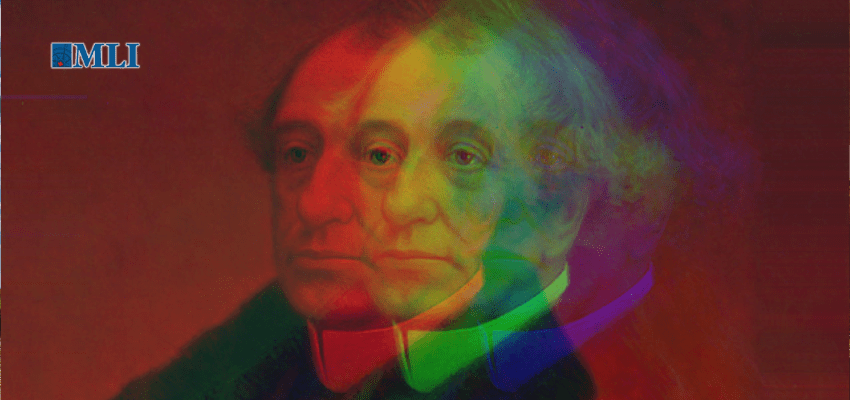
Sir John A. Macdonald and the Liberal-Conservative tradition Canada forgot: Patrice Dutil for Inside Policy

Macdonald mattered because he demonstrated that nations are made by political choice, institutional design, and hard compromise – not by moral purity or ideological certainty.

January 8, 2026
in Domestic Policy, Back Issues, Inside Policy, Latest News, Columns, Political Tradition, Patrice Dutil
Reading Time: 3 mins read
A A
Sir John A. Macdonald and the Liberal-Conservative tradition Canada forgot: Patrice Dutil for Inside Policy

By Patrice Dutil, January 8, 2026

Sir John A. Macdonald, whose 211th birthday will be marked on January 11, is often treated today as a problem to be managed rather than a statesman to be understood. In public debate, he appears either as a heroic founder beyond criticism or as a symbol of historic injustice best removed from view. Both approaches miss something essential. For much of the 20th century, Macdonald was neither untouchable nor disposable. He was a central reference point in how Canadian conservatives understood their own tradition – and their responsibilities in government.

Early biographies of Macdonald emphasized his pragmatism above all else. He was portrayed as a gifted tactician, a coalition-builder, and a politician who survived by compromise rather than conviction. The fact that he ran on a “Liberal-Conservative” ticket in 1867 and until 1891, demonstrated this vividly. On this view, Macdonald left no clear ideological legacy – only the practical achievement of Confederation itself. Conservatism, such as it was, seemed accidental.

That interpretation changed as Canada entered the age of mass democracy, economic crisis, and regional fragmentation. Faced with socialism, populism, and continental liberalism, conservatives went looking for roots. They found them in Macdonald. Confederation was reinterpreted not simply as a constitutional bargain, but as a conservative achievement: a political order designed to balance democracy with stability, local autonomy with national authority, and popular government with durable institutions.

At the centre of this reimagining stood the National Policy. Twentieth-century conservatives treated Macdonald’s tariffs, railway building, and western expansion as evidence that conservatism had never been synonymous with laissez-faire. Macdonald understood that markets alone do not build nations. Economic life, left entirely to abstraction and ideology, could just as easily dissolve social bonds as strengthen them. The state, properly directed, was a nation-building instrument – capable of integrating regions, anchoring sovereignty, and managing social change without surrendering to class warfare.

This reading mattered because it offered conservatives an alternative to both socialism and libertarianism. During the inter-war period and the Great Depression, Macdonald was invoked to justify active government without revolutionary ambition. The creation of the Canadian Radio Broadcasting Commission and the Bank of Canada attested to this. Conservatism, in this tradition, accepted intervention not to remake human nature, but to preserve political order and national cohesion. It was a politics of stewardship, not utopia.

Macdonald’s imperial outlook was also reframed. Rather than being seen as a colonial subordinate, he was cast as a constitutional realist who understood the value of inherited institutions. Empire, in this telling, was not about domination but about law, parliamentary government, and strategic independence – particularly from American influence. This allowed conservatives to connect Macdonald to a broader defence of sovereignty and national distinctiveness, even as Canada’s formal imperial ties faded.

Yet these twentieth-century reconstructions were selective. Like many national founders, Macdonald was remembered for what later generations needed him to be. His record on supporting Indigenous communities and ensuring a distinct Canadian voice in foreign policy was rarely foregrounded in celebratory accounts, mostly because they were undocumented. He functioned less as a moral exemplar than as a symbol of continuity – a reminder that Canada had been built deliberately, through politics, not inevitability.

By the mid-twentieth century, Macdonald had become a conservative touchstone: proof that Canada’s political tradition valued moderation, institutions, and national unity over ideology and abstraction. But this consensus did not survive the cultural and historical revolutions of the 1960s and after. New scholarship focused on some of the darker consequences of 19th-century nation-building. As moral judgment displaced political interpretation in the 21st century, Macdonald’s usefulness as a unifying symbol collapsed.

Today’s arguments over statues and street names often assume that Macdonald’s reputation was always contested in the same way it is now. It wasn’t. For decades, conservatives argued over how to interpret him, not whether to erase him. They treated history as a source of instruction, not merely accusation.

Recovering that older approach does not require whitewashing Macdonald’s failures or injustices. But it does require a recognition that Macdonald was an innovative policy entrepreneur who pursued a national purpose. Macdonald mattered because he demonstrated that nations are made by political choice, institutional design, and hard compromise – not by moral purity or ideological certainty.

If Canadian conservatism is to recover a sense of purpose that will rally a voting majority, it could do worse than to remember why Macdonald once mattered to it – not as a saint, but as a statesman who understood that governing means building, preserving, and sometimes restraining, rather than endlessly tearing down.


Patrice Dutil teaches politics and public administration at Toronto Metropolitan University and is a senior fellow at the Macdonald-Laurier Institute. His recent books include Sir John A. Macdonald and the Apocalyptic Year 1885, and Ballots and Brawls: The 1867 Canadian General Election.

Related Posts

Carney’s China gambit – Why Tokyo must come first: Stephen Nagy in National Newswatch
Indo-Pacific

Carney’s China gambit – Why Tokyo must come first: Stephen Nagy in National Newswatch

January 13, 2026
Israel flag
Inside Policy

Israel’s long wars—bracing for civilizational conflict in the Mideast: David M. Weinberg for Inside Policy

January 13, 2026
Fixing Canada’s broken immigration system – Presenting more data to Parliament: Michael Barutciski
Immigration

Fixing Canada’s broken immigration system – Presenting more data to Parliament: Michael Barutciski

January 13, 2026
Next Post
How immigration changes host countries: Garett Jones and Peter Copeland for Inside Policy Talks

How immigration changes host countries: Garett Jones and Peter Copeland for Inside Policy Talks

Newsletter Signup

  Thank you for Signing Up
  Please correct the marked field(s) below.
Email Address  *
1,true,6,Contact Email,2
First Name *
1,true,1,First Name,2
Last Name *
1,true,1,Last Name,2
*
*Required Fields

Follow us on

Macdonald-Laurier Institute

323 Chapel Street, Suite #300
Ottawa, Ontario, K1N 7Z2 Canada

613.482.8327

info@macdonaldlaurier.ca
MLI directory

Support Us

Support the Macdonald-Laurier Institute to help ensure that Canada is one of the best governed countries in the world. Click below to learn more or become a sponsor.

Support Us

  • Inside Policy Magazine
  • Annual Reports
  • Jobs
  • Privacy Policy

© 2023 Macdonald-Laurier Institute. All Rights reserved.

No Result
View All Result
  • Home
  • About
    • Who We Are
    • Who Makes MLI Work
    • Fifteenth Anniversary
  • Experts
    • Experts Directory
    • In Memoriam
  • Issues
    • Domestic Policy
      • Economic Policy
      • Justice
      • Rights and Freedoms
      • Assisted Suicide (MAID)
      • Health Care
      • COVID-19
      • Gender Identity
      • Canada’s Political Tradition
      • AI, Technology and Innovation
      • Media and Telecoms
      • Housing
      • Immigration
      • Agriculture and Agri-Food
      • Competition Policy
    • Energy Policy
      • Energy
      • Environment
    • Foreign Policy
      • Israel-Hamas War
      • Ukraine
      • Taiwan
      • China
      • Europe and Russia
      • Indo-Pacific
      • Middle East and North Africa
      • North America
      • Foreign Interference
      • National Defence
      • National Security
      • Foreign Affairs
    • Indigenous Affairs
  • Projects
    • CNAPS (Center for North American Prosperity and Security)
    • The Promised Land
    • Voices that Inspire: The Macdonald-Laurier Vancouver Speaker Series
    • Dragon at the door
    • Canada on top of the world
    • Letter to a minister
    • Justice Report Card
    • The Great Energy Crisis
    • DisInfoWatch.org
    • Managing Indigenous Prosperity
    • Judicial Foundations
    • Landmark Cases Council
    • Defending The Marketplace of Ideas
    • Reforming the University
    • Past Projects
      • Digital Policy & Connectivity
      • Double Trouble
      • Canada and the Indo-Pacific Initiative
      • The Transatlantic Program
      • COVID Misery Index
      • Speak for Ourselves
      • The Eavesdropping Dragon: Huawei
      • Talkin’ in the Free World with Mariam Memarsadeghi
      • An Intellectual Property Strategy for Canada
      • Munk Senior Fellows
      • A Mandate for Canada
      • Confederation Series
      • Fiscal Reform
      • The Canadian Century project
      • Fixing Canadian health care
      • Internal trade
      • From a mandate for change
      • Size of government in Canada
      • Straight Talk
      • Labour Market Report
      • Leading Economic Indicator
      • Centre for Advancing Canada’s Interests Abroad
      • Indigenous Prosperity at a Crossroads
  • Events
    • Upcoming Events
    • Past Events
      • MLI Dinners
      • Great Canadian Debates
  • Latest News
  • Libraries
    • Columns
    • Commentary
    • Papers
    • Books
    • Video
  • Donate

© 2023 Macdonald-Laurier Institute. All Rights reserved.