By Alan Kessel, September 19, 2025
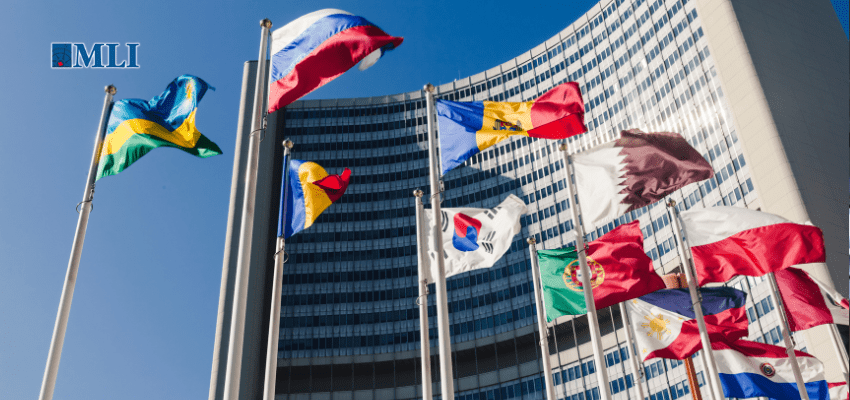
On September 12, 2025, an overwhelming majority at the United Nations General Assembly voted to endorse the creation of a Palestinian state – a move hailed by some as a moral corrective and by others as a pragmatic step toward peace. But sympathy, symbolism, and headlines are not substitutes for strategy.
This non-binding declaration will not free the hostages taken on October 7, 2023. It will not bring Israelis and Palestinians any closer to a durable two-state settlement. Instead, it rewards mass terror and teaches the world a deadly lesson: violence and hostage-taking pay.
The vote at the UN, large in number but small in consequence, hands a political prize to the very forces that made Gaza ungovernable. A General Assembly declaration can offer an on-paper blessing of state recognition, but it cannot create the institutions, the security, or the political legitimacy necessary for a viable state. Worse, when recognition is dissociated from the hard prerequisites of responsible governance, demilitarization, and the rule of law, it becomes a consolation prize for those who seized power by terror rather than earning it by consent.
The most urgent moral test is simple: will this resolution bring the hostages home? Nothing in the text compels their release. Hostage-taking is a criminal act; their return requires leverage, negotiation and, crucially, actors who can and will carry out an agreement. Rewarding the armed group that orchestrated the abductions sends precisely the opposite message. Rather than weakening the perpetrators’ hold, it risks cementing the idea that abductions and mass attacks are an effective way to extract political wins from the West.
 Advocates of immediate recognition claim it advances the two-state solution; in truth, it circumvents two crucial factors needed to make a Palestinian polity sustainable: accountable governance and security cooperation with Israel. You cannot create a viable state by fiat when one of the territories in question remains under the control of a militant organization that rejects the core premises of coexistence. Recognition divorced from the elimination of armed control and the establishment of accountable institutions is recognition of chaos, wrapped in diplomatic niceties.
For Canada, the vote was more than symbolic, it was self-inflicted damage. Successive governments – Conservative and Liberal alike – insisted that recognition could only come at the end of a negotiated settlement that guaranteed Israel’s security and created viable Palestinian institutions. That policy anchored Canada’s reputation as principled, even when it meant standing apart from UN majorities. By changing course, Ottawa has signalled that it is willing to abandon its own red lines for applause in New York.
That applause will fade; the loss of credibility will not. Once you show that your positions can be bent by international mood rather than anchored in principle, your voice is discounted. Canada has now made itself indistinguishable from the pack of states for whom recognition is a cost-free gesture. The price is not just diplomatic consistency, it is the trust of allies who expect Canada to stand firm when principles are on the line.
The West continues to imagine that “democratic elections” are the antidote to extremism, that the Palestinian voter, given a free and fair choice, will embrace moderation, coexistence, and responsible governance. But what if that is a delusion? What if the average Palestinian voter, when presented with the ballot box, chooses Hamas or a Hamas-like movement that channels grievance, antisemitism, and rejectionism?
It happened once already: Hamas won the 2006 elections in Gaza, not because it promised democracy but because it promised resistance. To assume that a new round of elections in Gaza or the West Bank would produce a liberal democratic alternative is to mistake Western aspiration for political reality. A democratic vote is only as healthy as the political culture that shapes it and, in a culture saturated with hate, that vote may simply legitimize the very extremism the West claims to oppose.
The danger here is not just in the Middle East. When terrorists see that hostage-taking and mass slaughter can yield international recognition, the rules of the game change. Instead of deterring terror, the UN vote legitimizes it as a pathway to political gain. That lesson will not be lost on groups elsewhere who see antisemitism and violent agitation as levers to force democratic governments to bend their policies.
There is also the corrosive domestic effect. In recent months, antisemitism has been wielded as a political tool to intimidate decision-makers and shape public policy. By rewarding the very actors who turned antisemitism into mass violence, this resolution risks normalizing that strategy in democratic societies. It emboldens those who claim that shouting down Jews, boycotting Jewish businesses, or targeting Jewish communities is a legitimate way to force governments into concessions.
Finally, there is the global stage. Russia, Iran, and China are watching carefully. What they will see in this resolution is confirmation that their long game of eroding Western solidarity is paying off. If the West cannot hold the line against terror in the Middle East, how credible will it be in defending Ukraine from Russia’s aggression, resisting Iran’s destabilizing networks, or standing up to China’s incremental encroachments? This vote risks signalling that the democratic world can be fractured, pressured, and worn down into self-defeat.
There is a place for symbolism in diplomacy. But symbols without a roadmap for implementation are dangerously seductive. The General Assembly can pass resolutions, but it cannot impose governance, reform institutions, or disarm militias. To imagine otherwise is to confuse moral posturing with statecraft. Symbolic recognition may feel good in the moment, but it will not lay roads in Gaza, build the ministries needed for a functioning state, or create the judicial and security frameworks that keep civilians safe.
If the genuine aim is a Palestinian state that can live at peace with Israel, the international community should insist on clear preconditions that go beyond ink on a UN page: a credible program for the removal of armed control from Palestinian territory, transparent elections that include independent monitoring, demobilization and reintegration of combatants, reconstruction tied to bona fide governance reforms, and a robust international stabilization force with a clear, enforceable mandate. Recognition should be the culminating act of a verified, irreversible process, not the opening salvo.
History will remember whether democracies stood for principles or pursued the cheap comfort of optics. If the vote at the UN is meant to demonstrate moral clarity, it has failed the most basic tests of responsibility: it makes nothing safer and rewards the very tactics that produce suffering. The West must not be taught by terror that coercion leads to concession. If we value the institutions, freedoms and security that define our civilization, we must insist that recognition be earned through peaceable, accountable means, not awarded as a prize to those who manufactured catastrophe.
Alan H. Kessel is a former assistant deputy minister at Global Affairs Canada. He is now a senior fellow at the Macdonald Laurier Institute.