By Avideh Motmaen-Far, June 18, 2026
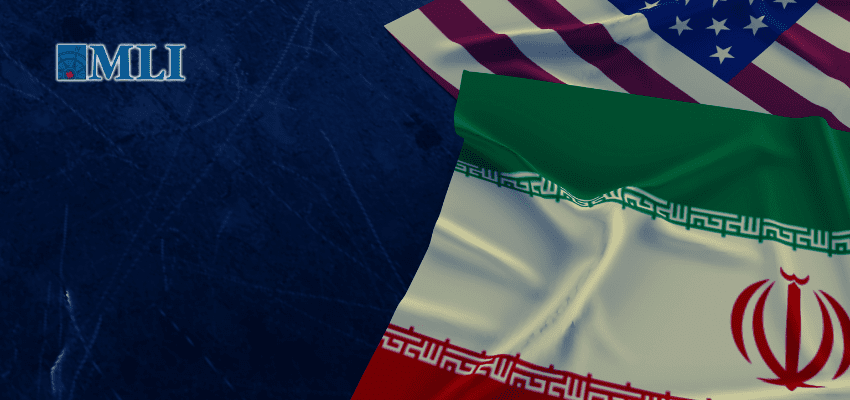
The United States and Iran have now signed a framework to end their months-long war – a conflict that was, in many ways, an extension of the Twelve-Day War between Israel and Iran in June 2025. United States President Donald Trump calls it peace. The young Iranians who staked everything on his promises know it by an older name: betrayal.
The agreement reopens the Strait of Hormuz, lifts oil and financial sanctions, and gives the Islamic Republic 60 days to negotiate over its stockpile of enriched uranium. Strip away the diplomatic language and the bargain is plain. A regime that was reeling – its economy in free fall, its skies cracked open, its people in the streets – receives cash, legitimacy and time. Its people receive nothing.
A paper promising peace
We have seen this before. In September 1938, British Prime Minister Neville Chamberlain returned from Munich waving a paper – and Anglo-German declaration co-signed by Chamberlain and Nazi leader Adolf Hitler – that promised “peace for our time.” London cheered. Winston Churchill, dismissed as a warmonger, saw the truth: “You were given the choice between war and dishonour. You chose dishonour, and you will have war.” Within a year, the prophecy was fulfilled in the rubble of Warsaw.
The comparison is not offered lightly, and no analogy is perfect. But the pattern is the same. A dictatorship is handed relief at the moment it is weakest, in return for promises it has every reason to break. Appeasement does not buy peace. It buys the aggressor time.
The promise Trump made
To see the betrayal, remember last winter. As Iran’s currency collapsed and protests spread from Tehran to a dozen cities, it was Trump who seized the megaphone. “Take over your institutions,” he told the demonstrators. “Help is on its way.” He declared America “locked and loaded” if the regime fired on its own people.
Those words landed on ground already soaked in sacrifice – the Woman, Life, Freedom uprising, the executions, the women jailed for uncovering their hair. Millions of Iranians let themselves believe that this time a superpower had their backs.
They were wrong. The same president who urged Iranians to topple their jailers is now signing a deal that refinances them. Sanctions relief will refill the coffers of the Revolutionary Guard – the institution that runs the prisons and points the rifles. The protesters who heard “help is on its way” appear nowhere in the text. Appeasement always pays the aggressor and bills the victim.
“But Trump bombed Iran”
Here the deal’s defenders raise their strongest objection. Trump did not appease Iran, they argue – he bombed it, and more than once. In June 2025, American B-2s flew Operation Midnight Hammer, striking the nuclear sites at Fordow, Natanz and Isfahan; this spring, Washington joined Israel in a second campaign against the regime. That is true, and it matters.
But weigh what the strikes achieved against what is now being done with the result. US officials claimed the program was set back two years; a leaked US intelligence assessment suggested the real delay was closer to a few months. Either way, force bought leverage. The tragedy is that Trump is now trading that leverage away for a signature and a 60-day clock the regime knows how to run out.
This is appeasement made worse by the bombing, not excused by it. Having proved he could strike Tehran, Trump is choosing not to press the advantage. He has even turned on the one ally who shares his stated goal, calling Israel’s President Benjamin Netanyahu a “very difficult guy” who nearly derailed the deal, while praising China’s Xi Jinping and Russia’s Vladimir Putin for helping close it. Chamberlain, too, believed he was being the reasonable one.
The strategy is as weak as the morality
Set the morality aside and the strategy still fails. Sixty days of talks over a uranium stockpile is not disarmament; it is a deadline. Cash is fungible. A government freed from economic siege does not buy bread for its people. It buys centrifuges, terror proxies, and prison guards. The likeliest result is not a disarmed Iran but a richer, more confident one – with the same nuclear ambitions and a freer hand to repress.
The Churchill of the hour
One Western leader has refused to applaud. Netanyahu has declined to make Israel a party to the deal. More telling, he speaks to Iranians directly, as no American president now dares, calling on “the Iranian people in all their diversity – Persians, Kurds, Azeris, Balochs” to seize “a new and free Iran.” For this he is mocked as the spoiler, the difficult man, the warmonger.
Be precise about that word. Churchill did not crave war; he loathed it, having seen it up close. What he grasped was that weakness invites the very catastrophe it hopes to avoid, and that firmness in peacetime is what spares the next generation a far bloodier reckoning. Netanyahu’s wager is the same: the lasting answer to Iran is not a paper signed with a regime that hates its own people. It is the freedom of those people – backed, not abandoned, by the democracies.
Where Canada comes in
This is where Canada should find its voice. Ottawa listed the Revolutionary Guard as a terrorist entity. It mourned the 176 people killed aboard Flight PS752, shot from the sky by this same regime in 2020. That clarity now needs a sequel.
Canada should refuse to lend its name, or its banks, to any bargain that strengthens Tehran while its prisons stay full. It should expand sanctions on the individuals who give the orders and pull the triggers. And it should amplify the voices of the Iranian diaspora – among the largest in the world – insisting in every forum it can reach that no peace built on the silence of the imprisoned deserves the name.
The Iranians who trusted Trump this winter are watching that trust dissolve into a handshake with their oppressors. They will remember who spoke for them and who sold them. So will history. Chamberlain was beloved in the autumn of 1938; it was the spring of 1939 that fixed his name forever. Trump was given the choice between war and dishonour. He has chosen dishonour. He should not be surprised by what comes next – and neither should we.
Avideh Motmaen-Far is president of the Council of Iranian Canadians and a writer and commentator on Iranian affairs and human rights.