Friday, February 6, 2026
No Result
View All Result
  • Media
Macdonald-Laurier Institute
  • Home
  • About
    • Who We Are
    • Who Makes MLI Work
    • Fifteenth Anniversary
  • Experts
    • Experts Directory
    • In Memoriam
  • Issues
    • Domestic Policy
      • Economic Policy
      • Justice
      • Rights and Freedoms
      • Assisted Suicide (MAID)
      • Health Care
      • COVID-19
      • Gender Identity
      • Canada’s Political Tradition
      • AI, Technology and Innovation
      • Media and Telecoms
      • Housing
      • Immigration
      • Agriculture and Agri-Food
      • Competition Policy
    • Energy Policy
      • Energy
      • Environment
    • Foreign Policy
      • Israel-Hamas War
      • Ukraine
      • Taiwan
      • China
      • Europe and Russia
      • Indo-Pacific
      • Middle East and North Africa
      • North America
      • Foreign Interference
      • National Defence
      • National Security
      • Foreign Affairs
    • Indigenous Affairs
  • Projects
    • CNAPS (Center for North American Prosperity and Security)
    • The Promised Land
    • Voices that Inspire: The Macdonald-Laurier Vancouver Speaker Series
    • Dragon at the door
    • Canada on top of the world
    • Letter to a minister
    • Justice Report Card
    • The Great Energy Crisis
    • DisInfoWatch.org
    • Managing Indigenous Prosperity
    • Judicial Foundations
    • Landmark Cases Council
    • Defending The Marketplace of Ideas
    • Reforming the University
    • Past Projects
      • Digital Policy & Connectivity
      • Double Trouble
      • Canada and the Indo-Pacific Initiative
      • The Transatlantic Program
      • COVID Misery Index
        • Provincial COVID Misery Index
        • Beyond Lockdown
        • COVID and after: A mandate for recovery
      • Speak for Ourselves
      • The Eavesdropping Dragon: Huawei
      • Talkin’ in the Free World with Mariam Memarsadeghi
      • An Intellectual Property Strategy for Canada
      • Munk Senior Fellows
      • A Mandate for Canada
      • Confederation Series
      • Fiscal Reform
      • The Canadian Century project
      • Fixing Canadian health care
      • Internal trade
      • From a mandate for change
      • Size of government in Canada
      • Straight Talk
      • Labour Market Report
      • Leading Economic Indicator
      • Centre for Advancing Canada’s Interests Abroad
      • Indigenous Prosperity at a Crossroads
        • Aboriginal Canada and Natural Resources
  • Events
    • Upcoming Events
    • Past Events
      • MLI Dinners
      • Great Canadian Debates
  • Latest News
  • Libraries
    • Columns
    • Commentary
    • Papers
    • Books
    • Video
  • Donate
  • Home
  • About
    • Who We Are
    • Who Makes MLI Work
    • Fifteenth Anniversary
  • Experts
    • Experts Directory
    • In Memoriam
  • Issues
    • Domestic Policy
      • Economic Policy
      • Justice
      • Rights and Freedoms
      • Assisted Suicide (MAID)
      • Health Care
      • COVID-19
      • Gender Identity
      • Canada’s Political Tradition
      • AI, Technology and Innovation
      • Media and Telecoms
      • Housing
      • Immigration
      • Agriculture and Agri-Food
      • Competition Policy
    • Energy Policy
      • Energy
      • Environment
    • Foreign Policy
      • Israel-Hamas War
      • Ukraine
      • Taiwan
      • China
      • Europe and Russia
      • Indo-Pacific
      • Middle East and North Africa
      • North America
      • Foreign Interference
      • National Defence
      • National Security
      • Foreign Affairs
    • Indigenous Affairs
  • Projects
    • CNAPS (Center for North American Prosperity and Security)
    • The Promised Land
    • Voices that Inspire: The Macdonald-Laurier Vancouver Speaker Series
    • Dragon at the door
    • Canada on top of the world
    • Letter to a minister
    • Justice Report Card
    • The Great Energy Crisis
    • DisInfoWatch.org
    • Managing Indigenous Prosperity
    • Judicial Foundations
    • Landmark Cases Council
    • Defending The Marketplace of Ideas
    • Reforming the University
    • Past Projects
      • Digital Policy & Connectivity
      • Double Trouble
      • Canada and the Indo-Pacific Initiative
      • The Transatlantic Program
      • COVID Misery Index
        • Provincial COVID Misery Index
        • Beyond Lockdown
        • COVID and after: A mandate for recovery
      • Speak for Ourselves
      • The Eavesdropping Dragon: Huawei
      • Talkin’ in the Free World with Mariam Memarsadeghi
      • An Intellectual Property Strategy for Canada
      • Munk Senior Fellows
      • A Mandate for Canada
      • Confederation Series
      • Fiscal Reform
      • The Canadian Century project
      • Fixing Canadian health care
      • Internal trade
      • From a mandate for change
      • Size of government in Canada
      • Straight Talk
      • Labour Market Report
      • Leading Economic Indicator
      • Centre for Advancing Canada’s Interests Abroad
      • Indigenous Prosperity at a Crossroads
        • Aboriginal Canada and Natural Resources
  • Events
    • Upcoming Events
    • Past Events
      • MLI Dinners
      • Great Canadian Debates
  • Latest News
  • Libraries
    • Columns
    • Commentary
    • Papers
    • Books
    • Video
  • Donate
No Result
View All Result
Macdonald-Laurier Institute

Memo to middle powers – Time for a reality check: Stephen Nagy in the Japan Times

Such states need to remember China offers stability but delivers coercion.

February 6, 2026
in Foreign Affairs, China: The dragon at the door, Latest News, Columns, Foreign Policy, Foreign Interference, In the Media, Indo-Pacific, Stephen Nagy
Reading Time: 5 mins read
A A
Memo to middle powers – Time for a reality check: Stephen Nagy in the Japan Times

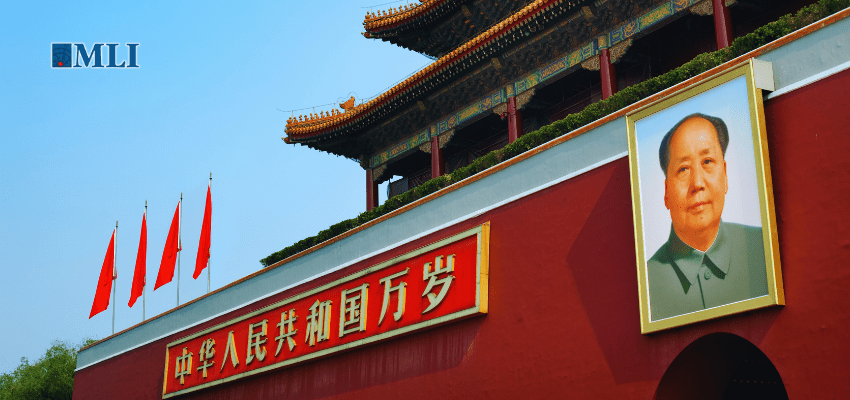
Image via Canva.

This article originally appeared in the Japan Times.

By Stephen Nagy, February 6, 2026

In Ottawa, Canadian Prime Minister Mark Carney’s Davos-style message lands as these speeches are meant to land: optimistic, forward-looking and reassuring.

In a world supposedly drifting toward multipolarity, the claim is that countries like Canada, Japan, Australia, South Korea and much of Europe can diversify partnerships, keep trade flowing and avoid being dragged into a great-power brawl.

It is a comforting idea. As strategy, it is incomplete.

Middle powers do not design the system they inhabit. They can maneuver inside it, but they cannot wish away the forces that set the boundaries of that maneuvering. What matters now is less whether the world is “multipolar” in an academic sense than whether Washington and Beijing behave as if it is — and whether Russia’s disruption, often enabled by its partnership with China, raises the costs of ambiguity.

On that score, the corridor for states that would prefer to keep one foot in each camp is narrowing because both major powers — meaning the U.S. and China — increasingly test loyalties through technology rules, export controls, sanctions regimes and security commitments.

Jennifer Lind, a professor of government at Dartmouth and author of “Sorry States: Apologies in International Politics,” claims that the system remains effectively bipolar. She suggests only the U.S. and China cross the historical threshold for great-power status; others remain influential but structurally subordinate. If that is right, “don’t make us choose” becomes less a principle than a plea.

Emma Ashford, a senior fellow at the Stimson Center and columnist at Foreign Policy, warns that Donald Trump-era unilateralism — tariffs, coercive leverage and weakened diplomacy — can leave allies unsure whether the U.S. is friend or foe, and can make China look steadier by comparison.

That anxiety is real. It is also a trap. The more middle powers read U.S. volatility as permanent decline, the more they will underinvest in alliance capacity and overinvest in hedging. That can become self-fulfilling: Washington sees free riding, doubts allied resolve and becomes still more transactional; Beijing sees hesitation, increases pressure and raises the price of resistance.

The temptation in Ottawa, Canberra, Tokyo, Seoul and Brussels is to treat American unpredictability as a reason to hedge away from U.S. reliance. But deterrence is not a supply chain. You can diversify semiconductor inputs; you cannot diversify a security guarantee on demand. Middle powers can and should reduce economic exposure to any single market, including China’s. They cannot “de-risk” their defense architectures from the United States without paying enormous costs and absorbing levels of uncertainty their publics are not prepared to price. Europe’s struggle to rebuild munitions stockpiles after Ukraine is a reminder that strategic autonomy is a multidecade bill.

Ashley Tellis, a senior fellow at the Carnegie Endowment for International Peace, has put forth a critique of India’s grand strategy that is instructive. He argues Washington has deliberately strengthened India’s capacity, largely because the U.S. sees a stronger India as useful in balancing China. Yet even India cannot contain China on its own, and India’s preference for strategic autonomy limits how tightly it will align. The implication for smaller middle powers is blunt: if India cannot substitute for the U.S. in balancing China, then Canada, Japan, Australia and European states certainly cannot. They may dislike Washington’s volatility but they cannot replace its capabilities, networks and deterrent role.

The rational response is not to pretend the U.S. guarantee can be hedged away. It is to make themselves critical allies — individually and collectively — so that even a transactional U.S. administration sees alliance as indispensable. That means measurable defense investment, deployable capabilities, secure supply chains, tighter intelligence posture and political seriousness about Indo-Pacific and Euro-Atlantic theaters as connected problems.

The counterargument deserves its due. The Trump administration has practiced a harsh, improvisational style: tariffs as a first resort; diplomacy that feels like leverage extraction; rhetoric that devalues multilateral institutions. It is easy to see why Beijing’s pitch — “we are stable, predictable, open for business” — sounds attractive to export-dependent economies fearing collateral damage in U.S.-China competition.

But the claim that China represents stability for middle powers collapses under scrutiny. Start with narrative control. A Strategic Resilience Group analysis of the Xinhua Institute report “Colonization of the Mind” shows how Beijing increasingly frames ordinary U.S. public diplomacy as cognitive warfare, blurring scholarly work, broadcasting and NGOs into a single moralized spectrum. The goal is to delegitimize Western messaging and provide partners a vocabulary to treat independent media and civil society as hostile capabilities.

Most damning is the track record of Beijing’s coercive diplomacy. A report by the Australian Strategic Policy Institute on China’s coercion catalogs 152 cases over a decade affecting 27 countries and the European Union, with a sharp rise since 2018. The methods range from trade restrictions and tourism bans to state-issued threats and arbitrary detention. Beijing often denies coercion while signaling it unmistakably; it uses ambiguity to keep targets off-balance; and it selects sectors that maximize pain while limiting domestic cost.

Even Chinese analysis sometimes concedes the dilemma. Yuan Sha of the China Institute of International Studies argues it is rational for Beijing to cultivate good relations with middle powers to prevent balancing coalitions, yet China repeatedly ends up in friction due to nationalism and sovereignty sensitivities. That matters because it suggests that even when Beijing recognizes the logic of reassurance, domestic incentives can pull it back toward punishment — especially when leaders fear looking weak on issues framed as national dignity.

The Persian parable of the scorpion and the frog comes to mind: The frog agrees to carry the scorpion across a river; halfway through, the scorpion stings; both begin to drown; and the scorpion explains, “It’s my nature.”

The point is not to reduce China to caricature. It is to recognize that political systems generate habits — especially when regime security is fused with national security and criticism is treated as a threat to be neutralized. A state that routinely uses coercion to protect party primacy may present itself as stable, but its stability is often conditional on others’ compliance. Middle powers that run to Beijing for refuge from Washington’s chaos risk discovering that commercial calm can flip to punishment once politics intrudes.

None of this implies middle powers can disengage from China. They cannot; their economies are intertwined. The choice is between naive engagement and hardened engagement: trading where interests align while reducing single-point dependencies, building collective countercoercion mechanisms and inoculating open societies against influence operations.

Middle powers must stop treating the U.S. alliance as something to balance against. Their ties with Washington run through technology ecosystems, finance, intelligence sharing and defense industrial cooperation. Even a difficult Washington remains the hub through which much of middle-power security flows. The durable answer to transactional U.S. politics is to reduce the temptation for Washington to be transactional — by making allied contributions so concrete and operationally essential that abandonment becomes costlier than commitment.

Yes, America has, at times, treated friends and allies carelessly. Yet for most middle powers today, the more relevant danger is not friendship but fantasy — the fantasy that they can outgrow the U.S. as their security underwriter or replace it with Beijing’s promises of “stability” while the Chinese Communist Party actively reshapes the international order to suit its one-party priorities.

Middle powers thus confront a difficult task: engaging China realistically, strengthening defenses against coercion and positioning themselves as indispensable partners to the United States — while widening strategic cooperation with India and other capable partners where interests align.

Davos speeches may soothe. Deterrence does not.


Stephen R. Nagy is professor of politics and international studies at the International Christian University. Concurrently, he holds appointments as a senior fellow and China project lead at the Macdonald-Laurier Institute and a visiting fellow at the Japan Institute for International Affairs. The title of his forthcoming book is “Japan as a Middle Power State: Navigating Ideological and Systemic Divides.”


Source: The Japan Times

Related Posts

No, Canada didn’t give the U.S. a trillion-dollar gift—but there’s still reason to worry: Trevor Tombe in The Hub
Economic Policy

Trade policy uncertainty is bad for investment and jobs: Jack Mintz in the Financial Post

February 6, 2026
Carney’s energy superpower talk isn’t cutting it—we need action: Heather Exner-Pirot in The Hub
Energy

Carney’s energy superpower talk isn’t cutting it—we need action: Heather Exner-Pirot in The Hub

February 6, 2026
Canada’s digital and AI governance must account for geopolitics: André Côté and Peter Copeland for Inside Policy Talks
National Security

Canada’s digital and AI governance must account for geopolitics: André Côté and Peter Copeland for Inside Policy Talks

February 6, 2026
Next Post
No, Canada didn’t give the U.S. a trillion-dollar gift—but there’s still reason to worry: Trevor Tombe in The Hub

Trade policy uncertainty is bad for investment and jobs: Jack Mintz in the Financial Post

Newsletter Signup

  Thank you for Signing Up
  Please correct the marked field(s) below.
Email Address  *
1,true,6,Contact Email,2
First Name *
1,true,1,First Name,2
Last Name *
1,true,1,Last Name,2
*
*Required Fields

Follow us on

Macdonald-Laurier Institute

323 Chapel Street, Suite #300
Ottawa, Ontario, K1N 7Z2 Canada

613.482.8327

info@macdonaldlaurier.ca
MLI directory

Support Us

Support the Macdonald-Laurier Institute to help ensure that Canada is one of the best governed countries in the world. Click below to learn more or become a sponsor.

Support Us

  • Inside Policy Magazine
  • Annual Reports
  • Jobs
  • Privacy Policy

© 2023 Macdonald-Laurier Institute. All Rights reserved.

This site uses cookies. By continuing to browse the site you are agreeing to our use of cookies.

Privacy Preference Center

Consent Management

Necessary

Advertising

Analytics

Other

No Result
View All Result
  • Home
  • About
    • Who We Are
    • Who Makes MLI Work
    • Fifteenth Anniversary
  • Experts
    • Experts Directory
    • In Memoriam
  • Issues
    • Domestic Policy
      • Economic Policy
      • Justice
      • Rights and Freedoms
      • Assisted Suicide (MAID)
      • Health Care
      • COVID-19
      • Gender Identity
      • Canada’s Political Tradition
      • AI, Technology and Innovation
      • Media and Telecoms
      • Housing
      • Immigration
      • Agriculture and Agri-Food
      • Competition Policy
    • Energy Policy
      • Energy
      • Environment
    • Foreign Policy
      • Israel-Hamas War
      • Ukraine
      • Taiwan
      • China
      • Europe and Russia
      • Indo-Pacific
      • Middle East and North Africa
      • North America
      • Foreign Interference
      • National Defence
      • National Security
      • Foreign Affairs
    • Indigenous Affairs
  • Projects
    • CNAPS (Center for North American Prosperity and Security)
    • The Promised Land
    • Voices that Inspire: The Macdonald-Laurier Vancouver Speaker Series
    • Dragon at the door
    • Canada on top of the world
    • Letter to a minister
    • Justice Report Card
    • The Great Energy Crisis
    • DisInfoWatch.org
    • Managing Indigenous Prosperity
    • Judicial Foundations
    • Landmark Cases Council
    • Defending The Marketplace of Ideas
    • Reforming the University
    • Past Projects
      • Digital Policy & Connectivity
      • Double Trouble
      • Canada and the Indo-Pacific Initiative
      • The Transatlantic Program
      • COVID Misery Index
      • Speak for Ourselves
      • The Eavesdropping Dragon: Huawei
      • Talkin’ in the Free World with Mariam Memarsadeghi
      • An Intellectual Property Strategy for Canada
      • Munk Senior Fellows
      • A Mandate for Canada
      • Confederation Series
      • Fiscal Reform
      • The Canadian Century project
      • Fixing Canadian health care
      • Internal trade
      • From a mandate for change
      • Size of government in Canada
      • Straight Talk
      • Labour Market Report
      • Leading Economic Indicator
      • Centre for Advancing Canada’s Interests Abroad
      • Indigenous Prosperity at a Crossroads
  • Events
    • Upcoming Events
    • Past Events
      • MLI Dinners
      • Great Canadian Debates
  • Latest News
  • Libraries
    • Columns
    • Commentary
    • Papers
    • Books
    • Video
  • Donate

© 2023 Macdonald-Laurier Institute. All Rights reserved.