
Wednesday, May 20, 2026
No Result
View All Result
  • Media
Macdonald-Laurier Institute
  • Home
  • About
    • Who We Are
    • Who Makes MLI Work
    • Fifteenth Anniversary
  • Experts
    • Experts Directory
    • In Memoriam
  • Issues
    • Domestic Policy
      • Economic Policy
      • Justice
      • Rights and Freedoms
      • Assisted Suicide (MAID)
      • Health Care
      • COVID-19
      • Gender Identity
      • Canada’s Political Tradition
      • AI, Technology and Innovation
      • Media and Telecoms
      • Housing
      • Immigration
      • Agriculture and Agri-Food
      • Competition Policy
    • Energy Policy
      • Energy
      • Environment
    • Foreign Policy
      • Israel-Hamas War
      • Ukraine
      • Taiwan
      • China
      • Europe and Russia
      • Indo-Pacific
      • Middle East and North Africa
      • North America
      • Foreign Interference
      • National Defence
      • National Security
      • Foreign Affairs
    • Indigenous Affairs
  • Projects
    • CNAPS (Center for North American Prosperity and Security)
    • Justice Report Card
    • The Promised Land
    • Voices that Inspire: The Macdonald-Laurier Vancouver Speaker Series
    • Dragon at the door
    • Canada on top of the world
    • Letter to a minister
    • The Great Energy Crisis
    • DisInfoWatch.org
    • Managing Indigenous Prosperity
    • Judicial Foundations
    • Landmark Cases Council
    • Defending The Marketplace of Ideas
    • Reforming the University
    • Past Projects
      • Digital Policy & Connectivity
      • Double Trouble
      • Canada and the Indo-Pacific Initiative
      • The Transatlantic Program
      • COVID Misery Index
        • Provincial COVID Misery Index
        • Beyond Lockdown
        • COVID and after: A mandate for recovery
      • Speak for Ourselves
      • The Eavesdropping Dragon: Huawei
      • Talkin’ in the Free World with Mariam Memarsadeghi
      • An Intellectual Property Strategy for Canada
      • Munk Senior Fellows
      • A Mandate for Canada
      • Confederation Series
      • Fiscal Reform
      • The Canadian Century project
      • Fixing Canadian health care
      • Internal trade
      • From a mandate for change
      • Size of government in Canada
      • Straight Talk
      • Labour Market Report
      • Leading Economic Indicator
      • Centre for Advancing Canada’s Interests Abroad
      • Indigenous Prosperity at a Crossroads
        • Aboriginal Canada and Natural Resources
  • Events
    • Upcoming Events
    • Past Events
      • MLI Dinners
      • Great Canadian Debates
  • Latest News
  • Libraries
    • Columns
    • Commentary
    • Papers
    • Books
    • Video
  • Donate
  • Home
  • About
    • Who We Are
    • Who Makes MLI Work
    • Fifteenth Anniversary
  • Experts
    • Experts Directory
    • In Memoriam
  • Issues
    • Domestic Policy
      • Economic Policy
      • Justice
      • Rights and Freedoms
      • Assisted Suicide (MAID)
      • Health Care
      • COVID-19
      • Gender Identity
      • Canada’s Political Tradition
      • AI, Technology and Innovation
      • Media and Telecoms
      • Housing
      • Immigration
      • Agriculture and Agri-Food
      • Competition Policy
    • Energy Policy
      • Energy
      • Environment
    • Foreign Policy
      • Israel-Hamas War
      • Ukraine
      • Taiwan
      • China
      • Europe and Russia
      • Indo-Pacific
      • Middle East and North Africa
      • North America
      • Foreign Interference
      • National Defence
      • National Security
      • Foreign Affairs
    • Indigenous Affairs
  • Projects
    • CNAPS (Center for North American Prosperity and Security)
    • Justice Report Card
    • The Promised Land
    • Voices that Inspire: The Macdonald-Laurier Vancouver Speaker Series
    • Dragon at the door
    • Canada on top of the world
    • Letter to a minister
    • The Great Energy Crisis
    • DisInfoWatch.org
    • Managing Indigenous Prosperity
    • Judicial Foundations
    • Landmark Cases Council
    • Defending The Marketplace of Ideas
    • Reforming the University
    • Past Projects
      • Digital Policy & Connectivity
      • Double Trouble
      • Canada and the Indo-Pacific Initiative
      • The Transatlantic Program
      • COVID Misery Index
        • Provincial COVID Misery Index
        • Beyond Lockdown
        • COVID and after: A mandate for recovery
      • Speak for Ourselves
      • The Eavesdropping Dragon: Huawei
      • Talkin’ in the Free World with Mariam Memarsadeghi
      • An Intellectual Property Strategy for Canada
      • Munk Senior Fellows
      • A Mandate for Canada
      • Confederation Series
      • Fiscal Reform
      • The Canadian Century project
      • Fixing Canadian health care
      • Internal trade
      • From a mandate for change
      • Size of government in Canada
      • Straight Talk
      • Labour Market Report
      • Leading Economic Indicator
      • Centre for Advancing Canada’s Interests Abroad
      • Indigenous Prosperity at a Crossroads
        • Aboriginal Canada and Natural Resources
  • Events
    • Upcoming Events
    • Past Events
      • MLI Dinners
      • Great Canadian Debates
  • Latest News
  • Libraries
    • Columns
    • Commentary
    • Papers
    • Books
    • Video
  • Donate
No Result
View All Result
Macdonald-Laurier Institute

MAID Committee hearings exposed a deeper problem: Ramona Coelho in The Hill Times

Canada already lacks adequate safeguards and oversight for medical assistance in dying. Pausing the practice for mental illness should only be the start.

May 20, 2026
in Domestic Policy, Latest News, Assisted Suicide (MAID), Ramona Coelho
Reading Time: 4 mins read
A A
MAID Committee hearings exposed a deeper problem: Ramona Coelho in The Hill Times

This article originally appeared in The Hill Times. 

By Ramona Coelho, May 20, 2026

As Canada seemingly moves to halt medical assistance in dying for mental illness as a sole underlying condition, parliamentarians are beginning to recognize what clinicians and experts have warned for years: the system is not safe enough, and there is insufficient evidence to continue with Canada’s expansive MAID practice.

Halting MAID for mental illness is not enough.

Parliamentary hearings exposed a deeper problem: Canada already lacks adequate MAID safeguards and oversight.

Based on two decades as a family physician caring for patients with complex disability, mental illnesses, chronic pain, and profound social vulnerability, and my recent experience on Ontario’s MAID Death Review Committee (MDRC), I consider these risks serious and under-recognized.

Suffering is shaped not only by illness, but also by trauma, poverty, isolation, and lack of access to care. The ethical obligation of medicine is to respond to that complexity with treatment, supports, and time. Yet assisted death is already occurring in cases where suffering is driven by unmet medical needs, psychiatric illness, trauma, isolation, and socioeconomic vulnerability.

In MDRC cases, eligibility determinations were shaped by treatment refusal, system gaps, and inadequate supports. In one case, an obese woman with depression and long-standing disengagement from care was deemed eligible for MAID after refusing interventions documented to potentially improve or reverse her conditions.

Another case involved a man in his late 40s who experienced significant suffering and unexplained functional decline following COVID vaccination. He had a history of depression and trauma, and experienced suicidal ideation requiring involuntary hospitalization. Psychiatric assessments raised concerns about mood disorder, trauma-related illness, and somatic symptom disorder. Despite this, he was deemed eligible for MAID, with assessors attributing his condition to a post-vaccine syndrome. Significantly, no pathological findings were identified on post-mortem examination.

These are not isolated concerns. MAID eligibility assessments vary across clinicians, and there is no standardized oversight system ensuring consistent evaluation of capacity, voluntariness, or adequate treatment of underlying distress.

Parliamentarians heard testimony from psychiatrists across Canada and the Netherlands warning Canada not to expand MAID. The heads of psychiatry at 13 medical schools have publicly called for the expansion to be halted.

With mental illness, it is not possible to reliably determine that someone will not recover. Prognosis is inherently uncertain and strongly shaped by social supports, including community connection, meaning, and purpose. Many Canadians wait prolonged periods for specialized psychiatric care, extending suffering and delaying recovery. Suicidality, lack of insight, and impaired judgment are symptoms of many psychiatric conditions. They fluctuate, and recovery often occurs with time and support.

Because there is no scientific basis to determine whether a person’s mental illness is truly irremediable, MAID assessments lack an objective standard. Bias and discrimination will inevitably shape who receives MAID and who receives suicide prevention.

The United Nations Committee on the Rights of Persons with Disabilities criticized Canada’s MAID regime, called for the repeal of Track 2 MAID, and urged Canada not to expand the practice to sole mental illness, mature minors, or advance requests. Canada’s emphasis on autonomy without adequate safeguards and supports was criticized. The International Association for Suicide Prevention has similarly warned there is “a strong potential for overlap or equivalence” between suicide and MAID, and that MAID should not be provided for sole mental illness.

The ethical issue is not theoretical. When individuals lack care and supports, requests for assisted death are not neutral. Structural vulnerability often drives desires to die, and this cannot be confused with free choice.

Some argue that excluding mental illness is discriminatory. In fact, including mental illness as a sole underlying condition for MAID is discriminatory and unsafe.

In medicine, we do not offer every intervention to every patient. We follow standards of care based on evidence of benefit and harm. Refusing a harmful or non-beneficial intervention is not discrimination. Excluding MAID in this context is not saying mental illness is less real. It is recognizing the limits of our knowledge, and prioritizing recovery and patient safety.

If Parliament indefinitely pauses MAID for mental illness, that should only be the beginning. Canada urgently needs stronger safeguards, improved oversight, better monitoring of social and psychiatric vulnerabilities, and far greater transparency about the factors driving MAID requests. We need to stop further efforts to loosen safeguards, such as advance requests, and we need to repeal Track 2 MAID.

We should seize this opportunity to reaffirm that the role of medicine is not to abandon people to hopelessness, but to respond to suffering with care, support, treatment, and protection.


Ramona Coelho, MDCM, CCFP, is a senior fellow at the Macdonald-Laurier Institute, an adjunct research professor of family medicine at the University of Western Ontario’s Schulich School of Medicine and Dentistry, and the co-editor of Unravelling MAiD in Canada: Euthanasia and Assisted Suicide as Medical Care.
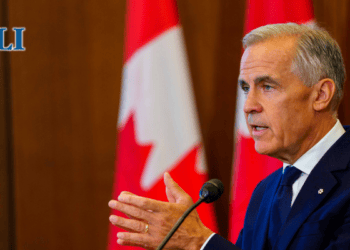
Source: The Hill Times

Related Posts

The Alberta-Ottawa pipeline agreement gets Canada off the starting blocks: Heather Exner-Pirot in The Hub
Environment

The Alberta-Ottawa pipeline agreement gets Canada off the starting blocks: Heather Exner-Pirot in The Hub

May 20, 2026
Short circuit – Lessons for Canada from Europe’s tech regulation: Jon Hartley
AI, Technology and Innovation

Short circuit – Lessons for Canada from Europe’s tech regulation: Jon Hartley

May 20, 2026
Affordability trumps productivity in Australian budget: Jack Mintz in the Financial Post
Domestic Policy

Affordability trumps productivity in Australian budget: Jack Mintz in the Financial Post

May 19, 2026

Newsletter Signup

  Thank you for Signing Up
  Please correct the marked field(s) below.
Email Address  *
1,true,6,Contact Email,2
First Name *
1,true,1,First Name,2
Last Name *
1,true,1,Last Name,2
*
*Required Fields

Follow us on

Macdonald-Laurier Institute

323 Chapel Street, Suite #300
Ottawa, Ontario, K1N 7Z2 Canada

613.482.8327

info@macdonaldlaurier.ca
MLI directory

Support Us

Support the Macdonald-Laurier Institute to help ensure that Canada is one of the best governed countries in the world. Click below to learn more or become a sponsor.

Support Us

  • Inside Policy Magazine
  • Annual Reports
  • Jobs
  • Privacy Policy

© 2023 Macdonald-Laurier Institute. All Rights reserved.

No Result
View All Result
  • Home
  • About
    • Who We Are
    • Who Makes MLI Work
    • Fifteenth Anniversary
  • Experts
    • Experts Directory
    • In Memoriam
  • Issues
    • Domestic Policy
      • Economic Policy
      • Justice
      • Rights and Freedoms
      • Assisted Suicide (MAID)
      • Health Care
      • COVID-19
      • Gender Identity
      • Canada’s Political Tradition
      • AI, Technology and Innovation
      • Media and Telecoms
      • Housing
      • Immigration
      • Agriculture and Agri-Food
      • Competition Policy
    • Energy Policy
      • Energy
      • Environment
    • Foreign Policy
      • Israel-Hamas War
      • Ukraine
      • Taiwan
      • China
      • Europe and Russia
      • Indo-Pacific
      • Middle East and North Africa
      • North America
      • Foreign Interference
      • National Defence
      • National Security
      • Foreign Affairs
    • Indigenous Affairs
  • Projects
    • CNAPS (Center for North American Prosperity and Security)
    • Justice Report Card
    • The Promised Land
    • Voices that Inspire: The Macdonald-Laurier Vancouver Speaker Series
    • Dragon at the door
    • Canada on top of the world
    • Letter to a minister
    • The Great Energy Crisis
    • DisInfoWatch.org
    • Managing Indigenous Prosperity
    • Judicial Foundations
    • Landmark Cases Council
    • Defending The Marketplace of Ideas
    • Reforming the University
    • Past Projects
      • Digital Policy & Connectivity
      • Double Trouble
      • Canada and the Indo-Pacific Initiative
      • The Transatlantic Program
      • COVID Misery Index
      • Speak for Ourselves
      • The Eavesdropping Dragon: Huawei
      • Talkin’ in the Free World with Mariam Memarsadeghi
      • An Intellectual Property Strategy for Canada
      • Munk Senior Fellows
      • A Mandate for Canada
      • Confederation Series
      • Fiscal Reform
      • The Canadian Century project
      • Fixing Canadian health care
      • Internal trade
      • From a mandate for change
      • Size of government in Canada
      • Straight Talk
      • Labour Market Report
      • Leading Economic Indicator
      • Centre for Advancing Canada’s Interests Abroad
      • Indigenous Prosperity at a Crossroads
  • Events
    • Upcoming Events
    • Past Events
      • MLI Dinners
      • Great Canadian Debates
  • Latest News
  • Libraries
    • Columns
    • Commentary
    • Papers
    • Books
    • Video
  • Donate

© 2023 Macdonald-Laurier Institute. All Rights reserved.