Wednesday, March 4, 2026
No Result
View All Result
  • Media
Macdonald-Laurier Institute
  • Home
  • About
    • Who We Are
    • Who Makes MLI Work
    • Fifteenth Anniversary
  • Experts
    • Experts Directory
    • In Memoriam
  • Issues
    • Domestic Policy
      • Economic Policy
      • Justice
      • Rights and Freedoms
      • Assisted Suicide (MAID)
      • Health Care
      • COVID-19
      • Gender Identity
      • Canada’s Political Tradition
      • AI, Technology and Innovation
      • Media and Telecoms
      • Housing
      • Immigration
      • Agriculture and Agri-Food
      • Competition Policy
    • Energy Policy
      • Energy
      • Environment
    • Foreign Policy
      • Israel-Hamas War
      • Ukraine
      • Taiwan
      • China
      • Europe and Russia
      • Indo-Pacific
      • Middle East and North Africa
      • North America
      • Foreign Interference
      • National Defence
      • National Security
      • Foreign Affairs
    • Indigenous Affairs
  • Projects
    • CNAPS (Center for North American Prosperity and Security)
    • The Promised Land
    • Voices that Inspire: The Macdonald-Laurier Vancouver Speaker Series
    • Dragon at the door
    • Canada on top of the world
    • Letter to a minister
    • Justice Report Card
    • The Great Energy Crisis
    • DisInfoWatch.org
    • Managing Indigenous Prosperity
    • Judicial Foundations
    • Landmark Cases Council
    • Defending The Marketplace of Ideas
    • Reforming the University
    • Past Projects
      • Digital Policy & Connectivity
      • Double Trouble
      • Canada and the Indo-Pacific Initiative
      • The Transatlantic Program
      • COVID Misery Index
        • Provincial COVID Misery Index
        • Beyond Lockdown
        • COVID and after: A mandate for recovery
      • Speak for Ourselves
      • The Eavesdropping Dragon: Huawei
      • Talkin’ in the Free World with Mariam Memarsadeghi
      • An Intellectual Property Strategy for Canada
      • Munk Senior Fellows
      • A Mandate for Canada
      • Confederation Series
      • Fiscal Reform
      • The Canadian Century project
      • Fixing Canadian health care
      • Internal trade
      • From a mandate for change
      • Size of government in Canada
      • Straight Talk
      • Labour Market Report
      • Leading Economic Indicator
      • Centre for Advancing Canada’s Interests Abroad
      • Indigenous Prosperity at a Crossroads
        • Aboriginal Canada and Natural Resources
  • Events
    • Upcoming Events
    • Past Events
      • MLI Dinners
      • Great Canadian Debates
  • Latest News
  • Libraries
    • Columns
    • Commentary
    • Papers
    • Books
    • Video
  • Donate
  • Home
  • About
    • Who We Are
    • Who Makes MLI Work
    • Fifteenth Anniversary
  • Experts
    • Experts Directory
    • In Memoriam
  • Issues
    • Domestic Policy
      • Economic Policy
      • Justice
      • Rights and Freedoms
      • Assisted Suicide (MAID)
      • Health Care
      • COVID-19
      • Gender Identity
      • Canada’s Political Tradition
      • AI, Technology and Innovation
      • Media and Telecoms
      • Housing
      • Immigration
      • Agriculture and Agri-Food
      • Competition Policy
    • Energy Policy
      • Energy
      • Environment
    • Foreign Policy
      • Israel-Hamas War
      • Ukraine
      • Taiwan
      • China
      • Europe and Russia
      • Indo-Pacific
      • Middle East and North Africa
      • North America
      • Foreign Interference
      • National Defence
      • National Security
      • Foreign Affairs
    • Indigenous Affairs
  • Projects
    • CNAPS (Center for North American Prosperity and Security)
    • The Promised Land
    • Voices that Inspire: The Macdonald-Laurier Vancouver Speaker Series
    • Dragon at the door
    • Canada on top of the world
    • Letter to a minister
    • Justice Report Card
    • The Great Energy Crisis
    • DisInfoWatch.org
    • Managing Indigenous Prosperity
    • Judicial Foundations
    • Landmark Cases Council
    • Defending The Marketplace of Ideas
    • Reforming the University
    • Past Projects
      • Digital Policy & Connectivity
      • Double Trouble
      • Canada and the Indo-Pacific Initiative
      • The Transatlantic Program
      • COVID Misery Index
        • Provincial COVID Misery Index
        • Beyond Lockdown
        • COVID and after: A mandate for recovery
      • Speak for Ourselves
      • The Eavesdropping Dragon: Huawei
      • Talkin’ in the Free World with Mariam Memarsadeghi
      • An Intellectual Property Strategy for Canada
      • Munk Senior Fellows
      • A Mandate for Canada
      • Confederation Series
      • Fiscal Reform
      • The Canadian Century project
      • Fixing Canadian health care
      • Internal trade
      • From a mandate for change
      • Size of government in Canada
      • Straight Talk
      • Labour Market Report
      • Leading Economic Indicator
      • Centre for Advancing Canada’s Interests Abroad
      • Indigenous Prosperity at a Crossroads
        • Aboriginal Canada and Natural Resources
  • Events
    • Upcoming Events
    • Past Events
      • MLI Dinners
      • Great Canadian Debates
  • Latest News
  • Libraries
    • Columns
    • Commentary
    • Papers
    • Books
    • Video
  • Donate
No Result
View All Result
Macdonald-Laurier Institute

Japan leg of Carney’s Indo-Pacific tour is Canada’s chance to course-correct: Jonathan Berkshire Miller for Inside Policy

Stronger partnerships with trusted, like-minded partners provide the opportunity to play a key role in the region that will shape the 21st century.

March 4, 2026
in Foreign Affairs, Back Issues, Inside Policy, Foreign Policy, Latest News, Indo-Pacific, Jonathan Berkshire Miller
Reading Time: 3 mins read
A A
Japan leg of Carney’s Indo-Pacific tour is Canada’s chance to course-correct: Jonathan Berkshire Miller for Inside Policy

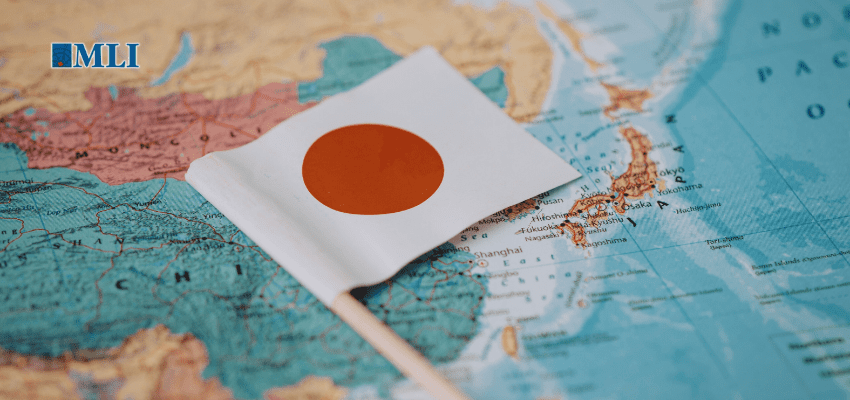
Image via Canva.

By Jonathan Berkshire Miller, March 4, 2026

Prime Minister Mark Carney’s arrival in Tokyo at the end of his Indo-Pacific tour (following visits to New Delhi and Canberra) presents a relatively rare and significant chance to do something more meaningful than just signing a communiqué or posing for a photo. He can signal that Canada is serious about engaging in the world’s most influential region, building its role on a solid foundation.

That message is especially important given recent trends in Carney’s government on the Indo-Pacific. The Prime Minister’s trip to Beijing earlier this year, framed as “stabilizing” and “reengaging” but omitting larger Indo-Pacific strategy, drew criticism from many observers. Once again, Canada seemed to default to a narrow, transactional perspective on Asia, centred almost exclusively on Beijing.

While Canada’s Indo-Pacific Strategy – years in the making and designed to prevent this type of thinking – is fading from Canada’s official lexicon, the Prime Minister showed signs of course-correction in New Delhi. His remarks on the differences between Canada’s relationships with India and China were both welcome and necessary.

There is a reason for this distinction; democratic Indo-Pacific partners are closely watching Ottawa’s actions. India is a complex partner with ongoing challenges, but as a democracy, it shares Canada’s interest in a stable, rule-of-law order. The difference between engaging with democracies and transacting with authoritarian states is not a matter of rhetoric – it is strategic.

This is reinforced by Australia’s experiences in developing a comprehensive Indo-Pacific posture built around AUKUS, the Quad, and investments in regional security architecture. Australia has clearly shown the risks of being too heavily exposed to China economically and the benefits of pushing back against those risks with determination. Canada can learn from that example and contribute significantly in return, particularly in terms of critical minerals, Arctic governance, and managing the competition between great powers.

However, the Japan leg of Carney’s trip holds the greatest strategic weight. It should not be viewed merely as a courtesy call.

While Japan is a major trading partner, it is also a key Indo-Pacific democracy that recently strengthened its defence, alliances, and role in regional security. Tokyo clearly understands the stakes in the contest between open and closed systems and has taken a leadership position in supply chain resilience, semiconductor security, economic statecraft, and technology standards that reflect democratic values.

Canada and Japan share several less-discussed characteristics, such as advanced economies, technological sophistication, democratic institutions, similar exposure to coercive trade practices, and a common interest in preserving the rules-based international order. Their relationship has long been productive, though low profile, and has never approached the strategic potential it holds today.

This visit is an opportunity to elevate the relationship to that level.

So, what would a serious commitment to Japan look like? It would move beyond trade ministerial discussions to engage in substantive strategic talks regarding Indo-Pacific security issues. It would coordinate Canadian and Japanese approaches to critical minerals and supply chain diversification – areas in which both countries bring complementary advantages. It would feature technology co-operation and investment screening that reflect a shared understanding of the economic security threats faced by both countries. And it would see Canada approach Japan as a long-term strategic partner, not simply as a bilateral relationship that is separate from the broader regional architecture of which Tokyo is a leading voice.

Collectively, India, Japan, and Australia represent something important. They are not fringe actors trying to hedge their bets between great powers. Rather, they are the central architects of the Indo-Pacific’s economic and security order. By showing a sustained, structured, and strategic commitment to these democracies, Canada can send a clear signal that its Indo-Pacific Strategy is more than just shelfware, symbolism, or worse, a pragmatic approach to China.

At a time when “pragmatism” towards China is again trending in some corners of the Ottawa establishment, working with other democracies in the Indo-Pacific is not idealism, it is strategic insurance. Stronger partnerships with trusted, like-minded partners enhance Canada’s economic stability, reduce dependence on China, and provide the opportunity to play a key role in the region that will shape the 21st century.

Carney has all the pieces, but will his government use this visit to launch a new era of Indo-Pacific engagement – integrated into Canada’s foreign and economic policy – or let it be another missed opportunity disguised as diplomacy.

Tokyo is the destination; it should not be the afterthought.


Jonathan Berkshire Miller is a senior fellow with the Macdonald-Laurier Institute and principal of Pendulum Geopolitical Advisory in Ottawa.


Related Posts

Have Alberta’s finances gone off the rails?: Trevor Tombe in The Hub
Intergovernmental Affairs

Have Alberta’s finances gone off the rails?: Trevor Tombe in The Hub

March 4, 2026
How Canada can prepare for high-pressure U.S. demands on sovereignty and trade: Jerome Gessaroli in Policy Options
Economic Policy

How Canada can prepare for high-pressure U.S. demands on sovereignty and trade: Jerome Gessaroli in Policy Options

March 3, 2026
Who should choose Canada’s judges? – Provincial power and the future of judicial appointments: Troy Riddell for Inside Policy
Justice

Who should choose Canada’s judges? – Provincial power and the future of judicial appointments: Troy Riddell for Inside Policy

March 3, 2026
Next Post
Have Alberta’s finances gone off the rails?: Trevor Tombe in The Hub

Have Alberta’s finances gone off the rails?: Trevor Tombe in The Hub

Newsletter Signup

  Thank you for Signing Up
  Please correct the marked field(s) below.
Email Address  *
1,true,6,Contact Email,2
First Name *
1,true,1,First Name,2
Last Name *
1,true,1,Last Name,2
*
*Required Fields

Follow us on

Macdonald-Laurier Institute

323 Chapel Street, Suite #300
Ottawa, Ontario, K1N 7Z2 Canada

613.482.8327

info@macdonaldlaurier.ca
MLI directory

Support Us

Support the Macdonald-Laurier Institute to help ensure that Canada is one of the best governed countries in the world. Click below to learn more or become a sponsor.

Support Us

  • Inside Policy Magazine
  • Annual Reports
  • Jobs
  • Privacy Policy

© 2023 Macdonald-Laurier Institute. All Rights reserved.

This site uses cookies. By continuing to browse the site you are agreeing to our use of cookies.

Privacy Preference Center

Consent Management

Necessary

Advertising

Analytics

Other

No Result
View All Result
  • Home
  • About
    • Who We Are
    • Who Makes MLI Work
    • Fifteenth Anniversary
  • Experts
    • Experts Directory
    • In Memoriam
  • Issues
    • Domestic Policy
      • Economic Policy
      • Justice
      • Rights and Freedoms
      • Assisted Suicide (MAID)
      • Health Care
      • COVID-19
      • Gender Identity
      • Canada’s Political Tradition
      • AI, Technology and Innovation
      • Media and Telecoms
      • Housing
      • Immigration
      • Agriculture and Agri-Food
      • Competition Policy
    • Energy Policy
      • Energy
      • Environment
    • Foreign Policy
      • Israel-Hamas War
      • Ukraine
      • Taiwan
      • China
      • Europe and Russia
      • Indo-Pacific
      • Middle East and North Africa
      • North America
      • Foreign Interference
      • National Defence
      • National Security
      • Foreign Affairs
    • Indigenous Affairs
  • Projects
    • CNAPS (Center for North American Prosperity and Security)
    • The Promised Land
    • Voices that Inspire: The Macdonald-Laurier Vancouver Speaker Series
    • Dragon at the door
    • Canada on top of the world
    • Letter to a minister
    • Justice Report Card
    • The Great Energy Crisis
    • DisInfoWatch.org
    • Managing Indigenous Prosperity
    • Judicial Foundations
    • Landmark Cases Council
    • Defending The Marketplace of Ideas
    • Reforming the University
    • Past Projects
      • Digital Policy & Connectivity
      • Double Trouble
      • Canada and the Indo-Pacific Initiative
      • The Transatlantic Program
      • COVID Misery Index
      • Speak for Ourselves
      • The Eavesdropping Dragon: Huawei
      • Talkin’ in the Free World with Mariam Memarsadeghi
      • An Intellectual Property Strategy for Canada
      • Munk Senior Fellows
      • A Mandate for Canada
      • Confederation Series
      • Fiscal Reform
      • The Canadian Century project
      • Fixing Canadian health care
      • Internal trade
      • From a mandate for change
      • Size of government in Canada
      • Straight Talk
      • Labour Market Report
      • Leading Economic Indicator
      • Centre for Advancing Canada’s Interests Abroad
      • Indigenous Prosperity at a Crossroads
  • Events
    • Upcoming Events
    • Past Events
      • MLI Dinners
      • Great Canadian Debates
  • Latest News
  • Libraries
    • Columns
    • Commentary
    • Papers
    • Books
    • Video
  • Donate

© 2023 Macdonald-Laurier Institute. All Rights reserved.