Thursday, December 4, 2025
No Result
View All Result
  • Media
Macdonald-Laurier Institute
  • Home
  • About
    • Who We Are
    • Who Makes MLI Work
    • Fifteenth Anniversary
  • Experts
    • Experts Directory
    • In Memoriam
  • Issues
    • Domestic Policy
      • Economic Policy
      • Justice
      • Rights and Freedoms
      • Assisted Suicide (MAID)
      • Health Care
      • COVID-19
      • Gender Identity
      • Canada’s Political Tradition
      • AI, Technology and Innovation
      • Media and Telecoms
      • Housing
      • Immigration
      • Agriculture and Agri-Food
      • Competition Policy
    • Energy Policy
      • Energy
      • Environment
    • Foreign Policy
      • Israel-Hamas War
      • Ukraine
      • Taiwan
      • China
      • Europe and Russia
      • Indo-Pacific
      • Middle East and North Africa
      • North America
      • Foreign Interference
      • National Defence
      • National Security
      • Foreign Affairs
    • Indigenous Affairs
  • Projects
    • CNAPS (Center for North American Prosperity and Security)
    • The Promised Land
    • Voices that Inspire: The Macdonald-Laurier Vancouver Speaker Series
    • Dragon at the door
    • Canada on top of the world
    • Letter to a minister
    • Justice Report Card
    • The Great Energy Crisis
    • DisInfoWatch.org
    • Managing Indigenous Prosperity
    • Judicial Foundations
    • Landmark Cases Council
    • Defending The Marketplace of Ideas
    • Reforming the University
    • Past Projects
      • Digital Policy & Connectivity
      • Double Trouble
      • Canada and the Indo-Pacific Initiative
      • The Transatlantic Program
      • COVID Misery Index
        • Provincial COVID Misery Index
        • Beyond Lockdown
        • COVID and after: A mandate for recovery
      • Speak for Ourselves
      • The Eavesdropping Dragon: Huawei
      • Talkin’ in the Free World with Mariam Memarsadeghi
      • An Intellectual Property Strategy for Canada
      • Munk Senior Fellows
      • A Mandate for Canada
      • Confederation Series
      • Fiscal Reform
      • The Canadian Century project
      • Fixing Canadian health care
      • Internal trade
      • From a mandate for change
      • Size of government in Canada
      • Straight Talk
      • Labour Market Report
      • Leading Economic Indicator
      • Centre for Advancing Canada’s Interests Abroad
      • Indigenous Prosperity at a Crossroads
        • Aboriginal Canada and Natural Resources
  • Events
    • Upcoming Events
    • Past Events
      • MLI Dinners
      • Great Canadian Debates
  • Latest News
  • Libraries
    • Columns
    • Commentary
    • Papers
    • Books
    • Video
  • Donate
  • Home
  • About
    • Who We Are
    • Who Makes MLI Work
    • Fifteenth Anniversary
  • Experts
    • Experts Directory
    • In Memoriam
  • Issues
    • Domestic Policy
      • Economic Policy
      • Justice
      • Rights and Freedoms
      • Assisted Suicide (MAID)
      • Health Care
      • COVID-19
      • Gender Identity
      • Canada’s Political Tradition
      • AI, Technology and Innovation
      • Media and Telecoms
      • Housing
      • Immigration
      • Agriculture and Agri-Food
      • Competition Policy
    • Energy Policy
      • Energy
      • Environment
    • Foreign Policy
      • Israel-Hamas War
      • Ukraine
      • Taiwan
      • China
      • Europe and Russia
      • Indo-Pacific
      • Middle East and North Africa
      • North America
      • Foreign Interference
      • National Defence
      • National Security
      • Foreign Affairs
    • Indigenous Affairs
  • Projects
    • CNAPS (Center for North American Prosperity and Security)
    • The Promised Land
    • Voices that Inspire: The Macdonald-Laurier Vancouver Speaker Series
    • Dragon at the door
    • Canada on top of the world
    • Letter to a minister
    • Justice Report Card
    • The Great Energy Crisis
    • DisInfoWatch.org
    • Managing Indigenous Prosperity
    • Judicial Foundations
    • Landmark Cases Council
    • Defending The Marketplace of Ideas
    • Reforming the University
    • Past Projects
      • Digital Policy & Connectivity
      • Double Trouble
      • Canada and the Indo-Pacific Initiative
      • The Transatlantic Program
      • COVID Misery Index
        • Provincial COVID Misery Index
        • Beyond Lockdown
        • COVID and after: A mandate for recovery
      • Speak for Ourselves
      • The Eavesdropping Dragon: Huawei
      • Talkin’ in the Free World with Mariam Memarsadeghi
      • An Intellectual Property Strategy for Canada
      • Munk Senior Fellows
      • A Mandate for Canada
      • Confederation Series
      • Fiscal Reform
      • The Canadian Century project
      • Fixing Canadian health care
      • Internal trade
      • From a mandate for change
      • Size of government in Canada
      • Straight Talk
      • Labour Market Report
      • Leading Economic Indicator
      • Centre for Advancing Canada’s Interests Abroad
      • Indigenous Prosperity at a Crossroads
        • Aboriginal Canada and Natural Resources
  • Events
    • Upcoming Events
    • Past Events
      • MLI Dinners
      • Great Canadian Debates
  • Latest News
  • Libraries
    • Columns
    • Commentary
    • Papers
    • Books
    • Video
  • Donate
No Result
View All Result
Macdonald-Laurier Institute

Israel’s strike on Doha was legal and justified — Canada should support it: Casey Babb and Avraham Russell Shalev in the National Post

Canada’s finger-wagging at Israel reeks of hypocrisy

September 25, 2025
in National Defence, Latest News, Columns, Foreign Policy, The Promised Land, Middle East and North Africa, Israel-Hamas War, Casey Babb
Reading Time: 5 mins read
A A
Israel’s strike on Doha was legal and justified — Canada should support it: Casey Babb and Avraham Russell Shalev in the National Post

This article originally appeared in the National Post.

By Casey Babb and Avraham Russell Shalev

In the shadowy world of international terrorism, safe havens for militants aren’t minor inconveniences — they’re enablers of atrocities. Israel’s recent precision strike in Doha, aimed at eliminating key leaders of Hamas who orchestrated the October 7 massacre and the kidnapping of hostages, was a bold and lawful act of self-defence. Yet Foreign Minister Anita Anand responded with a tone-deaf declaration, announcing that Ottawa is “evaluating” its relationship with Israel and decrying the operation as a violation of Qatari sovereignty.

This position not only betrays a stunning ignorance of international law, it also undermines the global fight against terrorism. Canada, a nation that prides itself on upholding the rule of law, should be condemning Qatar’s complicity, not Israel’s resolve.

Let’s be clear: the Hamas officials targeted in Doha were not innocent diplomats sipping tea in exile. They were high-ranking members of the organization’s political bureau, the nerve centre that directs Hamas’s blend of governance and terror. Often mislabelled as a mere “political wing,” this body sets strategies that fuel abhorrent acts of terrorism targeting civilians, from rocket barrages to suicide bombings.

Under the expansive view of military targeting in international law — as outlined in the U.S. Law of War Manual — any individual who’s functionally part of a non-state armed group like Hamas and shares in its hostile intent is a legitimate target. Even under a more restrictive lens, such as the International Committee of the Red Cross’s guidelines on direct participation in hostilities (DPH), these leaders qualify. The DPH includes those with a “continuous combat function” involving the preparation, execution or command of hostile acts.

Consider the specifics: Khalil al-Hayya, one of the targets, co-ordinated with Iran’s Revolutionary Guards Corps ahead of October 7, even soliciting intelligence for the attack, according to the New York Times. Zaher Jabarin, another one of the targets, oversaw suicide operations from the West Bank.

The group was also reportedly convening to deliberate on hostage negotiations — a grotesque euphemism for deciding the fate of innocents kidnapped in a barbaric raid with genocidal intent. Hostage-taking is terrorism incarnate, and the involvement of these men in sustaining it strips them of any civilian protections. Israel’s action wasn’t vengeance; it was a targeted disruption of an ongoing threat.

International law has long rejected the absurd notion that terrorists gain immunity simply by crossing borders into sympathetic states. Remember U.S. President George W. Bush’s post-9/11 vow: the U.S. would make “no distinction between the terrorists who committed these acts and those who harbour them.”

This principle underpinned the United Nations Security Council’s resolution authorizing action against Afghanistan, despite the Taliban’s denials of involvement in al-Qaida’s plots. It also justified the 2011 raid that killed Osama bin Laden in Pakistan, a supposed ally. Canada and its NATO allies invoked Article 5 of the NATO charter to support these efforts, treating an attack on one as an attack on all — something people seem to conveniently forget.

More recently, the threat posed by ISIS prompted a coalition response, with strikes in Syria and Iraq under the “unwilling or unable” doctrine. Canada used this doctrine to justify its participation the war in a 2015 letter to the UN Security Council, which affirmed states’ rights to self-defence when a host government can’t — or won’t — curb threats emanating from its soil.

This precedent fits Qatar like a glove. Doha isn’t a neutral bystander; it’s a willing accomplice — and for that, there must be a price to pay. Qatar has positioned itself as Hamas’s premier patron, offering political cover, lavish exile and billions in funding that sustain the group’s terror machine.
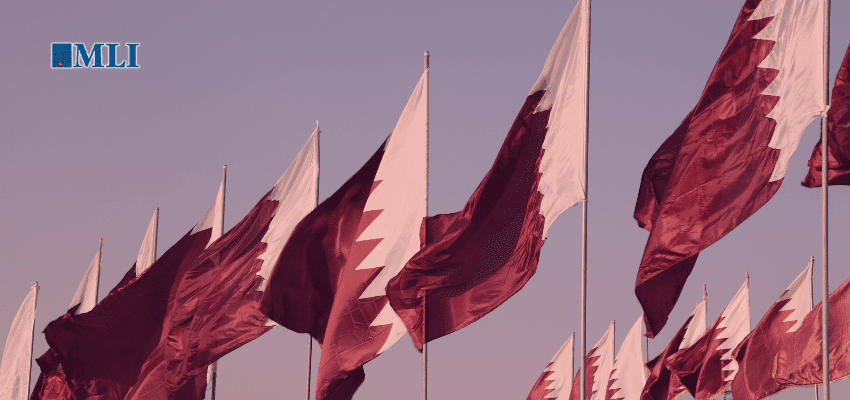
Leaders like Khaled Meshaal and Mousa Abu-Marzouk have called Doha home for years, co-ordinating campaigns of annihilation from five-star hotels. Over the years, Qatar has funnelled over $1.8 billion to Hamas in Gaza, and its state-run Al-Jazeera network acts as Hamas’s propaganda arm.

This isn’t passive hosting; it’s active facilitation, rooted in ideological ties to the Muslim Brotherhood. By any measure, Qatar is “unwilling or unable” to rein in Hamas — more accurately, though, it’s unwilling because it’s enabling.

In light of this, Canada’s finger-wagging at Israel reeks of hypocrisy. Canada, which once stood firm against those who harbour terrorists, now risks alienating a democratic ally fighting for its survival. The Carney government’s continuation of the Trudeau government’s anti-Israel policies signals a troubling drift, prioritizing performative diplomacy over moral clarity. Rather than evaluating ties with Israel, Canada should re-evaluate its own stance and recognize that shielding terrorists under the guise of sovereignty only emboldens them.

Israel’s strike was not just defensible — it was imperative. In a world where Hamas vows eternal jihad, decisive action saves lives. Canada must choose: side with the victims of terror, including the eight Canadians murdered on October 7, or the terrorists themselves. Anything less dishonours our shared values and invites more chaos.


Casey Babb is the director of the Promised Land Project at the Macdonald-Laurier Institute in Ottawa and an advisor to Secure Canada in Toronto.

Avraham Russell Shalev is a senior fellow at the Kohelet Policy Forum in Jerusalem.

Tags: Avraham Russell Shalev

Related Posts

Property rights are “precarious” in Canada: Paul Warchuk and Peter Copeland for Inside Policy Talks
Domestic Policy

Property rights are “precarious” in Canada: Paul Warchuk and Peter Copeland for Inside Policy Talks

December 4, 2025
Harvard eschews ingrained ideology in order to tackle ‘genuinely hard problems’: Peter MacKinnon in the National Post
Reforming Universities

Harvard eschews ingrained ideology in order to tackle ‘genuinely hard problems’: Peter MacKinnon in the National Post

December 3, 2025
Risking public backlash? Canadian universities and demographic-based faculty hiring
Education

Risking public backlash? Canadian universities and demographic-based faculty hiring

December 3, 2025
Next Post
Canada Is NATO’s Soft Underbelly: Matthew Bondy for Foreign Policy

Canada Is NATO’s Soft Underbelly: Matthew Bondy for Foreign Policy

Newsletter Signup

  Thank you for Signing Up
  Please correct the marked field(s) below.
Email Address  *
1,true,6,Contact Email,2
First Name *
1,true,1,First Name,2
Last Name *
1,true,1,Last Name,2
*
*Required Fields

Follow us on

Macdonald-Laurier Institute

323 Chapel Street, Suite #300
Ottawa, Ontario, K1N 7Z2 Canada

613.482.8327

info@macdonaldlaurier.ca
MLI directory

Support Us

Support the Macdonald-Laurier Institute to help ensure that Canada is one of the best governed countries in the world. Click below to learn more or become a sponsor.

Support Us

  • Inside Policy Magazine
  • Annual Reports
  • Jobs
  • Privacy Policy

© 2023 Macdonald-Laurier Institute. All Rights reserved.

No Result
View All Result
  • Home
  • About
    • Who We Are
    • Who Makes MLI Work
    • Fifteenth Anniversary
  • Experts
    • Experts Directory
    • In Memoriam
  • Issues
    • Domestic Policy
      • Economic Policy
      • Justice
      • Rights and Freedoms
      • Assisted Suicide (MAID)
      • Health Care
      • COVID-19
      • Gender Identity
      • Canada’s Political Tradition
      • AI, Technology and Innovation
      • Media and Telecoms
      • Housing
      • Immigration
      • Agriculture and Agri-Food
      • Competition Policy
    • Energy Policy
      • Energy
      • Environment
    • Foreign Policy
      • Israel-Hamas War
      • Ukraine
      • Taiwan
      • China
      • Europe and Russia
      • Indo-Pacific
      • Middle East and North Africa
      • North America
      • Foreign Interference
      • National Defence
      • National Security
      • Foreign Affairs
    • Indigenous Affairs
  • Projects
    • CNAPS (Center for North American Prosperity and Security)
    • The Promised Land
    • Voices that Inspire: The Macdonald-Laurier Vancouver Speaker Series
    • Dragon at the door
    • Canada on top of the world
    • Letter to a minister
    • Justice Report Card
    • The Great Energy Crisis
    • DisInfoWatch.org
    • Managing Indigenous Prosperity
    • Judicial Foundations
    • Landmark Cases Council
    • Defending The Marketplace of Ideas
    • Reforming the University
    • Past Projects
      • Digital Policy & Connectivity
      • Double Trouble
      • Canada and the Indo-Pacific Initiative
      • The Transatlantic Program
      • COVID Misery Index
      • Speak for Ourselves
      • The Eavesdropping Dragon: Huawei
      • Talkin’ in the Free World with Mariam Memarsadeghi
      • An Intellectual Property Strategy for Canada
      • Munk Senior Fellows
      • A Mandate for Canada
      • Confederation Series
      • Fiscal Reform
      • The Canadian Century project
      • Fixing Canadian health care
      • Internal trade
      • From a mandate for change
      • Size of government in Canada
      • Straight Talk
      • Labour Market Report
      • Leading Economic Indicator
      • Centre for Advancing Canada’s Interests Abroad
      • Indigenous Prosperity at a Crossroads
  • Events
    • Upcoming Events
    • Past Events
      • MLI Dinners
      • Great Canadian Debates
  • Latest News
  • Libraries
    • Columns
    • Commentary
    • Papers
    • Books
    • Video
  • Donate

© 2023 Macdonald-Laurier Institute. All Rights reserved.