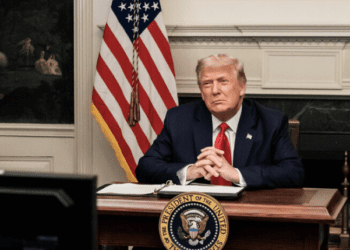
On December 3, Jamie Tronnes, executive director of the Center for North American Prosperity and Security, testified at a special hearing on the United States–Canada–Mexico Agreement, which comes up for review in 2026. The hearings were hosted by the Office of the U.S. Trade Representative and were held in Washington, D.C.
By Jamie Tronnes
As we head into the review of the USMCA, it is worth it to point out the underlying factors that have made the agreement such a success.
First, the number one benefit of USMCA has been its certainty. Foreign direct investment has followed the predictable market conditions in the United States. This has contributed to the strength of the North American supply chain, enhancing the safety and security of the continent.
Barrier-free markets for US goods are another benefit of the USMCA model. Indeed, Canada, Mexico, and the United States are all, to varying degrees, marketplaces for one another’s goods, with Canada being the second-largest customer of American-made goods in the world.
Indeed, USMCA has turned a trade deficit with Canada into a good thing – CNAPS analysis shows that 66 percent of the Canadian trade deficit with the United States is inputs into the US economy. Only 31 percent of what the US imports from Canada are finished goods. However, of those finished goods, many, such as autos, contain significant American inputs, contributing to American jobs and prosperity.
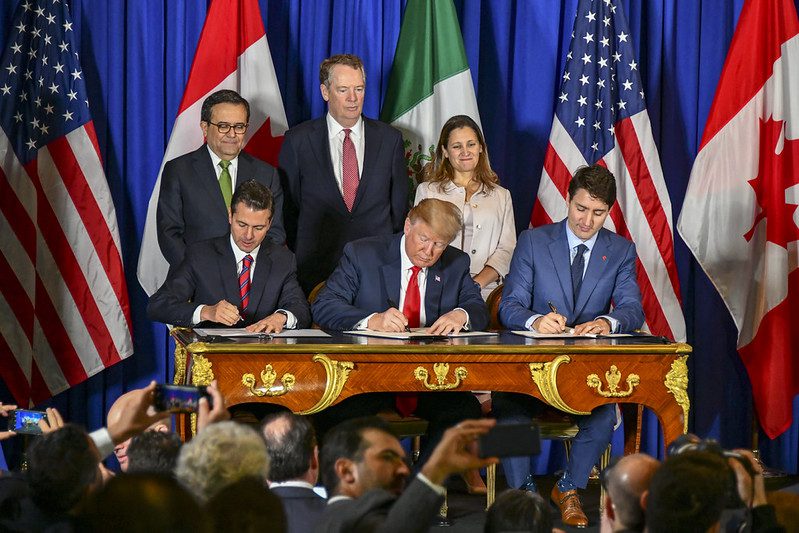
Geographical proximity keeps costs down for American manufacturers. Sourcing inputs from Canada and Mexico is more cost-effective and, thanks to the USMCA, more predictable with fewer barriers to entry, clearance, and customs issues.
These factors have resulted in a thriving North American economy in which over 8 million American jobs are a direct result of trade with Canada, and Canada is a major direct contributor to America’s energy dominance.
Despite the many benefits, there have been some downsides. The Canadian supply management policies have led to an unequal footing for cross-border producers. Canadian cultural exceptions and regulations as they pertain to digital services and trade are beginning to strain credulity.
Of late, however, the trade discussions between Canada, the United States, and Mexico have been strained due to the separate use of American sectoral tariffs on Canadian and Mexican goods. This has soured foreign direct investment, reintroduced uncertainty into the market, and led many manufacturers and construction firms to pause planned expansions and even close factories as input costs on steel, aluminum, and lumber have skyrocketed.
As broad tariffs have been put in place despite the USMCA, it questions the commitment to the future of the agreement on the part of the United States.
As such, our comments do not pertain to specific trading sections that should be saved, scrapped, readjusted, or altered. Our comments for the USMCA review are simple:
First: Keep the USMCA
Second: A review will do – and a Grand Bargain approach is the way to do it.
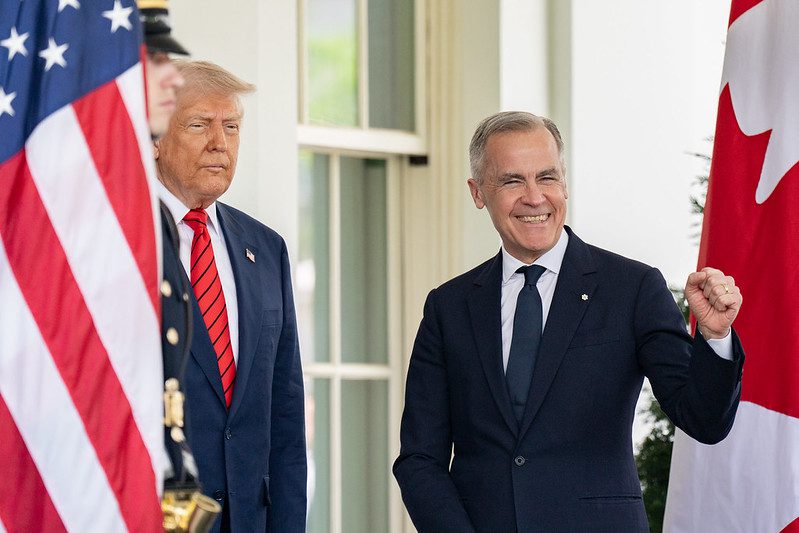
If Canada, Mexico, and the United States are committed to keeping the USMCA, they should adhere to it in both spirit and action. The Agreement has been ratified by elected branches of all three governments, and this is part of its allure for investment: the certainty that trade in the North American continent will continue to flow freely and unimpeded by government overreach.
This means that additional tariff authorities, including sectoral authorities, should not be applied against USMCA member states by any one government without due process, consideration, or wider consultation.
The review, therefore, should look at the streamlining of tariff mechanisms and enforcement by partner countries into a USMCA pact, effectively bringing tariff resolutions on other sectoral tariffs under the rubric of the USMCA tariff remedies for member countries.
Secondly, if a review is truly what is being proposed, then a review will do.
However, the USMCA is being overstepped by sectoral tariffs. Relations between Canada and the United States have deteriorated.
To get things back on track, CNAPS has authored a paper titled, The Grand Bargain: A Path to Prosperity, Security, and Strength for the United States and Canada. In it, we argue that Canada and the United States can gain more leverage in a trade deal by expanding the scope to include things that America would like Canada to do in exchange for continued free market trading. For example, Canada would have to keep up its end of the bargain on defense spending and national security, a longtime irritant between the two countries, to ensure the future of its access to free trade. Canada could then demand that no unilateral pipeline vetoes, such as what occurred under the Biden Administration, would endanger its oil and natural gas exports to the United States.
This comprehensive fiscal, social, and security strategy also bakes in certainty into the trade relationship, as the United States is getting more from Canada than it would otherwise through a trade agreement. Having a comprehensive agreement makes it harder for any one President or Prime Minister to try to back out of the agreement; he or she would be giving up all other gains promised by the other country.
The USMCA is the greatest trade agreement ever negotiated. It has guaranteed the prosperity and growth of an entire continent in the face of other rising powers and has raised the standard of living and quality of life for millions of North Americans. It is an investment magnet, the ace in the hole for North American prosperity. Now is not the time to walk away but to double down.
Jamie Tronnes is the Executive Director of the Center for North American Prosperity and Security, the US-based office of the Macdonald-Laurier Institute.