Thursday, December 4, 2025
No Result
View All Result
  • Media
Macdonald-Laurier Institute
  • Home
  • About
    • Who We Are
    • Who Makes MLI Work
    • Fifteenth Anniversary
  • Experts
    • Experts Directory
    • In Memoriam
  • Issues
    • Domestic Policy
      • Economic Policy
      • Justice
      • Rights and Freedoms
      • Assisted Suicide (MAID)
      • Health Care
      • COVID-19
      • Gender Identity
      • Canada’s Political Tradition
      • AI, Technology and Innovation
      • Media and Telecoms
      • Housing
      • Immigration
      • Agriculture and Agri-Food
      • Competition Policy
    • Energy Policy
      • Energy
      • Environment
    • Foreign Policy
      • Israel-Hamas War
      • Ukraine
      • Taiwan
      • China
      • Europe and Russia
      • Indo-Pacific
      • Middle East and North Africa
      • North America
      • Foreign Interference
      • National Defence
      • National Security
      • Foreign Affairs
    • Indigenous Affairs
  • Projects
    • CNAPS (Center for North American Prosperity and Security)
    • The Promised Land
    • Voices that Inspire: The Macdonald-Laurier Vancouver Speaker Series
    • Dragon at the door
    • Canada on top of the world
    • Letter to a minister
    • Justice Report Card
    • The Great Energy Crisis
    • DisInfoWatch.org
    • Managing Indigenous Prosperity
    • Judicial Foundations
    • Landmark Cases Council
    • Defending The Marketplace of Ideas
    • Reforming the University
    • Past Projects
      • Digital Policy & Connectivity
      • Double Trouble
      • Canada and the Indo-Pacific Initiative
      • The Transatlantic Program
      • COVID Misery Index
        • Provincial COVID Misery Index
        • Beyond Lockdown
        • COVID and after: A mandate for recovery
      • Speak for Ourselves
      • The Eavesdropping Dragon: Huawei
      • Talkin’ in the Free World with Mariam Memarsadeghi
      • An Intellectual Property Strategy for Canada
      • Munk Senior Fellows
      • A Mandate for Canada
      • Confederation Series
      • Fiscal Reform
      • The Canadian Century project
      • Fixing Canadian health care
      • Internal trade
      • From a mandate for change
      • Size of government in Canada
      • Straight Talk
      • Labour Market Report
      • Leading Economic Indicator
      • Centre for Advancing Canada’s Interests Abroad
      • Indigenous Prosperity at a Crossroads
        • Aboriginal Canada and Natural Resources
  • Events
    • Upcoming Events
    • Past Events
      • MLI Dinners
      • Great Canadian Debates
  • Latest News
  • Libraries
    • Columns
    • Commentary
    • Papers
    • Books
    • Video
  • Donate
  • Home
  • About
    • Who We Are
    • Who Makes MLI Work
    • Fifteenth Anniversary
  • Experts
    • Experts Directory
    • In Memoriam
  • Issues
    • Domestic Policy
      • Economic Policy
      • Justice
      • Rights and Freedoms
      • Assisted Suicide (MAID)
      • Health Care
      • COVID-19
      • Gender Identity
      • Canada’s Political Tradition
      • AI, Technology and Innovation
      • Media and Telecoms
      • Housing
      • Immigration
      • Agriculture and Agri-Food
      • Competition Policy
    • Energy Policy
      • Energy
      • Environment
    • Foreign Policy
      • Israel-Hamas War
      • Ukraine
      • Taiwan
      • China
      • Europe and Russia
      • Indo-Pacific
      • Middle East and North Africa
      • North America
      • Foreign Interference
      • National Defence
      • National Security
      • Foreign Affairs
    • Indigenous Affairs
  • Projects
    • CNAPS (Center for North American Prosperity and Security)
    • The Promised Land
    • Voices that Inspire: The Macdonald-Laurier Vancouver Speaker Series
    • Dragon at the door
    • Canada on top of the world
    • Letter to a minister
    • Justice Report Card
    • The Great Energy Crisis
    • DisInfoWatch.org
    • Managing Indigenous Prosperity
    • Judicial Foundations
    • Landmark Cases Council
    • Defending The Marketplace of Ideas
    • Reforming the University
    • Past Projects
      • Digital Policy & Connectivity
      • Double Trouble
      • Canada and the Indo-Pacific Initiative
      • The Transatlantic Program
      • COVID Misery Index
        • Provincial COVID Misery Index
        • Beyond Lockdown
        • COVID and after: A mandate for recovery
      • Speak for Ourselves
      • The Eavesdropping Dragon: Huawei
      • Talkin’ in the Free World with Mariam Memarsadeghi
      • An Intellectual Property Strategy for Canada
      • Munk Senior Fellows
      • A Mandate for Canada
      • Confederation Series
      • Fiscal Reform
      • The Canadian Century project
      • Fixing Canadian health care
      • Internal trade
      • From a mandate for change
      • Size of government in Canada
      • Straight Talk
      • Labour Market Report
      • Leading Economic Indicator
      • Centre for Advancing Canada’s Interests Abroad
      • Indigenous Prosperity at a Crossroads
        • Aboriginal Canada and Natural Resources
  • Events
    • Upcoming Events
    • Past Events
      • MLI Dinners
      • Great Canadian Debates
  • Latest News
  • Libraries
    • Columns
    • Commentary
    • Papers
    • Books
    • Video
  • Donate
No Result
View All Result
Macdonald-Laurier Institute

China’s critical minerals playbook – How flooding the market becomes a geopolitical weapon: Wesley Nicol, Raphael Racicot, and Kurtis H. Simpson for Inside Policy

At its core, China’s strategy is to maintain structural dependence – keeping other states tied to Chinese systems and supply chains and limiting their ability to (re)industrialize and build strategic capacities needed in today’s era of intense geoeconomic and geopolitical rivalry.

November 27, 2025
in Foreign Affairs, Back Issues, Inside Policy, Energy Policy, Resources, Latest News, Foreign Policy, Indo-Pacific
Reading Time: 6 mins read
A A
China’s critical minerals playbook – How flooding the market becomes a geopolitical weapon: Wesley Nicol, Raphael Racicot, and Kurtis H. Simpson for Inside Policy

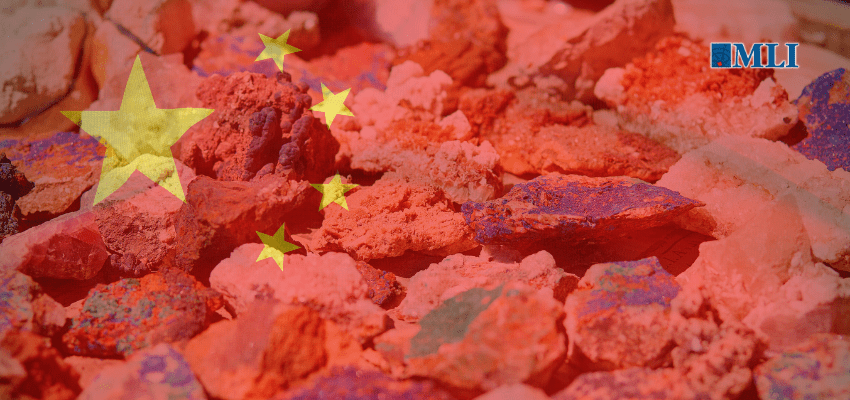
Image via Canva.

By Wesley Nicol, Raphael Racicot, and Kurtis H. Simpson, November 27, 2025

China’s grip on critical minerals isn’t just about scarcity – it’s also about something far more subtle and dangerous: flooding the market. By deliberately oversupplying key minerals and driving down prices, Beijing makes it nearly impossible for Western producers to attract private investment and sustain operations. Cheap Chinese minerals might look like a bargain, but they wipe out competitors, deepen dependence, and ultimately tighten China’s hold over the global processing and refining system.

Indeed, for decades, Beijing has carefully cultivated its critical minerals supply chain, from mining and processing to downstream manufacturing, using it both to fuel economic growth and to gain leverage abroad. China’s power is derived from its centrality in the global supply chain, notably in processing, where it enjoys near-monopoly control. In response, the Trump administration has vowed to work with allies to counter Beijing’s dominance in rare earth elements, calling China an “unreliable partner” and a threat to global production needs. This development was triggered by China’s restrictions on rare earth elements exports in the lead-up to the 2025 APEC summit in South Korea.

While export controls on critical minerals and rare earth elements may garner more attention and renew calls to onshore domestic refining capacity, failing to appreciate China’s larger strategy could render these efforts moot. Without the underlying commercial and economic incentives to invest in alternative Western supply chains, new projects risk becoming uncompetitive money pits long before they reach full production. Unpacking how China coordinates economic policy and strategy and then translates this into foreign policy – a process that has been decades in the making vis-à-vis critical minerals – is key to understanding Beijing’s goal of protecting its structural advantage in this sector.
Coordinating Economic Policy

China’s economic policy under President Xi Jinping has included an emphasis on top-down Chinese Communist Party (CCP) direction (through rigorous Five-Year Plans) focused on ensuring “high-quality development.” This entails moving up the value chain away from cheap manufactured goods to high-end products like smartphones and solar panels. By leveraging “new quality productive forces” and emerging technologies, Beijing seeks to avoid the middle-income trap as its economic expansion slows from the double-digit GDP growth it experienced from the 1980s to around 2010.

In this context, China’s critical minerals policies have worked to foster a commercial ecosystem through a vertically integrated supply chain. China’s dominance in electric vehicle (EV) production today is no accident; it is the result of decades of effort ignored by the West. Years of state-backed financing and overseas acquisitions have given China first-mover advantage. Western firms now find it difficult to gain a foothold in markets where Chinese companies enjoy Beijing’s support via subsidies, regulations, and scaling potential – all made possible by the country’s growing consumer class, which is cordoned off from Western competitors.

This vertically integrated supply chain has given China an enormous consumer base to first establish its own companies with full state-backing before flooding foreign markets. While Western firms rely on market forces, Chinese firms benefit from a system designed from day one to ensure their dominance.

Pricing in Strategic Dilemmas

Beyond advantageous domestic economic policy, China seeks to mitigate its geopolitical vulnerabilities by reducing its dependency on imports like oil and natural gas, one of the main drivers of China’s renewable energy push. A challenge faced by Chinese strategists is the “Malacca Dilemma,” which recognizes that oil shipped through the Strait could be cut off during a conflict. Securing critical minerals for inputs to scale EVs and renewable technologies is thus necessary for energy independence. Likewise, critical minerals for China are a matter of national security, crucial for ensuring military readiness, economic stability, and technological superiority, as over-reliance on foreign sources ensures vulnerabilities. Beijing’s 2025 National Security White Paper highlights the importance of “strategic minerals” in Chinese thinking on security, as it calls for action to achieve mineral exploration breakthroughs and increases in rare earth reserves.

As Beijing actively seeks to reduce its own reliance on imports like energy, it strives to increase international dependencies on China as part of its national dual-circulation strategy. While the CCP could cut off supply of critical minerals to coerce or punish states, this tactic has a “use-it-and-lose-it” quality, as it would incentivize private investment in an alternative Western supply chain. China arguably benefits more over the long-term by setting global prices and continuing to monopolize supply than from short-term escalations that would provoke retaliation or global supply chain recalibration. This allows China to remain an industrial powerhouse and to preserve the incentives for Western companies to offshore their industrial activities.

Dominance in critical minerals therefore offers China three core advantages. The first is promoting economic expansion through sectors with promising growth potential over the long-term, including the higher value-added manufacturing of finished products. The second is self-sufficiency, both in the supply of the raw resources and energy independence by extension. The third is in setting global prices for critical minerals so that the world must accept Beijing’s self-interested terms, even at the expense of dependency relationships that preclude industrial self-sufficiency.

Economic Statecraft Through Critical Minerals

Beijing’s most consequential strategic play is the weaponization of the entire demand and downstream ecosystem that turns minerals into capability. China’s economic statecraft vis-à-vis critical minerals is designed to extract long-term geopolitical advantage from its dominant position in this sector. Beijing’s instrumental use of short-term export restrictions, first employed in 2010 against Japan over competing territorial claims, is periodically invoked to bolster China’s negotiating position in bilateral disputes. Most recently, Beijing limited exports of gallium and germanium to the United States in retaliation for American restrictions on advanced semiconductor exports to China.

Since their first foray into critical mineral export restrictions, China has refined this tactic and has now built a comprehensive system of policies, institutions, and strategies to more credibly threaten deploying such coercive actions. While inconvenient, Beijing’s use of such measures has principally been used as a leverage point and has not yet resulted in Western countries demonstrating a willingness to incur the costs required to alter existing supply chains. To do so would require significant infrastructure and processing investments for an industrial capacity often criticized as environmentally damaging, water-intensive, energy-demanding, and prone to waste generation.

Beijing’s true strategic strength comes from the structural dominance China has built across the value chain. By oversupplying markets, depressing prices, and denying its Western counterparts the room to develop profitable alternatives, Beijing entrenches its role as the indispensable critical mineral processor and refiner. This position allows China to compel, without explicitly coercing, Western countries – shaping the decisions of other states not through direct action but rather through the anticipation of what China could do.

Conclusion

Dominance in critical minerals advances China’s economy up the value chain, reduces its own strategic vulnerabilities, and positions it as a global price-setter. This gives Beijing a coercive economic tool that rarely needs to be brandished to have the desired effect. At its core, China’s strategy is to maintain structural dependence – keeping other states tied to Chinese systems and supply chains and limiting their ability to (re)industrialize and build strategic capacities needed in today’s era of intense geoeconomic and geopolitical rivalry. When it comes to critical minerals, that reality, more than any single embargo or restriction, is Beijing’s real weapon.


Wesley Nicol is a student researcher at Defence Research and Development Canada’s Centre for Operational Research and Analysis. Nicol is a PhD candidate at the Norman Paterson School of International Affairs at Carleton University. His dissertation focuses on geoeconomic competition and Chinese economic statecraft, and he has published on AUKUS, NATO and UN peacekeeping operations, and topics in the Canadian Armed Forces.

Raphael Racicot is a student researcher at Defence Research and Development Canada’s Centre for Operational Research and Analysis. He is pursuing an MA in International Affairs at the Norman Paterson School of International Affairs at Carleton University. His work has notably been published by War on the Rocks, the Centre for International Governance Innovation, and the Conference of Defence Associations Institute.

Dr. Kurtis H. Simpson currently serves as a special advisor, Indo-Pacific affairs, within the Department of National Defence. As a senior defence scientist, he is a specialist on China and has extensive expertise in Asian security issues, global affairs, as well as transnational threats and terrorism.


Tags: Wesley NicolRaphael RacicotKurtis H. Simpson

Related Posts

Property rights are “precarious” in Canada: Paul Warchuk and Peter Copeland for Inside Policy Talks
Domestic Policy

Property rights are “precarious” in Canada: Paul Warchuk and Peter Copeland for Inside Policy Talks

December 4, 2025
Harvard eschews ingrained ideology in order to tackle ‘genuinely hard problems’: Peter MacKinnon in the National Post
Reforming Universities

Harvard eschews ingrained ideology in order to tackle ‘genuinely hard problems’: Peter MacKinnon in the National Post

December 3, 2025
Risking public backlash? Canadian universities and demographic-based faculty hiring
Education

Risking public backlash? Canadian universities and demographic-based faculty hiring

December 3, 2025
Next Post
Canada is climbing out of Trump’s frying pan and into Xi’s fire: Nathan Law and Daniel Dorman in the National Post

Canada is climbing out of Trump’s frying pan and into Xi’s fire: Nathan Law and Daniel Dorman in the National Post

Newsletter Signup

  Thank you for Signing Up
  Please correct the marked field(s) below.
Email Address  *
1,true,6,Contact Email,2
First Name *
1,true,1,First Name,2
Last Name *
1,true,1,Last Name,2
*
*Required Fields

Follow us on

Macdonald-Laurier Institute

323 Chapel Street, Suite #300
Ottawa, Ontario, K1N 7Z2 Canada

613.482.8327

info@macdonaldlaurier.ca
MLI directory

Support Us

Support the Macdonald-Laurier Institute to help ensure that Canada is one of the best governed countries in the world. Click below to learn more or become a sponsor.

Support Us

  • Inside Policy Magazine
  • Annual Reports
  • Jobs
  • Privacy Policy

© 2023 Macdonald-Laurier Institute. All Rights reserved.

No Result
View All Result
  • Home
  • About
    • Who We Are
    • Who Makes MLI Work
    • Fifteenth Anniversary
  • Experts
    • Experts Directory
    • In Memoriam
  • Issues
    • Domestic Policy
      • Economic Policy
      • Justice
      • Rights and Freedoms
      • Assisted Suicide (MAID)
      • Health Care
      • COVID-19
      • Gender Identity
      • Canada’s Political Tradition
      • AI, Technology and Innovation
      • Media and Telecoms
      • Housing
      • Immigration
      • Agriculture and Agri-Food
      • Competition Policy
    • Energy Policy
      • Energy
      • Environment
    • Foreign Policy
      • Israel-Hamas War
      • Ukraine
      • Taiwan
      • China
      • Europe and Russia
      • Indo-Pacific
      • Middle East and North Africa
      • North America
      • Foreign Interference
      • National Defence
      • National Security
      • Foreign Affairs
    • Indigenous Affairs
  • Projects
    • CNAPS (Center for North American Prosperity and Security)
    • The Promised Land
    • Voices that Inspire: The Macdonald-Laurier Vancouver Speaker Series
    • Dragon at the door
    • Canada on top of the world
    • Letter to a minister
    • Justice Report Card
    • The Great Energy Crisis
    • DisInfoWatch.org
    • Managing Indigenous Prosperity
    • Judicial Foundations
    • Landmark Cases Council
    • Defending The Marketplace of Ideas
    • Reforming the University
    • Past Projects
      • Digital Policy & Connectivity
      • Double Trouble
      • Canada and the Indo-Pacific Initiative
      • The Transatlantic Program
      • COVID Misery Index
      • Speak for Ourselves
      • The Eavesdropping Dragon: Huawei
      • Talkin’ in the Free World with Mariam Memarsadeghi
      • An Intellectual Property Strategy for Canada
      • Munk Senior Fellows
      • A Mandate for Canada
      • Confederation Series
      • Fiscal Reform
      • The Canadian Century project
      • Fixing Canadian health care
      • Internal trade
      • From a mandate for change
      • Size of government in Canada
      • Straight Talk
      • Labour Market Report
      • Leading Economic Indicator
      • Centre for Advancing Canada’s Interests Abroad
      • Indigenous Prosperity at a Crossroads
  • Events
    • Upcoming Events
    • Past Events
      • MLI Dinners
      • Great Canadian Debates
  • Latest News
  • Libraries
    • Columns
    • Commentary
    • Papers
    • Books
    • Video
  • Donate

© 2023 Macdonald-Laurier Institute. All Rights reserved.