This article originally appeared in the Financial Post. Below is an excerpt from the article.
By Philip Cross, August 1, 2025
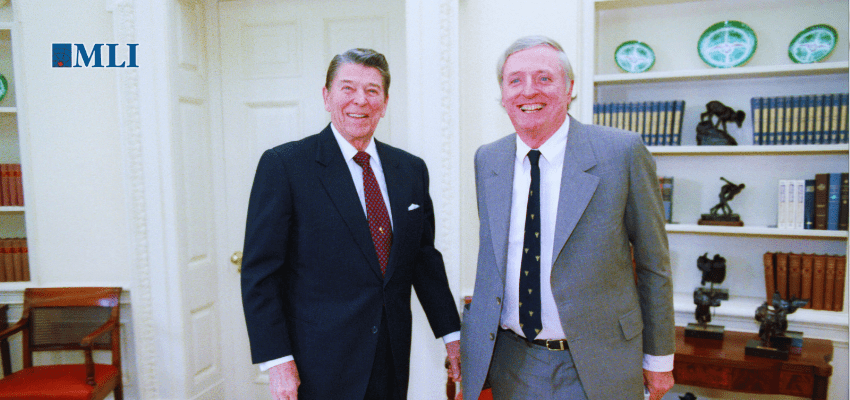
Sam Tanenhaus’s authorized biography of William F. Buckley, Buckley: The Life and the Revolution That Changed America, details in 1,028 pages how the renowned U.S. conservative almost single-handedly revived the American conservative movement after its near-death experience during the New Deal and Second World War. It also provides useful insights into how conservatism evolved into the populism that Donald Trump harnessed to become president and how its influence is put at risk by his lack of morality.
Buckley’s goal was to create “a well-organized and disciplined band of intellectuals” who could resuscitate conservatism after the post-war blitz of Keynesianism and small-L, leftish liberalism captured opinion-makers, if not the majority of Americans. Buckley energized the movement with prolific commentary in all venues: books, his new magazine National Review, a syndicated column that eventually appeared three times a week in over 300 newspapers, thousands of speeches, and his weekly public affairs TV program, Firing Line. His goal was to neutralize the radical left’s “disproportionate influence” by matching its dedication to cause.
Buckley conceded a shortcoming of conservatism was that his movement “cannot say what they are for — only what they are against.” He delighted in skewering the left’s “unexamined orthodoxies … and unacknowledged biases.” His recurring criticism of liberalism was that “beneath superficial piety and virtue lurked the chill spirit of conformism and perhaps coercion.”
***TO READ THE FULL ARTICLE, VISIT THE FINANCIAL POST HERE***
Philip Cross is a senior fellow at the Macdonald-Laurier Institute.