Friday, June 5, 2026
No Result
View All Result
  • Media
Macdonald-Laurier Institute
  • Home
  • About
    • Who We Are
    • Who Makes MLI Work
    • Fifteenth Anniversary
  • Experts
    • Experts Directory
    • In Memoriam
  • Issues
    • Domestic Policy
      • Economic Policy
      • Justice
      • Rights and Freedoms
      • Assisted Suicide (MAID)
      • Health Care
      • COVID-19
      • Gender Identity
      • Canada’s Political Tradition
      • AI, Technology and Innovation
      • Media and Telecoms
      • Housing
      • Immigration
      • Agriculture and Agri-Food
      • Competition Policy
    • Energy Policy
      • Energy
      • Environment
    • Foreign Policy
      • Israel-Hamas War
      • Ukraine
      • Taiwan
      • China
      • Europe and Russia
      • Indo-Pacific
      • Middle East and North Africa
      • North America
      • Foreign Interference
      • National Defence
      • National Security
      • Foreign Affairs
    • Indigenous Affairs
  • Projects
    • CNAPS (Center for North American Prosperity and Security)
    • Justice Report Card
    • The Promised Land
    • Voices that Inspire: The Macdonald-Laurier Vancouver Speaker Series
    • Dragon at the door
    • Canada on top of the world
    • Letter to a minister
    • The Great Energy Crisis
    • DisInfoWatch.org
    • Managing Indigenous Prosperity
    • Judicial Foundations
    • Landmark Cases Council
    • Defending The Marketplace of Ideas
    • Reforming the University
    • Digital Policy & Connectivity
    • Past Projects
      • Double Trouble
      • Canada and the Indo-Pacific Initiative
      • The Transatlantic Program
      • COVID Misery Index
        • Provincial COVID Misery Index
        • Beyond Lockdown
        • COVID and after: A mandate for recovery
      • Speak for Ourselves
      • The Eavesdropping Dragon: Huawei
      • Talkin’ in the Free World with Mariam Memarsadeghi
      • An Intellectual Property Strategy for Canada
      • Munk Senior Fellows
      • A Mandate for Canada
      • Confederation Series
      • Fiscal Reform
      • The Canadian Century project
      • Fixing Canadian health care
      • Internal trade
      • From a mandate for change
      • Size of government in Canada
      • Straight Talk
      • Labour Market Report
      • Leading Economic Indicator
      • Centre for Advancing Canada’s Interests Abroad
      • Indigenous Prosperity at a Crossroads
        • Aboriginal Canada and Natural Resources
  • Events
    • Upcoming Events
    • Past Events
      • MLI Dinners
      • Great Canadian Debates
  • Latest News
  • Libraries
    • Columns
    • Commentary
    • Papers
    • Books
    • Video
  • Donate
  • Home
  • About
    • Who We Are
    • Who Makes MLI Work
    • Fifteenth Anniversary
  • Experts
    • Experts Directory
    • In Memoriam
  • Issues
    • Domestic Policy
      • Economic Policy
      • Justice
      • Rights and Freedoms
      • Assisted Suicide (MAID)
      • Health Care
      • COVID-19
      • Gender Identity
      • Canada’s Political Tradition
      • AI, Technology and Innovation
      • Media and Telecoms
      • Housing
      • Immigration
      • Agriculture and Agri-Food
      • Competition Policy
    • Energy Policy
      • Energy
      • Environment
    • Foreign Policy
      • Israel-Hamas War
      • Ukraine
      • Taiwan
      • China
      • Europe and Russia
      • Indo-Pacific
      • Middle East and North Africa
      • North America
      • Foreign Interference
      • National Defence
      • National Security
      • Foreign Affairs
    • Indigenous Affairs
  • Projects
    • CNAPS (Center for North American Prosperity and Security)
    • Justice Report Card
    • The Promised Land
    • Voices that Inspire: The Macdonald-Laurier Vancouver Speaker Series
    • Dragon at the door
    • Canada on top of the world
    • Letter to a minister
    • The Great Energy Crisis
    • DisInfoWatch.org
    • Managing Indigenous Prosperity
    • Judicial Foundations
    • Landmark Cases Council
    • Defending The Marketplace of Ideas
    • Reforming the University
    • Digital Policy & Connectivity
    • Past Projects
      • Double Trouble
      • Canada and the Indo-Pacific Initiative
      • The Transatlantic Program
      • COVID Misery Index
        • Provincial COVID Misery Index
        • Beyond Lockdown
        • COVID and after: A mandate for recovery
      • Speak for Ourselves
      • The Eavesdropping Dragon: Huawei
      • Talkin’ in the Free World with Mariam Memarsadeghi
      • An Intellectual Property Strategy for Canada
      • Munk Senior Fellows
      • A Mandate for Canada
      • Confederation Series
      • Fiscal Reform
      • The Canadian Century project
      • Fixing Canadian health care
      • Internal trade
      • From a mandate for change
      • Size of government in Canada
      • Straight Talk
      • Labour Market Report
      • Leading Economic Indicator
      • Centre for Advancing Canada’s Interests Abroad
      • Indigenous Prosperity at a Crossroads
        • Aboriginal Canada and Natural Resources
  • Events
    • Upcoming Events
    • Past Events
      • MLI Dinners
      • Great Canadian Debates
  • Latest News
  • Libraries
    • Columns
    • Commentary
    • Papers
    • Books
    • Video
  • Donate
No Result
View All Result
Macdonald-Laurier Institute

Belarus is becoming Europe’s most dangerous blind spot: Yaroslav Baran for Inside Policy

The best way to prevent a wider European conflict is not to hope it will not happen. It is to convince those contemplating it that it cannot succeed.

June 5, 2026
in Back Issues, Foreign Affairs, Inside Policy, Foreign Policy, Latest News, Europe and Russia, Ukraine
Reading Time: 5 mins read
A A
Belarus is becoming Europe’s most dangerous blind spot: Yaroslav Baran for Inside Policy

Image via Canva.

By Yaroslav Baran, June 5, 2026

More than four years after Russia launched its full-scale invasion of Ukraine, Europe may be sleepwalking toward a dangerous new phase of the war.

It is already the continent’s largest and longest conflict since 1945, and in less than two weeks, Russia’s war against Ukraine will surpass the length of the First World War. In the regions most affected by the fighting, the resemblance is striking: vast stretches of eastern and southern Ukraine transformed into a moonscape of trenches, shell craters, and devastated settlements reminiscent of the Somme and Passchendaele.

This week’s heavy bombardment of Kyiv and other major Ukrainian cities indicates a tactical shift by Russia. Faced with an inability to make additional gains with its “meat grinder” infantry attacks, a persistent shortfall of new conscripts relative to casualties, and the gradual loss of territorial gains this spring, Moscow has shifted its thinking toward new approaches in its savage war against Ukraine. And now, while Western attention remains fixed on the southeastern front, another threat is quietly emerging to the north: Belarus.

Throughout the war, Vladimir Putin and the Kremlin regime have demonstrated no intention of returning to the norms of international law. Instead, Moscow has reoriented its economy and supply chains for long-term confrontation with the West while steadily increasing its dependence on Chinese and Iranian markets and technology. Russia–China bilateral trade has jumped significantly, reaching a 2024 high of $237 billion, more than doubling its 2020 levels.

China has become Russia’s largest trading partner, replacing European suppliers with Chinese automobiles, machinery, and electronics while serving as the principal market for Russian energy exports. Moscow has also signed a 20-year strategic partnership with Iran, accelerated development of the International North-South Transport Corridor linking Russia to Asian and Middle Eastern markets, and dramatically expanded economic and military co-operation with North Korea. At the same time, Russia has shifted much of its international trade into yuan and other non-Western currencies, reducing its dependence on Western financial systems.

Since the invasion, Russia has moved much of its international trade into rubles, yuan, and other non-Western currencies. Russian firms increasingly rely on Chinese banking channels, and alternative payment systems have been developed to reduce exposure to Western sanctions and the dollar-based financial system.

This diminishing dependence on the West is a precursor to potentially widening the conflict.

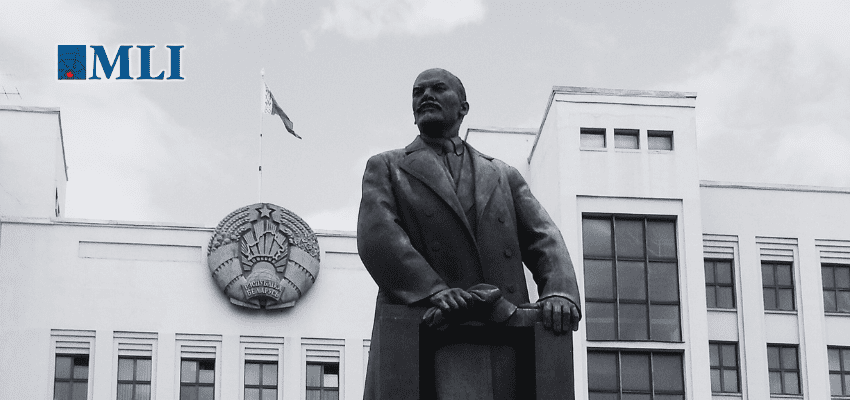
Belarusian dictator Alexander Lukashenka has already effectively traded much of his country’s sovereignty for Russian guarantees of his personal hold on power. Belarus’s territory, military infrastructure, airspace, and economy are now deeply integrated with Russia’s. In practical terms, the country has become both a vassal and co-aggressor in Moscow’s war against Ukraine.

This is not theoretical. Russian forces used Belarusian territory as a staging ground for their failed assault on Kyiv in 2022. Without Belarus’s participation, that offensive would have been far more difficult.

Today, there are growing indications that the Kremlin is pressuring Minsk toward another – and more direct – military role. Open-source intelligence and military analysts point to the mobilization of selected Belarusian units, the deployment of Russian hypersonic missile systems, and expanded joint exercises involving simulated use of tactical nuclear weapons. Lukashenka has correspondingly escalated his rhetoric, warning of alleged threats from Ukraine and NATO while promising to use the “full arsenal” available to Belarus and Russia, should NATO attack.

Such claims appear designed to create a pretext for further militarization.

Military analysts assess that a renewed offensive from Belarus would likely seek to threaten the logistical corridors connecting Ukraine to its European partners, disrupting the flow of military and humanitarian assistance. Even if unsuccessful, such an operation could force Kyiv to divert personnel and resources from critical fronts in the east and south, allowing Russia to again advance after weeks of losing ground.

And the implications extend beyond Ukraine.

Unlike 2022, Ukraine is now far better prepared for any northern threat. Its border defences have been vastly strengthened, its armed forces have become Europe’s largest combat-experienced military, and its drone capabilities rank among the world’s most advanced.

Should Belarus enter the war directly, Ukrainian planners will have identified extensive military targets inside the country, including air bases, logistics hubs, weapons depots, and defence-industrial facilities. The result would likely be catastrophic for Belarus itself.

Even if no invasion occurs, the current militarization carries serious risks. Large-scale troop movements, missile deployments, and military exercises increase the possibility of accidents, miscalculations or deliberate provocations. Belarus borders not only Ukraine, but also Poland, Lithuania, and Latvia. The consequences of an “accident” could therefore extend well beyond a bilateral conflict.
Yet this emerging threat has received remarkably little attention in Western capitals. Europe and the West should act before events overtake it by:

  • Considering additional sanctions pressure on Belarus.
  • Reviewing trade and transit routes that continue to support the Lukashenka regime.
  • Demonstrating clearly that any attempt to widen the war would fail.

Deterrence remains the best tool available. That means accelerating NATO and European military assistance to Ukraine, increasing supplies of long-range strike systems, and deepening co-operation with Ukraine’s rapidly evolving defence and drone industries. The goal is not to escalate the current conflict but to prevent it from expanding. Indeed, France’s Emmanuel Macron has suggested a deployment of European troops to Ukraine. Though rejected by other European powers, such a move could free up thousands of Ukrainian troops in the rearguard to redeploy to the east and perhaps make a breakthrough.

Moscow and Minsk must understand that opening a new front would impose enormous costs while offering little prospect of success. A renewed northern front in 2026 would not have the same success as the early days of the war in 2022. Lukashenka certainly has few friends left beyond Putin, so he is easily pressured by his larger neighbour. But the prospect of devastation should appeal to the Belarusian dictator’s strong instinct for self-preservation. If Lukashenka recognizes that Ukraine possesses the means to inflict severe damage on military infrastructure in Belarus, and therefore that direct intervention could threaten his regime’s survival, the likelihood of an expanded war diminishes dramatically. The West has an imperative to make that outcome clear.

The best way to prevent a wider European conflict is not to hope it will not happen. It is to convince those contemplating it that it cannot succeed.

The warning signs are already visible. The question is whether Europe and NATO are willing to see them before it is too late.


Yaroslav Baran is co-founder of Pendulum, a strategic and geopolitical advisory. He is also chair of the board of the Parliamentary Centre, Canada’s oldest democracy promotion agency.

Tags: Yaroslav Baran

Related Posts

Canada must teach its national story: Christopher Dummitt and Ian Campbell for Inside Policy Talks
Domestic Policy

Canada must teach its national story: Christopher Dummitt and Ian Campbell for Inside Policy Talks

June 4, 2026
The architecture of harm – Why online safety requires more than child social media bans: Armando L. I. de Miranda and Michelle Abel for Inside Policy
AI, Technology and Innovation

The architecture of harm – Why online safety requires more than child social media bans: Armando L. I. de Miranda and Michelle Abel for Inside Policy

June 4, 2026
How to actually fight separatism – Deepen the economic ties between provinces: Trevor Tombe in The Hub
Economic Policy

How to actually fight separatism – Deepen the economic ties between provinces: Trevor Tombe in The Hub

June 4, 2026

Newsletter Signup

  Thank you for Signing Up
  Please correct the marked field(s) below.
Email Address  *
1,true,6,Contact Email,2
First Name *
1,true,1,First Name,2
Last Name *
1,true,1,Last Name,2
*
*Required Fields

Follow us on

Macdonald-Laurier Institute

323 Chapel Street, Suite #300
Ottawa, Ontario, K1N 7Z2 Canada

613.482.8327

info@macdonaldlaurier.ca
MLI directory

Support Us

Support the Macdonald-Laurier Institute to help ensure that Canada is one of the best governed countries in the world. Click below to learn more or become a sponsor.

Support Us

  • Inside Policy Magazine
  • Annual Reports
  • Jobs
  • Privacy Policy

© 2023 Macdonald-Laurier Institute. All Rights reserved.

This site uses cookies. By continuing to browse the site you are agreeing to our use of cookies.

Privacy Preference Center

Consent Management

Necessary

Advertising

Analytics

Other

No Result
View All Result
  • Home
  • About
    • Who We Are
    • Who Makes MLI Work
    • Fifteenth Anniversary
  • Experts
    • Experts Directory
    • In Memoriam
  • Issues
    • Domestic Policy
      • Economic Policy
      • Justice
      • Rights and Freedoms
      • Assisted Suicide (MAID)
      • Health Care
      • COVID-19
      • Gender Identity
      • Canada’s Political Tradition
      • AI, Technology and Innovation
      • Media and Telecoms
      • Housing
      • Immigration
      • Agriculture and Agri-Food
      • Competition Policy
    • Energy Policy
      • Energy
      • Environment
    • Foreign Policy
      • Israel-Hamas War
      • Ukraine
      • Taiwan
      • China
      • Europe and Russia
      • Indo-Pacific
      • Middle East and North Africa
      • North America
      • Foreign Interference
      • National Defence
      • National Security
      • Foreign Affairs
    • Indigenous Affairs
  • Projects
    • CNAPS (Center for North American Prosperity and Security)
    • Justice Report Card
    • The Promised Land
    • Voices that Inspire: The Macdonald-Laurier Vancouver Speaker Series
    • Dragon at the door
    • Canada on top of the world
    • Letter to a minister
    • The Great Energy Crisis
    • DisInfoWatch.org
    • Managing Indigenous Prosperity
    • Judicial Foundations
    • Landmark Cases Council
    • Defending The Marketplace of Ideas
    • Reforming the University
    • Digital Policy & Connectivity
    • Past Projects
      • Double Trouble
      • Canada and the Indo-Pacific Initiative
      • The Transatlantic Program
      • COVID Misery Index
      • Speak for Ourselves
      • The Eavesdropping Dragon: Huawei
      • Talkin’ in the Free World with Mariam Memarsadeghi
      • An Intellectual Property Strategy for Canada
      • Munk Senior Fellows
      • A Mandate for Canada
      • Confederation Series
      • Fiscal Reform
      • The Canadian Century project
      • Fixing Canadian health care
      • Internal trade
      • From a mandate for change
      • Size of government in Canada
      • Straight Talk
      • Labour Market Report
      • Leading Economic Indicator
      • Centre for Advancing Canada’s Interests Abroad
      • Indigenous Prosperity at a Crossroads
  • Events
    • Upcoming Events
    • Past Events
      • MLI Dinners
      • Great Canadian Debates
  • Latest News
  • Libraries
    • Columns
    • Commentary
    • Papers
    • Books
    • Video
  • Donate

© 2023 Macdonald-Laurier Institute. All Rights reserved.