Thursday, December 4, 2025
No Result
View All Result
  • Media
Macdonald-Laurier Institute
  • Home
  • About
    • Who We Are
    • Who Makes MLI Work
    • Fifteenth Anniversary
  • Experts
    • Experts Directory
    • In Memoriam
  • Issues
    • Domestic Policy
      • Economic Policy
      • Justice
      • Rights and Freedoms
      • Assisted Suicide (MAID)
      • Health Care
      • COVID-19
      • Gender Identity
      • Canada’s Political Tradition
      • AI, Technology and Innovation
      • Media and Telecoms
      • Housing
      • Immigration
      • Agriculture and Agri-Food
      • Competition Policy
    • Energy Policy
      • Energy
      • Environment
    • Foreign Policy
      • Israel-Hamas War
      • Ukraine
      • Taiwan
      • China
      • Europe and Russia
      • Indo-Pacific
      • Middle East and North Africa
      • North America
      • Foreign Interference
      • National Defence
      • National Security
      • Foreign Affairs
    • Indigenous Affairs
  • Projects
    • CNAPS (Center for North American Prosperity and Security)
    • The Promised Land
    • Voices that Inspire: The Macdonald-Laurier Vancouver Speaker Series
    • Dragon at the door
    • Canada on top of the world
    • Letter to a minister
    • Justice Report Card
    • The Great Energy Crisis
    • DisInfoWatch.org
    • Managing Indigenous Prosperity
    • Judicial Foundations
    • Landmark Cases Council
    • Defending The Marketplace of Ideas
    • Reforming the University
    • Past Projects
      • Digital Policy & Connectivity
      • Double Trouble
      • Canada and the Indo-Pacific Initiative
      • The Transatlantic Program
      • COVID Misery Index
        • Provincial COVID Misery Index
        • Beyond Lockdown
        • COVID and after: A mandate for recovery
      • Speak for Ourselves
      • The Eavesdropping Dragon: Huawei
      • Talkin’ in the Free World with Mariam Memarsadeghi
      • An Intellectual Property Strategy for Canada
      • Munk Senior Fellows
      • A Mandate for Canada
      • Confederation Series
      • Fiscal Reform
      • The Canadian Century project
      • Fixing Canadian health care
      • Internal trade
      • From a mandate for change
      • Size of government in Canada
      • Straight Talk
      • Labour Market Report
      • Leading Economic Indicator
      • Centre for Advancing Canada’s Interests Abroad
      • Indigenous Prosperity at a Crossroads
        • Aboriginal Canada and Natural Resources
  • Events
    • Upcoming Events
    • Past Events
      • MLI Dinners
      • Great Canadian Debates
  • Latest News
  • Libraries
    • Columns
    • Commentary
    • Papers
    • Books
    • Video
  • Donate
  • Home
  • About
    • Who We Are
    • Who Makes MLI Work
    • Fifteenth Anniversary
  • Experts
    • Experts Directory
    • In Memoriam
  • Issues
    • Domestic Policy
      • Economic Policy
      • Justice
      • Rights and Freedoms
      • Assisted Suicide (MAID)
      • Health Care
      • COVID-19
      • Gender Identity
      • Canada’s Political Tradition
      • AI, Technology and Innovation
      • Media and Telecoms
      • Housing
      • Immigration
      • Agriculture and Agri-Food
      • Competition Policy
    • Energy Policy
      • Energy
      • Environment
    • Foreign Policy
      • Israel-Hamas War
      • Ukraine
      • Taiwan
      • China
      • Europe and Russia
      • Indo-Pacific
      • Middle East and North Africa
      • North America
      • Foreign Interference
      • National Defence
      • National Security
      • Foreign Affairs
    • Indigenous Affairs
  • Projects
    • CNAPS (Center for North American Prosperity and Security)
    • The Promised Land
    • Voices that Inspire: The Macdonald-Laurier Vancouver Speaker Series
    • Dragon at the door
    • Canada on top of the world
    • Letter to a minister
    • Justice Report Card
    • The Great Energy Crisis
    • DisInfoWatch.org
    • Managing Indigenous Prosperity
    • Judicial Foundations
    • Landmark Cases Council
    • Defending The Marketplace of Ideas
    • Reforming the University
    • Past Projects
      • Digital Policy & Connectivity
      • Double Trouble
      • Canada and the Indo-Pacific Initiative
      • The Transatlantic Program
      • COVID Misery Index
        • Provincial COVID Misery Index
        • Beyond Lockdown
        • COVID and after: A mandate for recovery
      • Speak for Ourselves
      • The Eavesdropping Dragon: Huawei
      • Talkin’ in the Free World with Mariam Memarsadeghi
      • An Intellectual Property Strategy for Canada
      • Munk Senior Fellows
      • A Mandate for Canada
      • Confederation Series
      • Fiscal Reform
      • The Canadian Century project
      • Fixing Canadian health care
      • Internal trade
      • From a mandate for change
      • Size of government in Canada
      • Straight Talk
      • Labour Market Report
      • Leading Economic Indicator
      • Centre for Advancing Canada’s Interests Abroad
      • Indigenous Prosperity at a Crossroads
        • Aboriginal Canada and Natural Resources
  • Events
    • Upcoming Events
    • Past Events
      • MLI Dinners
      • Great Canadian Debates
  • Latest News
  • Libraries
    • Columns
    • Commentary
    • Papers
    • Books
    • Video
  • Donate
No Result
View All Result
Macdonald-Laurier Institute

A stronger Ukraine would be the only acceptable outcome of the Alaska summit: Aurel Braun in the Globe and Mail

Trump is wasting a powerful hand, while Putin, a KGB-trained manipulator backed by a seasoned negotiating team, is using his cards brilliantly.

August 14, 2025
in Foreign Affairs, Columns, Foreign Policy, Latest News, In the Media, Europe and Russia, Ukraine, Aurel Braun
Reading Time: 4 mins read
A A
A stronger Ukraine would be the only acceptable outcome of the Alaska summit: Aurel Braun in the Globe and Mail

Image via Canva.

This article originally appeared in the Globe and Mail.

By Aurel Braun, August 14, 2025

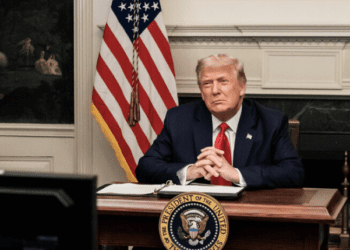
Nothing is ever truly predictable with Donald Trump. His upcoming Alaska summit with Russian President Vladimir Putin, viewed with such dread by Ukraine and its allies, is a case in point.

Much of the media and policy focus has been on Mr. Trump’s earlier position that there may have to be territorial compromises to end this terrible war (though he assured EU allies he wouldn’t discuss the matter without Ukraine present), and Ukrainian President Volodymyr Zelensky’s declaration that Kyiv will not accept such a derogation of national sovereignty. Indeed, territorial concessions by Ukraine would be traumatic, unfair and dangerous. Yet, there may be even greater problems that enormously diminish the possibility of a successful outcome.

In negotiations, often the devil resides in the details, and at this summit, which may well decide the future of Ukraine and peace and stability in Europe, there may be grave quandaries – territorial disputes, the format of the discussion, who actually participates, etc. The most bedeviling problem, however, is likely to be the absence of a clear and sustainable American grand strategy that addresses the fundamental principles of any successful settlement. The intention to stop the killing is noble, but it is missing the first principle of a good and lasting outcome: namely, that at the end of any agreement, unless Ukraine, regardless of territorial compromise, emerges as a more secure, stable, independent country that can rebuild in peace and thrive, there will be potentially a continuing mortal danger to Ukraine and a grave threat to democracy.

The American approach thus far, however, has been all transactional, and in the absence of a grand strategy and first principle, all the usual overwhelming American advantages are dissipated. This lacuna alone may prevent success.

By contrast, Mr. Putin has a grand strategy, which has been consistent throughout the conflict. Rejecting the unconditional, in-place ceasefire that Mr. Trump had originally demanded, Mr. Putin has responded with a cynical, manipulative demand to address the “root causes” of the conflict that he, in fact, precipitated. As resolution, he has invariably insisted on “demilitarization,” “denazification,” and “alliance neutrality” – in short, a Ukraine that is prohibited from joining NATO, with very limited armed forces and a subservient, or at least pliable, government in Kyiv. At the end of any “negotiations,” he wants to see a Ukraine that is effectively helpless. For him, the summit is not just a personal legitimation, but also a means to dictate Ukraine’s surrender.

Second, to use Mr. Trump’s metaphor of a card game, he is wasting a powerful hand, while Mr. Putin, a KGB-trained manipulator backed by a seasoned negotiating team (though playing with a weak deck in leading only a remnant of a superpower, suffering mammoth battlefield losses for minuscule tactical gains, and dealing with a stagnant economy and increasingly vassal status vis-a-vis China), is using his cards brilliantly. All the overwhelming American advantages – being the greatest superpower, with rapidly revitalizing NATO allies – are squandered by Mr. Trump’s eagerness to reach an agreement in his obsessive quest for a Nobel Prize.

Third, credibility in negotiations is a pivotal asset and here Mr. Trump has largely forfeited. His deadlines, red lines and threats of secondary sanctions have all been ephemeral, and his determination to confront the Russian dictator melts even during phone calls. Mr. Trump’s contemptuous dismissal of Mr. Zelensky, posturing that his presence at the summit would not affect the outcome, further encourages Russia.

Yet it might still be possible to make the best of a bad situation, assuming that Mr. Trump will not just walk away from the summit and finally turn on an irredeemable Russian regime. Though there are shades of Munich in 1938, Ukraine and modern Europe are different. Given enough time, the Europeans will be ready to stand up and a fatigued Ukraine is still prepared to continue the fight. The U.S., however, needs to provide the “bridging” to the time when the Europeans, and particularly Germany, can match their willingness to help defend Ukraine with commensurate military capacity. Success would ensure that even a neutralized Ukraine that concedes or exchanges some territory emerges as a large, heavily-armed Switzerland, a kind of “military hedgehog” that can fight off or deter future Putinite aggression as it evolves into a modern, advanced democracy.

On the other hand, if Mr. Trump bullies Kyiv into submitting to Moscow’s strategic goals and the Europeans’ resolve evaporates, Ukraine could become Russia’s protectorate. Far from peace, this would just whet Mr. Putin’s appetite for more gains and embolden Chinese aggressiveness in the East. For Mr. Trump, this betrayal would become the poisonous tree of his legacy. Anything else he might do subsequently would be deemed the fruits of that tree.


Aurel Braun is a professor of political science and international relations at the University of Toronto, an associate at Harvard University’s Davis Center, and Advisory Council member at the Macdonald-Laurier Institute.
Source: The Globe and Mail

Related Posts

Property rights are “precarious” in Canada: Paul Warchuk and Peter Copeland for Inside Policy Talks
Domestic Policy

Property rights are “precarious” in Canada: Paul Warchuk and Peter Copeland for Inside Policy Talks

December 4, 2025
Harvard eschews ingrained ideology in order to tackle ‘genuinely hard problems’: Peter MacKinnon in the National Post
Reforming Universities

Harvard eschews ingrained ideology in order to tackle ‘genuinely hard problems’: Peter MacKinnon in the National Post

December 3, 2025
Risking public backlash? Canadian universities and demographic-based faculty hiring
Education

Risking public backlash? Canadian universities and demographic-based faculty hiring

December 3, 2025
Next Post
A second Munich in Alaska? Joe Varner in Real Clear World

A second Munich in Alaska? Joe Varner in Real Clear World

Newsletter Signup

  Thank you for Signing Up
  Please correct the marked field(s) below.
Email Address  *
1,true,6,Contact Email,2
First Name *
1,true,1,First Name,2
Last Name *
1,true,1,Last Name,2
*
*Required Fields

Follow us on

Macdonald-Laurier Institute

323 Chapel Street, Suite #300
Ottawa, Ontario, K1N 7Z2 Canada

613.482.8327

info@macdonaldlaurier.ca
MLI directory

Support Us

Support the Macdonald-Laurier Institute to help ensure that Canada is one of the best governed countries in the world. Click below to learn more or become a sponsor.

Support Us

  • Inside Policy Magazine
  • Annual Reports
  • Jobs
  • Privacy Policy

© 2023 Macdonald-Laurier Institute. All Rights reserved.

No Result
View All Result
  • Home
  • About
    • Who We Are
    • Who Makes MLI Work
    • Fifteenth Anniversary
  • Experts
    • Experts Directory
    • In Memoriam
  • Issues
    • Domestic Policy
      • Economic Policy
      • Justice
      • Rights and Freedoms
      • Assisted Suicide (MAID)
      • Health Care
      • COVID-19
      • Gender Identity
      • Canada’s Political Tradition
      • AI, Technology and Innovation
      • Media and Telecoms
      • Housing
      • Immigration
      • Agriculture and Agri-Food
      • Competition Policy
    • Energy Policy
      • Energy
      • Environment
    • Foreign Policy
      • Israel-Hamas War
      • Ukraine
      • Taiwan
      • China
      • Europe and Russia
      • Indo-Pacific
      • Middle East and North Africa
      • North America
      • Foreign Interference
      • National Defence
      • National Security
      • Foreign Affairs
    • Indigenous Affairs
  • Projects
    • CNAPS (Center for North American Prosperity and Security)
    • The Promised Land
    • Voices that Inspire: The Macdonald-Laurier Vancouver Speaker Series
    • Dragon at the door
    • Canada on top of the world
    • Letter to a minister
    • Justice Report Card
    • The Great Energy Crisis
    • DisInfoWatch.org
    • Managing Indigenous Prosperity
    • Judicial Foundations
    • Landmark Cases Council
    • Defending The Marketplace of Ideas
    • Reforming the University
    • Past Projects
      • Digital Policy & Connectivity
      • Double Trouble
      • Canada and the Indo-Pacific Initiative
      • The Transatlantic Program
      • COVID Misery Index
      • Speak for Ourselves
      • The Eavesdropping Dragon: Huawei
      • Talkin’ in the Free World with Mariam Memarsadeghi
      • An Intellectual Property Strategy for Canada
      • Munk Senior Fellows
      • A Mandate for Canada
      • Confederation Series
      • Fiscal Reform
      • The Canadian Century project
      • Fixing Canadian health care
      • Internal trade
      • From a mandate for change
      • Size of government in Canada
      • Straight Talk
      • Labour Market Report
      • Leading Economic Indicator
      • Centre for Advancing Canada’s Interests Abroad
      • Indigenous Prosperity at a Crossroads
  • Events
    • Upcoming Events
    • Past Events
      • MLI Dinners
      • Great Canadian Debates
  • Latest News
  • Libraries
    • Columns
    • Commentary
    • Papers
    • Books
    • Video
  • Donate

© 2023 Macdonald-Laurier Institute. All Rights reserved.