
Friday, September 4, 2026
No Result
View All Result
  • Media
Macdonald-Laurier Institute
  • Home
  • About
    • Who We Are
    • Who Makes MLI Work
    • Fifteenth Anniversary
  • Experts
    • Experts Directory
    • In Memoriam
  • Issues
    • Domestic Policy
      • Economic Policy
      • Justice
      • Rights and Freedoms
      • Assisted Suicide (MAID)
      • Health Care
      • COVID-19
      • Gender Identity
      • Canada’s Political Tradition
      • AI, Technology and Innovation
      • Media and Telecoms
      • Housing
      • Immigration
      • Agriculture and Agri-Food
      • Competition Policy
    • Energy Policy
      • Energy
      • Environment
    • Foreign Policy
      • Israel-Hamas War
      • Ukraine
      • Taiwan
      • China
      • Europe and Russia
      • Indo-Pacific
      • Middle East and North Africa
      • North America
      • Foreign Interference
      • National Defence
      • National Security
      • Foreign Affairs
    • Indigenous Affairs
  • Projects
    • CNAPS (Center for North American Prosperity and Security)
    • The Promised Land
    • Dragon at the door
    • Justice Report Card
    • DisInfoWatch.org
    • Managing Indigenous Prosperity
    • Judicial Foundations
    • Landmark Cases Council
    • Closing Canada’s Border, Policing, and Legal Gaps
    • Reforming the University
    • Digital Policy & Connectivity
    • Defending The Marketplace of Ideas
    • Letter to a minister
    • Past Projects
      • The Great Energy Crisis
      • Canada on top of the world
      • Double Trouble
      • Canada and the Indo-Pacific Initiative
      • The Transatlantic Program
      • COVID Misery Index
        • Provincial COVID Misery Index
        • Beyond Lockdown
        • COVID and after: A mandate for recovery
      • Speak for Ourselves
      • The Eavesdropping Dragon: Huawei
      • Talkin’ in the Free World with Mariam Memarsadeghi
      • An Intellectual Property Strategy for Canada
      • Munk Senior Fellows
      • A Mandate for Canada
      • Confederation Series
      • Fiscal Reform
      • The Canadian Century project
      • Fixing Canadian health care
      • Internal trade
      • From a mandate for change
      • Size of government in Canada
      • Straight Talk
      • Labour Market Report
      • Leading Economic Indicator
      • Centre for Advancing Canada’s Interests Abroad
      • Indigenous Prosperity at a Crossroads
        • Aboriginal Canada and Natural Resources
  • Events
    • Voices that Inspire: The Macdonald-Laurier Vancouver Speaker Series
    • Upcoming Events
    • Past Events
      • MLI Dinners
      • Great Canadian Debates
  • Latest News
  • Libraries
    • Columns
    • Commentary
    • Papers
    • Books
    • Video
  • Donate
  • Home
  • About
    • Who We Are
    • Who Makes MLI Work
    • Fifteenth Anniversary
  • Experts
    • Experts Directory
    • In Memoriam
  • Issues
    • Domestic Policy
      • Economic Policy
      • Justice
      • Rights and Freedoms
      • Assisted Suicide (MAID)
      • Health Care
      • COVID-19
      • Gender Identity
      • Canada’s Political Tradition
      • AI, Technology and Innovation
      • Media and Telecoms
      • Housing
      • Immigration
      • Agriculture and Agri-Food
      • Competition Policy
    • Energy Policy
      • Energy
      • Environment
    • Foreign Policy
      • Israel-Hamas War
      • Ukraine
      • Taiwan
      • China
      • Europe and Russia
      • Indo-Pacific
      • Middle East and North Africa
      • North America
      • Foreign Interference
      • National Defence
      • National Security
      • Foreign Affairs
    • Indigenous Affairs
  • Projects
    • CNAPS (Center for North American Prosperity and Security)
    • The Promised Land
    • Dragon at the door
    • Justice Report Card
    • DisInfoWatch.org
    • Managing Indigenous Prosperity
    • Judicial Foundations
    • Landmark Cases Council
    • Closing Canada’s Border, Policing, and Legal Gaps
    • Reforming the University
    • Digital Policy & Connectivity
    • Defending The Marketplace of Ideas
    • Letter to a minister
    • Past Projects
      • The Great Energy Crisis
      • Canada on top of the world
      • Double Trouble
      • Canada and the Indo-Pacific Initiative
      • The Transatlantic Program
      • COVID Misery Index
        • Provincial COVID Misery Index
        • Beyond Lockdown
        • COVID and after: A mandate for recovery
      • Speak for Ourselves
      • The Eavesdropping Dragon: Huawei
      • Talkin’ in the Free World with Mariam Memarsadeghi
      • An Intellectual Property Strategy for Canada
      • Munk Senior Fellows
      • A Mandate for Canada
      • Confederation Series
      • Fiscal Reform
      • The Canadian Century project
      • Fixing Canadian health care
      • Internal trade
      • From a mandate for change
      • Size of government in Canada
      • Straight Talk
      • Labour Market Report
      • Leading Economic Indicator
      • Centre for Advancing Canada’s Interests Abroad
      • Indigenous Prosperity at a Crossroads
        • Aboriginal Canada and Natural Resources
  • Events
    • Voices that Inspire: The Macdonald-Laurier Vancouver Speaker Series
    • Upcoming Events
    • Past Events
      • MLI Dinners
      • Great Canadian Debates
  • Latest News
  • Libraries
    • Columns
    • Commentary
    • Papers
    • Books
    • Video
  • Donate
No Result
View All Result
Macdonald-Laurier Institute

Geography trumps geopolitics — Canada cannot play Beijing off Washington: Khanh Vu Duc in the Western Standard

Ottawa’s pivot to Beijing in the wake of US tariffs is a dangerous geopolitical delusion.

September 4, 2026
in Foreign Affairs, Latest News, Columns, Foreign Policy, In the Media, Indo-Pacific, North America
Reading Time: 4 mins read
A A
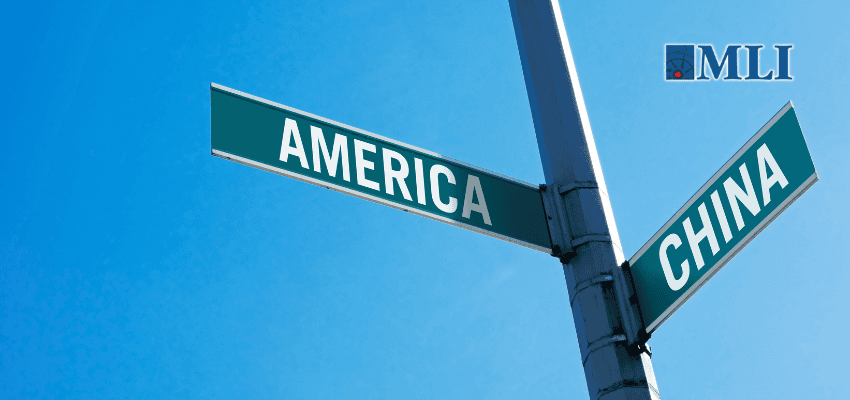
Image via Canva.

Image via Canva.

This article originally appeared in the Western Standard.

By Khanh Vu Duc, September 4, 2026

Prime Minister Mark Carney was right to walk away from the latest Canada–US trade talks. But he should not confuse resisting Washington with balancing Washington.

The collapse of negotiations, followed by Washington’s new 50% tariffs on roughly $28 billion of Canadian goods, marks a new rift in a relationship that will not simply return to pre-Trump normality. Carney says the United States (US) demanded too much and offered too little, including terms affecting Canadian culture, the auto sector, and Canada’s ability to negotiate future trade agreements.

In his August 22 remarks, Carney set out Canada’s position on the negotiations. If that account is accurate, Ottawa was right to say no. But walking away is not a strategy. What Canada does next matters more.

Carney has correctly identified Canada’s vulnerability: too much of the economy depends on one market and one relationship. The answer, of course, is to diversify into new markets without stumbling into another strategic dependency.

Canada should expand trade with Europe, Japan, South Korea, India, Australia, and Southeast Asia. It should build the infrastructure and domestic capacity needed to reach those markets and make Canada more competitive at home.

However, Carney’s January 2026 decision to establish a “new strategic partnership” with China deserves scrutiny. Ottawa has every right to trade with Beijing. But trading with China is not the same as making China a strategic counterweight to America. The partnership covers not only trade and energy, but also security, multilateralism, and culture.

After all, geography matters. The US is not simply Canada’s largest customer. It is our continental partner in defence, intelligence, energy, infrastructure and industrial supply chains. Meanwhile, China — located an ocean away — has a security architecture and economic ecosystem that are fundamentally at odds with ours.

Canada should reject two bad choices: accepting whatever Washington demands or moving closer to Beijing to balance American power.

Carney has made economic coercion a central theme of his foreign policy thinking. The current crisis is testing whether Canada can resist pressure from a great power without sacrificing its own interests. His August 21 statement on the trade negotiations underscored Canada’s defiant response to the US pressure.

Ottawa should be able to tell Washington: Canada chooses its own trading partners. It should also tell itself: China will not become Canada’s bargaining chip against the US.

Canada’s sovereignty gives it the right to trade with China. It does not require Canada to make China part of its geopolitical strategy.

The automobile dispute exposes the stakes. Canada’s auto industry is part of an integrated North American production system. Carney says US proposals affecting Canadian auto content and vehicle tariffs would have made production in Canada increasingly uneconomic.

If Washington wants North America as a whole to compete with China, it should not pursue policies that weaken Canadian manufacturing and push investment south of the border. Ottawa, meanwhile, should not rush to deepen integration with China as a response to the US trade war.

The goal should be a stronger North American industrial base and wider access to other democratic markets. That would strengthen both Canada and the US.

Carney is right that the international order has changed and Canada needs greater resilience. But not at the cost of swapping dependence on one hegemon for another, less democratic one.

Canada should diversify trade, strengthen infrastructure, expand exports to democratic economies and protect critical sectors from coercion. It should trade with China, where doing so serves Canadian interests, while maintaining strict safeguards around critical minerals, technology, data, telecommunications, and strategic infrastructure. Above all, Canada should remain anchored in North America.

That does not mean accepting every American demand. Nor does it mean pretending Washington will always be predictable or reliable.

The US is difficult to replace because geography, security, and economic integration make the relationship unique. But while confrontation may play well politically at home, the Carney government needs to also be realistic. The goal is not to choose between Washington and Beijing, but to make Canada strong enough to deal with both on its own terms.

Canada needs more markets, stronger domestic capacity, and greater freedom of action — not another great power to balance the one next door. It means having enough options to say no to America when necessary without imagining that Canada can afford to choose China instead.


Macdonald-Laurier Institute contributor Khanh Vu Duc is an Ottawa-based lawyer, essayist, and commentator on international affairs. He has appeared on BBC News, Radio Free Asia, Voice of America (Vietnamese), and Asia Sentinel (English).
Source: Western Standard
Tags: Khanh Vu Duc

Related Posts

Don’t count on Europe to save us, Canada: Ed Fast and Richard Shimooka in The Hub
Foreign Policy

Don’t count on Europe to save us, Canada: Ed Fast and Richard Shimooka in The Hub

September 4, 2026
How diversity requirements reduced productivity for Canada’s research chairs: Peter Copeland and Eric Kaufmann on Inside Policy Talks
Education

How diversity requirements reduced productivity for Canada’s research chairs: Peter Copeland and Eric Kaufmann on Inside Policy Talks

September 4, 2026
Eric Kaufmann responds to allegations MLI paper is “racist and sexist”
Social Issues

Eric Kaufmann responds to allegations MLI paper is “racist and sexist”

September 3, 2026
Next Post
Don’t count on Europe to save us, Canada: Ed Fast and Richard Shimooka in The Hub

Don’t count on Europe to save us, Canada: Ed Fast and Richard Shimooka in The Hub

Newsletter Signup

  Thank you for Signing Up
  Please correct the marked field(s) below.
Email Address *
1,true,6,Contact Email,2
First Name *
1,true,1,First Name,2
Last Name *
1,true,1,Last Name,2
*Required Fields

Follow us on

Macdonald-Laurier Institute

323 Chapel Street, Suite #300
Ottawa, Ontario, K1N 7Z2 Canada

613.482.8327

info@macdonaldlaurier.ca
MLI directory

Support Us

Support the Macdonald-Laurier Institute to help ensure that Canada is one of the best governed countries in the world. Click below to learn more or become a sponsor.

Support Us

  • Inside Policy Magazine
  • Annual Reports
  • Jobs
  • Privacy Policy

© 2023 Macdonald-Laurier Institute. All Rights reserved.

No Result
View All Result
  • Home
  • About
    • Who We Are
    • Who Makes MLI Work
    • Fifteenth Anniversary
  • Experts
    • Experts Directory
    • In Memoriam
  • Issues
    • Domestic Policy
      • Economic Policy
      • Justice
      • Rights and Freedoms
      • Assisted Suicide (MAID)
      • Health Care
      • COVID-19
      • Gender Identity
      • Canada’s Political Tradition
      • AI, Technology and Innovation
      • Media and Telecoms
      • Housing
      • Immigration
      • Agriculture and Agri-Food
      • Competition Policy
    • Energy Policy
      • Energy
      • Environment
    • Foreign Policy
      • Israel-Hamas War
      • Ukraine
      • Taiwan
      • China
      • Europe and Russia
      • Indo-Pacific
      • Middle East and North Africa
      • North America
      • Foreign Interference
      • National Defence
      • National Security
      • Foreign Affairs
    • Indigenous Affairs
  • Projects
    • CNAPS (Center for North American Prosperity and Security)
    • The Promised Land
    • Dragon at the door
    • Justice Report Card
    • DisInfoWatch.org
    • Managing Indigenous Prosperity
    • Judicial Foundations
    • Landmark Cases Council
    • Closing Canada’s Border, Policing, and Legal Gaps
    • Reforming the University
    • Digital Policy & Connectivity
    • Defending The Marketplace of Ideas
    • Letter to a minister
    • Past Projects
      • The Great Energy Crisis
      • Canada on top of the world
      • Double Trouble
      • Canada and the Indo-Pacific Initiative
      • The Transatlantic Program
      • COVID Misery Index
      • Speak for Ourselves
      • The Eavesdropping Dragon: Huawei
      • Talkin’ in the Free World with Mariam Memarsadeghi
      • An Intellectual Property Strategy for Canada
      • Munk Senior Fellows
      • A Mandate for Canada
      • Confederation Series
      • Fiscal Reform
      • The Canadian Century project
      • Fixing Canadian health care
      • Internal trade
      • From a mandate for change
      • Size of government in Canada
      • Straight Talk
      • Labour Market Report
      • Leading Economic Indicator
      • Centre for Advancing Canada’s Interests Abroad
      • Indigenous Prosperity at a Crossroads
  • Events
    • Voices that Inspire: The Macdonald-Laurier Vancouver Speaker Series
    • Upcoming Events
    • Past Events
      • MLI Dinners
      • Great Canadian Debates
  • Latest News
  • Libraries
    • Columns
    • Commentary
    • Papers
    • Books
    • Video
  • Donate

© 2023 Macdonald-Laurier Institute. All Rights reserved.