This article originally appeared in the National Post.
By Chris Milburn, July 16, 2026
Are we really past “peak woke,” as some think? Perhaps it’s true elsewhere. But recent events suggest the underlying ideology remains deeply entrenched in Canada.
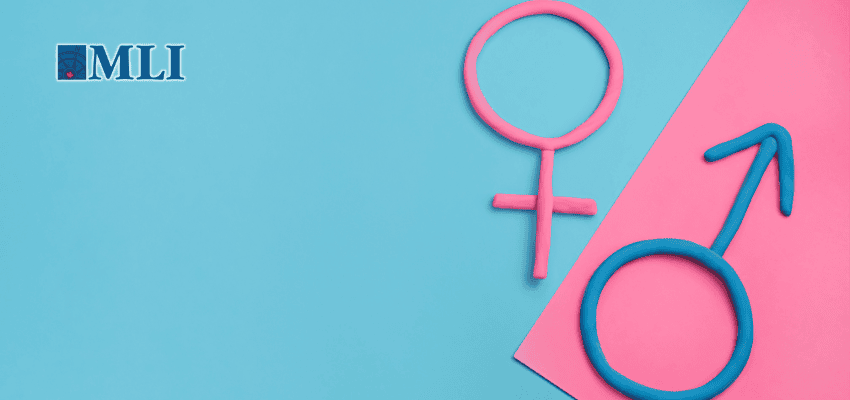
On June 8, the Standing Committee on Science and Research met to examine explicit affirmative action hiring practices for women. However, when Conservative MP Vincent Neil Ho asked a witness — Dr. Mona Nemer, a molecular biologist and Canada’s chief science advisor — to define “woman,” chaos erupted.
“You know a thing or two about X and Y chromosomes,” Ho asked, “so I want to ask you: what is the definition of a woman?”
Immediately, Liberal MP John Paul Danko interrupted on a point of order. “It is Pride Month,” Danforth said, clearly agitated, “and Order 18 prohibits personal attacks, insults and offensive language.” Danko’s interjection kicked off several minutes of acrimonious debate as Ho pressed the question, and his colleague persisted in trying to shut him down.
For viewers, it must have felt like stepping into 2021–22, when “What is a woman?” became one of the defining flashpoints of the culture wars. While many countries have since begun retreating from the postmodern ideology that fuelled that moment, Canada remains stubbornly mired in it.
Postmodernism’s most damaging legacy has been its insistence that even our most basic and self-evident truths — including the biological reality of womanhood — are open to question. This wasn’t a problem when the ideology was confined to obscure fields like 19th-century French literature or 1920s feminist art. But like a malignant cancer, postmodernism spread quietly at first before metastasizing throughout our cultural and societal institutions.
Along the way, it produced increasingly absurd ideas, such as “decolonizing light” and “queering math.” But to most people, the most visible consequence has been the efforts to “break the gender binary.”
As science fiction author Philip K. Dick said, “Reality is that which, when you stop believing in it, doesn’t go away.” Activists can try to “break the gender binary,” but its existence is as fundamental a truth as the physics of light or the reality of mathematics. Our human existence as male or female is as definite and fundamental a distinction as black and white or up and down.
So why do governments and institutions in Canada continue to push forward this harmful, unscientific ideology through, for instance, the recent appointment of a gender activist as the head of the Canadian Pediatric Society?
Wokeism’s advocates will, no doubt, claim that the United States’ recent retreat on the issue is fuelled by the supposed transphobia and bigotry of the Trump administration and the MAGA movement. However, countries that would normally be considered “progressive” are also eliminating ideologically based policies and returning to a science-based approach. In the United Kingdom, the government closed the infamous Tavistock Clinic and greatly restricted hormonal and surgical manipulation of children in the wake of the release of the Cass Review, while Denmark, Sweden, and Finland have restricted the use of puberty blockers.
Gender activists may believe that it is harmless to view sex and gender as fluid. But there are very real-world consequences. Just ask the biological women who, almost overnight, were forced to share women-only spaces such as changing rooms, prisons, or rape crisis centres with biological men. Or ask the women and girls who watched biological men take their places on sports teams and their spots atop the podium.
More than a half-century ago, George Orwell warned of the dangers of “doublethink” — the psychological process of simultaneously holding two contradictory beliefs in one’s mind and accepting both as true. He also wrote, “One has to belong to the intelligentsia to believe things like that: no ordinary man could be such a fool.”
Today, Canadians are forced to engage in doublethink on a range of contradictory ideas, from “I’m a proud Canadian … but there is no Canadian culture” to “We are living on stolen land … but I support open borders and mass immigration” to “Women need affirmative action in hiring … but asking for a definition of ‘woman’ is deeply offensive.”
The heated exchange between MPs Ho and Danko and Dr. Nemer highlights how “double-thinkers” can retreat to defensiveness and anger when their contradictions are challenged. For many Canadians, it was another moment adding to a growing sense of unease.
Doublethink is not just bad for individuals, it is unhealthy for our country as a whole. We need to be able to agree on basic realities, such as the sex binary. Canada needs to break wokeism’s grip on the nation. How can we begin to find answers if we can’t even ask questions?
Chris Milburn, a Macdonald-Laurier Institute contributing writer, is a family and ER physician with 25 years of experience working in communities of all sizes. He has worked on public health policy with the Canadian Medical Association, Doctors Nova Scotia, and community groups.