Friday, June 12, 2026
No Result
View All Result
  • Media
Macdonald-Laurier Institute
  • Home
  • About
    • Who We Are
    • Who Makes MLI Work
    • Fifteenth Anniversary
  • Experts
    • Experts Directory
    • In Memoriam
  • Issues
    • Domestic Policy
      • Economic Policy
      • Justice
      • Rights and Freedoms
      • Assisted Suicide (MAID)
      • Health Care
      • COVID-19
      • Gender Identity
      • Canada’s Political Tradition
      • AI, Technology and Innovation
      • Media and Telecoms
      • Housing
      • Immigration
      • Agriculture and Agri-Food
      • Competition Policy
    • Energy Policy
      • Energy
      • Environment
    • Foreign Policy
      • Israel-Hamas War
      • Ukraine
      • Taiwan
      • China
      • Europe and Russia
      • Indo-Pacific
      • Middle East and North Africa
      • North America
      • Foreign Interference
      • National Defence
      • National Security
      • Foreign Affairs
    • Indigenous Affairs
  • Projects
    • CNAPS (Center for North American Prosperity and Security)
    • Justice Report Card
    • The Promised Land
    • Voices that Inspire: The Macdonald-Laurier Vancouver Speaker Series
    • Dragon at the door
    • Canada on top of the world
    • Letter to a minister
    • The Great Energy Crisis
    • DisInfoWatch.org
    • Managing Indigenous Prosperity
    • Judicial Foundations
    • Landmark Cases Council
    • Defending The Marketplace of Ideas
    • Reforming the University
    • Digital Policy & Connectivity
    • Past Projects
      • Double Trouble
      • Canada and the Indo-Pacific Initiative
      • The Transatlantic Program
      • COVID Misery Index
        • Provincial COVID Misery Index
        • Beyond Lockdown
        • COVID and after: A mandate for recovery
      • Speak for Ourselves
      • The Eavesdropping Dragon: Huawei
      • Talkin’ in the Free World with Mariam Memarsadeghi
      • An Intellectual Property Strategy for Canada
      • Munk Senior Fellows
      • A Mandate for Canada
      • Confederation Series
      • Fiscal Reform
      • The Canadian Century project
      • Fixing Canadian health care
      • Internal trade
      • From a mandate for change
      • Size of government in Canada
      • Straight Talk
      • Labour Market Report
      • Leading Economic Indicator
      • Centre for Advancing Canada’s Interests Abroad
      • Indigenous Prosperity at a Crossroads
        • Aboriginal Canada and Natural Resources
  • Events
    • Upcoming Events
    • Past Events
      • MLI Dinners
      • Great Canadian Debates
  • Latest News
  • Libraries
    • Columns
    • Commentary
    • Papers
    • Books
    • Video
  • Donate
  • Home
  • About
    • Who We Are
    • Who Makes MLI Work
    • Fifteenth Anniversary
  • Experts
    • Experts Directory
    • In Memoriam
  • Issues
    • Domestic Policy
      • Economic Policy
      • Justice
      • Rights and Freedoms
      • Assisted Suicide (MAID)
      • Health Care
      • COVID-19
      • Gender Identity
      • Canada’s Political Tradition
      • AI, Technology and Innovation
      • Media and Telecoms
      • Housing
      • Immigration
      • Agriculture and Agri-Food
      • Competition Policy
    • Energy Policy
      • Energy
      • Environment
    • Foreign Policy
      • Israel-Hamas War
      • Ukraine
      • Taiwan
      • China
      • Europe and Russia
      • Indo-Pacific
      • Middle East and North Africa
      • North America
      • Foreign Interference
      • National Defence
      • National Security
      • Foreign Affairs
    • Indigenous Affairs
  • Projects
    • CNAPS (Center for North American Prosperity and Security)
    • Justice Report Card
    • The Promised Land
    • Voices that Inspire: The Macdonald-Laurier Vancouver Speaker Series
    • Dragon at the door
    • Canada on top of the world
    • Letter to a minister
    • The Great Energy Crisis
    • DisInfoWatch.org
    • Managing Indigenous Prosperity
    • Judicial Foundations
    • Landmark Cases Council
    • Defending The Marketplace of Ideas
    • Reforming the University
    • Digital Policy & Connectivity
    • Past Projects
      • Double Trouble
      • Canada and the Indo-Pacific Initiative
      • The Transatlantic Program
      • COVID Misery Index
        • Provincial COVID Misery Index
        • Beyond Lockdown
        • COVID and after: A mandate for recovery
      • Speak for Ourselves
      • The Eavesdropping Dragon: Huawei
      • Talkin’ in the Free World with Mariam Memarsadeghi
      • An Intellectual Property Strategy for Canada
      • Munk Senior Fellows
      • A Mandate for Canada
      • Confederation Series
      • Fiscal Reform
      • The Canadian Century project
      • Fixing Canadian health care
      • Internal trade
      • From a mandate for change
      • Size of government in Canada
      • Straight Talk
      • Labour Market Report
      • Leading Economic Indicator
      • Centre for Advancing Canada’s Interests Abroad
      • Indigenous Prosperity at a Crossroads
        • Aboriginal Canada and Natural Resources
  • Events
    • Upcoming Events
    • Past Events
      • MLI Dinners
      • Great Canadian Debates
  • Latest News
  • Libraries
    • Columns
    • Commentary
    • Papers
    • Books
    • Video
  • Donate
No Result
View All Result
Macdonald-Laurier Institute

Canada’s risky China reset: Dennis Molinaro in Real Clear World

Beijing is not offering partnership. It seeks access to the United States through Canada, and leverage over Canada itself.

June 12, 2026
in Foreign Affairs, Latest News, Columns, Foreign Policy, In the Media, Indo-Pacific
Reading Time: 4 mins read
A A
Canada’s risky China reset: Dennis Molinaro in Real Clear World

Photo via pm.gc.ca

This article originally appeared in Real Clear World.

By Dennis Molinaro, June 12, 2026

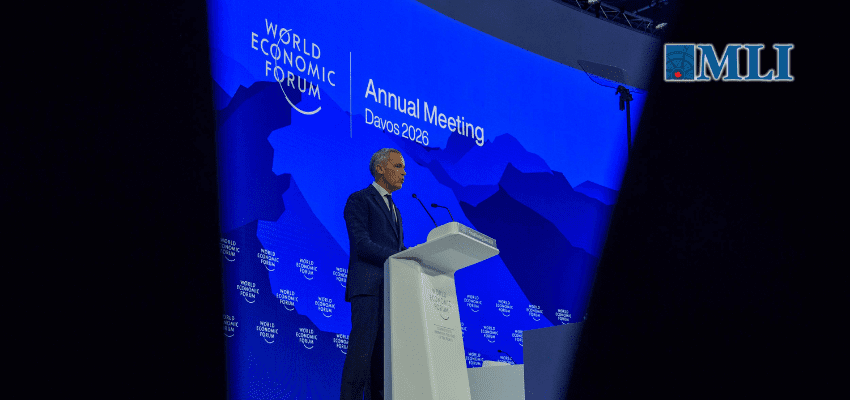
Well over 100 days have passed since Canadian Prime Minister Carney signaled his belief in a new world order at Davos and announced a strategic partnership with China. Since then, the government has never explained how such a partnership is possible with a state that occupies an openly adversarial position toward Canada and its allies. China engages in espionage, political interference, coercion of diaspora communities, cyber intrusion, and intellectual property theft. The list of offenses is long, and the abuse stretches back decades.

Canadians are right to ask how Carney expects to walk this path with China while depending on China’s principal rival, the United States, for much of its economic prosperity and nearly all of its intelligence picture. The decisions Ottawa is making to increase Canada-China engagement will shape the Canada-US relationship regardless of which party holds power in Washington.

For example, Canada’s place in the Five Eyes, the most exclusive intelligence sharing club in the world, is central to its national security and is almost entirely asymmetric — it is the smallest contributor and the most dependent recipient. The Five Eyes is not a treaty alliance like NATO. It is a habit of trust, renewed daily by analysts and liaison officers who decide, case by case, what to share and with whom. Every signal Ottawa sends about deepening ties with the PRC registers in Washington, London, Canberra, and Wellington as evidence that Canadian discretion can no longer be assumed. The partnership was built among wartime allies on the premise that each member’s secrets were safer with the others than with anyone else. That premise does not survive a member entering a strategic partnership with a country the other four spend most of their effort countering.

The integration runs deeper still. Canada and the United States maintain a defence relationship built over more than seven decades, with thousands of agreements and the closest industrial integration of any two militaries in the world. That architecture is already under strain: the United States announced this month that it will no longer participate in the Permanent Joint Board on Defence, the senior bilateral defence body established in 1940. Ottawa cannot afford to compound that pressure by signaling alignment with Washington’s adversary, particularly as competition over the Arctic intensifies and Beijing declares itself a “near-Arctic state.” How does Canada protect its supply chains and defence-industrial base from the same country the United States is restructuring its entire industrial policy to decouple from? Ottawa has not explained this either.

The development that should worry Canada and our allies the most is the undisclosed law enforcement arrangement Ottawa has signed with the PRC. Arrangements with the Ministry of Public Security are not new; earlier ones centred on Fox Hunt and Sky Net, programs Beijing calls anti-corruption operations, and which Western authorities have identified as instruments for surveilling and coercing dissidents abroad.

The United States prosecutes those who run covert police stations on its soil. Lu Jianwang was convicted in Brooklyn in May 2026 for operating one out of Manhattan’s Chinatown on behalf of the Ministry of Public Security, the same service with which Canada has now signed a confidential agreement.

Will the RCMP be expected to share information with the very same ministry of the PRC that has been shown to commit transnational repression in both Canada and the US? Outside the Carney government, no one knows. Nothing has been said to reassure the Chinese-Canadians, Tibetans, Uyghurs, and Hong Kongers whose families remain within Beijing’s reach.

The problem running through all of this is the government’s refusal to be transparent with Canadians and with Canada’s partners. None of these arrangements appeared in an election platform, and semantic exercises around the need for diversification do not change that. Canadians deserve an explanation; the government continues to refuse one.

The deeper dilemma is that Canada may believe it is choosing between partnership with Washington and partnership with Beijing. No such choice exists. Beijing is not offering partnership. It seeks access to the United States through Canada, and leverage over Canada itself. Canada is at risk of losing itself. The question is whether the country still knows where it stands in our relationship with an aggressive, authoritarian Beijing, and whether it has honesty and courage to explain why we’ve “partnered” with our adversary.


Dennis Molinaro, a contributor to the Macdonald-Laurier Institute, is a former national security analyst and policy advisor for the Canadian federal government. His latest book Under Assault: Interference and Espionage in China’s Secret War Against Canada, was published by Penguin Random House, 2025.


Source: Real Clear World
Tags: Dennis Molinaro

Related Posts

Dame shame no more – Why Canada should revive merit-based titles: Matthew Downey for Inside Policy
Political Tradition

Dame shame no more – Why Canada should revive merit-based titles: Matthew Downey for Inside Policy

June 12, 2026
Trump’s replacement tariffs will have unintended consequences for USMCA: Jamie Tronnes & Emily Kilcrease in the National Review
North America

Trump’s replacement tariffs will have unintended consequences for USMCA: Jamie Tronnes & Emily Kilcrease in the National Review

June 12, 2026
Liberalism is in crisis: Michael Bonner and Peter Copeland for Inside Policy Talks
Political Tradition

Liberalism is in crisis: Michael Bonner and Peter Copeland for Inside Policy Talks

June 11, 2026

Newsletter Signup

  Thank you for Signing Up
  Please correct the marked field(s) below.
Email Address  *
1,true,6,Contact Email,2
First Name *
1,true,1,First Name,2
Last Name *
1,true,1,Last Name,2
*
*Required Fields

Follow us on

Macdonald-Laurier Institute

323 Chapel Street, Suite #300
Ottawa, Ontario, K1N 7Z2 Canada

613.482.8327

info@macdonaldlaurier.ca
MLI directory

Support Us

Support the Macdonald-Laurier Institute to help ensure that Canada is one of the best governed countries in the world. Click below to learn more or become a sponsor.

Support Us

  • Inside Policy Magazine
  • Annual Reports
  • Jobs
  • Privacy Policy

© 2023 Macdonald-Laurier Institute. All Rights reserved.

This site uses cookies. By continuing to browse the site you are agreeing to our use of cookies.

Privacy Preference Center

Consent Management

Necessary

Advertising

Analytics

Other

No Result
View All Result
  • Home
  • About
    • Who We Are
    • Who Makes MLI Work
    • Fifteenth Anniversary
  • Experts
    • Experts Directory
    • In Memoriam
  • Issues
    • Domestic Policy
      • Economic Policy
      • Justice
      • Rights and Freedoms
      • Assisted Suicide (MAID)
      • Health Care
      • COVID-19
      • Gender Identity
      • Canada’s Political Tradition
      • AI, Technology and Innovation
      • Media and Telecoms
      • Housing
      • Immigration
      • Agriculture and Agri-Food
      • Competition Policy
    • Energy Policy
      • Energy
      • Environment
    • Foreign Policy
      • Israel-Hamas War
      • Ukraine
      • Taiwan
      • China
      • Europe and Russia
      • Indo-Pacific
      • Middle East and North Africa
      • North America
      • Foreign Interference
      • National Defence
      • National Security
      • Foreign Affairs
    • Indigenous Affairs
  • Projects
    • CNAPS (Center for North American Prosperity and Security)
    • Justice Report Card
    • The Promised Land
    • Voices that Inspire: The Macdonald-Laurier Vancouver Speaker Series
    • Dragon at the door
    • Canada on top of the world
    • Letter to a minister
    • The Great Energy Crisis
    • DisInfoWatch.org
    • Managing Indigenous Prosperity
    • Judicial Foundations
    • Landmark Cases Council
    • Defending The Marketplace of Ideas
    • Reforming the University
    • Digital Policy & Connectivity
    • Past Projects
      • Double Trouble
      • Canada and the Indo-Pacific Initiative
      • The Transatlantic Program
      • COVID Misery Index
      • Speak for Ourselves
      • The Eavesdropping Dragon: Huawei
      • Talkin’ in the Free World with Mariam Memarsadeghi
      • An Intellectual Property Strategy for Canada
      • Munk Senior Fellows
      • A Mandate for Canada
      • Confederation Series
      • Fiscal Reform
      • The Canadian Century project
      • Fixing Canadian health care
      • Internal trade
      • From a mandate for change
      • Size of government in Canada
      • Straight Talk
      • Labour Market Report
      • Leading Economic Indicator
      • Centre for Advancing Canada’s Interests Abroad
      • Indigenous Prosperity at a Crossroads
  • Events
    • Upcoming Events
    • Past Events
      • MLI Dinners
      • Great Canadian Debates
  • Latest News
  • Libraries
    • Columns
    • Commentary
    • Papers
    • Books
    • Video
  • Donate

© 2023 Macdonald-Laurier Institute. All Rights reserved.