Saturday, December 13, 2025
No Result
View All Result
  • Media
Macdonald-Laurier Institute
  • Home
  • About
    • Who We Are
    • Who Makes MLI Work
    • Fifteenth Anniversary
  • Experts
    • Experts Directory
    • In Memoriam
  • Issues
    • Domestic Policy
      • Economic Policy
      • Justice
      • Rights and Freedoms
      • Assisted Suicide (MAID)
      • Health Care
      • COVID-19
      • Gender Identity
      • Canada’s Political Tradition
      • AI, Technology and Innovation
      • Media and Telecoms
      • Housing
      • Immigration
      • Agriculture and Agri-Food
      • Competition Policy
    • Energy Policy
      • Energy
      • Environment
    • Foreign Policy
      • Israel-Hamas War
      • Ukraine
      • Taiwan
      • China
      • Europe and Russia
      • Indo-Pacific
      • Middle East and North Africa
      • North America
      • Foreign Interference
      • National Defence
      • National Security
      • Foreign Affairs
    • Indigenous Affairs
  • Projects
    • CNAPS (Center for North American Prosperity and Security)
    • The Promised Land
    • Voices that Inspire: The Macdonald-Laurier Vancouver Speaker Series
    • Dragon at the door
    • Canada on top of the world
    • Letter to a minister
    • Justice Report Card
    • The Great Energy Crisis
    • DisInfoWatch.org
    • Managing Indigenous Prosperity
    • Judicial Foundations
    • Landmark Cases Council
    • Defending The Marketplace of Ideas
    • Reforming the University
    • Past Projects
      • Digital Policy & Connectivity
      • Double Trouble
      • Canada and the Indo-Pacific Initiative
      • The Transatlantic Program
      • COVID Misery Index
        • Provincial COVID Misery Index
        • Beyond Lockdown
        • COVID and after: A mandate for recovery
      • Speak for Ourselves
      • The Eavesdropping Dragon: Huawei
      • Talkin’ in the Free World with Mariam Memarsadeghi
      • An Intellectual Property Strategy for Canada
      • Munk Senior Fellows
      • A Mandate for Canada
      • Confederation Series
      • Fiscal Reform
      • The Canadian Century project
      • Fixing Canadian health care
      • Internal trade
      • From a mandate for change
      • Size of government in Canada
      • Straight Talk
      • Labour Market Report
      • Leading Economic Indicator
      • Centre for Advancing Canada’s Interests Abroad
      • Indigenous Prosperity at a Crossroads
        • Aboriginal Canada and Natural Resources
  • Events
    • Upcoming Events
    • Past Events
      • MLI Dinners
      • Great Canadian Debates
  • Latest News
  • Libraries
    • Columns
    • Commentary
    • Papers
    • Books
    • Video
  • Donate
  • Home
  • About
    • Who We Are
    • Who Makes MLI Work
    • Fifteenth Anniversary
  • Experts
    • Experts Directory
    • In Memoriam
  • Issues
    • Domestic Policy
      • Economic Policy
      • Justice
      • Rights and Freedoms
      • Assisted Suicide (MAID)
      • Health Care
      • COVID-19
      • Gender Identity
      • Canada’s Political Tradition
      • AI, Technology and Innovation
      • Media and Telecoms
      • Housing
      • Immigration
      • Agriculture and Agri-Food
      • Competition Policy
    • Energy Policy
      • Energy
      • Environment
    • Foreign Policy
      • Israel-Hamas War
      • Ukraine
      • Taiwan
      • China
      • Europe and Russia
      • Indo-Pacific
      • Middle East and North Africa
      • North America
      • Foreign Interference
      • National Defence
      • National Security
      • Foreign Affairs
    • Indigenous Affairs
  • Projects
    • CNAPS (Center for North American Prosperity and Security)
    • The Promised Land
    • Voices that Inspire: The Macdonald-Laurier Vancouver Speaker Series
    • Dragon at the door
    • Canada on top of the world
    • Letter to a minister
    • Justice Report Card
    • The Great Energy Crisis
    • DisInfoWatch.org
    • Managing Indigenous Prosperity
    • Judicial Foundations
    • Landmark Cases Council
    • Defending The Marketplace of Ideas
    • Reforming the University
    • Past Projects
      • Digital Policy & Connectivity
      • Double Trouble
      • Canada and the Indo-Pacific Initiative
      • The Transatlantic Program
      • COVID Misery Index
        • Provincial COVID Misery Index
        • Beyond Lockdown
        • COVID and after: A mandate for recovery
      • Speak for Ourselves
      • The Eavesdropping Dragon: Huawei
      • Talkin’ in the Free World with Mariam Memarsadeghi
      • An Intellectual Property Strategy for Canada
      • Munk Senior Fellows
      • A Mandate for Canada
      • Confederation Series
      • Fiscal Reform
      • The Canadian Century project
      • Fixing Canadian health care
      • Internal trade
      • From a mandate for change
      • Size of government in Canada
      • Straight Talk
      • Labour Market Report
      • Leading Economic Indicator
      • Centre for Advancing Canada’s Interests Abroad
      • Indigenous Prosperity at a Crossroads
        • Aboriginal Canada and Natural Resources
  • Events
    • Upcoming Events
    • Past Events
      • MLI Dinners
      • Great Canadian Debates
  • Latest News
  • Libraries
    • Columns
    • Commentary
    • Papers
    • Books
    • Video
  • Donate
No Result
View All Result
Macdonald-Laurier Institute

Now is not the time for a new nuclear deal with Iran: Tzvi Kahn for Inside Policy

The time is ripe not for an accord, but for increased global economic pressure that would deter the Islamic Republic from ever reconstituting its atomic program.

August 29, 2025
in Foreign Affairs, Back Issues, Inside Policy, Foreign Policy, Latest News, Middle East and North Africa
Reading Time: 4 mins read
A A
Now is not the time for a new nuclear deal with Iran: Tzvi Kahn for Inside Policy

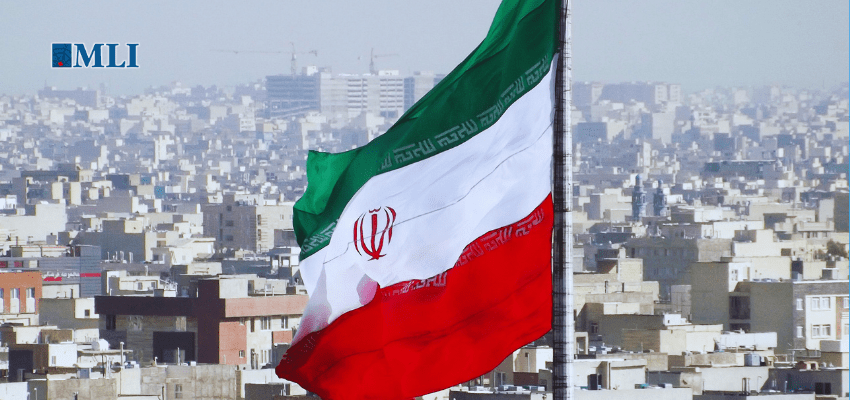
Image via Canva.

By Tzvi Kahn, August 29, 2025

Canada says it wants a new nuclear deal with Iran. Tehran says it wants one too. But their goals are not the same. Iran seeks only an agreement that would enable the regime to advance a nuclear weapons program – not an agreement that would end it. Ottawa must not be fooled. The time is ripe not for an accord, but for increased global economic pressure that would deter the Islamic Republic from ever reconstituting its atomic program — particularly its efforts to enrich uranium.

In an August 20 statement, the Non-Proliferation Group of the G7, where Canada holds the presidency, asserted, “We re-iterate that Iran can never have or acquire a nuclear weapon.” This is a welcome declaration. But the group then goes on to undermine that goal by calling for “the resumption of negotiations aimed at achieving a comprehensive, verifiable, and durable agreement that addresses Iran’s nuclear program.” This objective fails to reckon with a key reality: Iran has already declared that it will never abandon its uranium enrichment, an indispensable step in the development of a nuclear bomb.

Rather than grapple with Tehran’s contention, the statement vaguely proclaims that Canada and its partners aspire for a deal that merely “addresses” the nuclear program. Such nebulous language, which diverges from a stronger G7 statement on June 30 that also urged Iran “to refrain from reconstituting its unjustified enrichment activities,” tacitly reduces pressure on Tehran to halt enrichment.

Consequently, the statement risks repeating the mistake that led to the fatally flawed 2015 nuclear agreement between Iran and world powers. That accord, formally known as the Joint Comprehensive Plan of Action (JCPOA), never required the dismantlement of Iran’s nuclear facilities, and allowed Iran to continue enriching uranium, thereby preserving Tehran’s ability to build a bomb at a future date. Still, the deal also granted Iran billions of dollars in sanctions relief.

These concessions marked a notable departure from previous international demands. Between 2006 and 2010, the UN Security Council passed multiple resolutions requiring Tehran to suspend enrichment indefinitely. At the time, the international community correctly understood that enrichment – notwithstanding Iran’s insistent claims that its nuclear program was exclusively peaceful – marked an undeniable indicator of the regime’s intent to develop the ultimate weapon.

During negotiations for the JCPOA, then-US Secretary of State John Kerry repeated the UN’s orders. “No, there is no right to enrich,” he said. “We do not recognize a right to enrich.” Then-chief US negotiator Wendy Sherman said that any nuclear deal must include “a lot of dismantling of their infrastructure.”

These imperatives went unfulfilled. Thus, in 2018, the first Trump administration prudently withdrew from the accord, noting, quite rightly, that it fails to prevent Iran from constructing a nuclear bomb. In its place, Washington imposed a campaign of maximum pressure, crippling Iran’s economy with devastating sanctions and articulating a credible military threat. Tehran proceeded to violate the JCPOA with fresh nuclear advances, but they were narrow and incremental, as the regime feared more punishment from Washington.

After the 2020 US assassination of the notorious Iranian general Qassem Soleimani, who led the Islamic Republic’s campaign of terror and aggression throughout the Middle East, Tehran refrained from enriching uranium to high levels. The Trump administration had successfully deterred the regime from significantly advancing its nuclear program.

Upon taking office, however, the Biden administration suspended the maximum pressure campaign, hoping to revive the JCPOA. Billions of dollars once again flowed into the regime’s coffers. Tehran, recognizing that the United States no longer posed a meaningful threat, once again surged ahead with its nuclear activities, including robust uranium enrichment, placing it on the threshold of a nuclear weapons capability by the time Trump returned to office in January 2025.

Biden’s failure to sustain maximum pressure on Iran thus made the 12-Day War in June inevitable. To be sure, Trump did make a good-faith effort to resolve the crisis diplomatically, engaging in two months of negotiations with Iran prior to the conflict. But when Tehran refused to dismantle its nuclear program and terminate enrichment, the United States and Israel justifiably recognized that they no longer had time for peaceful options to end the threat.

Yet for the past decade, Ottawa has largely failed to grasp that Iran’s insistence on enriching uranium reflected its sustained commitment to developing a nuclear bomb. Instead, the federal government of Justin Trudeau supported the JCPOA, opposed Washington’s 2018 withdrawal, and backed Biden’s failed efforts to restore the accord. Prime Minister Mark Carney has yet to signal that he disagrees with his predecessor’s approach.

If the G7 pursues a new deal that resembles the JCPOA, the prospects of renewed conflict in Iran would dramatically intensify. Any Western compromise on enrichment would effectively legitimize and enable Tehran’s nuclear weapons program, likely leading the regime to start rebuilding its atomic facilities.

Trump’s maximum pressure campaign during his first term indicated that strong pressure, with sufficient longevity, can deter Iran from advancing its nuclear activities even in the absence of a deal. Today, Canada can pursue its primary objectives without an agreement as well. By supporting America’s maximum pressure campaign, Ottawa and its partners can help restrain Iran – and meaningfully “address” the threat of its nuclear program.


Tzvi Kahn is a research fellow and senior editor at the Foundation for Defense of Democracies. Follow him on X @TzviKahn.
Tags: Tzvi Kahn

Related Posts

Breakthrough Nation with Karen Restoule: Crystal Smith, Ep. 1
Energy

Breakthrough Nation with Karen Restoule: Crystal Smith, Ep. 1

December 12, 2025
Asia Map
Columns

Survival in Trump, Xi and Putin’s ‘great power’ world: Stephen Nagy in the Japan Times

December 12, 2025
Westminster parliament
Domestic Policy

Dec. 11 is the day Canada gained autonomy. Progressives want us to forget: Christopher Dummitt in the National Post

December 11, 2025
Next Post
Barriers to building LNG infrastructure in Canada: Heather Exner-Pirot on BNN Bloomberg

Barriers to building LNG infrastructure in Canada: Heather Exner-Pirot on BNN Bloomberg

Newsletter Signup

  Thank you for Signing Up
  Please correct the marked field(s) below.
Email Address  *
1,true,6,Contact Email,2
First Name *
1,true,1,First Name,2
Last Name *
1,true,1,Last Name,2
*
*Required Fields

Follow us on

Macdonald-Laurier Institute

323 Chapel Street, Suite #300
Ottawa, Ontario, K1N 7Z2 Canada

613.482.8327

info@macdonaldlaurier.ca
MLI directory

Support Us

Support the Macdonald-Laurier Institute to help ensure that Canada is one of the best governed countries in the world. Click below to learn more or become a sponsor.

Support Us

  • Inside Policy Magazine
  • Annual Reports
  • Jobs
  • Privacy Policy

© 2023 Macdonald-Laurier Institute. All Rights reserved.

No Result
View All Result
  • Home
  • About
    • Who We Are
    • Who Makes MLI Work
    • Fifteenth Anniversary
  • Experts
    • Experts Directory
    • In Memoriam
  • Issues
    • Domestic Policy
      • Economic Policy
      • Justice
      • Rights and Freedoms
      • Assisted Suicide (MAID)
      • Health Care
      • COVID-19
      • Gender Identity
      • Canada’s Political Tradition
      • AI, Technology and Innovation
      • Media and Telecoms
      • Housing
      • Immigration
      • Agriculture and Agri-Food
      • Competition Policy
    • Energy Policy
      • Energy
      • Environment
    • Foreign Policy
      • Israel-Hamas War
      • Ukraine
      • Taiwan
      • China
      • Europe and Russia
      • Indo-Pacific
      • Middle East and North Africa
      • North America
      • Foreign Interference
      • National Defence
      • National Security
      • Foreign Affairs
    • Indigenous Affairs
  • Projects
    • CNAPS (Center for North American Prosperity and Security)
    • The Promised Land
    • Voices that Inspire: The Macdonald-Laurier Vancouver Speaker Series
    • Dragon at the door
    • Canada on top of the world
    • Letter to a minister
    • Justice Report Card
    • The Great Energy Crisis
    • DisInfoWatch.org
    • Managing Indigenous Prosperity
    • Judicial Foundations
    • Landmark Cases Council
    • Defending The Marketplace of Ideas
    • Reforming the University
    • Past Projects
      • Digital Policy & Connectivity
      • Double Trouble
      • Canada and the Indo-Pacific Initiative
      • The Transatlantic Program
      • COVID Misery Index
      • Speak for Ourselves
      • The Eavesdropping Dragon: Huawei
      • Talkin’ in the Free World with Mariam Memarsadeghi
      • An Intellectual Property Strategy for Canada
      • Munk Senior Fellows
      • A Mandate for Canada
      • Confederation Series
      • Fiscal Reform
      • The Canadian Century project
      • Fixing Canadian health care
      • Internal trade
      • From a mandate for change
      • Size of government in Canada
      • Straight Talk
      • Labour Market Report
      • Leading Economic Indicator
      • Centre for Advancing Canada’s Interests Abroad
      • Indigenous Prosperity at a Crossroads
  • Events
    • Upcoming Events
    • Past Events
      • MLI Dinners
      • Great Canadian Debates
  • Latest News
  • Libraries
    • Columns
    • Commentary
    • Papers
    • Books
    • Video
  • Donate

© 2023 Macdonald-Laurier Institute. All Rights reserved.