Friday, December 5, 2025
No Result
View All Result
  • Media
Macdonald-Laurier Institute
  • Home
  • About
    • Who We Are
    • Who Makes MLI Work
    • Fifteenth Anniversary
  • Experts
    • Experts Directory
    • In Memoriam
  • Issues
    • Domestic Policy
      • Economic Policy
      • Justice
      • Rights and Freedoms
      • Assisted Suicide (MAID)
      • Health Care
      • COVID-19
      • Gender Identity
      • Canada’s Political Tradition
      • AI, Technology and Innovation
      • Media and Telecoms
      • Housing
      • Immigration
      • Agriculture and Agri-Food
      • Competition Policy
    • Energy Policy
      • Energy
      • Environment
    • Foreign Policy
      • Israel-Hamas War
      • Ukraine
      • Taiwan
      • China
      • Europe and Russia
      • Indo-Pacific
      • Middle East and North Africa
      • North America
      • Foreign Interference
      • National Defence
      • National Security
      • Foreign Affairs
    • Indigenous Affairs
  • Projects
    • CNAPS (Center for North American Prosperity and Security)
    • The Promised Land
    • Voices that Inspire: The Macdonald-Laurier Vancouver Speaker Series
    • Dragon at the door
    • Canada on top of the world
    • Letter to a minister
    • Justice Report Card
    • The Great Energy Crisis
    • DisInfoWatch.org
    • Managing Indigenous Prosperity
    • Judicial Foundations
    • Landmark Cases Council
    • Defending The Marketplace of Ideas
    • Reforming the University
    • Past Projects
      • Digital Policy & Connectivity
      • Double Trouble
      • Canada and the Indo-Pacific Initiative
      • The Transatlantic Program
      • COVID Misery Index
        • Provincial COVID Misery Index
        • Beyond Lockdown
        • COVID and after: A mandate for recovery
      • Speak for Ourselves
      • The Eavesdropping Dragon: Huawei
      • Talkin’ in the Free World with Mariam Memarsadeghi
      • An Intellectual Property Strategy for Canada
      • Munk Senior Fellows
      • A Mandate for Canada
      • Confederation Series
      • Fiscal Reform
      • The Canadian Century project
      • Fixing Canadian health care
      • Internal trade
      • From a mandate for change
      • Size of government in Canada
      • Straight Talk
      • Labour Market Report
      • Leading Economic Indicator
      • Centre for Advancing Canada’s Interests Abroad
      • Indigenous Prosperity at a Crossroads
        • Aboriginal Canada and Natural Resources
  • Events
    • Upcoming Events
    • Past Events
      • MLI Dinners
      • Great Canadian Debates
  • Latest News
  • Libraries
    • Columns
    • Commentary
    • Papers
    • Books
    • Video
  • Donate
  • Home
  • About
    • Who We Are
    • Who Makes MLI Work
    • Fifteenth Anniversary
  • Experts
    • Experts Directory
    • In Memoriam
  • Issues
    • Domestic Policy
      • Economic Policy
      • Justice
      • Rights and Freedoms
      • Assisted Suicide (MAID)
      • Health Care
      • COVID-19
      • Gender Identity
      • Canada’s Political Tradition
      • AI, Technology and Innovation
      • Media and Telecoms
      • Housing
      • Immigration
      • Agriculture and Agri-Food
      • Competition Policy
    • Energy Policy
      • Energy
      • Environment
    • Foreign Policy
      • Israel-Hamas War
      • Ukraine
      • Taiwan
      • China
      • Europe and Russia
      • Indo-Pacific
      • Middle East and North Africa
      • North America
      • Foreign Interference
      • National Defence
      • National Security
      • Foreign Affairs
    • Indigenous Affairs
  • Projects
    • CNAPS (Center for North American Prosperity and Security)
    • The Promised Land
    • Voices that Inspire: The Macdonald-Laurier Vancouver Speaker Series
    • Dragon at the door
    • Canada on top of the world
    • Letter to a minister
    • Justice Report Card
    • The Great Energy Crisis
    • DisInfoWatch.org
    • Managing Indigenous Prosperity
    • Judicial Foundations
    • Landmark Cases Council
    • Defending The Marketplace of Ideas
    • Reforming the University
    • Past Projects
      • Digital Policy & Connectivity
      • Double Trouble
      • Canada and the Indo-Pacific Initiative
      • The Transatlantic Program
      • COVID Misery Index
        • Provincial COVID Misery Index
        • Beyond Lockdown
        • COVID and after: A mandate for recovery
      • Speak for Ourselves
      • The Eavesdropping Dragon: Huawei
      • Talkin’ in the Free World with Mariam Memarsadeghi
      • An Intellectual Property Strategy for Canada
      • Munk Senior Fellows
      • A Mandate for Canada
      • Confederation Series
      • Fiscal Reform
      • The Canadian Century project
      • Fixing Canadian health care
      • Internal trade
      • From a mandate for change
      • Size of government in Canada
      • Straight Talk
      • Labour Market Report
      • Leading Economic Indicator
      • Centre for Advancing Canada’s Interests Abroad
      • Indigenous Prosperity at a Crossroads
        • Aboriginal Canada and Natural Resources
  • Events
    • Upcoming Events
    • Past Events
      • MLI Dinners
      • Great Canadian Debates
  • Latest News
  • Libraries
    • Columns
    • Commentary
    • Papers
    • Books
    • Video
  • Donate
No Result
View All Result
Macdonald-Laurier Institute

Without reform, Ontario’s elected school boards face inevitable death: Paul W. Bennett in the Globe and Mail

Education is too important to be left solely to Queen’s Park bureaucrats.

September 5, 2025
in Domestic Policy, Latest News, Columns, In the Media, Education, Paul W. Bennett
Reading Time: 4 mins read
A A
Lack of viewpoint diversity in academia erodes trusts in universities: Christopher Dummitt for Inside Policy

Image via Flickr.

This article originally appeared in the Globe and Mail.

By Paul W. Bennett, September 5, 2025

The long-standing pillar of local democracy in Canadian education – the elected school board – is crumbling. In Atlantic Canada, locally elected school boards with trustees have been swept away. In Quebec, anglophone school boards were gutted. In Manitoba, trustees narrowly escaped elimination. And in Ontario, their decline has reached a terminal stage – and Education Minister Paul Calandra is now poised to wield the axe.

The question is no longer whether trustees are in trouble. It is whether they can be saved – or whether it’s time to replace them with something better.

For more than a century, school boards were populated by trustees who were neighbours, who listened to parents, who spoke up on school closures, and who defended community priorities against distant bureaucracies. But since the 1990s, provincial governments have clipped their wings. Trustees lost taxing powers. They cannot alter curriculum or testing. Their roles have been reduced to those of a corporate director, while superintendents run the show.

The irony is becoming more visible. Trustees are expected to be both grassroots advocates and balcony-view governors. The result is confusion, frustration, impotence and, increasingly, irrelevance.

Nova Scotia showed where this ends. In early 2018, the Stephen McNeil government dissolved all English-language school boards, replacing them with an appointed provincial advisory council and school-level committees. Few mourned the boards’ demise.

By then, they had become detached, plagued by low voter turnout, rampant acclamations and infighting. Communities saw them as useless in the fight to save local schools. When boards lost credibility, abolition was the logical conclusion.

Ontario’s boards now teeter on the same precipice. The Toronto District School Board and four other boards are under provincial supervision. Trustees in Toronto, Ottawa, and London have made headlines for infighting, overspending, and budget bungling. Outside of major cities, most trustees are elected by acclamation. That’s not democracy – it’s vacancy.

The crisis has clear roots. District consolidation created remote bureaucracies. Corporate governance models neutered trustees. Codes of conduct, enforced by superintendents, stifled dissent. School closings, particularly in rural areas, destroyed trust. And when boards failed to oversee administrators or improve performance, they forfeited what little legitimacy they had left.

Nova Scotia replaced boards with top-down bureaucracies known as “regional centres of education.” Quebec and Manitoba came close to following them. Ontario is watching – and drifting toward the same fate.

If Ontario wants to avoid repeating Nova Scotia’s mistake, it must act now. Some important lessons stand out.

Locals need to feel that their voices matter. Parents want to be heard when schools close, class sizes grow, or supports vanish. If boards disappear, Ontario must create new, authentic channels for parental engagement – not token parent councils with no authority.

School-board governance structures must be clear. Trustees cannot be both corporate directors and grassroots advocates; the province must choose one or the other. Either empower trustees with real authority, or admit the charade and design something new.

School closings must change. Parents are not opposed to creative solutions. In Nova Scotia, communities rallied a decade ago and pushed for schools as “hubs” with shared use and innovative programming. Bureaucratic roadblocks fuel cynicism. Ontario should open doors to local alternatives before more schools are consolidated into super-sized “big box” elementaries.
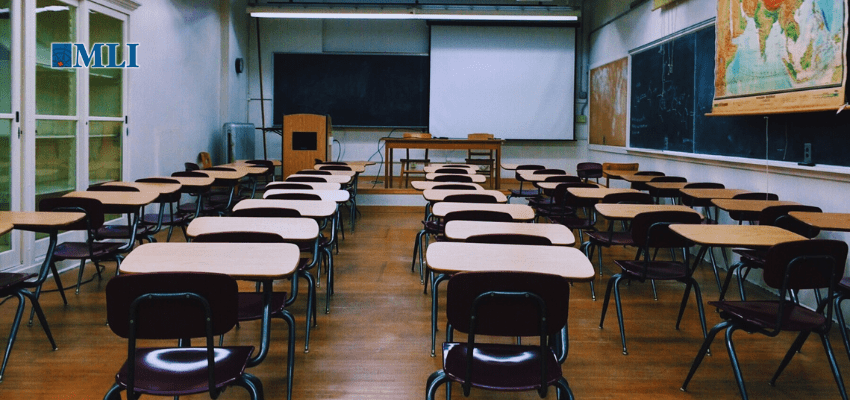
Democracy depends on participation. When most trustees are elected by acclamation, boards lack legitimacy. Reviving contested elections may require bold measures: aligning trustee elections with municipal contests, restoring meaningful powers, and raising the stakes. Without that, public apathy will only deepen, giving bureaucrats free rein.

Ontario is approaching the point of no return. The slow death of the province’s 72 school boards is not inevitable, but without reform their obituary may already be written.

Education is too important to be left solely to Queen’s Park bureaucrats. Local voices matter – whether through reimagined boards or through new, more credible democratic structures.

The status quo is unsustainable. Ontario can rehabilitate school boards or replace them with stronger, community-driven models. But one thing is certain: doing nothing will leave parents voiceless, teachers disempowered, and communities shut out of the schools they fund and depend upon.

The end of trusteeship is near. Ontario must decide: renewal or oblivion. Let’s hope meaningful local voices survive the coming transition.


Paul W. Bennett is the director of the Schoolhouse Institute, a senior fellow at the Macdonald-Laurier Institute and author of The State of the System: A Reality Check on Canada’s Schools.
Source: The Globe and Mail

Related Posts

Property rights are “precarious” in Canada: Paul Warchuk and Peter Copeland for Inside Policy Talks
Domestic Policy

Property rights are “precarious” in Canada: Paul Warchuk and Peter Copeland for Inside Policy Talks

December 4, 2025
Harvard eschews ingrained ideology in order to tackle ‘genuinely hard problems’: Peter MacKinnon in the National Post
Reforming Universities

Harvard eschews ingrained ideology in order to tackle ‘genuinely hard problems’: Peter MacKinnon in the National Post

December 3, 2025
Risking public backlash? Canadian universities and demographic-based faculty hiring
Education

Risking public backlash? Canadian universities and demographic-based faculty hiring

December 3, 2025
Next Post
Big spending on public transit has not changed commuting: Philip Cross in the Financial Post

Big spending on public transit has not changed commuting: Philip Cross in the Financial Post

Newsletter Signup

  Thank you for Signing Up
  Please correct the marked field(s) below.
Email Address  *
1,true,6,Contact Email,2
First Name *
1,true,1,First Name,2
Last Name *
1,true,1,Last Name,2
*
*Required Fields

Follow us on

Macdonald-Laurier Institute

323 Chapel Street, Suite #300
Ottawa, Ontario, K1N 7Z2 Canada

613.482.8327

info@macdonaldlaurier.ca
MLI directory

Support Us

Support the Macdonald-Laurier Institute to help ensure that Canada is one of the best governed countries in the world. Click below to learn more or become a sponsor.

Support Us

  • Inside Policy Magazine
  • Annual Reports
  • Jobs
  • Privacy Policy

© 2023 Macdonald-Laurier Institute. All Rights reserved.

No Result
View All Result
  • Home
  • About
    • Who We Are
    • Who Makes MLI Work
    • Fifteenth Anniversary
  • Experts
    • Experts Directory
    • In Memoriam
  • Issues
    • Domestic Policy
      • Economic Policy
      • Justice
      • Rights and Freedoms
      • Assisted Suicide (MAID)
      • Health Care
      • COVID-19
      • Gender Identity
      • Canada’s Political Tradition
      • AI, Technology and Innovation
      • Media and Telecoms
      • Housing
      • Immigration
      • Agriculture and Agri-Food
      • Competition Policy
    • Energy Policy
      • Energy
      • Environment
    • Foreign Policy
      • Israel-Hamas War
      • Ukraine
      • Taiwan
      • China
      • Europe and Russia
      • Indo-Pacific
      • Middle East and North Africa
      • North America
      • Foreign Interference
      • National Defence
      • National Security
      • Foreign Affairs
    • Indigenous Affairs
  • Projects
    • CNAPS (Center for North American Prosperity and Security)
    • The Promised Land
    • Voices that Inspire: The Macdonald-Laurier Vancouver Speaker Series
    • Dragon at the door
    • Canada on top of the world
    • Letter to a minister
    • Justice Report Card
    • The Great Energy Crisis
    • DisInfoWatch.org
    • Managing Indigenous Prosperity
    • Judicial Foundations
    • Landmark Cases Council
    • Defending The Marketplace of Ideas
    • Reforming the University
    • Past Projects
      • Digital Policy & Connectivity
      • Double Trouble
      • Canada and the Indo-Pacific Initiative
      • The Transatlantic Program
      • COVID Misery Index
      • Speak for Ourselves
      • The Eavesdropping Dragon: Huawei
      • Talkin’ in the Free World with Mariam Memarsadeghi
      • An Intellectual Property Strategy for Canada
      • Munk Senior Fellows
      • A Mandate for Canada
      • Confederation Series
      • Fiscal Reform
      • The Canadian Century project
      • Fixing Canadian health care
      • Internal trade
      • From a mandate for change
      • Size of government in Canada
      • Straight Talk
      • Labour Market Report
      • Leading Economic Indicator
      • Centre for Advancing Canada’s Interests Abroad
      • Indigenous Prosperity at a Crossroads
  • Events
    • Upcoming Events
    • Past Events
      • MLI Dinners
      • Great Canadian Debates
  • Latest News
  • Libraries
    • Columns
    • Commentary
    • Papers
    • Books
    • Video
  • Donate

© 2023 Macdonald-Laurier Institute. All Rights reserved.