Saturday, December 6, 2025
No Result
View All Result
  • Media
Macdonald-Laurier Institute
  • Home
  • About
    • Who We Are
    • Who Makes MLI Work
    • Fifteenth Anniversary
  • Experts
    • Experts Directory
    • In Memoriam
  • Issues
    • Domestic Policy
      • Economic Policy
      • Justice
      • Rights and Freedoms
      • Assisted Suicide (MAID)
      • Health Care
      • COVID-19
      • Gender Identity
      • Canada’s Political Tradition
      • AI, Technology and Innovation
      • Media and Telecoms
      • Housing
      • Immigration
      • Agriculture and Agri-Food
      • Competition Policy
    • Energy Policy
      • Energy
      • Environment
    • Foreign Policy
      • Israel-Hamas War
      • Ukraine
      • Taiwan
      • China
      • Europe and Russia
      • Indo-Pacific
      • Middle East and North Africa
      • North America
      • Foreign Interference
      • National Defence
      • National Security
      • Foreign Affairs
    • Indigenous Affairs
  • Projects
    • CNAPS (Center for North American Prosperity and Security)
    • The Promised Land
    • Voices that Inspire: The Macdonald-Laurier Vancouver Speaker Series
    • Dragon at the door
    • Canada on top of the world
    • Letter to a minister
    • Justice Report Card
    • The Great Energy Crisis
    • DisInfoWatch.org
    • Managing Indigenous Prosperity
    • Judicial Foundations
    • Landmark Cases Council
    • Defending The Marketplace of Ideas
    • Reforming the University
    • Past Projects
      • Digital Policy & Connectivity
      • Double Trouble
      • Canada and the Indo-Pacific Initiative
      • The Transatlantic Program
      • COVID Misery Index
        • Provincial COVID Misery Index
        • Beyond Lockdown
        • COVID and after: A mandate for recovery
      • Speak for Ourselves
      • The Eavesdropping Dragon: Huawei
      • Talkin’ in the Free World with Mariam Memarsadeghi
      • An Intellectual Property Strategy for Canada
      • Munk Senior Fellows
      • A Mandate for Canada
      • Confederation Series
      • Fiscal Reform
      • The Canadian Century project
      • Fixing Canadian health care
      • Internal trade
      • From a mandate for change
      • Size of government in Canada
      • Straight Talk
      • Labour Market Report
      • Leading Economic Indicator
      • Centre for Advancing Canada’s Interests Abroad
      • Indigenous Prosperity at a Crossroads
        • Aboriginal Canada and Natural Resources
  • Events
    • Upcoming Events
    • Past Events
      • MLI Dinners
      • Great Canadian Debates
  • Latest News
  • Libraries
    • Columns
    • Commentary
    • Papers
    • Books
    • Video
  • Donate
  • Home
  • About
    • Who We Are
    • Who Makes MLI Work
    • Fifteenth Anniversary
  • Experts
    • Experts Directory
    • In Memoriam
  • Issues
    • Domestic Policy
      • Economic Policy
      • Justice
      • Rights and Freedoms
      • Assisted Suicide (MAID)
      • Health Care
      • COVID-19
      • Gender Identity
      • Canada’s Political Tradition
      • AI, Technology and Innovation
      • Media and Telecoms
      • Housing
      • Immigration
      • Agriculture and Agri-Food
      • Competition Policy
    • Energy Policy
      • Energy
      • Environment
    • Foreign Policy
      • Israel-Hamas War
      • Ukraine
      • Taiwan
      • China
      • Europe and Russia
      • Indo-Pacific
      • Middle East and North Africa
      • North America
      • Foreign Interference
      • National Defence
      • National Security
      • Foreign Affairs
    • Indigenous Affairs
  • Projects
    • CNAPS (Center for North American Prosperity and Security)
    • The Promised Land
    • Voices that Inspire: The Macdonald-Laurier Vancouver Speaker Series
    • Dragon at the door
    • Canada on top of the world
    • Letter to a minister
    • Justice Report Card
    • The Great Energy Crisis
    • DisInfoWatch.org
    • Managing Indigenous Prosperity
    • Judicial Foundations
    • Landmark Cases Council
    • Defending The Marketplace of Ideas
    • Reforming the University
    • Past Projects
      • Digital Policy & Connectivity
      • Double Trouble
      • Canada and the Indo-Pacific Initiative
      • The Transatlantic Program
      • COVID Misery Index
        • Provincial COVID Misery Index
        • Beyond Lockdown
        • COVID and after: A mandate for recovery
      • Speak for Ourselves
      • The Eavesdropping Dragon: Huawei
      • Talkin’ in the Free World with Mariam Memarsadeghi
      • An Intellectual Property Strategy for Canada
      • Munk Senior Fellows
      • A Mandate for Canada
      • Confederation Series
      • Fiscal Reform
      • The Canadian Century project
      • Fixing Canadian health care
      • Internal trade
      • From a mandate for change
      • Size of government in Canada
      • Straight Talk
      • Labour Market Report
      • Leading Economic Indicator
      • Centre for Advancing Canada’s Interests Abroad
      • Indigenous Prosperity at a Crossroads
        • Aboriginal Canada and Natural Resources
  • Events
    • Upcoming Events
    • Past Events
      • MLI Dinners
      • Great Canadian Debates
  • Latest News
  • Libraries
    • Columns
    • Commentary
    • Papers
    • Books
    • Video
  • Donate
No Result
View All Result
Macdonald-Laurier Institute

UN aviation body meeting in Montreal a chance to push back against Chinese aggression on Taiwan: Scott E. Simon in National Newswatch

Rapid geopolitical shifts make it urgent to welcome Taiwan to the International Civil Aviation Organization's fall meeting.

September 24, 2025
in Foreign Affairs, National Security, Latest News, Foreign Policy, In the Media, Taiwan, Scott Simon
Reading Time: 4 mins read
A A
UN aviation body meeting in Montreal a chance to push back against Chinese aggression on Taiwan: Scott E. Simon in National Newswatch

This article originally appeared in National Newswatch.

By Scott E. Simon, September 23, 2025

A coming meeting of a United Nations body in Montreal is an opportunity for Canada to push back against the Chinese Communist Party’s rising aggression and lawfare.

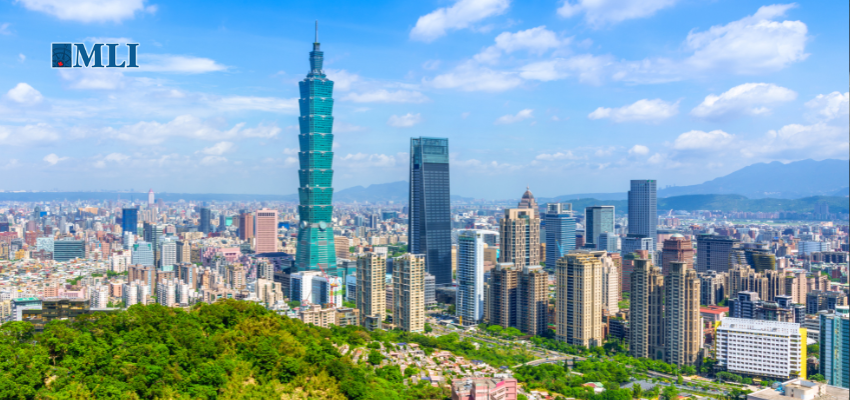
The International Civil Aviation Organization (ICAO)—which helps to coordinate the global sharing of airspace—hosts its 42nd Assembly beginning Sept. 23. Rapid geopolitical shifts make it urgent to welcome Taiwan to this meeting.

Taiwan’s inclusion in the ICAO and other international agencies that deal with borderless issues is a long-standing goal of Canada and its G7 allies. Despite ICAO’s motto of “no country left behind,” Taiwan is excluded because of coercion from the People’s Republic of China (PRC). China’s claim to represent Taiwan is part of its global campaign to legitimize eventual annexation of the island state. This is itself a threat to global peace.

The Republic of China (ROC)—the government that inherited administration of Taiwan from Japan after the Second World War—was a founding ICAO member in 1944. In 1971, ICAO bolstered aviation safety by admitting the Communist-controlled People’s Republic of China, with its vast airspace, as the sole representative of China. Taiwan remained outside of PRC jurisdiction. Because both governments claimed to represent China, pragmatic arrangements were made to keep planes flying safely everywhere.

Taiwan’s Civil Aviation Administration continued to manage the Taipei Flight Information Region (FIR) while being excluded from the UN body. Taiwan’s aviation authority still negotiates bilateral aviation agreements, including with Canada. Since the 1990s, when Taiwan democratized, its freely elected government has abandoned all pretence of ruling China, and has sought an autonomous place in international society. But the PRC has never abandoned its goal of integrating Taiwan, and seeks to eliminate Taiwan’s international presence through global lawfare.

Securing Taiwan’s place at ICAO is important to Canada for three reasons.

First, Canada’s trade-based economy relies on aviation. In 2024, the Taipei FIR handled more than 1.64 million flights—including direct flights between Canada and Taiwan, as well as Air Canada flights to and from Hong Kong. 64 million passengers went through Taiwan’s airports that year, including Canadians travelling onward to Southeast Asia or India. In terms of cargo, Taiwan ranks 6th in international air cargo volume. For most of the COVID-19 pandemic, flights between Taiwan and Canada continued because, even with few passengers, the cargo hold was full of electronics needed in Canadians’ daily lives.

Second, technological change makes Taiwan’s exclusion untenable. For decades, Taiwan received operations manuals and up-to-date instructions from the American Federal Aviation Administration. Nowadays, aviation governance relies on platforms like ICAO’s Secure Portal. Taiwan’s exclusion means its aviation authorities cannot directly access this information. Increased commercial use of AI will bring new challenges.

Third, geopolitical risks have increased. Most dangerously, China uses Taiwan’s exclusion from ICAO in disruptive ways, letting politics trump even their own aviation security. Since 2015, China has unilaterally activated new routes immediately adjacent to the Taipei FIR without following ICAO protocol of consulting with all concerned parties. Between Aug. 4 and 7, 2022, Taiwan had to reroute flights away from its FIR due to suddenly announced military exercises in its airspace. This violated ICAO regulations requiring seven days advance notice. Finally, last November, an unauthorized aircraft approached a US cargo flight in the Taipei FIR. A similar incident happened to a Taiwanese passenger airline shortly thereafter. As a result, Taiwan has become a pioneer in systems that detect the presence and location of other aircraft. Taiwan is on the frontline as China’s military activities impact aviation safety in the region.

China weaponizes aviation safety in its lawfare and psychological warfare against Taiwan, with the clearly stated goal of annexation by any means necessary. China’s impingements on the Taipei FIR, its failure to consult with Taipei, and pressure on Canada and others to temper their support of Taiwan are all part of this.

International complacency risks giving China’s leaders the impression that they can encroach upon Taiwan’s territory with impunity, and risks military quarantine of Taiwan’s airspace by the PRC. Since China also claims territories belonging to Japan and the Philippines, any move against Taiwan could mark the beginning of protracted conflict. All efforts must be made to avoid legitimizing China’s extraterritorial claims and to stem its lawfare against democracies.

ICAO already invites a variety of stakeholders—including non-member states, NGOs, and private enterprises—to participate in meetings and activities. Taiwan even attended the 2013 ICAO Assembly as a guest. Taiwan is not asking for membership, but for meaningful participation.

Including Taiwan is not altruism. It’s a means to repudiate China’s ambitions. Taiwan’s accession to full ICAO membership, like it has at APEC and the WTO, would be ideal. But even an invitation for non-state membership would show that China does not exercise effective jurisdiction over Taiwan’s airspace.

Canada obviously cannot bring Taiwan into international organizations on its own. But it can lead the advocacy, within the boundaries of long-standing Canadian policy to not comment on sovereignty conflicts. Resisting China’s lawfare—which lays the ground for further aggression—protects Taiwan’s resilience and thus upholds the status quo of the Indo-Pacific.


Dr. Scott E. Simon is chair of Taiwan Studies at the University of Ottawa, and a senior fellow at the Macdonald-Laurier Institute.

Related Posts

Strengthening Taiwan’s resilience: Armchair discussion with Taiwan Deputy Minister Ming-chi Chen
Past Events

Strengthening Taiwan’s resilience: Armchair discussion with Taiwan Deputy Minister Ming-chi Chen

December 5, 2025
Iran pushing the Middle East to the brink of war: Joe Varner for National Security Journal
Middle East and North Africa

Iran pushing the Middle East to the brink of war: Joe Varner for National Security Journal

December 5, 2025
Property rights are “precarious” in Canada: Paul Warchuk and Peter Copeland for Inside Policy Talks
Domestic Policy

Property rights are “precarious” in Canada: Paul Warchuk and Peter Copeland for Inside Policy Talks

December 4, 2025
Next Post
Diagnosing the system: Rare diseases and Canadian life sciences reform roundtable

Diagnosing the system: Rare diseases and Canadian life sciences reform roundtable

Newsletter Signup

  Thank you for Signing Up
  Please correct the marked field(s) below.
Email Address  *
1,true,6,Contact Email,2
First Name *
1,true,1,First Name,2
Last Name *
1,true,1,Last Name,2
*
*Required Fields

Follow us on

Macdonald-Laurier Institute

323 Chapel Street, Suite #300
Ottawa, Ontario, K1N 7Z2 Canada

613.482.8327

info@macdonaldlaurier.ca
MLI directory

Support Us

Support the Macdonald-Laurier Institute to help ensure that Canada is one of the best governed countries in the world. Click below to learn more or become a sponsor.

Support Us

  • Inside Policy Magazine
  • Annual Reports
  • Jobs
  • Privacy Policy

© 2023 Macdonald-Laurier Institute. All Rights reserved.

No Result
View All Result
  • Home
  • About
    • Who We Are
    • Who Makes MLI Work
    • Fifteenth Anniversary
  • Experts
    • Experts Directory
    • In Memoriam
  • Issues
    • Domestic Policy
      • Economic Policy
      • Justice
      • Rights and Freedoms
      • Assisted Suicide (MAID)
      • Health Care
      • COVID-19
      • Gender Identity
      • Canada’s Political Tradition
      • AI, Technology and Innovation
      • Media and Telecoms
      • Housing
      • Immigration
      • Agriculture and Agri-Food
      • Competition Policy
    • Energy Policy
      • Energy
      • Environment
    • Foreign Policy
      • Israel-Hamas War
      • Ukraine
      • Taiwan
      • China
      • Europe and Russia
      • Indo-Pacific
      • Middle East and North Africa
      • North America
      • Foreign Interference
      • National Defence
      • National Security
      • Foreign Affairs
    • Indigenous Affairs
  • Projects
    • CNAPS (Center for North American Prosperity and Security)
    • The Promised Land
    • Voices that Inspire: The Macdonald-Laurier Vancouver Speaker Series
    • Dragon at the door
    • Canada on top of the world
    • Letter to a minister
    • Justice Report Card
    • The Great Energy Crisis
    • DisInfoWatch.org
    • Managing Indigenous Prosperity
    • Judicial Foundations
    • Landmark Cases Council
    • Defending The Marketplace of Ideas
    • Reforming the University
    • Past Projects
      • Digital Policy & Connectivity
      • Double Trouble
      • Canada and the Indo-Pacific Initiative
      • The Transatlantic Program
      • COVID Misery Index
      • Speak for Ourselves
      • The Eavesdropping Dragon: Huawei
      • Talkin’ in the Free World with Mariam Memarsadeghi
      • An Intellectual Property Strategy for Canada
      • Munk Senior Fellows
      • A Mandate for Canada
      • Confederation Series
      • Fiscal Reform
      • The Canadian Century project
      • Fixing Canadian health care
      • Internal trade
      • From a mandate for change
      • Size of government in Canada
      • Straight Talk
      • Labour Market Report
      • Leading Economic Indicator
      • Centre for Advancing Canada’s Interests Abroad
      • Indigenous Prosperity at a Crossroads
  • Events
    • Upcoming Events
    • Past Events
      • MLI Dinners
      • Great Canadian Debates
  • Latest News
  • Libraries
    • Columns
    • Commentary
    • Papers
    • Books
    • Video
  • Donate

© 2023 Macdonald-Laurier Institute. All Rights reserved.