Friday, March 27, 2026
No Result
View All Result
  • Media
Macdonald-Laurier Institute
  • Home
  • About
    • Who We Are
    • Who Makes MLI Work
    • Fifteenth Anniversary
  • Experts
    • Experts Directory
    • In Memoriam
  • Issues
    • Domestic Policy
      • Economic Policy
      • Justice
      • Rights and Freedoms
      • Assisted Suicide (MAID)
      • Health Care
      • COVID-19
      • Gender Identity
      • Canada’s Political Tradition
      • AI, Technology and Innovation
      • Media and Telecoms
      • Housing
      • Immigration
      • Agriculture and Agri-Food
      • Competition Policy
    • Energy Policy
      • Energy
      • Environment
    • Foreign Policy
      • Israel-Hamas War
      • Ukraine
      • Taiwan
      • China
      • Europe and Russia
      • Indo-Pacific
      • Middle East and North Africa
      • North America
      • Foreign Interference
      • National Defence
      • National Security
      • Foreign Affairs
    • Indigenous Affairs
  • Projects
    • CNAPS (Center for North American Prosperity and Security)
    • Justice Report Card
    • The Promised Land
    • Voices that Inspire: The Macdonald-Laurier Vancouver Speaker Series
    • Dragon at the door
    • Canada on top of the world
    • Letter to a minister
    • The Great Energy Crisis
    • DisInfoWatch.org
    • Managing Indigenous Prosperity
    • Judicial Foundations
    • Landmark Cases Council
    • Defending The Marketplace of Ideas
    • Reforming the University
    • Past Projects
      • Digital Policy & Connectivity
      • Double Trouble
      • Canada and the Indo-Pacific Initiative
      • The Transatlantic Program
      • COVID Misery Index
        • Provincial COVID Misery Index
        • Beyond Lockdown
        • COVID and after: A mandate for recovery
      • Speak for Ourselves
      • The Eavesdropping Dragon: Huawei
      • Talkin’ in the Free World with Mariam Memarsadeghi
      • An Intellectual Property Strategy for Canada
      • Munk Senior Fellows
      • A Mandate for Canada
      • Confederation Series
      • Fiscal Reform
      • The Canadian Century project
      • Fixing Canadian health care
      • Internal trade
      • From a mandate for change
      • Size of government in Canada
      • Straight Talk
      • Labour Market Report
      • Leading Economic Indicator
      • Centre for Advancing Canada’s Interests Abroad
      • Indigenous Prosperity at a Crossroads
        • Aboriginal Canada and Natural Resources
  • Events
    • Upcoming Events
    • Past Events
      • MLI Dinners
      • Great Canadian Debates
  • Latest News
  • Libraries
    • Columns
    • Commentary
    • Papers
    • Books
    • Video
  • Donate
  • Home
  • About
    • Who We Are
    • Who Makes MLI Work
    • Fifteenth Anniversary
  • Experts
    • Experts Directory
    • In Memoriam
  • Issues
    • Domestic Policy
      • Economic Policy
      • Justice
      • Rights and Freedoms
      • Assisted Suicide (MAID)
      • Health Care
      • COVID-19
      • Gender Identity
      • Canada’s Political Tradition
      • AI, Technology and Innovation
      • Media and Telecoms
      • Housing
      • Immigration
      • Agriculture and Agri-Food
      • Competition Policy
    • Energy Policy
      • Energy
      • Environment
    • Foreign Policy
      • Israel-Hamas War
      • Ukraine
      • Taiwan
      • China
      • Europe and Russia
      • Indo-Pacific
      • Middle East and North Africa
      • North America
      • Foreign Interference
      • National Defence
      • National Security
      • Foreign Affairs
    • Indigenous Affairs
  • Projects
    • CNAPS (Center for North American Prosperity and Security)
    • Justice Report Card
    • The Promised Land
    • Voices that Inspire: The Macdonald-Laurier Vancouver Speaker Series
    • Dragon at the door
    • Canada on top of the world
    • Letter to a minister
    • The Great Energy Crisis
    • DisInfoWatch.org
    • Managing Indigenous Prosperity
    • Judicial Foundations
    • Landmark Cases Council
    • Defending The Marketplace of Ideas
    • Reforming the University
    • Past Projects
      • Digital Policy & Connectivity
      • Double Trouble
      • Canada and the Indo-Pacific Initiative
      • The Transatlantic Program
      • COVID Misery Index
        • Provincial COVID Misery Index
        • Beyond Lockdown
        • COVID and after: A mandate for recovery
      • Speak for Ourselves
      • The Eavesdropping Dragon: Huawei
      • Talkin’ in the Free World with Mariam Memarsadeghi
      • An Intellectual Property Strategy for Canada
      • Munk Senior Fellows
      • A Mandate for Canada
      • Confederation Series
      • Fiscal Reform
      • The Canadian Century project
      • Fixing Canadian health care
      • Internal trade
      • From a mandate for change
      • Size of government in Canada
      • Straight Talk
      • Labour Market Report
      • Leading Economic Indicator
      • Centre for Advancing Canada’s Interests Abroad
      • Indigenous Prosperity at a Crossroads
        • Aboriginal Canada and Natural Resources
  • Events
    • Upcoming Events
    • Past Events
      • MLI Dinners
      • Great Canadian Debates
  • Latest News
  • Libraries
    • Columns
    • Commentary
    • Papers
    • Books
    • Video
  • Donate
No Result
View All Result
Macdonald-Laurier Institute

Toronto’s woke crusade against its past: Jerry Amernic for Inside Policy

Toronto City Council – duly elected representatives who run Canada’s biggest city – are awash in “woke” ideology and allow it to impact public policy.

March 27, 2026
in Back Issues, Domestic Policy, Inside Policy, Latest News, Political Tradition
Reading Time: 5 mins read
A A
Four big bangs that will get Canada growing again: Jack Mintz in the Financial Post

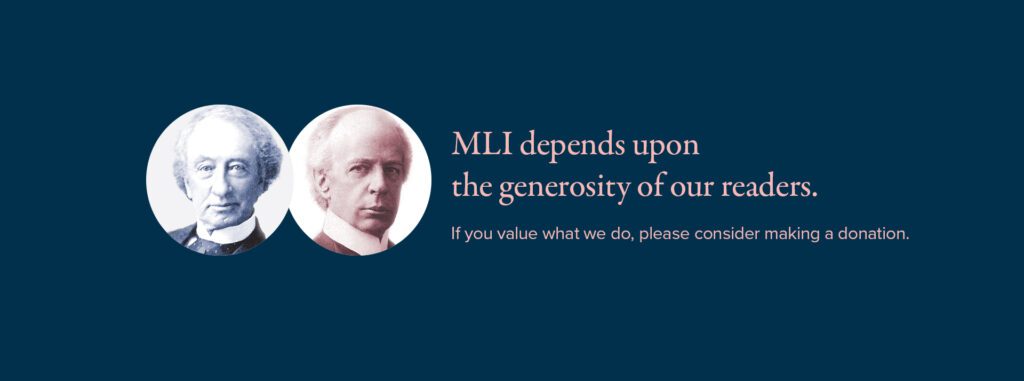
Image via Canva.

By Jerry Amernic, March 27, 2026

In December 2023, Toronto Council passed a motion to change the name of the city’s main public square from Yonge-Dundas Square to Sankofa Square. The vote was 19–2 in favour. Toronto mayor Olivia Chow went on the record saying that the actions of Henry Dundas, an 18th–century Scottish parliamentarian whose name would be attached to many things in Toronto, were “horrific” and that he wanted to “delay the end of the slave trade.” She said the name change reflected community concerns and the council did not pick it arbitrarily.

Earlier that year, Toronto Council had voted 17–7 to change the name of Dundas Street, a major east–west artery older than the city itself, but later relented because the cost of replacing hundreds of street signs would have been prohibitive. According to the CBC, this was all because of Dundas’s “association with the transatlantic slave trade.” That same council would soon vote to remove the Dundas name from a public library and two subway stations.

However, the historical record shows something very different – Henry Dundas was an ardent abolitionist. Before entering politics, lawyer Dundas defended a Black man who had been purchased as a slave in Jamaica and then taken to Scotland. Dundas pleaded the case on appeal and won over a majority of Scottish lords, some of them slaveowners themselves. The upshot was that lords freed the slave. There would be no slavery in Scotland.

What’s more, after entering politics Dundas spoke in the British Parliament about the complicity of Black African leaders in the slave trade. It’s all there in the Parliamentary Register in London.

Nevertheless, after an original motion to ban the slave trade failed in the British House of Commons, Dundas introduced an amendment for the gradual abolition of slavery, which passed. It was the first step towards legally abolishing the slave trade.

Historians contend that Dundas was being politically expedient in order to bring about the end of the slave trade. In addition, Dundas appointed fellow abolitionist John Graves Simcoe as the first Lieutenant-Governor of Upper Canada. In 1793, under Simcoe, the Act to Limit Slavery in Upper Canada was passed to prevent the introduction of slaves there, making that jurisdiction the first in the British Empire to do anything like that.

But none of this had any effect on Toronto Council, despite the efforts of historians, scholars and such people as Lynn McDonald, a former Canadian Member of Parliament and Fellow of the London-based Royal Historical Society. They all tried to explain the true legacy of Dundas – only to get stonewalled at every turn. McDonald, a resident of the City of Toronto, told me that  her own councillor refused to meet with her. Instead, Toronto Council took the side of activists who disparage our history. Their writings are punctuated with references to “white supremacy and colonial violence” and criticize historical figures who get dismissed as “white supremacists and, in some cases, mass murderers.”

After changing the name of the city’s public square to Sankofa Square – that comes from Ghana, a slave-trading nation in West Africa that was slow to ban the practice – Toronto Council erected two neon signs in the middle of that public space. One sign serves as an Indigenous Land Acknowledgement and the other an African Ancestral Acknowledgement. The latter reads as follows:

“As we gather on Sankofa Square, we acknowledge all Treaty peoples, including those who came here as settlers, migrants either in this generation or in generations past – and those of African descent who came here involuntarily through the Trans-Atlantic Slave Trade and Slavery.”

For the past two years, at Remembrance Day ceremonies in front of Toronto City Hall, speakers representing the city echoed the same words. The not-so-subtle implication is that inhabitants of Canada’s biggest city are derived from Treaty people (Indigenous), those of African descent (Black), and others who are dismissed as settlers and migrants. That would include the English, French, Dutch, and everyone else who arrived from all corners of the world.

According to Canada’s 2021 census, the City of Toronto had a population of 2.8 million, of whom 23,000 identified as Indigenous. According to the 2016 census, the Greater Toronto Area had a Black population of 442,000. By anyone’s math that would leave a huge majority in the setters-and-migrants camp. What’s more, what is portrayed as history on that sign is deceiving, especially where it says, “those of African descent coming here involuntarily through the Trans-Atlantic Slave Trade and Slavery.”

However, no slave ships ever came here. Slave ships journeyed from Africa to South America, to islands in the Caribbean, and to the Thirteen Colonies which became the United States. The American ports that received slave ships were in Boston, Massachusetts, Newport, Rhode Island, and Charleston, South Carolina. It’s true that some slaves – estimates range from 500 to 700 – were living in the province after their slaveowners brought them but it’s also true that many thousands of Blacks who found themselves in Upper or Lower Canada, or Canada West and Canada East as they were known, arrived through the Underground Railroad to escape slavery in the US, where it was not only legal but a staple of the economy, especially in the south.
So why did all this happen? Because Toronto City Council – duly elected representatives who run Canada’s biggest city – are awash in “woke” ideology and allow it to impact public policy. If there is any doubt, consider how the city chooses to commemorate history through its Guiding Principles for Commemoration. Those principles include the following:

  • Be informed by historical research, traditional knowledge and community insights.
  • Be supported by communities through meaningful engagement.
  • Honour Indigenous ways of knowing and being.
  • Prioritize commemorations significant to Indigenous Peoples, Black communities, and equity-deserving groups.

“Meaningful engagement” is all fine and good, but how meaningful is it when legitimate scholars and historians are ignored while activists with an axe to grind become the architects of city policy? But that is what has happened in Toronto.

One person not happy with how the city does things now is General Rick Hillier. He was Chief of Defence Staff for Canada from 2005 to 2008, which means he was the country’s top soldier during the height of Canada’s involvement in the war in Afghanistan. After a Remembrance Day ceremony at Toronto City Hall in 2024, he posted the following on X:
“We are nothing but ‘sheep’ to put up with this condescending lecture at any time, but especially today. A day devoted to those who served and sacrificed to build a country that doesn’t have that.”

But Hillier wasn’t finished. He added one more word to his message.

“Shame.”


Jerry Amernic is the author of SLEEPWOKING, a book about historical revisionism in Canada and all the fallout associated with it. One chapter is devoted to the cancelling of Henry Dundas.

Tags: Jerry Amernic

Related Posts

Job Posting: Project Manager
Jobs

Job Posting: Events Fundraising Officer

March 27, 2026
We need better metrics for human flourishing: Brendan Case and Peter Copeland for Inside Policy Talks
Domestic Policy

We need better metrics for human flourishing: Brendan Case and Peter Copeland for Inside Policy Talks

March 27, 2026
The free and open Indo-Pacific – Challenges and prospects ahead: Panel discussion
Indo-Pacific

The free and open Indo-Pacific – Challenges and prospects ahead: Panel discussion

March 26, 2026
Next Post
Job Posting: Project Manager

Job Posting: Events Fundraising Officer

Newsletter Signup

  Thank you for Signing Up
  Please correct the marked field(s) below.
Email Address  *
1,true,6,Contact Email,2
First Name *
1,true,1,First Name,2
Last Name *
1,true,1,Last Name,2
*
*Required Fields

Follow us on

Macdonald-Laurier Institute

323 Chapel Street, Suite #300
Ottawa, Ontario, K1N 7Z2 Canada

613.482.8327

info@macdonaldlaurier.ca
MLI directory

Support Us

Support the Macdonald-Laurier Institute to help ensure that Canada is one of the best governed countries in the world. Click below to learn more or become a sponsor.

Support Us

  • Inside Policy Magazine
  • Annual Reports
  • Jobs
  • Privacy Policy

© 2023 Macdonald-Laurier Institute. All Rights reserved.

This site uses cookies. By continuing to browse the site you are agreeing to our use of cookies.

Privacy Preference Center

Consent Management

Necessary

Advertising

Analytics

Other

No Result
View All Result
  • Home
  • About
    • Who We Are
    • Who Makes MLI Work
    • Fifteenth Anniversary
  • Experts
    • Experts Directory
    • In Memoriam
  • Issues
    • Domestic Policy
      • Economic Policy
      • Justice
      • Rights and Freedoms
      • Assisted Suicide (MAID)
      • Health Care
      • COVID-19
      • Gender Identity
      • Canada’s Political Tradition
      • AI, Technology and Innovation
      • Media and Telecoms
      • Housing
      • Immigration
      • Agriculture and Agri-Food
      • Competition Policy
    • Energy Policy
      • Energy
      • Environment
    • Foreign Policy
      • Israel-Hamas War
      • Ukraine
      • Taiwan
      • China
      • Europe and Russia
      • Indo-Pacific
      • Middle East and North Africa
      • North America
      • Foreign Interference
      • National Defence
      • National Security
      • Foreign Affairs
    • Indigenous Affairs
  • Projects
    • CNAPS (Center for North American Prosperity and Security)
    • Justice Report Card
    • The Promised Land
    • Voices that Inspire: The Macdonald-Laurier Vancouver Speaker Series
    • Dragon at the door
    • Canada on top of the world
    • Letter to a minister
    • The Great Energy Crisis
    • DisInfoWatch.org
    • Managing Indigenous Prosperity
    • Judicial Foundations
    • Landmark Cases Council
    • Defending The Marketplace of Ideas
    • Reforming the University
    • Past Projects
      • Digital Policy & Connectivity
      • Double Trouble
      • Canada and the Indo-Pacific Initiative
      • The Transatlantic Program
      • COVID Misery Index
      • Speak for Ourselves
      • The Eavesdropping Dragon: Huawei
      • Talkin’ in the Free World with Mariam Memarsadeghi
      • An Intellectual Property Strategy for Canada
      • Munk Senior Fellows
      • A Mandate for Canada
      • Confederation Series
      • Fiscal Reform
      • The Canadian Century project
      • Fixing Canadian health care
      • Internal trade
      • From a mandate for change
      • Size of government in Canada
      • Straight Talk
      • Labour Market Report
      • Leading Economic Indicator
      • Centre for Advancing Canada’s Interests Abroad
      • Indigenous Prosperity at a Crossroads
  • Events
    • Upcoming Events
    • Past Events
      • MLI Dinners
      • Great Canadian Debates
  • Latest News
  • Libraries
    • Columns
    • Commentary
    • Papers
    • Books
    • Video
  • Donate

© 2023 Macdonald-Laurier Institute. All Rights reserved.