Thursday, April 16, 2026
No Result
View All Result
  • Media
Macdonald-Laurier Institute
  • Home
  • About
    • Who We Are
    • Who Makes MLI Work
    • Fifteenth Anniversary
  • Experts
    • Experts Directory
    • In Memoriam
  • Issues
    • Domestic Policy
      • Economic Policy
      • Justice
      • Rights and Freedoms
      • Assisted Suicide (MAID)
      • Health Care
      • COVID-19
      • Gender Identity
      • Canada’s Political Tradition
      • AI, Technology and Innovation
      • Media and Telecoms
      • Housing
      • Immigration
      • Agriculture and Agri-Food
      • Competition Policy
    • Energy Policy
      • Energy
      • Environment
    • Foreign Policy
      • Israel-Hamas War
      • Ukraine
      • Taiwan
      • China
      • Europe and Russia
      • Indo-Pacific
      • Middle East and North Africa
      • North America
      • Foreign Interference
      • National Defence
      • National Security
      • Foreign Affairs
    • Indigenous Affairs
  • Projects
    • CNAPS (Center for North American Prosperity and Security)
    • Justice Report Card
    • The Promised Land
    • Voices that Inspire: The Macdonald-Laurier Vancouver Speaker Series
    • Dragon at the door
    • Canada on top of the world
    • Letter to a minister
    • The Great Energy Crisis
    • DisInfoWatch.org
    • Managing Indigenous Prosperity
    • Judicial Foundations
    • Landmark Cases Council
    • Defending The Marketplace of Ideas
    • Reforming the University
    • Past Projects
      • Digital Policy & Connectivity
      • Double Trouble
      • Canada and the Indo-Pacific Initiative
      • The Transatlantic Program
      • COVID Misery Index
        • Provincial COVID Misery Index
        • Beyond Lockdown
        • COVID and after: A mandate for recovery
      • Speak for Ourselves
      • The Eavesdropping Dragon: Huawei
      • Talkin’ in the Free World with Mariam Memarsadeghi
      • An Intellectual Property Strategy for Canada
      • Munk Senior Fellows
      • A Mandate for Canada
      • Confederation Series
      • Fiscal Reform
      • The Canadian Century project
      • Fixing Canadian health care
      • Internal trade
      • From a mandate for change
      • Size of government in Canada
      • Straight Talk
      • Labour Market Report
      • Leading Economic Indicator
      • Centre for Advancing Canada’s Interests Abroad
      • Indigenous Prosperity at a Crossroads
        • Aboriginal Canada and Natural Resources
  • Events
    • Upcoming Events
    • Past Events
      • MLI Dinners
      • Great Canadian Debates
  • Latest News
  • Libraries
    • Columns
    • Commentary
    • Papers
    • Books
    • Video
  • Donate
  • Home
  • About
    • Who We Are
    • Who Makes MLI Work
    • Fifteenth Anniversary
  • Experts
    • Experts Directory
    • In Memoriam
  • Issues
    • Domestic Policy
      • Economic Policy
      • Justice
      • Rights and Freedoms
      • Assisted Suicide (MAID)
      • Health Care
      • COVID-19
      • Gender Identity
      • Canada’s Political Tradition
      • AI, Technology and Innovation
      • Media and Telecoms
      • Housing
      • Immigration
      • Agriculture and Agri-Food
      • Competition Policy
    • Energy Policy
      • Energy
      • Environment
    • Foreign Policy
      • Israel-Hamas War
      • Ukraine
      • Taiwan
      • China
      • Europe and Russia
      • Indo-Pacific
      • Middle East and North Africa
      • North America
      • Foreign Interference
      • National Defence
      • National Security
      • Foreign Affairs
    • Indigenous Affairs
  • Projects
    • CNAPS (Center for North American Prosperity and Security)
    • Justice Report Card
    • The Promised Land
    • Voices that Inspire: The Macdonald-Laurier Vancouver Speaker Series
    • Dragon at the door
    • Canada on top of the world
    • Letter to a minister
    • The Great Energy Crisis
    • DisInfoWatch.org
    • Managing Indigenous Prosperity
    • Judicial Foundations
    • Landmark Cases Council
    • Defending The Marketplace of Ideas
    • Reforming the University
    • Past Projects
      • Digital Policy & Connectivity
      • Double Trouble
      • Canada and the Indo-Pacific Initiative
      • The Transatlantic Program
      • COVID Misery Index
        • Provincial COVID Misery Index
        • Beyond Lockdown
        • COVID and after: A mandate for recovery
      • Speak for Ourselves
      • The Eavesdropping Dragon: Huawei
      • Talkin’ in the Free World with Mariam Memarsadeghi
      • An Intellectual Property Strategy for Canada
      • Munk Senior Fellows
      • A Mandate for Canada
      • Confederation Series
      • Fiscal Reform
      • The Canadian Century project
      • Fixing Canadian health care
      • Internal trade
      • From a mandate for change
      • Size of government in Canada
      • Straight Talk
      • Labour Market Report
      • Leading Economic Indicator
      • Centre for Advancing Canada’s Interests Abroad
      • Indigenous Prosperity at a Crossroads
        • Aboriginal Canada and Natural Resources
  • Events
    • Upcoming Events
    • Past Events
      • MLI Dinners
      • Great Canadian Debates
  • Latest News
  • Libraries
    • Columns
    • Commentary
    • Papers
    • Books
    • Video
  • Donate
No Result
View All Result
Macdonald-Laurier Institute

Stop trivializing the use of ‘genocide’: Harry LaForme in The Hub

A watered-down definition of 'genocide' destroys the legal framework meant to shield humanity from such atrocities.

April 16, 2026
in Foreign Affairs, Latest News, Columns, The Promised Land, In the Media, Israel-Hamas War, Harry LaForme
Reading Time: 5 mins read
A A
Stop trivializing the use of ‘genocide’: Harry LaForme in The Hub

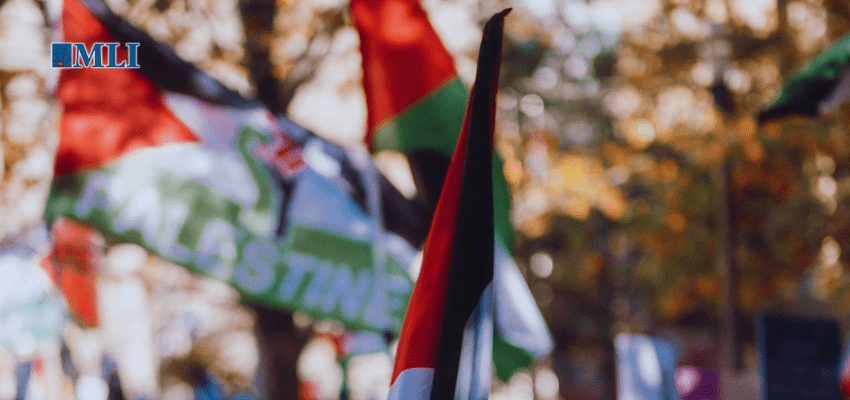
Image via Canva.

This article originally appeared in The Hub.

By Harry LaForme, April 16, 2026

If I hear or read another reference to Israel and its “genocide of Palestinians” or the labelling of children’s summer camps as supporting a “genocidal state,” I fear my head will explode. Is it simply a case of willful ignorance that prompts the use of such phrases, or is it that genocide has simply become the descriptive word defining any war? Or is it exclusive to Israel and the military action it undertakes in its defence?

The recent display at an Al-Qud’s day rally in Toronto, which saw signs and chants condemning Israel’s “genocide in Palestine,” is the latest in a string of such incidents over the past two-and-a-half years. Last month, Amnesty International once again joined the chorus, releasing a report detailing how Israel’s “genocide in Gaza” is causing compounded harm to women and girls. My head is aching.

Thankfully, I’m not the only one looking to draw a line on its correct meaning. The family of Ralph Lemkin, the late author who gave us the concept of genocide, is suing the institute that bears his name for mischaracterizing the term. The Lemkin family means for genocide to be faithful to Lemkin’s definition, recognized by international law. It objects to the organization’s use of the Lemkin name and its misapplication of genocide to Israel’s actions.

Let’s look at the basis created by Lemkin for how the term is meant to operate. In his 1944 book Axis Rule in Occupied Europe, Lemkin conceptualized genocide as a crime “in a class of its own”—a systemic, state-driven effort to physically erase a people, exemplified by the Holocaust. Genocide, he stated, is distinct from all war crimes established by international law and convention, such as the Hague, Geneva, and UN conventions.

According to Lemkin, the definition of a genocide requires explicit acts that are “specifically intended” to destroy, in whole or in part, “a nation or an ethnic group.” It is “a coordinated plan of different actions … with the aim of annihilating the groups themselves.” Genocide must be the only inference that can reasonably be drawn from the acts.

Today, that definition is being systematically dismantled to serve a “moral inversion” that transforms a defensive war into a crime of extermination. The modern application of the word “genocide” to Israel is not a legal conclusion; it is a political strategy.

The irony of the current accusations is found in the timeline. On October 6, 2023, a ceasefire existed. On October 7, Hamas invaded Israel. As part of its genocidal strategy, over 1,200 people were murdered, 5,500 more were maimed, and 251 hostages were taken into Gaza. Hamas vowed to repeat the slaughter over and over again until all Jews are eliminated and the state of Israel is destroyed.

The “genocide libel” against Israel didn’t wait for a military response. It began on October 8, while the blood was still wet. This is a moral inversion: Israel, the victim of a genocidal invasion, was branded the perpetrator before a single Israeli soldier entered Gaza.

The foundation for today’s accusations was laid decades ago. Starting in the 1970s, the United Nations underwent a “Pariah Shift,” where the dominance of non-aligned and Soviet-aligned blocs transformed the international body into a platform for anti-Israel advocacy.

From the 1975 “Zionism is Racism” resolution (later rescinded but culturally embedded) to the 39-year exclusion of Israel from regional groups, the UN created a unique set of rules for the Jewish state. Just as Lemkin wrote that genocide is sui generis (in a class of its own), it appears it’s much the same for Israel on the international stage.

The bias is quantifiable: in 2025, Israel was targeted by 15 General Assembly resolutions, while the rest of the world’s countries combined garnered only 12. This is the environment in which “genocide” is now casually adjudicated.

The selective application of the term becomes undeniable when compared to the Global War on Terror. In the wake of the September 11 terrorist attacks, the United States launched military operations across Iraq, Afghanistan, and Syria, resulting in an estimated 4.5 million deaths.

Despite the staggering loss of non-combatant life, the international community correctly identified these as acts of war, not genocide. Yet, when Israel responds to a genocidal invasion by Hamas—a group that explicitly vows to repeat the October 7 slaughter until every Jew is eliminated—the “genocide” label is perversely applied to Israel within hours of the attack.

International law (the ICJ) dictates that genocide requires “specific intent” that must be the only reasonable inference from the facts. Critics and NGOs like Amnesty International have inverted this, suggesting that genocidal intent can simply “coexist” with military goals. By lowering this bar, they effectively criminalize urban self-defence. They ignore Israel’s civilian evacuation orders and aid corridors, focusing instead on a narrative manufactured by Hamas and its patrons in Tehran.

The astounding statement by UN Secretary-General António Guterres that the October 7 attacks “did not happen in a vacuum” is viewed by many as justifying terror. And, there is the shocking silence surrounding the Israeli hostages, the war crimes committed against Israeli women, and the war crimes committed against the people of Gaza by Hamas.

When “Zionism”—the movement for Jewish self-determination—is reframed as “genocidal,” it becomes a modern mask for centuries-old antisemitism. In this “through the looking glass” world, facts are treated as inconveniences. By distorting Lemkin’s definition to fit a pre-packaged narrative, international bodies are not just failing Israel; they are destroying the very legal framework designed to protect humanity from actual genocide.

It is tiresome, in fact exhausting, to witness genocide trivialized as it is. It is frustrating to see the word genocide applied to anything and everything in which the word “Israel” may happen to appear. Recently, an activist campaign accused several Jewish Canadian children’s camps of supporting a “genocidal state” because their social media contained references to Israel. Critics aren’t debating policy; they are attempting to delegitimize the very existence of a people.

Lemkin is no longer here to take on this trivialization of genocide by civil, political and academic society. But the next generation is. His family’s lawsuit offers a chance to restore precision and moral clarity when it comes to the use of this term. In another positive development, legal scholars are drafting “Amicus Briefs” to ensure the ICJ does not succumb to the “diluted” definition of genocide. They argue that if “genocide” can be inferred despite civilian warnings, humanitarian zones, and surgical strikes, then every urban war in history would be a genocide. They are seeking to force a return to the “Only Reasonable Inference” rule—reminding the court that if an action can be explained by the intent to destroy a tunnel or a rocket launcher, it cannot legally be called genocide.

For the sake of humanity and my head, let’s hope they are successful.


Harry S. LaForme, a proud member of the Mississaugas of the Credit First Nation, is a retired appellate court judge and lawyer, and a senior fellow at the Macdonald-Laurier Institute.

Source: The Hub

Related Posts

Canada’s Anti-American Defense Industrial Strategy: Daniel Dorman and Jamie Tronnes in the National Review
National Defence

Canada’s Anti-American Defense Industrial Strategy: Daniel Dorman and Jamie Tronnes in the National Review

April 16, 2026
Navigating turbulence – A more effective path to Canada’s economic diversification: George Abonyi and David Abonyi for Inside Policy
Economic Policy

Navigating turbulence – A more effective path to Canada’s economic diversification: George Abonyi and David Abonyi for Inside Policy

April 16, 2026
If the Iran talks collapse, what next?: Joe Varner in International Policy Digest
Middle East and North Africa

If the Iran talks collapse, what next?: Joe Varner in International Policy Digest

April 15, 2026
Next Post
Canada’s Anti-American Defense Industrial Strategy: Daniel Dorman and Jamie Tronnes in the National Review

Canada’s Anti-American Defense Industrial Strategy: Daniel Dorman and Jamie Tronnes in the National Review

Newsletter Signup

  Thank you for Signing Up
  Please correct the marked field(s) below.
Email Address  *
1,true,6,Contact Email,2
First Name *
1,true,1,First Name,2
Last Name *
1,true,1,Last Name,2
*
*Required Fields

Follow us on

Macdonald-Laurier Institute

323 Chapel Street, Suite #300
Ottawa, Ontario, K1N 7Z2 Canada

613.482.8327

info@macdonaldlaurier.ca
MLI directory

Support Us

Support the Macdonald-Laurier Institute to help ensure that Canada is one of the best governed countries in the world. Click below to learn more or become a sponsor.

Support Us

  • Inside Policy Magazine
  • Annual Reports
  • Jobs
  • Privacy Policy

© 2023 Macdonald-Laurier Institute. All Rights reserved.

This site uses cookies. By continuing to browse the site you are agreeing to our use of cookies.

Privacy Preference Center

Consent Management

Necessary

Advertising

Analytics

Other

No Result
View All Result
  • Home
  • About
    • Who We Are
    • Who Makes MLI Work
    • Fifteenth Anniversary
  • Experts
    • Experts Directory
    • In Memoriam
  • Issues
    • Domestic Policy
      • Economic Policy
      • Justice
      • Rights and Freedoms
      • Assisted Suicide (MAID)
      • Health Care
      • COVID-19
      • Gender Identity
      • Canada’s Political Tradition
      • AI, Technology and Innovation
      • Media and Telecoms
      • Housing
      • Immigration
      • Agriculture and Agri-Food
      • Competition Policy
    • Energy Policy
      • Energy
      • Environment
    • Foreign Policy
      • Israel-Hamas War
      • Ukraine
      • Taiwan
      • China
      • Europe and Russia
      • Indo-Pacific
      • Middle East and North Africa
      • North America
      • Foreign Interference
      • National Defence
      • National Security
      • Foreign Affairs
    • Indigenous Affairs
  • Projects
    • CNAPS (Center for North American Prosperity and Security)
    • Justice Report Card
    • The Promised Land
    • Voices that Inspire: The Macdonald-Laurier Vancouver Speaker Series
    • Dragon at the door
    • Canada on top of the world
    • Letter to a minister
    • The Great Energy Crisis
    • DisInfoWatch.org
    • Managing Indigenous Prosperity
    • Judicial Foundations
    • Landmark Cases Council
    • Defending The Marketplace of Ideas
    • Reforming the University
    • Past Projects
      • Digital Policy & Connectivity
      • Double Trouble
      • Canada and the Indo-Pacific Initiative
      • The Transatlantic Program
      • COVID Misery Index
      • Speak for Ourselves
      • The Eavesdropping Dragon: Huawei
      • Talkin’ in the Free World with Mariam Memarsadeghi
      • An Intellectual Property Strategy for Canada
      • Munk Senior Fellows
      • A Mandate for Canada
      • Confederation Series
      • Fiscal Reform
      • The Canadian Century project
      • Fixing Canadian health care
      • Internal trade
      • From a mandate for change
      • Size of government in Canada
      • Straight Talk
      • Labour Market Report
      • Leading Economic Indicator
      • Centre for Advancing Canada’s Interests Abroad
      • Indigenous Prosperity at a Crossroads
  • Events
    • Upcoming Events
    • Past Events
      • MLI Dinners
      • Great Canadian Debates
  • Latest News
  • Libraries
    • Columns
    • Commentary
    • Papers
    • Books
    • Video
  • Donate

© 2023 Macdonald-Laurier Institute. All Rights reserved.