This article originally appeared in the Hill Times.
By Heather Exner-Pirot, February 25, 2026
Canada’s national identity is deeply intertwined with its energy and resources sector. From the fur trade that drove European exploration and Indigenous trade across the boreal forest, to the settlement of the west for farming; and from mining booms that settled the provincial and territorial north, to striking oil in Leduc, Alta., our fortunes have literally risen and fallen alongside the competitiveness of our natural resources.
Many have lamented the volatility of this path. Downturns can devastate whole regions and put the economy into recession. Calls for diversification, more manufacturing and services, urbanization, or a knowledge economy are ubiquitous. “My predecessor wanted you to know Canada for its resources. I want you to know Canadians for our resourcefulness,” then-prime minister Justin Trudeau told his audience in Davos, Switzerland, in 2016.
But every generation those busts turn to booms, and what a gift Canada’s resource endowment then becomes—the foundation of our prosperity and our influence in the world.
I am delighted to inform you that an upswing in the commodity cycle is now upon us, and it couldn’t have come at a better time. In the face of supply chain insecurity, United States President Donald Trump’s tariffs, rampant artificial intelligence energy demand, and the outright weaponization of minerals and energy trade by great powers, Canada’s immense mineral and energy reserves not only provide a defence against the worst of American trade provocations. They work for offence, too. As Canada is seeking new trade partners, it turns out just about everyone we want to strengthen ties with is an energy importer, and we happen to have a century’s worth of oil, natural gas, and uranium that we could never use up ourselves.
First, to assess where we are. Commodity cycles are usually long, drawn-out affairs triggered by major demographic or technological change. The last three were driven respectively from the post-war boom (mid-1940s and ’50s); strong oil demand and subsequent supply shocks (1970s); and China’s extraordinary growth resulting from its World Trade Organization accession and demographic dividend from its one-child policy (2000s).
The last cycle busted in 2014, paving the way for the rise of Trudeau and a climate policy focus that came at the expense of regulatory efficiency and project development. But just as policymakers were pushed to sideline energy and resources in the commodity downcycle, so, too, are they now pressured to support their expansion in the upswing phase.
Post-COVID and post-Ukraine invasion, we saw a short-lived supply shock that sparked inflation, unrest, and a pendulum swing in prevailing policy trends. But prices largely settled and stabilized by 2023.
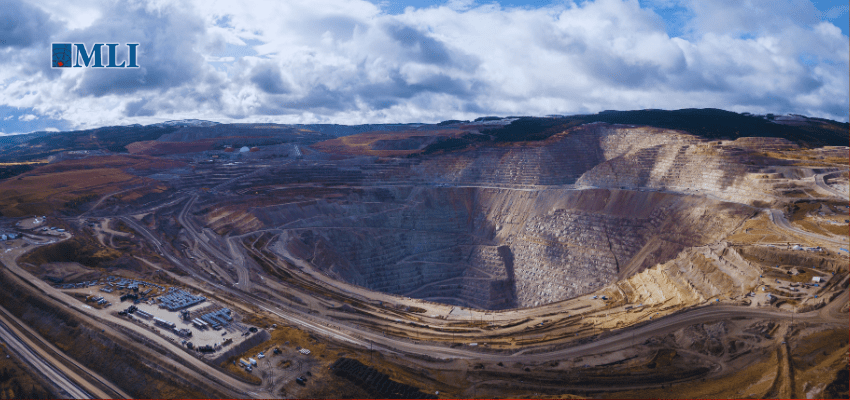
That shock is now starting to look structural, precipitated by years of underinvestment, population growth, and a rising global middle class. Uranium, gold, and silver were early winners, but a broader rotation towards mining, energy, and utilities stocks is now underway. It is in that landscape that Canada has been forced to assert its position in the world, not as a junior partner to the U.S., but as a significant nation in its own right.
When Prime Minister Mark Carney goes out into the world—to Berlin, Beijing, or Davos—he is pitching our oil, liquefied natural gas, uranium, critical minerals, and agricultural goods. He is pitching an energy superpower that has what the world needs. And when he is not the one doing the pitching, it is his energy minister, Tim Hodgson, who he has carry his message.
There are lingering tensions between how we’ve developed our trade infrastructure and regulatory framework over the past decade, and how we are positioning ourselves on the world stage. There remain factions in our elite who don’t want to be known for our resources at all.
But everything is easier for Canada when the roller-coaster is going up the commodity cycle rather than down, and nothing smooths the road for policy reform quite like royalties, revenues, and jobs. I am confident our political class will come along for the ride.
Heather Exner-Pirot is the director of energy, natural resources, and environment at the Macdonald-Laurier Institute.