Friday, December 5, 2025
No Result
View All Result
  • Media
Macdonald-Laurier Institute
  • Home
  • About
    • Who We Are
    • Who Makes MLI Work
    • Fifteenth Anniversary
  • Experts
    • Experts Directory
    • In Memoriam
  • Issues
    • Domestic Policy
      • Economic Policy
      • Justice
      • Rights and Freedoms
      • Assisted Suicide (MAID)
      • Health Care
      • COVID-19
      • Gender Identity
      • Canada’s Political Tradition
      • AI, Technology and Innovation
      • Media and Telecoms
      • Housing
      • Immigration
      • Agriculture and Agri-Food
      • Competition Policy
    • Energy Policy
      • Energy
      • Environment
    • Foreign Policy
      • Israel-Hamas War
      • Ukraine
      • Taiwan
      • China
      • Europe and Russia
      • Indo-Pacific
      • Middle East and North Africa
      • North America
      • Foreign Interference
      • National Defence
      • National Security
      • Foreign Affairs
    • Indigenous Affairs
  • Projects
    • CNAPS (Center for North American Prosperity and Security)
    • The Promised Land
    • Voices that Inspire: The Macdonald-Laurier Vancouver Speaker Series
    • Dragon at the door
    • Canada on top of the world
    • Letter to a minister
    • Justice Report Card
    • The Great Energy Crisis
    • DisInfoWatch.org
    • Managing Indigenous Prosperity
    • Judicial Foundations
    • Landmark Cases Council
    • Defending The Marketplace of Ideas
    • Reforming the University
    • Past Projects
      • Digital Policy & Connectivity
      • Double Trouble
      • Canada and the Indo-Pacific Initiative
      • The Transatlantic Program
      • COVID Misery Index
        • Provincial COVID Misery Index
        • Beyond Lockdown
        • COVID and after: A mandate for recovery
      • Speak for Ourselves
      • The Eavesdropping Dragon: Huawei
      • Talkin’ in the Free World with Mariam Memarsadeghi
      • An Intellectual Property Strategy for Canada
      • Munk Senior Fellows
      • A Mandate for Canada
      • Confederation Series
      • Fiscal Reform
      • The Canadian Century project
      • Fixing Canadian health care
      • Internal trade
      • From a mandate for change
      • Size of government in Canada
      • Straight Talk
      • Labour Market Report
      • Leading Economic Indicator
      • Centre for Advancing Canada’s Interests Abroad
      • Indigenous Prosperity at a Crossroads
        • Aboriginal Canada and Natural Resources
  • Events
    • Upcoming Events
    • Past Events
      • MLI Dinners
      • Great Canadian Debates
  • Latest News
  • Libraries
    • Columns
    • Commentary
    • Papers
    • Books
    • Video
  • Donate
  • Home
  • About
    • Who We Are
    • Who Makes MLI Work
    • Fifteenth Anniversary
  • Experts
    • Experts Directory
    • In Memoriam
  • Issues
    • Domestic Policy
      • Economic Policy
      • Justice
      • Rights and Freedoms
      • Assisted Suicide (MAID)
      • Health Care
      • COVID-19
      • Gender Identity
      • Canada’s Political Tradition
      • AI, Technology and Innovation
      • Media and Telecoms
      • Housing
      • Immigration
      • Agriculture and Agri-Food
      • Competition Policy
    • Energy Policy
      • Energy
      • Environment
    • Foreign Policy
      • Israel-Hamas War
      • Ukraine
      • Taiwan
      • China
      • Europe and Russia
      • Indo-Pacific
      • Middle East and North Africa
      • North America
      • Foreign Interference
      • National Defence
      • National Security
      • Foreign Affairs
    • Indigenous Affairs
  • Projects
    • CNAPS (Center for North American Prosperity and Security)
    • The Promised Land
    • Voices that Inspire: The Macdonald-Laurier Vancouver Speaker Series
    • Dragon at the door
    • Canada on top of the world
    • Letter to a minister
    • Justice Report Card
    • The Great Energy Crisis
    • DisInfoWatch.org
    • Managing Indigenous Prosperity
    • Judicial Foundations
    • Landmark Cases Council
    • Defending The Marketplace of Ideas
    • Reforming the University
    • Past Projects
      • Digital Policy & Connectivity
      • Double Trouble
      • Canada and the Indo-Pacific Initiative
      • The Transatlantic Program
      • COVID Misery Index
        • Provincial COVID Misery Index
        • Beyond Lockdown
        • COVID and after: A mandate for recovery
      • Speak for Ourselves
      • The Eavesdropping Dragon: Huawei
      • Talkin’ in the Free World with Mariam Memarsadeghi
      • An Intellectual Property Strategy for Canada
      • Munk Senior Fellows
      • A Mandate for Canada
      • Confederation Series
      • Fiscal Reform
      • The Canadian Century project
      • Fixing Canadian health care
      • Internal trade
      • From a mandate for change
      • Size of government in Canada
      • Straight Talk
      • Labour Market Report
      • Leading Economic Indicator
      • Centre for Advancing Canada’s Interests Abroad
      • Indigenous Prosperity at a Crossroads
        • Aboriginal Canada and Natural Resources
  • Events
    • Upcoming Events
    • Past Events
      • MLI Dinners
      • Great Canadian Debates
  • Latest News
  • Libraries
    • Columns
    • Commentary
    • Papers
    • Books
    • Video
  • Donate
No Result
View All Result
Macdonald-Laurier Institute

Should Canada scrap the NORAD agreement?: J.L. Granatstein in The Hub

The F-35 must be the choice because nothing else will persuade Washington that Canada is serious about credibly contributing to North American defence through NORAD.

September 16, 2025
in Columns, Foreign Policy, National Defence, Latest News, In the Media, North America, Arctic
Reading Time: 4 mins read
A A
Should Canada scrap the NORAD agreement?: J.L. Granatstein in The Hub

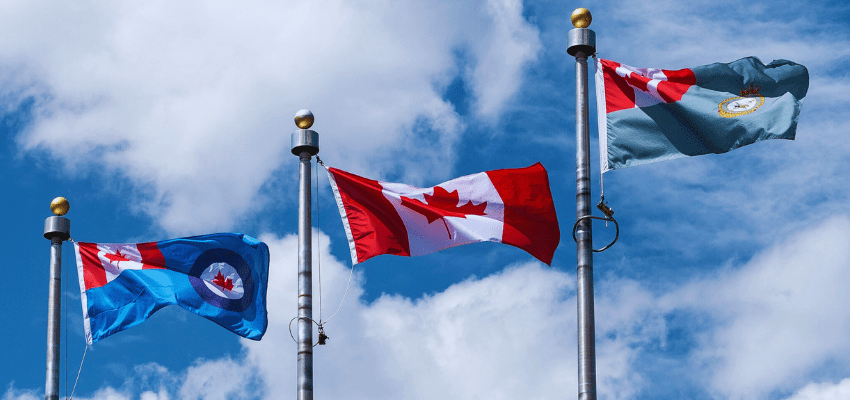
Photo by Master Corporal Robert Mitchell, Royal Canadian Air Force Imagery Technician | Combat Camera via Flickr.

This article originally appeared in The Hub.

By J.L. Granatstein, September 16, 2025

There are beginning murmurings that Canada should get out of the North American Aerospace Defence agreement (NORAD). Given the Trump administration’s hostile tone—its 51st state suggestions, its tariffs, and its growing concerns with Arctic defence—the United States has become a difficult partner and a threat to Canadian sovereignty. But would this be a sensible decision for Ottawa to make?

Not at all. In the first place, NORAD is a joint alliance to defend North America against Russian, Chinese, or other potential attackers. Canada provides aircraft, radars, personnel, and expertise to this role that serves our national interests. It would be a grave error to scrap NORAD and to take on the role of defending our part of North America on our own. It would also be hugely expensive.

The problem, however, is that the Trump administration is right: Canada is, in fact, not doing enough today to defend our portion of North America and protect our sovereignty in the region.

The Royal Canadian Air Force has 1980s vintage CF-18s flying patrols and occasional larger surveillance aircraft monitoring traffic in Arctic waters; there are snowmobile and ATV patrols of Canadian Rangers armed with rifles; and a few army exercises in the north each year. The Royal Canadian Navy has a half dozen new Arctic Offshore Patrol Vessels that have limited utility in Arctic waters and are very lightly armed, and the Canadian Coast Guard (CCG) has only one 66-year-old icebreaker capable of clearing thick ice. The CCG is now under the authority of the Department of National Defence, but its members, unlike those in the Canadian Armed Forces, are unionized, and its vessels are unarmed. This could be a problem in a conflict.

Yes, Ottawa has promised to do more. The Trudeau government agreed to the $38.6 billion NORAD Modernization Plan, which includes the new Northern Approaches Surveillance System featuring the Arctic Over-the-Horizon Radar and a Polar Over-the-Horizon Radar, enhancing early warning and threat tracking from the North for air and maritime threats. These systems will not be fully operational until the 2040s.

The Carney government has pledged to have 12 submarines built in either South Korea or Germany. The submarines are apparently only to have very limited under-ice capability, but they will still be useful when they come into service in the mid-2030s—if the RCN can recruit the necessary 3,000 or so sailors and train them to operate this new undersea flotilla. There are pledges to complete an Arctic port, something first promised by the Harper government, but even then, this port will be operable only in the summer months. There are plans to have more army units based in the North, but this requires the construction of bases, the provision of specialized equipment, and training. This too will take time.

To put it simply, there is very little Ottawa can do to persuade the Americans that Canada is doing its part to secure the Arctic.

This is where the Lockheed Martin F-35s come into play. The U.S. Air Force has two squadrons of F-35s in Alaska, and these 54 aircraft operate under NORAD. Capable of operating as fighters or strike aircraft, the F-35 is thought to be the best such aircraft available anywhere.

Canada has been part of the international consortium involved in building the fifth-generation F-35 fighter bombers since the beginning of this century, and Canadian firms, building parts, have earned hundreds of millions of dollars. Ottawa has bought and paid for 16 of these aircraft and has 72 more on order, but this transaction has not yet been confirmed. The Carney government, intent on diversifying its defence purchases, ordered a study to determine if the RCAF should acquire the remaining 72 F-35s or the Swedish Saab Gripen fighters that are cheaper to purchase and to operate. Saab has also said that it will build a factory in Canada to fulfill an order for its fighter. The RCAF has left no doubt that it wants the more expensive F-35, its argument being that the Gripen is much less capable, and that a small, understrength air force cannot easily operate and maintain two different fighters. Ottawa’s decision on which aircraft to purchase is expected soon.

The F-35 must be the choice because nothing else will persuade Washington that Canada is serious about credibly contributing to North American defence through NORAD. The Gripen is a good airplane, but to the Trump administration, it is much less capable than the F-35 and, most importantly, it is not American. If the F-35 purchase is cancelled, Canadians will cheer the Carney government for standing up to the American bully, but this will be an error. It will likely embolden the hawks in Washington to claim that the United States must take responsibility for the defence of all of the North American Arctic. So much for Canadian sovereignty.

Much as patriotic Canadians will surely hate a decision to buy American fighters, there is no real alternative choice. Prime Minister Carney must complete the F-35 purchase and use it to maintain both Canada’s sovereignty over our North and the nation’s bargaining position with Washington.


Historian J.L. Granatstein is a member of the Macdonald-Laurier Institute’s Research Advisory Board. A bestselling author, Granatstein was the director and CEO of the Canadian War Museum.
Source: The Hub
Tags: J.L. Granatstein

Related Posts

Property rights are “precarious” in Canada: Paul Warchuk and Peter Copeland for Inside Policy Talks
Domestic Policy

Property rights are “precarious” in Canada: Paul Warchuk and Peter Copeland for Inside Policy Talks

December 4, 2025
Harvard eschews ingrained ideology in order to tackle ‘genuinely hard problems’: Peter MacKinnon in the National Post
Reforming Universities

Harvard eschews ingrained ideology in order to tackle ‘genuinely hard problems’: Peter MacKinnon in the National Post

December 3, 2025
Risking public backlash? Canadian universities and demographic-based faculty hiring
Education

Risking public backlash? Canadian universities and demographic-based faculty hiring

December 3, 2025
Next Post
Is progressivism to blame for the West’s falling birth rates?: Eric Kaufmann in UnHerd

Is progressivism to blame for the West’s falling birth rates?: Eric Kaufmann in UnHerd

Newsletter Signup

  Thank you for Signing Up
  Please correct the marked field(s) below.
Email Address  *
1,true,6,Contact Email,2
First Name *
1,true,1,First Name,2
Last Name *
1,true,1,Last Name,2
*
*Required Fields

Follow us on

Macdonald-Laurier Institute

323 Chapel Street, Suite #300
Ottawa, Ontario, K1N 7Z2 Canada

613.482.8327

info@macdonaldlaurier.ca
MLI directory

Support Us

Support the Macdonald-Laurier Institute to help ensure that Canada is one of the best governed countries in the world. Click below to learn more or become a sponsor.

Support Us

  • Inside Policy Magazine
  • Annual Reports
  • Jobs
  • Privacy Policy

© 2023 Macdonald-Laurier Institute. All Rights reserved.

No Result
View All Result
  • Home
  • About
    • Who We Are
    • Who Makes MLI Work
    • Fifteenth Anniversary
  • Experts
    • Experts Directory
    • In Memoriam
  • Issues
    • Domestic Policy
      • Economic Policy
      • Justice
      • Rights and Freedoms
      • Assisted Suicide (MAID)
      • Health Care
      • COVID-19
      • Gender Identity
      • Canada’s Political Tradition
      • AI, Technology and Innovation
      • Media and Telecoms
      • Housing
      • Immigration
      • Agriculture and Agri-Food
      • Competition Policy
    • Energy Policy
      • Energy
      • Environment
    • Foreign Policy
      • Israel-Hamas War
      • Ukraine
      • Taiwan
      • China
      • Europe and Russia
      • Indo-Pacific
      • Middle East and North Africa
      • North America
      • Foreign Interference
      • National Defence
      • National Security
      • Foreign Affairs
    • Indigenous Affairs
  • Projects
    • CNAPS (Center for North American Prosperity and Security)
    • The Promised Land
    • Voices that Inspire: The Macdonald-Laurier Vancouver Speaker Series
    • Dragon at the door
    • Canada on top of the world
    • Letter to a minister
    • Justice Report Card
    • The Great Energy Crisis
    • DisInfoWatch.org
    • Managing Indigenous Prosperity
    • Judicial Foundations
    • Landmark Cases Council
    • Defending The Marketplace of Ideas
    • Reforming the University
    • Past Projects
      • Digital Policy & Connectivity
      • Double Trouble
      • Canada and the Indo-Pacific Initiative
      • The Transatlantic Program
      • COVID Misery Index
      • Speak for Ourselves
      • The Eavesdropping Dragon: Huawei
      • Talkin’ in the Free World with Mariam Memarsadeghi
      • An Intellectual Property Strategy for Canada
      • Munk Senior Fellows
      • A Mandate for Canada
      • Confederation Series
      • Fiscal Reform
      • The Canadian Century project
      • Fixing Canadian health care
      • Internal trade
      • From a mandate for change
      • Size of government in Canada
      • Straight Talk
      • Labour Market Report
      • Leading Economic Indicator
      • Centre for Advancing Canada’s Interests Abroad
      • Indigenous Prosperity at a Crossroads
  • Events
    • Upcoming Events
    • Past Events
      • MLI Dinners
      • Great Canadian Debates
  • Latest News
  • Libraries
    • Columns
    • Commentary
    • Papers
    • Books
    • Video
  • Donate

© 2023 Macdonald-Laurier Institute. All Rights reserved.