This article originally appeared in CapX.
By Tim Sargent, Fen Osler Hampson, and Allan Rock, December 18, 2025
While peace proposals are circulating to end this ruinous conflict, any deal that results in a lasting peace will need to ensure Ukraine is economically and militarily strong enough to resist future Russian aggression. That requires money – lots of it – to rebuild shattered infrastructure and maintain a technologically advanced military.
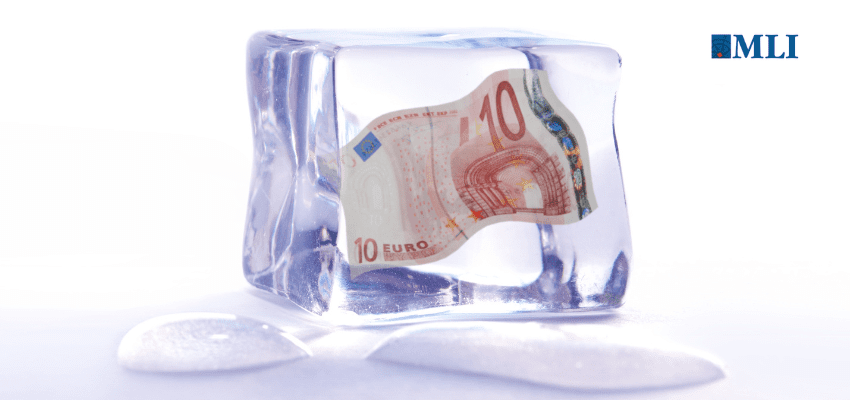
The obvious source for these funds is the €185 billion in Russian Central Bank assets frozen in Western accounts, the vast majority of which sits in Belgium at Euroclear. However, the Belgian government has rightfully hesitated. While they have agreed to use the interest on these assets to help Ukraine, they have resisted EU attempts to touch the principal.
Belgium’s fears are grounded in reality. They worry that current proposals to access these funds violate sovereign immunity and could wreck Belgium’s reputation as a secure financial hub. Worse, they fear that the Belgian government or Euroclear could be held liable for the entire €185bn if Russia successfully sues after the war.
Today’s meeting offers a chance to break this deadlock. The answer lies not in the immediate confiscation that Belgium fears, but in a clear legal mechanism familiar in normal commercial disputes: a lien.
If a neighbour owes you money, you do not simply seize their property; you obtain a lien on their assets. If they pay what is owed, the lien is removed; if they refuse, you seek repayment from the asset. We propose utilising this exact mechanism to transform frozen Russian assets into conditional collateral for Ukraine.
Under this proposal, the EU and Ukraine would calculate the war damages to form the basis of a reparations claim. Belgium would then enact legislation rendering this claim actionable, placing a lien on the Russian assets rather than seizing them. This distinction is vital: the assets are only seized if Russia formally refuses to pay reparations.
To make this work for Belgium, we must address the financial risk. A Special Purpose Vehicle (SPV) can be created to raise funds from private investors and governments to loan to Ukraine. However, Belgium cannot bear the risk of legal blowback alone. The financial and legal risks must be spread through a robust, shared indemnification scheme guaranteed by the EU and G7 nation.
Europe has successfully implemented such risk-sharing mechanisms before. From the historic Marshall Plan to the loans extended to Greece during its fiscal crisis, the continent has a roadmap for collective financial security. To fund this specific insurance scheme, the allies can utilise the significant interest currently accruing on the frozen Euroclear accounts. This ensures that the indemnification fund is self-financing and robust.
Crucially, this structure protects the public purse. Our taxpayers should not be left on the hook for loans extended to Ukraine. By using a lien structure backed by indemnification funded by Russian asset interest, we insulate taxpayers from the cost of Russia’s aggression.
Furthermore, this mechanism clarifies the financial hierarchy. We need a clear agreement with Kyiv that Russian reparations are the primary collateral for these loans. The frozen assets in Belgium serve strictly as secondary collateral, activated only if and when Russia refuses to honor its reparation obligations. If Russia pays, the lien is lifted, and Ukraine repays the SPV with the reparation funds.
This approach provides the middle ground between indefinite freezing and the immediate confiscation that Belgium rejects. It respects international law and due process while providing Ukraine with the resources it desperately needs.
Any peace agreement that leaves Ukraine underfunded ensures that Russia will simply attack again once it has rebuilt its own strength. Unless Europe is willing to finance Ukraine directly – straining states’ finances when they need to rebuild their own militaries – leaders must embrace this proposal. Today, Europe’s leaders have the opportunity to protect Belgium’s financial integrity while ensuring Russia, not the taxpayer, pays for the destruction it has caused.
Fen Osler Hampson is Chancellor’s Professor at Carleton University and president of the World Refugee and Migration Council.
Allan Rock has served as minister of justice and attorney-general of Canada and Canadian ambassador to the United Nations. He is a member of the World Refugee & Migration Council.
Tim Sargent is Director of Domestic Policy at the Macdonald-Laurier Institute and a former deputy minister of trade in the Canadian government.