By Dylan R. Clarke
January 8, 2026
The Supreme Court of Canada is striking down penal (i.e. criminal) legislation more often now than at any other time since the Charter of Rights and Freedoms was introduced. This raises an important question for Canadians: how does the Supreme Court (SCC) justify overturning laws created by our democratically elected governments, especially in a system built upon the notion of Parliamentary supremacy.
A key part of the answer comes from the 1989 case Irwin Toy Ltd. v. Quebec (Attorney General), which helped define how Charter rights should be understood. But recent data shows a troubling trend: criminal laws are being struck down most frequently by justices appointed by Liberal governments.
All branches of government have played a part in creating a situation where Parliament’s penal codes are being invalidated at record levels – and each branch has a role to play in fixing the problem.
Irwin Toy was mainly about freedom of expression and restrictions on commercial advertising aimed at children under thirteen. However, a lesser known part of the decision – the obiter dicta, or judge’s side comments – has had a big impact. In those comments, the Court suggested that it should give less deference to the government when a criminal or penal law violates someone’s rights, especially “where the government is best characterized as the singular antagonist of the individual whose right has been infringed” (Irwin Toy, 994). This includes the rights to be free from unreasonable search and seizure and arbitrary detention, the presumption of innocence, and the prevention of cruel or unusual punishment, among other rights of the accused enshrined in sections 8 to 14, which, per the 1985 decision of Re B.C. Motor Vehicle Act, are principles of fundamental justice in the criminal context.
Irwin Toy is perhaps most well-known for its establishment of the two-part test for an infringement of the constitutional right to freedom of expression. The Court sets out the test for a free expression infringement as the following:
1. Does the activity non-violently convey meaning?
2. Is the purpose or effect of the government action to restrict expression? (Irwin Toy, 978)
This remains the test for freedom of expression infringements today. For better or for worse, Irwin Toy chose a very distinct path for the right to freedom of expression that we all now take for granted as the Canadian approach: a broad test for an infringement of free expression with many justified infringements, such as hate speech, threats, harassment, terrorism, obscenity, and other violent forms of expression, which fall outside the protected core of political, artistic or literary, and academic or scientific forms of expression.
Professor Ryan Alford, a senior fellow at the Macdonald-Laurier Institute, has pointed out that the broad test catches more speech than is otherwise needed for truth-seeking, democratic processes, and self-expression, relegating much of our free speech jurisprudence to the section 1 analysis and the “deception inherent in the idea of ‘balancing’ rights” (Alford 2025). Irwin Toy showed deference to Parliament on the regulation of advertising towards children under the age of thirteen. Irwin Toy, Keegstra, Lucas, Butler, Little Sisters, Sharpe – all show deference to Parliament in their legislative restrictions on free expression.
Only one penal statute has ever been struck down for violating the constitutional right to freedom of expression: section 181 of the Criminal Code prohibiting willful publication of false statements or news that person knows is false and that is likely to cause injury or mischief to a public interest. The Court in Zundel felt that the harms described by the statute were far too broad and that harmless misinformation and lies were wrongly proscribed by the statute. The Supreme Court of the United States rested on precisely the same dictum in United States v. Alvarez in judicially reviewing a federal law that criminalized false statements about having a military medal.
But in another sense, Irwin Toy is deeply committed to due process, that is, the protection of the rights of the accused, and we have seen that rear its head in recent years as the SCC invalidates penal legislation in violation of legal rights enshrined in sections 7 and 8 to 14 of the Charter.
What I will call the “singular antagonist” principle helps explain the Court’s recent approach to the rights of accused persons. Put simply, the Court is less willing to defer to Parliament when it sees the State as the “singular antagonist” of an individual’s constitutional rights, rather than as a mediator balancing the rights of different groups.
The Court points to sections 7 to 14 of the Charter as examples of where this approach shows up. Indeed, nearly half of all criminal laws challenged under section 7 – which protects life, liberty, and security of person – are struck down. And when the SCC finds a law that violates section 7’s “principles of fundamental justice,” it has never upheld that law in a majority decision.
The numbers are similar in sections 8 to 12, which cover things like search and seizure, detention, and punishment. Only about one in ten laws found to violate these rights survived the Court’s review – and only one of those surviving penal laws was upheld after the years 2000. I call this pronouncement about where the Court should exercise its deference the Irwin Toy Hypothesis.
Like varying intensities of judicial review in the United States, Germany, and the European Union, Irwin Toy prescribes a sort of two-tiered level of judicial review of legislation. Despite a uniform standard of review prescribed by the test in the 1986 case of R v. Oakes, the Court shows less deference for violations of legal rights, where it is the “singular antagonist,” than it does for other rights, where it mediates interests between groups. I suppose one could conclude that Canada does have de facto tiered judicial review of legislation.
This so-called Irwin Toy Hypothesis is borne out in a larger sample of the data as well. I constructed a database of the universe of SCC judicial review of legislation cases where the Court performs judicial review of Charter rights purportedly infringed by legislation. The database covers all cases from the inception of the Charter to present where the SCC judicial reviews legislation of Parliament or the provinces to determine whether it is deemed to be Charter-compliant.[1]
Using my newly constructed data on the universe of Charter rights cases, I find that there has been a steady rise in judicial activism in evaluating the constitutional validity of penal legislation. We have seen a recent increase in the last 15 to 20 years of invalidation of penal legislation that violates these legal rights of the accused. Meanwhile, the Court has shown more deference on penal legislation that violates the right to freedom of expression and in the judicial review of other, non-penal legislation that infringes on fundamental freedoms. Figure 1 displays a growing trend of activism on criminal or penal legislation, while the Court has remained steady or even more deferential on non-criminal or non-penal legislation.
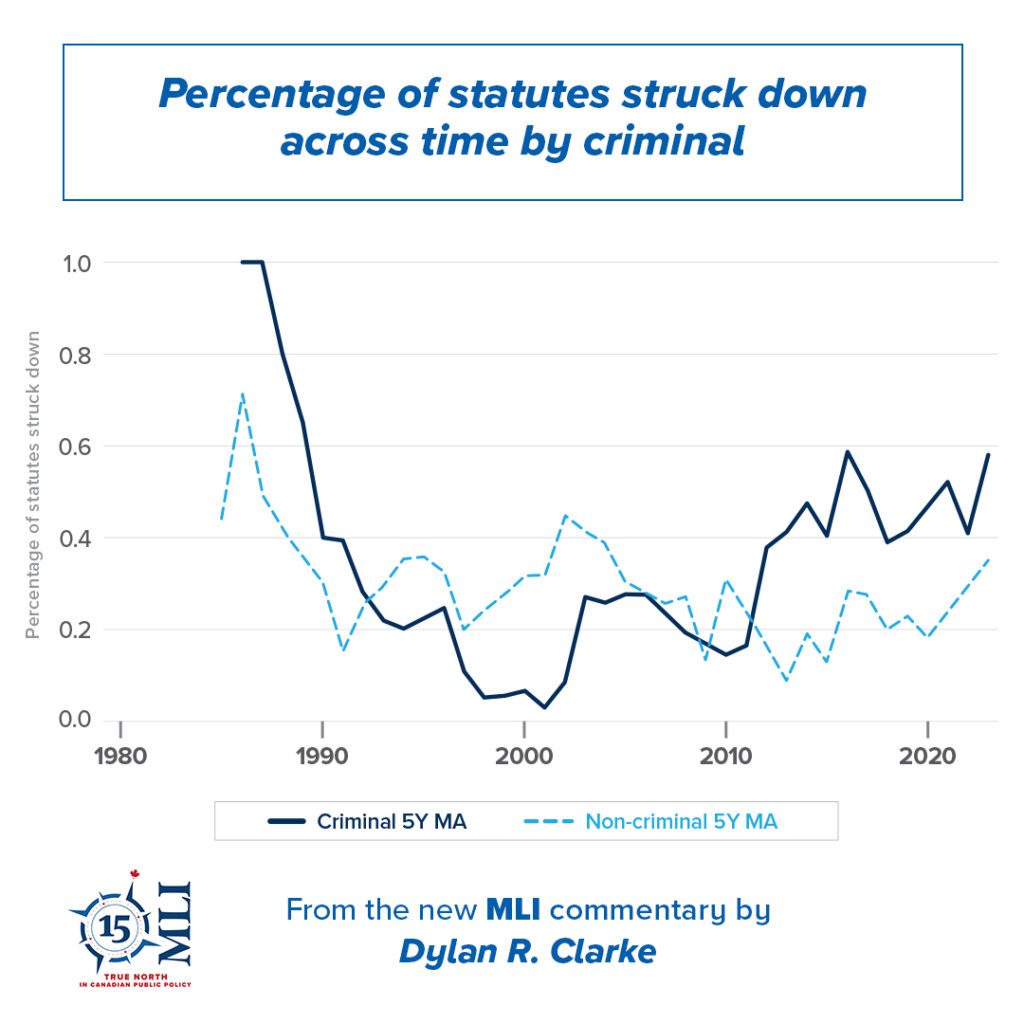
Figure 1: Percentage of Statutes Struck Down Across Time by Criminal
Irwin Toy especially views the section 1 analysis as being the focal point of this activism. Section 1 of the Charter is where the Court decides whether a Charter violation can be justified in a free and democratic society. To do that, it considers whether the government’s goal is pressing, of substantial concern, has a rational connection to that objective, results in minimal impairment, and whether its benefits outweigh its harms. Indeed, Figure 2 shows that the pattern found in invalidation of statutes holds equally for whether or not the Court finds a constitutional infringement to be justified in a free and democratic society. The Court is much less likely to see a penal statute as justified in a free and democratic society than other legislation, but particularly when legal rights of the accused are at stake, The opposite is true in cases of penal legislation that infringes free expression – penal statutes that proscribe harmful or violent speech are upheld as justified in a free and democratic society.
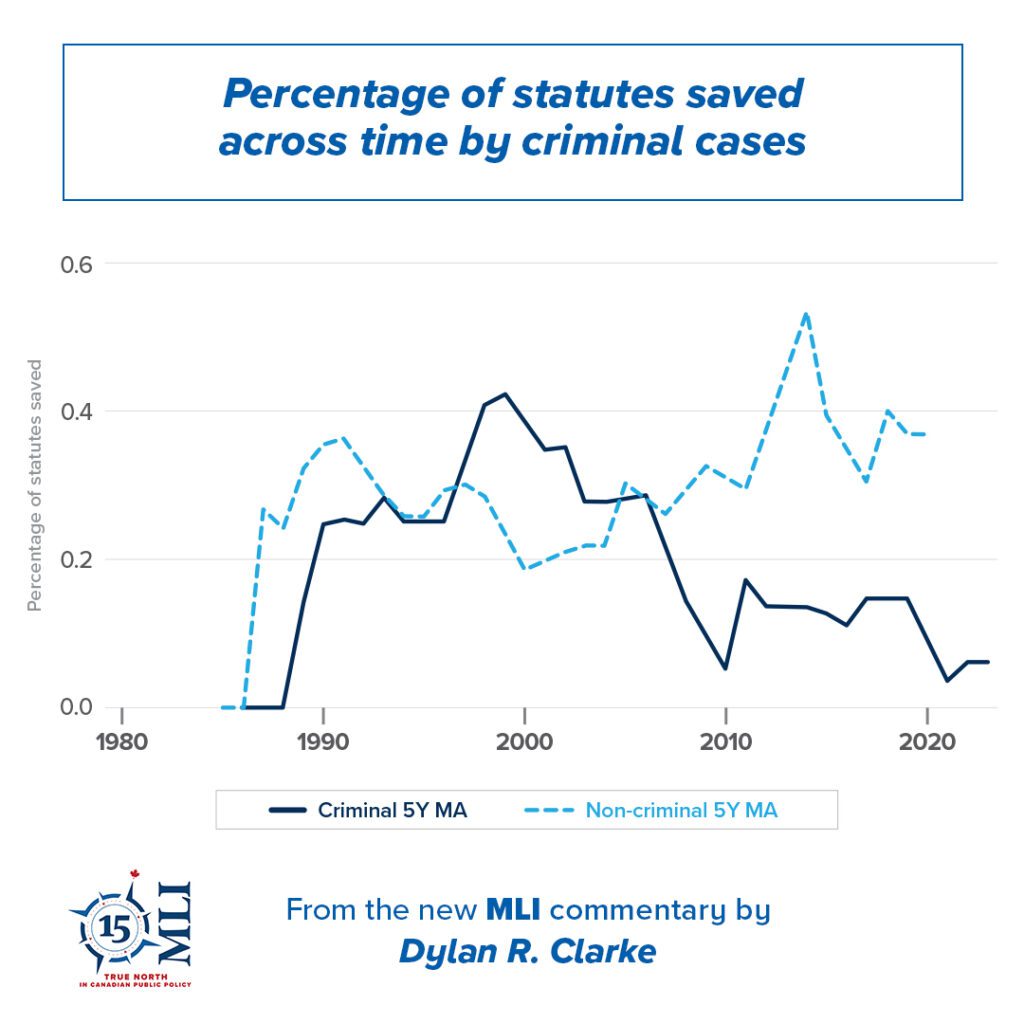
Figure 2: Percentage of Statutes Saved Across Time by Criminal Cases
This pattern of judicial activism in reviewing penal legislation that violates legal rights mostly comes from Liberal-appointed justices. Figure 3 depicts that Liberal-appointed justices are 10 to 20 percentage points more likely to invalidate a penal statute, even after controlling for other factors, such as justice sex, age, tenure, and region of origin. To be sure, the appointing party of a justice makes no difference on important dimensions, such as in cases involving free expression or equality rights. Some may find this surprising given popular media coverage of anecdotes in the small, but it’s true in the data in the large. The Liberal-appointed wing of the Court appears to ascribe deeply to liberal penal theory, but not when applied to any other rights than the legal rights of the accused.
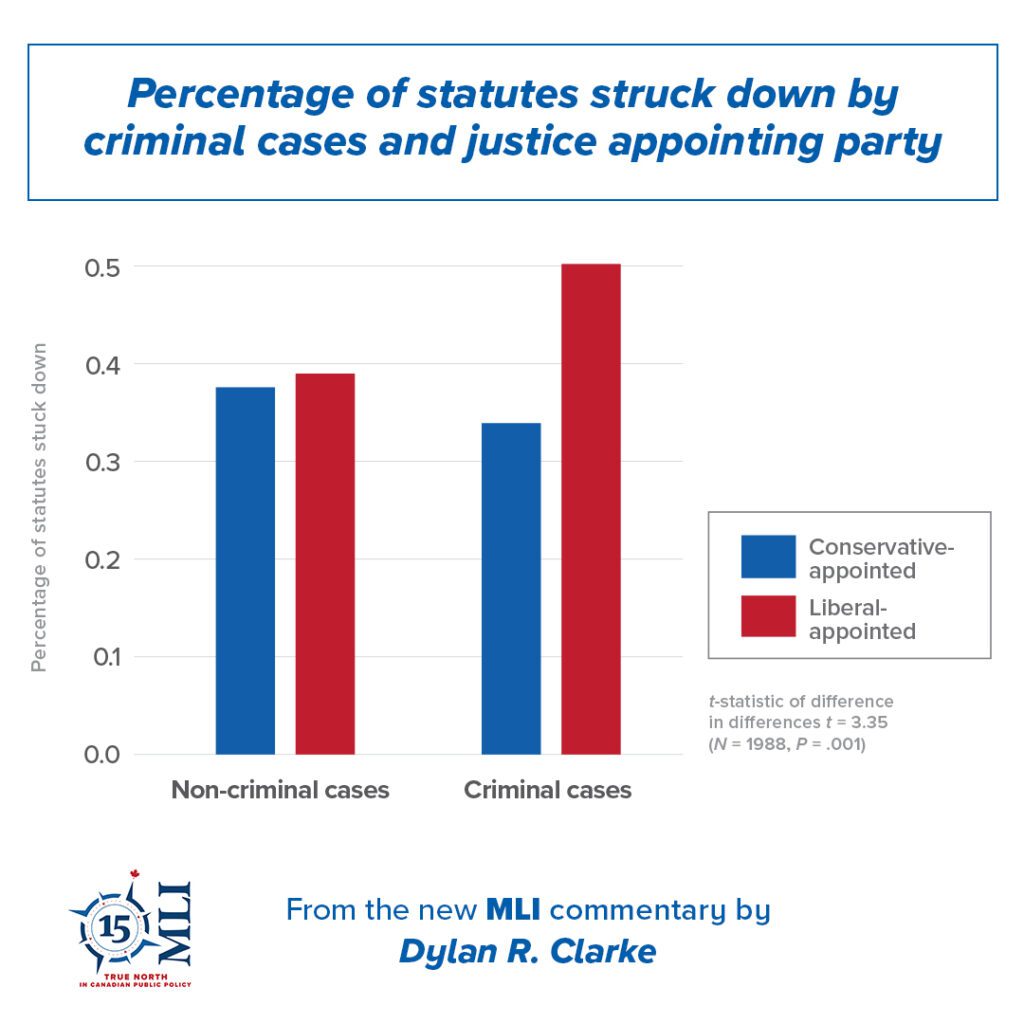
Figure 3: Percentage of Statutes Struck Down by Criminal Cases and Justice Appointing Party
Justice politics in criminal law is not the lone instance of legal realism, or “personality-based decision-making,” on the Court. Figure 4 displays the invalidation rate of statutes across equality rights by justice sex. Female justices are more likely to strike down statutes that purportedly violate the right to equality. This suggests that democratic deference and party politics is hardly only a feature of partisan politics but rather judge preferences. This could be due to differences in judicial philosophy, judicial biography, or judge preferences, but has not changed over time as the test for equality has evolved. The attitudinal model of judging suggests that justices’ decisions are influenced by their personal values and ideological orientations – here, potentially reflecting a greater sensitivity among female justices to issues of equality and discrimination. Rather than matters of right or wrong, ideology and personality may drive judicial decision-making at the apex court more than one might think.
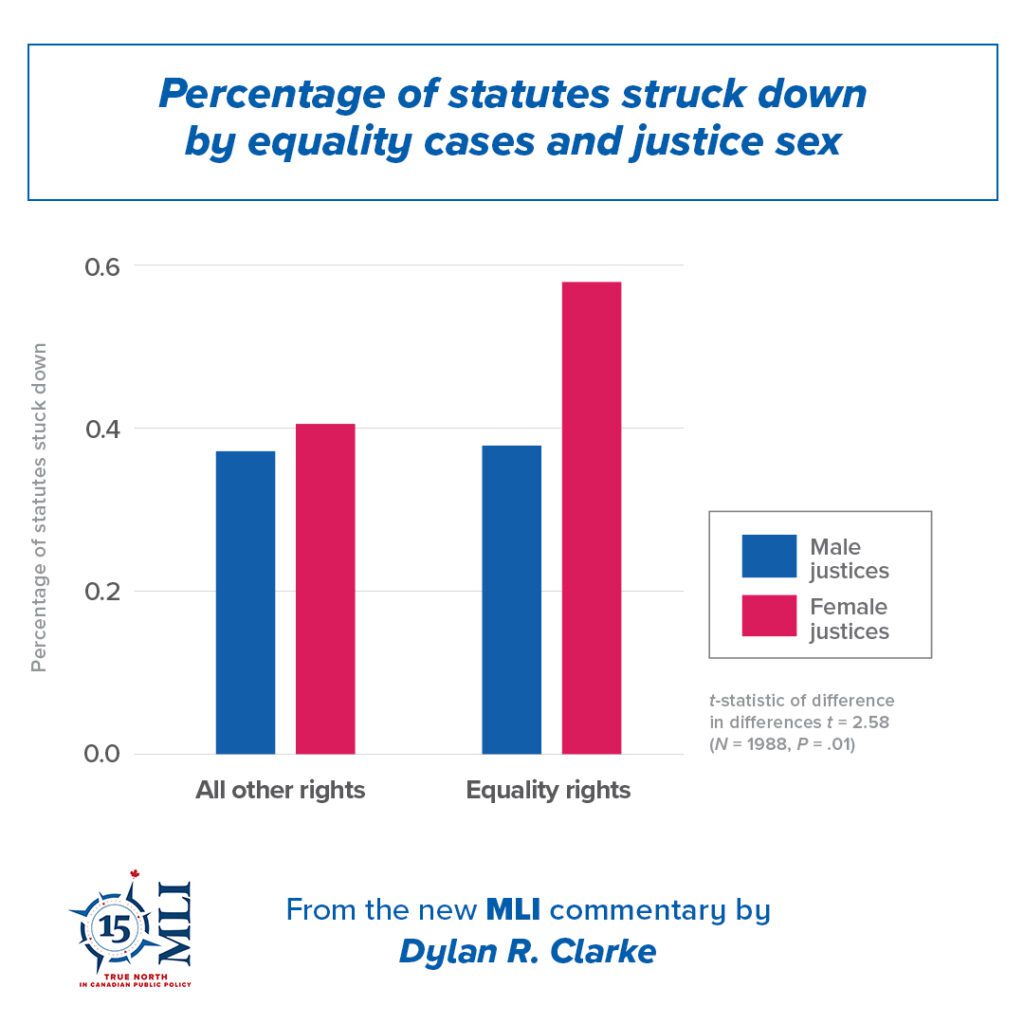
Figure 4: Percentage of Statutes Struck Down by Equality Cases and Justice Sex
Irwin Toy’s predictions have been borne out in the data over the last 40 years of our nation’s history of judicial review of legislation. To quote a famous Quebec conflict of laws decision on a case regarding a marriage between a Quebec groom and an Ontario bride in which the groom lacked his parent’s consent, invalidating the marriage: “Perhaps their law is better than ours, but it is not our law.” The same is true of Irwin Toy.
That said, there are practical policy steps that can help fix the legal problems created by Irwin Toy, especially given the increasing number of penal laws being struck down. The Charter is not a suicide pact. The following are possible recommendations for each branch of government to combat the rise in judicial activism by Liberal justices in striking down penal statutes:
- Parliament should consider invoking the section 33 notwithstanding clause in penal legislation.
- Parliament should narrowly tailor its penal legislation towards its legislative purpose.
- The judiciary should consider showing more deference to Parliament on penal legislation.
- The judiciary should acknowledge other unwritten principles of constitutional interpretation, such as natural law, in judicially reviewing penal statutes.
- The Prime Minister should consider carefully appointing judges with weaker philosophical commitments to liberal penal theory or those that are less explicitly activist.
These suggested policies could feasibly reverse the current trend of the Supreme Court striking down criminal laws. All branches of government have a role to play and are culpable in allowing for the Canadian criminal justice system to come to its current state of affairs where a penal statute is more likely to be invalidated than not.
Campaign promises about using the Charter’s section 33 “notwithstanding clause” in federal penal legislation are not necessarily dangerous or politicized when you look at the facts. Justices appointed by Liberal governments have tended to take a more activist approach in invalidating federal penal legislation. The Harper government passed stronger and tougher penal legislation but failed to narrowly tailor the statutes to their intended purpose. Judges then used their authority to invalidate a significant portion of those laws. Given that judicial appointments are largely at the prime minister’s sole discretion, the prime minister should more carefully consider their appointments to the highest court. These decisions have major long-term effects on how Canada’s criminal justice system works.
Irwin Toy is a landmark case in our constitutional history. This is true for several reasons. We know the case for its free speech pronouncements, but it is less well-known for what it says about the rights of the accused. Irwin Toy should be squarely placed in the constitutional canon and evaluated, for better or for worse, for what it truly says. Irwin Toy continues to have lasting relevance today, and not merely for what it says about the regulation of advertising towards children and free expression. It helps explain the rising invalidation of penal statutes, especially true for Liberal-appointed justices, in the judicial review of rights of the accused in section 7 to 12 of the Charter.
About the author
Dylan R. Clarke holds graduate degrees in law and economics and is currently a CUSP fellow at West Neighbourhood House. His research uses the tools of economics and statistics to study legal phenomena. His work has been published in the Journal of Urban Economics, Regional Science and Urban Economics, and the Journal of Law & Empirical Analysis. A revised version of the article is forthcoming at the Journal of Law & Empirical Analysis.
References
Agnew v. Gober (1907) 32 Que. S.C. 266, (1919) 38 Que. S. C. (Judgment revised) 31
Alford, Ryan. 2025. The Forgotten Freedom: Reviving Canada’s Rational Debate in the Public Sphere. Macdonald-Laurier Institute. Available at https://macdonaldlaurier.ca/the-forgotten-freedom-reviving-rational-debate-in-canadas-public-sphere/.
Irwin Toy Ltd. v. Quebec (Attorney General), [1989] 1 S.C.R. 927
Little Sisters Book and Art Emporium v. Canada (Minister of Justice), [2000] 2 S.C.R. 1120
United States v. Alvarez, 567 U.S. 709 (2012)
Re B.C. Motor Vehicle Act, [1985] 2 S.C.R. 486v. Butler, [1992] 1 S.C.R. 452
R. v. Keegstra, [1990] 3 S.C.R. 697
R. v. Lucas, [1998] 1 S.C.R. 439
R. v. Oakes, [1986] 1 S.C.R. 103
R. v. Sharpe, [2001] 2001 SCC 2
R. v. Zundel, [1992] 2 S.C.R. 731
[1] The data are constructed using case- and judge-level data on 249 Charter rights cases involving judicial review of legislation at the Supreme Court of Canada. A case is determined to be criminal if it judicially reviews a penal statute, such as the Criminal Code, Narcotic Control Act, Controlled Drugs and Substances Act, Youth Criminal Justice Act, or Combines Investigation Act. In total, these criminal cases comprise nearly half (44 per cent) of the dataset.