This article originally appeared in International Policy Digest.
By Joe Varner, April 15, 2026
The collapse of the ceasefire negotiations—and the emerging discussion of a naval blockade—marks the end of a brief diplomatic pause that had temporarily slowed the regional war. What replaces it is not yet full-scale conflict, but something more ambiguous and, in some ways, more dangerous. The situation remains highly volatile, and all three actors involved retain the capacity to move from tension to open hostilities with little warning.
What follows is unlikely to be a sudden plunge into total war. Instead, the conflict is entering a new phase defined by calibrated pressure: limited strikes, strategic positioning, and military signaling designed to shape the terms of a future political settlement. At the center of this phase lies a fundamental asymmetry. The opposing sides do not share the same definition of victory. For Iran, survival of the regime and preservation of its strategic posture are sufficient. For the United States and Israel, the threshold is higher. Washington seeks to restore freedom of navigation and reassert deterrence across the Gulf, while Israel aims to significantly degrade Iran’s ability to threaten its territory, whether directly or through proxies. This divergence ensures that even limited actions carry the risk of escalation, especially if either side perceives its core interests to be under threat.
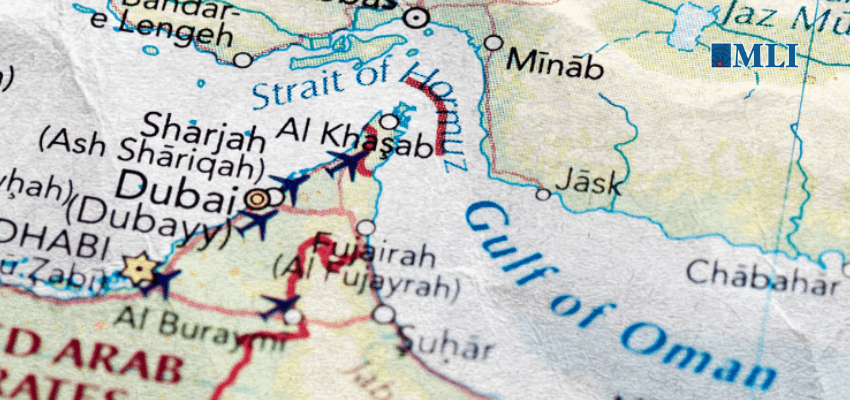
In the immediate term, the maritime domain will become the focal point of military activity. One of the clearest indicators that the confrontation is shifting from political pressure toward operational reality will be the positioning of naval forces in and around the Strait of Hormuz. A blockade is not merely a policy declaration; it is a physical act. It requires ships deployed in positions where they can intercept, inspect, and escort commercial vessels moving through narrow and heavily trafficked shipping lanes. Observers will be watching closely for American destroyers establishing inspection corridors near the entrance to the strait, as well as for maritime patrol aircraft maintaining persistent surveillance over the approaches to the Gulf.
Equally significant will be the appearance of mine countermeasures vessels tasked with clearing suspected minefields. Minesweeping operations rarely occur in a vacuum. They signal that commanders believe mining activity has either already taken place or is imminent, and that forces are operating under rules of engagement that permit defensive fire. Once naval forces begin inspecting outbound vessels and clearing transit lanes, the probability of direct encounters between American and Iranian forces increases sharply.
A naval blockade targeting Iranian oil exports—or broader restrictions on shipping through the Strait of Hormuz—would represent one of the most consequential economic and military actions taken against Iran in decades. The strait is more than a geographic chokepoint; it is a central artery of the global energy system. Roughly twenty percent of the world’s oil and liquefied natural gas exports pass through this narrow corridor each day. Any disruption would reverberate immediately through global energy markets.
Enforcing such a blockade would require constant naval patrols, routine inspections of commercial shipping, and sustained mine countermeasures operations to ensure safe passage. Each of these activities creates friction points where confrontation becomes possible. History suggests that maritime incidents often begin as limited encounters, not intended to escalate, but capable of doing so once forces operate under wartime assumptions. Reports also indicate that the United Kingdom and France are preparing to contribute to a large multinational naval presence aimed at maintaining freedom of navigation in the Persian Gulf and the Strait of Hormuz.
Iran, for its part, is unlikely to respond through direct conventional naval engagement. Its military doctrine favors asymmetric strategies designed to impose costs while avoiding decisive confrontation with a technologically superior adversary. The tools available are varied and well-practiced: coastal anti-ship missile batteries, swarms of fast attack craft, sea mines, armed drones, and a network of proxy forces across the region. These capabilities allow Iran to challenge a blockade indirectly, raising the stakes without formally crossing the threshold into full-scale war.
Beyond the maritime domain, the broader regional dimension remains highly unstable. Hezbollah in Lebanon continues to represent the most capable Iranian-aligned force outside Iran itself. Despite sustained Israeli operations that have degraded elements of its leadership and infrastructure, the organization retains substantial missile and rocket capabilities. Any decision by Tehran to activate Hezbollah in a more direct role would transform the conflict almost immediately, expanding it from a maritime confrontation into a multi-front regional war stretching from the eastern Mediterranean to the Persian Gulf.
Attention must also be paid to the Bab-el-Mandeb and the Red Sea, both of which remain vulnerable to escalation. The Bab-el-Mandeb is a critical passage in the global trading system, with approximately fifteen percent of world shipping and close to thirty percent of global container traffic moving through its narrow waters. Beneath it runs a dense network of undersea communication cables that carry digital traffic between Europe, the Middle East, and Asia. Iranian-aligned forces in Yemen, particularly the Houthis, have already demonstrated their capacity to disrupt maritime traffic through drone and missile attacks. Should Tehran choose to broaden the pressure on international shipping, simultaneous disruptions in both the Strait of Hormuz and the Red Sea would place two of the world’s most vital chokepoints under strain, dramatically increasing the economic and strategic stakes.
For Israel, the calculus is shaped by a different set of priorities. Iranian missile capabilities and nuclear infrastructure remain the central long-term threat to Israeli security. If Iranian retaliation expands to include missile launches or proxy attacks directed at Israeli territory, Israel is likely to respond swiftly with long-range air operations targeting Iranian military assets. Israeli strategy has historically emphasized preemption in the face of credible threats. As a result, the shift from defensive posture to offensive action could occur rapidly if Iranian forces begin to mobilize or initiate strikes.
The United States, meanwhile, will attempt to maintain escalation control even as it applies military pressure. American strategy traditionally aims to impose costs without triggering a broader regional war. Maintaining that balance will prove increasingly difficult if Iranian proxy forces in Iraq, Syria, Lebanon, and Yemen begin coordinated attacks on American bases or allied infrastructure. At that point, the conflict could evolve from limited maritime enforcement into a wider campaign targeting Iran’s regional military network.

Time itself is a strategic variable. Iran benefits from prolonging the confrontation. The longer tensions persist without decisive resolution, the greater the pressure on global energy markets, regional governments, and international actors to push for renewed negotiations. For the United States and Israel, this creates a dilemma. Applying sufficient pressure to compel concessions risks escalation, while restraint risks allowing Iran to outlast the current phase of the crisis.
For middle powers observing the unfolding situation, the crisis offers a stark lesson. Economic interests alone rarely translate into meaningful influence during major security crises. States without forward-deployed military capabilities have limited capacity to shape outcomes once conflict begins. Securing access to critical maritime routes such as the Strait of Hormuz requires not only diplomatic engagement but also credible naval and air assets capable of contributing to multinational operations.
Canada illustrates this challenge with particular clarity. Despite its dependence on global trade routes and energy markets, Canada lacks significant forward-deployed naval or air assets in the Gulf region. A meaningful contribution might include the deployment of a Royal Canadian Navy frigate equipped with an embarked Cyclone helicopter, supported by CP-140 Aurora maritime patrol aircraft, cyber capabilities, and personnel integrated into coalition command structures.
Yet because Canada does not maintain a persistent presence in the region, assembling and deploying such a force would take time. In the early stages of a crisis, that delay limits the country’s ability to contribute meaningfully—an issue compounded by years of constrained defense spending and reduced readiness.
What comes next, then, is unlikely to be a decisive battle or a swift political resolution. The more probable trajectory is a sustained period of pressure: limited strikes, proxy engagements, and strategic maneuvering, as each side seeks to shape the conditions for eventual negotiations. The ceasefire may have collapsed, but the conflict itself is entering a transitional phase rather than approaching its conclusion.
The coming weeks will determine whether that transition leads back toward diplomacy or forward into a broader regional war. History suggests that what begins in the narrow waters of the Strait of Hormuz rarely remains contained there. The maritime corridors linking the Persian Gulf, the Red Sea, the Arabian Sea, and the eastern Mediterranean form an interconnected strategic system, where instability in one location quickly spreads to others. Much will depend on whether the first military incidents in the strait remain limited encounters—or become the spark that ignites a wider conflagration across the Middle East.
Joe Varner is a senior fellow at the Macdonald-Laurier Institute and the Center for North American Prosperity and Security in Washington, D.C.