Wednesday, November 12, 2025
No Result
View All Result
  • Media
Macdonald-Laurier Institute
  • Home
  • About
    • Who We Are
    • Who Makes MLI Work
    • Fifteenth Anniversary
  • Experts
    • Experts Directory
    • In Memoriam
  • Issues
    • Domestic Policy
      • Economic Policy
      • Justice
      • Rights and Freedoms
      • Assisted Suicide (MAID)
      • Health Care
      • COVID-19
      • Gender Identity
      • Canada’s Political Tradition
      • AI, Technology and Innovation
      • Media and Telecoms
      • Housing
      • Immigration
      • Agriculture and Agri-Food
      • Competition Policy
    • Energy Policy
      • Energy
      • Environment
    • Foreign Policy
      • Israel-Hamas War
      • Ukraine
      • Taiwan
      • China
      • Europe and Russia
      • Indo-Pacific
      • Middle East and North Africa
      • North America
      • Foreign Interference
      • National Defence
      • National Security
      • Foreign Affairs
    • Indigenous Affairs
  • Projects
    • CNAPS (Center for North American Prosperity and Security)
    • The Promised Land
    • Voices that Inspire: The Macdonald-Laurier Vancouver Speaker Series
    • Dragon at the door
    • Canada on top of the world
    • Letter to a minister
    • Justice Report Card
    • The Great Energy Crisis
    • DisInfoWatch.org
    • Managing Indigenous Prosperity
    • Judicial Foundations
    • Landmark Cases Council
    • Defending The Marketplace of Ideas
    • Reforming the University
    • Past Projects
      • Digital Policy & Connectivity
      • Double Trouble
      • Canada and the Indo-Pacific Initiative
      • The Transatlantic Program
      • COVID Misery Index
        • Provincial COVID Misery Index
        • Beyond Lockdown
        • COVID and after: A mandate for recovery
      • Speak for Ourselves
      • The Eavesdropping Dragon: Huawei
      • Talkin’ in the Free World with Mariam Memarsadeghi
      • An Intellectual Property Strategy for Canada
      • Munk Senior Fellows
      • A Mandate for Canada
      • Confederation Series
      • Fiscal Reform
      • The Canadian Century project
      • Fixing Canadian health care
      • Internal trade
      • From a mandate for change
      • Size of government in Canada
      • Straight Talk
      • Labour Market Report
      • Leading Economic Indicator
      • Centre for Advancing Canada’s Interests Abroad
      • Indigenous Prosperity at a Crossroads
        • Aboriginal Canada and Natural Resources
  • Events
    • Upcoming Events
    • Past Events
      • MLI Dinners
      • Great Canadian Debates
  • Latest News
  • Libraries
    • Columns
    • Commentary
    • Papers
    • Books
    • Video
  • Donate
  • Home
  • About
    • Who We Are
    • Who Makes MLI Work
    • Fifteenth Anniversary
  • Experts
    • Experts Directory
    • In Memoriam
  • Issues
    • Domestic Policy
      • Economic Policy
      • Justice
      • Rights and Freedoms
      • Assisted Suicide (MAID)
      • Health Care
      • COVID-19
      • Gender Identity
      • Canada’s Political Tradition
      • AI, Technology and Innovation
      • Media and Telecoms
      • Housing
      • Immigration
      • Agriculture and Agri-Food
      • Competition Policy
    • Energy Policy
      • Energy
      • Environment
    • Foreign Policy
      • Israel-Hamas War
      • Ukraine
      • Taiwan
      • China
      • Europe and Russia
      • Indo-Pacific
      • Middle East and North Africa
      • North America
      • Foreign Interference
      • National Defence
      • National Security
      • Foreign Affairs
    • Indigenous Affairs
  • Projects
    • CNAPS (Center for North American Prosperity and Security)
    • The Promised Land
    • Voices that Inspire: The Macdonald-Laurier Vancouver Speaker Series
    • Dragon at the door
    • Canada on top of the world
    • Letter to a minister
    • Justice Report Card
    • The Great Energy Crisis
    • DisInfoWatch.org
    • Managing Indigenous Prosperity
    • Judicial Foundations
    • Landmark Cases Council
    • Defending The Marketplace of Ideas
    • Reforming the University
    • Past Projects
      • Digital Policy & Connectivity
      • Double Trouble
      • Canada and the Indo-Pacific Initiative
      • The Transatlantic Program
      • COVID Misery Index
        • Provincial COVID Misery Index
        • Beyond Lockdown
        • COVID and after: A mandate for recovery
      • Speak for Ourselves
      • The Eavesdropping Dragon: Huawei
      • Talkin’ in the Free World with Mariam Memarsadeghi
      • An Intellectual Property Strategy for Canada
      • Munk Senior Fellows
      • A Mandate for Canada
      • Confederation Series
      • Fiscal Reform
      • The Canadian Century project
      • Fixing Canadian health care
      • Internal trade
      • From a mandate for change
      • Size of government in Canada
      • Straight Talk
      • Labour Market Report
      • Leading Economic Indicator
      • Centre for Advancing Canada’s Interests Abroad
      • Indigenous Prosperity at a Crossroads
        • Aboriginal Canada and Natural Resources
  • Events
    • Upcoming Events
    • Past Events
      • MLI Dinners
      • Great Canadian Debates
  • Latest News
  • Libraries
    • Columns
    • Commentary
    • Papers
    • Books
    • Video
  • Donate
No Result
View All Result
Macdonald-Laurier Institute

Don’t be complacent Canada, Russia’s imperialism looms at our doorstep: Marcus Kolga in the Toronto Star

Moscow and its proxies insist the Kremlin’s Arctic intentions are peaceful. Its record says otherwise.

November 5, 2025
in Foreign Affairs, Latest News, Columns, Foreign Policy, In the Media, Europe and Russia, Ukraine, Marcus Kolga
Reading Time: 4 mins read
A A
Don’t be complacent Canada, Russia’s imperialism looms at our doorstep: Marcus Kolga in the Toronto Star

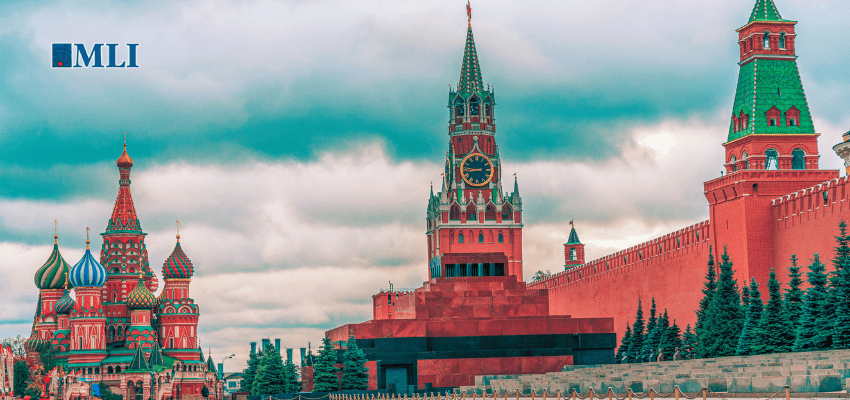
Image via Canva.

This article originally appeared in the Toronto Star.

By Marcus Kolga, November 5, 2025

Over the past decade, Russian President Vladimir Putin has made his intentions unmistakable. At a minimum, Russia aims to reassert colonial control over territories it “liberated” and then seized after the Second World War.

The terror unleashed on Ukraine — from ruined towns to deported children and daily bombardment — reveals the shape of Moscow’s modern imperialism. Yet many still treat Putin’s war as a distant European quarrel, echoing Neville Chamberlain’s 1938 dismissal of Nazi aggression as “a quarrel in a faraway country, between people of whom we know nothing.”

It is not. The threat to Canada, our allies and our Arctic is clear and accelerating. Looking away will not make it fade. It invites more, and worse. It now looms at our own doorstep.

If the past decade has taught us anything, it is that Putin does not negotiate in good faith. His regime reads dialogue as weakness and exploits it. Betting on engagement with Moscow in the Arctic is wishful thinking that puts our sovereignty at risk.

The same was clear in the months before Russia’s full-scale invasion of Ukraine, when the Kremlin denied it had any such plan. Those who warned about Putin’s aims were dismissed as hysterical “Russophobes.” In the Arctic, by contrast, Moscow has openly spelled out its ambitions, pressed expansive territorial claims and matched words with rapid militarization across the region.

In 2021, Moscow broadened its UN submission on the Arctic continental shelf to include most of the Arctic Ocean seabed, right up to the outer limit of Canada’s exclusive economic zone. University of Calgary professor Rob Huebert observed that Russia is “claiming the entire Arctic Ocean as their continental shelf … claiming the entire Canadian and Danish continental shelf” as part of their own.

These claims mirror Russia’s official 2035 Arctic Strategy, which envisions aggressive resource expansion that could collide with Canada’s sovereign interests, maritime rights, and northern security.

To back these claims, Russia has rebuilt and expanded its military presence in the Arctic.

It has reopened Soviet-era outposts, modernized airfields and radar and increased bomber, submarine and surface patrols. A growing fleet of nuclear icebreakers gives Moscow year-round reach in waters that guard Canada’s approaches. Russia’s offensive Arctic “superweapons” now include the Poseidon, a nuclear-powered undersea torpedo built to travel at high speeds under ice, evading detection, with the mission of devastating coastal cities and irradiating shorelines for generations.

Arctic watchdogs like Bellona warn that Moscow’s Northern Sea Route is now serviced by a Russian shadow fleet of aging tankers that “operate outside normal maritime insurance and safety frameworks,” often sail dark and evade oversight. Designed to evade sanctions, this fleet poses environmental risks in one of the world’s most fragile seas.

French authorities recently immobilized a Russian shadow fleet tanker off Saint-Nazaire after President Emmanuel Macron tied it to “very serious wrongdoings.” Analysts also noted the ship’s presence off Denmark during recent drone incursions. This mix of lax regulation and deniable activity gives the Kremlin cover for hybrid operations, from surveillance to sabotage, which also threatens Canada.
Over the past year, the subsea fibre-optic link between Newfoundland and Nova Scotia has been cut twice. Bell reports both incidents were deliberate and investigations are ongoing. It fits into the pattern of suspected sabotage in the Baltic Sea since 2022, where multiple data cables and energy lines have been damaged. Foreign involvement cannot be ruled out, including Russia.

Moscow and its proxies insist the Kremlin’s Arctic intentions are peaceful. Its record says otherwise. In June 2024, Russia’s ambassador to Canada claimed that Moscow “strongly advocates for the High North remaining peaceful and nonmilitarized,” even as Russia expanded bases, ran exercises and pressed maximal seabed claims.

By February 2025, the same envoy accused Canada, Sweden, and Finland of seeking confrontation. The Kremlin is recycling its Ukraine script: aggression masked as victimhood.

We are already seeing the Kremlin’s hybrid warfare tool kit in NATO’s North: aggressive patrols, drone overflights, GPS jamming and probing of undersea cables and choke points. Canada must treat this as a live security problem and answer with credible capacity, resilient infrastructure, and tight interoperability with allies.

Putin has demonstrated raw contempt for sovereignty and human life. Canada’s Arctic is vulnerable and a prize in the Kremlin’s imperial ambitions. The signals from Moscow point to a growing flashpoint.

Like our Arctic allies Finland and Sweden, we must prepare now. Canada’s best defence lies in demonstrating credible strength and unwavering political will and determination, both at home and alongside our allies.


Marcus Kolga is a senior fellow at the Macdonald-Laurier Institute.

Source: Toronto Star

Related Posts

In the Israel-Hamas war, international law favours the lawless: Mathew Giagnorio for Inside Policy
Israel-Hamas War

In the Israel-Hamas war, international law favours the lawless: Mathew Giagnorio for Inside Policy

November 12, 2025
Is Budget 2025 enough to reverse Canada’s economic decline?: Trevor Tombe in The Hub
Economic Policy

Is Budget 2025 enough to reverse Canada’s economic decline?: Trevor Tombe in The Hub

November 12, 2025
The CBC just got more government cash—good luck, private sector competitors: Peter Menzies in The Hub
Media and Telecoms

The CBC just got more government cash—good luck, private sector competitors: Peter Menzies in The Hub

November 12, 2025
Next Post
The false gospel of gender “affirmation”: J. Edward Les for Inside Policy

The false gospel of gender “affirmation”: J. Edward Les for Inside Policy

Newsletter Signup

  Thank you for Signing Up
  Please correct the marked field(s) below.
Email Address  *
1,true,6,Contact Email,2
First Name *
1,true,1,First Name,2
Last Name *
1,true,1,Last Name,2
*
*Required Fields

Follow us on

Macdonald-Laurier Institute

323 Chapel Street, Suite #300
Ottawa, Ontario, K1N 7Z2 Canada

613.482.8327

info@macdonaldlaurier.ca
MLI directory

Support Us

Support the Macdonald-Laurier Institute to help ensure that Canada is one of the best governed countries in the world. Click below to learn more or become a sponsor.

Support Us

  • Inside Policy Magazine
  • Annual Reports
  • Jobs
  • Privacy Policy

© 2023 Macdonald-Laurier Institute. All Rights reserved.

No Result
View All Result
  • Home
  • About
    • Who We Are
    • Who Makes MLI Work
    • Fifteenth Anniversary
  • Experts
    • Experts Directory
    • In Memoriam
  • Issues
    • Domestic Policy
      • Economic Policy
      • Justice
      • Rights and Freedoms
      • Assisted Suicide (MAID)
      • Health Care
      • COVID-19
      • Gender Identity
      • Canada’s Political Tradition
      • AI, Technology and Innovation
      • Media and Telecoms
      • Housing
      • Immigration
      • Agriculture and Agri-Food
      • Competition Policy
    • Energy Policy
      • Energy
      • Environment
    • Foreign Policy
      • Israel-Hamas War
      • Ukraine
      • Taiwan
      • China
      • Europe and Russia
      • Indo-Pacific
      • Middle East and North Africa
      • North America
      • Foreign Interference
      • National Defence
      • National Security
      • Foreign Affairs
    • Indigenous Affairs
  • Projects
    • CNAPS (Center for North American Prosperity and Security)
    • The Promised Land
    • Voices that Inspire: The Macdonald-Laurier Vancouver Speaker Series
    • Dragon at the door
    • Canada on top of the world
    • Letter to a minister
    • Justice Report Card
    • The Great Energy Crisis
    • DisInfoWatch.org
    • Managing Indigenous Prosperity
    • Judicial Foundations
    • Landmark Cases Council
    • Defending The Marketplace of Ideas
    • Reforming the University
    • Past Projects
      • Digital Policy & Connectivity
      • Double Trouble
      • Canada and the Indo-Pacific Initiative
      • The Transatlantic Program
      • COVID Misery Index
      • Speak for Ourselves
      • The Eavesdropping Dragon: Huawei
      • Talkin’ in the Free World with Mariam Memarsadeghi
      • An Intellectual Property Strategy for Canada
      • Munk Senior Fellows
      • A Mandate for Canada
      • Confederation Series
      • Fiscal Reform
      • The Canadian Century project
      • Fixing Canadian health care
      • Internal trade
      • From a mandate for change
      • Size of government in Canada
      • Straight Talk
      • Labour Market Report
      • Leading Economic Indicator
      • Centre for Advancing Canada’s Interests Abroad
      • Indigenous Prosperity at a Crossroads
  • Events
    • Upcoming Events
    • Past Events
      • MLI Dinners
      • Great Canadian Debates
  • Latest News
  • Libraries
    • Columns
    • Commentary
    • Papers
    • Books
    • Video
  • Donate

© 2023 Macdonald-Laurier Institute. All Rights reserved.