Thursday, December 4, 2025
No Result
View All Result
  • Media
Macdonald-Laurier Institute
  • Home
  • About
    • Who We Are
    • Who Makes MLI Work
    • Fifteenth Anniversary
  • Experts
    • Experts Directory
    • In Memoriam
  • Issues
    • Domestic Policy
      • Economic Policy
      • Justice
      • Rights and Freedoms
      • Assisted Suicide (MAID)
      • Health Care
      • COVID-19
      • Gender Identity
      • Canada’s Political Tradition
      • AI, Technology and Innovation
      • Media and Telecoms
      • Housing
      • Immigration
      • Agriculture and Agri-Food
      • Competition Policy
    • Energy Policy
      • Energy
      • Environment
    • Foreign Policy
      • Israel-Hamas War
      • Ukraine
      • Taiwan
      • China
      • Europe and Russia
      • Indo-Pacific
      • Middle East and North Africa
      • North America
      • Foreign Interference
      • National Defence
      • National Security
      • Foreign Affairs
    • Indigenous Affairs
  • Projects
    • CNAPS (Center for North American Prosperity and Security)
    • The Promised Land
    • Voices that Inspire: The Macdonald-Laurier Vancouver Speaker Series
    • Dragon at the door
    • Canada on top of the world
    • Letter to a minister
    • Justice Report Card
    • The Great Energy Crisis
    • DisInfoWatch.org
    • Managing Indigenous Prosperity
    • Judicial Foundations
    • Landmark Cases Council
    • Defending The Marketplace of Ideas
    • Reforming the University
    • Past Projects
      • Digital Policy & Connectivity
      • Double Trouble
      • Canada and the Indo-Pacific Initiative
      • The Transatlantic Program
      • COVID Misery Index
        • Provincial COVID Misery Index
        • Beyond Lockdown
        • COVID and after: A mandate for recovery
      • Speak for Ourselves
      • The Eavesdropping Dragon: Huawei
      • Talkin’ in the Free World with Mariam Memarsadeghi
      • An Intellectual Property Strategy for Canada
      • Munk Senior Fellows
      • A Mandate for Canada
      • Confederation Series
      • Fiscal Reform
      • The Canadian Century project
      • Fixing Canadian health care
      • Internal trade
      • From a mandate for change
      • Size of government in Canada
      • Straight Talk
      • Labour Market Report
      • Leading Economic Indicator
      • Centre for Advancing Canada’s Interests Abroad
      • Indigenous Prosperity at a Crossroads
        • Aboriginal Canada and Natural Resources
  • Events
    • Upcoming Events
    • Past Events
      • MLI Dinners
      • Great Canadian Debates
  • Latest News
  • Libraries
    • Columns
    • Commentary
    • Papers
    • Books
    • Video
  • Donate
  • Home
  • About
    • Who We Are
    • Who Makes MLI Work
    • Fifteenth Anniversary
  • Experts
    • Experts Directory
    • In Memoriam
  • Issues
    • Domestic Policy
      • Economic Policy
      • Justice
      • Rights and Freedoms
      • Assisted Suicide (MAID)
      • Health Care
      • COVID-19
      • Gender Identity
      • Canada’s Political Tradition
      • AI, Technology and Innovation
      • Media and Telecoms
      • Housing
      • Immigration
      • Agriculture and Agri-Food
      • Competition Policy
    • Energy Policy
      • Energy
      • Environment
    • Foreign Policy
      • Israel-Hamas War
      • Ukraine
      • Taiwan
      • China
      • Europe and Russia
      • Indo-Pacific
      • Middle East and North Africa
      • North America
      • Foreign Interference
      • National Defence
      • National Security
      • Foreign Affairs
    • Indigenous Affairs
  • Projects
    • CNAPS (Center for North American Prosperity and Security)
    • The Promised Land
    • Voices that Inspire: The Macdonald-Laurier Vancouver Speaker Series
    • Dragon at the door
    • Canada on top of the world
    • Letter to a minister
    • Justice Report Card
    • The Great Energy Crisis
    • DisInfoWatch.org
    • Managing Indigenous Prosperity
    • Judicial Foundations
    • Landmark Cases Council
    • Defending The Marketplace of Ideas
    • Reforming the University
    • Past Projects
      • Digital Policy & Connectivity
      • Double Trouble
      • Canada and the Indo-Pacific Initiative
      • The Transatlantic Program
      • COVID Misery Index
        • Provincial COVID Misery Index
        • Beyond Lockdown
        • COVID and after: A mandate for recovery
      • Speak for Ourselves
      • The Eavesdropping Dragon: Huawei
      • Talkin’ in the Free World with Mariam Memarsadeghi
      • An Intellectual Property Strategy for Canada
      • Munk Senior Fellows
      • A Mandate for Canada
      • Confederation Series
      • Fiscal Reform
      • The Canadian Century project
      • Fixing Canadian health care
      • Internal trade
      • From a mandate for change
      • Size of government in Canada
      • Straight Talk
      • Labour Market Report
      • Leading Economic Indicator
      • Centre for Advancing Canada’s Interests Abroad
      • Indigenous Prosperity at a Crossroads
        • Aboriginal Canada and Natural Resources
  • Events
    • Upcoming Events
    • Past Events
      • MLI Dinners
      • Great Canadian Debates
  • Latest News
  • Libraries
    • Columns
    • Commentary
    • Papers
    • Books
    • Video
  • Donate
No Result
View All Result
Macdonald-Laurier Institute

Canada should not stand for China’s aggression towards Japan: Scott Simon in iPolitics

Carney should oppose all Chinese threats toward Japan before the situation escalates further. This is the time for G7 unity, rather than subservience to a third authoritarian power.

November 21, 2025
in Foreign Affairs, China: The dragon at the door, Foreign Policy, Latest News, Columns, In the Media, Indo-Pacific, Taiwan, Scott Simon
Reading Time: 4 mins read
A A
Canada should not stand for China’s aggression towards Japan: Scott Simon in iPolitics

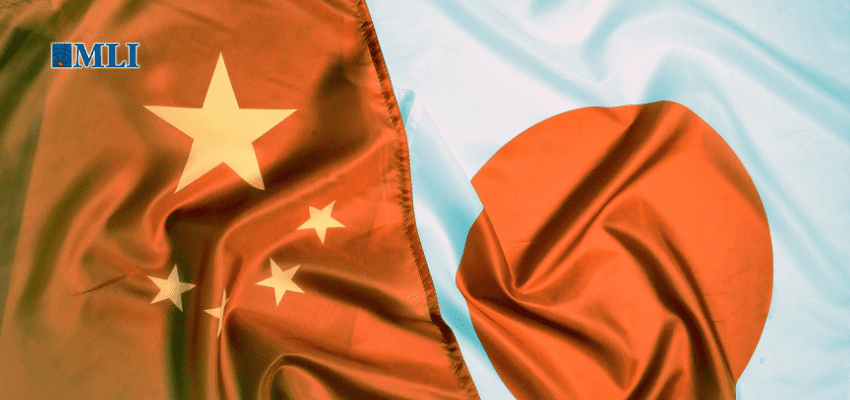
Image via Canva.

This article originally appeared in iPolitics.

By Scott Simon, November 21, 2025

Canada cannot afford to stay on the sidelines of escalating tensions between Japan and China. China has coordinated an all-of-society attack against Japan ever since Japanese Prime Minister Sanae Takaichi answered a question in the National Diet on November 7 to clarify that Chinese military action in a Taiwan conflict would be a “survival-threatening situation.” This classification could justify mobilization of Japan’s Self-defence Forces in certain contingencies.

The immediately shocking response was that China’s Consul General in Osaka, Xue Jian, seemed to threaten decapitation of Takaichi in a since-deleted X post. Rather than apologize for the consul’s inappropriate remarks, China doubled down in a domestic and international campaign against Japan. In a PLA Daily editorial, translated and published by Global Times, China’s military characterized Takaichi’s remarks as the most aggressive act against China in 80 years, raised the specter of Japanese militarism, and warned that Japan will suffer consequences if Takaichi does not retract her “wrong remarks.”

China reiterated that the “Taiwan question” is a core interest of China and a red line that cannot be crossed. As punishment, China advised its population against traveling to Japan as tourists or students. Chinese airlines complied by waiving cancellation fees for flights to Japan. This is already a disproportionate reaction and a blatant interference in Japanese domestic politics.

Takaichi’s remarks echoed the words of former Prime Minister Shinzō Abe, who warned that “a Taiwan contingency is a contingency for Japan.” These observations are based on undeniable geographical reality. Taiwan is only 110 kilometers from the Japanese island of Yonaguni, yet 180 kilometers from China across the Taiwan Strait. Proximity means that any Chinese military action to encircle Taiwan would inevitably encroach upon Japanese territorial waters and airspace. Moreover, the fact remains that the People’s Republic of China has never ruled Taiwan. Since the Taiwanese people are unlikely to willingly accept occupation from a foreign authoritarian state, China is preparing for military aggression.

China also escalated its military threats to Japan. On November 16, China sent Coast Guard ships through the uninhabited Senkaku Islands. China’s actions disregard the 1971 Okinawa Reversion Treaty, which explicitly transferred the island from US occupation to Japan. Just as China sent forces to Senkaku, its Foreign Ministry posted on X a historical document declaring that Japanese sovereignty shall be limited to Honshu, Hokkaido, Kyushu, Shikoku, and minor islands. Japan has every right to be concerned about the security of Okinawa, which also houses US forces, in a potential conflict. China’s goals do not stop at annexing Taiwan.

China also singled out Japan at precisely the moment when the G7 Foreign Ministers met in the Niagara Region of Canada and issued a joint statement about the importance of a free and open Indo-Pacific. The statement emphasized the importance of maintaining peace and stability across the Taiwan Strait, opposed unilateral attempts to change the status quo by force or coercion, encouraged resolution of issues by dialogue, and supported Taiwan’s meaningful participation in appropriate international organizations.

China is pressuring G7 states to abandon the collective goal of upholding the status quo in the Taiwan Straits. In an October rebuke to Germany, Chinese Foreign Ministry spokesman Guo Jiakun argued that talk of maintaining the status quo while refusing to oppose “Taiwan independence” amounts to “condoning and supporting separatist activities.” China’s actions toward Japan and Germany are clearly part of a strategy to undermine unity in the G7, even if Chinese officials seem superficially to differ in their approach to Canada.

The op-ed published by China’s Ambassador Wang Di in the Globe and Mail last Friday, following a meeting between Canadian Prime Minister Mark Carney and Chinese leader Xi Jinping, must be read in light of these developments. While promising a new era of China-Canada relations, Xi and Wang reiterated that “China and Canada should develop an objective and rational perception of each other, view each other in the correct way.”

As Michael Kovrig argued last month, vocabulary of perception encompasses a set of political demands. China’s demands about perception are requests to acquiesce to China’s position on Taiwan and other “core” issues, abandon much of Canada’s own Indo-Pacific Strategy, and stop framing China as a security threat. Kovrig is not alone. Just last Thursday, the Canadian Security Intelligence Service identified China as a threat to Canada for transnational repression and hostile intelligence gathering. China clearly does not want Canada to continue to use the One-China policy that Canada crafted in the 1970s, simply because it provides flexibility for substantive relations with Taiwan.

Mounting tensions between China and Japan should be a warning sign. Canada, like Japan, has a long-standing policy of taking note of China’s claims to Taiwan without publicly challenging or endorsing them. China, impatient with this approach, is trying to drive a wedge between G7 allies —sweet-talking Canada while rebuking Germany and threatening Japan. The temptation for Canada may be to remain silent about Chinese sable-rattling. But, a free and open Indo-Pacific, including the resilience of Taiwan, undergirds Canadian prosperity.

Carney should oppose all Chinese threats toward Japan before the situation escalates further. This is the time for G7 unity, rather than subservience to a third authoritarian power.


Dr. Scott E. Simon is chair of Taiwan Studies at the University of Ottawa, and a senior fellow at the Macdonald-Laurier Institute.


Source: iPolitics

Related Posts

Property rights are “precarious” in Canada: Paul Warchuk and Peter Copeland for Inside Policy Talks
Domestic Policy

Property rights are “precarious” in Canada: Paul Warchuk and Peter Copeland for Inside Policy Talks

December 4, 2025
Harvard eschews ingrained ideology in order to tackle ‘genuinely hard problems’: Peter MacKinnon in the National Post
Reforming Universities

Harvard eschews ingrained ideology in order to tackle ‘genuinely hard problems’: Peter MacKinnon in the National Post

December 3, 2025
Risking public backlash? Canadian universities and demographic-based faculty hiring
Education

Risking public backlash? Canadian universities and demographic-based faculty hiring

December 3, 2025
Next Post
Want to boost the economy? Improve our transportation systems: Tim Sargent’s Letter to a minister in The Hub

Want to boost the economy? Improve our transportation systems: Tim Sargent’s Letter to a minister in The Hub

Newsletter Signup

  Thank you for Signing Up
  Please correct the marked field(s) below.
Email Address  *
1,true,6,Contact Email,2
First Name *
1,true,1,First Name,2
Last Name *
1,true,1,Last Name,2
*
*Required Fields

Follow us on

Macdonald-Laurier Institute

323 Chapel Street, Suite #300
Ottawa, Ontario, K1N 7Z2 Canada

613.482.8327

info@macdonaldlaurier.ca
MLI directory

Support Us

Support the Macdonald-Laurier Institute to help ensure that Canada is one of the best governed countries in the world. Click below to learn more or become a sponsor.

Support Us

  • Inside Policy Magazine
  • Annual Reports
  • Jobs
  • Privacy Policy

© 2023 Macdonald-Laurier Institute. All Rights reserved.

No Result
View All Result
  • Home
  • About
    • Who We Are
    • Who Makes MLI Work
    • Fifteenth Anniversary
  • Experts
    • Experts Directory
    • In Memoriam
  • Issues
    • Domestic Policy
      • Economic Policy
      • Justice
      • Rights and Freedoms
      • Assisted Suicide (MAID)
      • Health Care
      • COVID-19
      • Gender Identity
      • Canada’s Political Tradition
      • AI, Technology and Innovation
      • Media and Telecoms
      • Housing
      • Immigration
      • Agriculture and Agri-Food
      • Competition Policy
    • Energy Policy
      • Energy
      • Environment
    • Foreign Policy
      • Israel-Hamas War
      • Ukraine
      • Taiwan
      • China
      • Europe and Russia
      • Indo-Pacific
      • Middle East and North Africa
      • North America
      • Foreign Interference
      • National Defence
      • National Security
      • Foreign Affairs
    • Indigenous Affairs
  • Projects
    • CNAPS (Center for North American Prosperity and Security)
    • The Promised Land
    • Voices that Inspire: The Macdonald-Laurier Vancouver Speaker Series
    • Dragon at the door
    • Canada on top of the world
    • Letter to a minister
    • Justice Report Card
    • The Great Energy Crisis
    • DisInfoWatch.org
    • Managing Indigenous Prosperity
    • Judicial Foundations
    • Landmark Cases Council
    • Defending The Marketplace of Ideas
    • Reforming the University
    • Past Projects
      • Digital Policy & Connectivity
      • Double Trouble
      • Canada and the Indo-Pacific Initiative
      • The Transatlantic Program
      • COVID Misery Index
      • Speak for Ourselves
      • The Eavesdropping Dragon: Huawei
      • Talkin’ in the Free World with Mariam Memarsadeghi
      • An Intellectual Property Strategy for Canada
      • Munk Senior Fellows
      • A Mandate for Canada
      • Confederation Series
      • Fiscal Reform
      • The Canadian Century project
      • Fixing Canadian health care
      • Internal trade
      • From a mandate for change
      • Size of government in Canada
      • Straight Talk
      • Labour Market Report
      • Leading Economic Indicator
      • Centre for Advancing Canada’s Interests Abroad
      • Indigenous Prosperity at a Crossroads
  • Events
    • Upcoming Events
    • Past Events
      • MLI Dinners
      • Great Canadian Debates
  • Latest News
  • Libraries
    • Columns
    • Commentary
    • Papers
    • Books
    • Video
  • Donate

© 2023 Macdonald-Laurier Institute. All Rights reserved.