Friday, December 5, 2025
No Result
View All Result
  • Media
Macdonald-Laurier Institute
  • Home
  • About
    • Who We Are
    • Who Makes MLI Work
    • Fifteenth Anniversary
  • Experts
    • Experts Directory
    • In Memoriam
  • Issues
    • Domestic Policy
      • Economic Policy
      • Justice
      • Rights and Freedoms
      • Assisted Suicide (MAID)
      • Health Care
      • COVID-19
      • Gender Identity
      • Canada’s Political Tradition
      • AI, Technology and Innovation
      • Media and Telecoms
      • Housing
      • Immigration
      • Agriculture and Agri-Food
      • Competition Policy
    • Energy Policy
      • Energy
      • Environment
    • Foreign Policy
      • Israel-Hamas War
      • Ukraine
      • Taiwan
      • China
      • Europe and Russia
      • Indo-Pacific
      • Middle East and North Africa
      • North America
      • Foreign Interference
      • National Defence
      • National Security
      • Foreign Affairs
    • Indigenous Affairs
  • Projects
    • CNAPS (Center for North American Prosperity and Security)
    • The Promised Land
    • Voices that Inspire: The Macdonald-Laurier Vancouver Speaker Series
    • Dragon at the door
    • Canada on top of the world
    • Letter to a minister
    • Justice Report Card
    • The Great Energy Crisis
    • DisInfoWatch.org
    • Managing Indigenous Prosperity
    • Judicial Foundations
    • Landmark Cases Council
    • Defending The Marketplace of Ideas
    • Reforming the University
    • Past Projects
      • Digital Policy & Connectivity
      • Double Trouble
      • Canada and the Indo-Pacific Initiative
      • The Transatlantic Program
      • COVID Misery Index
        • Provincial COVID Misery Index
        • Beyond Lockdown
        • COVID and after: A mandate for recovery
      • Speak for Ourselves
      • The Eavesdropping Dragon: Huawei
      • Talkin’ in the Free World with Mariam Memarsadeghi
      • An Intellectual Property Strategy for Canada
      • Munk Senior Fellows
      • A Mandate for Canada
      • Confederation Series
      • Fiscal Reform
      • The Canadian Century project
      • Fixing Canadian health care
      • Internal trade
      • From a mandate for change
      • Size of government in Canada
      • Straight Talk
      • Labour Market Report
      • Leading Economic Indicator
      • Centre for Advancing Canada’s Interests Abroad
      • Indigenous Prosperity at a Crossroads
        • Aboriginal Canada and Natural Resources
  • Events
    • Upcoming Events
    • Past Events
      • MLI Dinners
      • Great Canadian Debates
  • Latest News
  • Libraries
    • Columns
    • Commentary
    • Papers
    • Books
    • Video
  • Donate
  • Home
  • About
    • Who We Are
    • Who Makes MLI Work
    • Fifteenth Anniversary
  • Experts
    • Experts Directory
    • In Memoriam
  • Issues
    • Domestic Policy
      • Economic Policy
      • Justice
      • Rights and Freedoms
      • Assisted Suicide (MAID)
      • Health Care
      • COVID-19
      • Gender Identity
      • Canada’s Political Tradition
      • AI, Technology and Innovation
      • Media and Telecoms
      • Housing
      • Immigration
      • Agriculture and Agri-Food
      • Competition Policy
    • Energy Policy
      • Energy
      • Environment
    • Foreign Policy
      • Israel-Hamas War
      • Ukraine
      • Taiwan
      • China
      • Europe and Russia
      • Indo-Pacific
      • Middle East and North Africa
      • North America
      • Foreign Interference
      • National Defence
      • National Security
      • Foreign Affairs
    • Indigenous Affairs
  • Projects
    • CNAPS (Center for North American Prosperity and Security)
    • The Promised Land
    • Voices that Inspire: The Macdonald-Laurier Vancouver Speaker Series
    • Dragon at the door
    • Canada on top of the world
    • Letter to a minister
    • Justice Report Card
    • The Great Energy Crisis
    • DisInfoWatch.org
    • Managing Indigenous Prosperity
    • Judicial Foundations
    • Landmark Cases Council
    • Defending The Marketplace of Ideas
    • Reforming the University
    • Past Projects
      • Digital Policy & Connectivity
      • Double Trouble
      • Canada and the Indo-Pacific Initiative
      • The Transatlantic Program
      • COVID Misery Index
        • Provincial COVID Misery Index
        • Beyond Lockdown
        • COVID and after: A mandate for recovery
      • Speak for Ourselves
      • The Eavesdropping Dragon: Huawei
      • Talkin’ in the Free World with Mariam Memarsadeghi
      • An Intellectual Property Strategy for Canada
      • Munk Senior Fellows
      • A Mandate for Canada
      • Confederation Series
      • Fiscal Reform
      • The Canadian Century project
      • Fixing Canadian health care
      • Internal trade
      • From a mandate for change
      • Size of government in Canada
      • Straight Talk
      • Labour Market Report
      • Leading Economic Indicator
      • Centre for Advancing Canada’s Interests Abroad
      • Indigenous Prosperity at a Crossroads
        • Aboriginal Canada and Natural Resources
  • Events
    • Upcoming Events
    • Past Events
      • MLI Dinners
      • Great Canadian Debates
  • Latest News
  • Libraries
    • Columns
    • Commentary
    • Papers
    • Books
    • Video
  • Donate
No Result
View All Result
Macdonald-Laurier Institute

Canada should embrace Washington’s call for a ‘grander bargain’: Ed Fast in The Hub

It’s time to reset and future-proof the Canada-U.S. relationship.

September 19, 2025
in Foreign Affairs, Domestic Policy, National Security, National Defence, Latest News, Columns, In the Media, Economic Policy, Ed Fast
Reading Time: 4 mins read
A A
Canada should embrace Washington’s call for a ‘grander bargain’: Ed Fast in The Hub

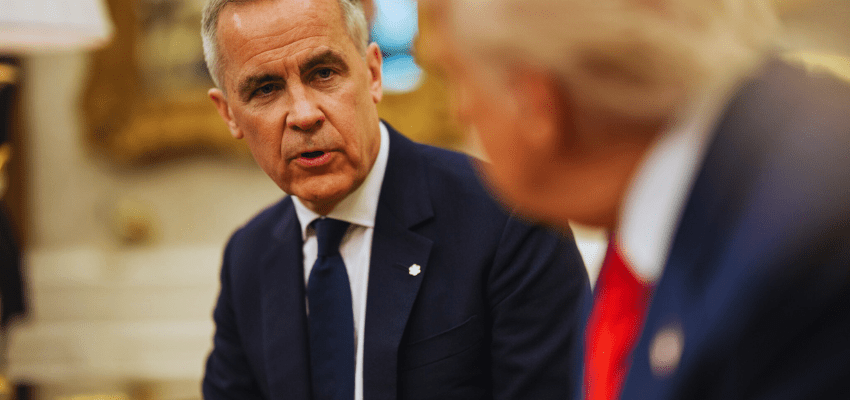
Official White House Photo by Daniel Torok via Flickr.

This article originally appeared in The Hub.

By Ed Fast, September 19, 2025

When U.S. Ambassador to Canada Pete Hoekstra told a Canadian International Council audience recently that the Trump administration had hoped to negotiate a “bigger deal” with Canada beyond the narrow confines of CUSMA, our trade agreement with the United States and Mexico, he was not simply musing. He was extending an invitation. If Canada accepts it, Ottawa can reset the bilateral relationship on more balanced and sustainable terms.

Unfortunately, much of the early commentary has treated Hoekstra’s remarks as a warning shot, a prelude to hardball tactics. That is a mistake. Canadians should recognize this as an opening. Policy thinkers at the Macdonald-Laurier Institute and the Center for North American Prosperity and Security (CNAPS) have argued that our two countries need a “grander bargain,” one that goes far beyond tariffs or auto rules of origin. Hoekstra’s comments signal that Washington is prepared to have that conversation. The Carney government should embrace this opportunity.

A restrictive renegotiation of USMCA places Canada at a structural disadvantage. The United States has more bargaining chips and more appetite for confrontation. In a sector-by-sector negotiation, Ottawa would be forced into concessions on things such as autos, agriculture, or digital taxation—with very few cards to play in return.

That is why Canada must broaden the scope of our engagement with the Trump administration. We need to entice Trump, the quintessential “dealmaker,” with a deal that can move us beyond the individual irritants. Only a comprehensive negotiation can give us space to protect vital interests, trade concessions across domains, and rebalance the asymmetry of power.

The benefits for both sides

A grand bargain has many advantages.

Turning interdependence into leverage: Canada is deeply enmeshed in the American economy. Our energy exports fuel U.S. industry; our critical minerals are indispensable for electric vehicles and defense; our agricultural and forestry products supply American households. By broadening negotiations, Canada can frame this interdependence as a shared asset—one that requires reciprocity, not one-sided pressure.

Rebalancing asymmetries: A grander deal lets Canada bring forward issues where we have weight, such as critical minerals, continental defence, Arctic sovereignty, water management, and food security. These become tradeable chips in a cross-issue bargain, something impossible within a narrow CUSMA renegotiation.

Locking in stability: Recent events have shown how easily U.S. administrations can invoke “national security” or arbitrary tariff authority to disrupt trade. A comprehensive agreement should include stronger binding dispute settlement provisions and a legislative lock-in, raising the cost of political opportunism and mercantilism.

Future-proofing the partnership: The next decade will test North America with supply chain shifts, AI, climate adaptation, and Arctic pressures. Piecemeal trade deals will not suffice. A grand bargain can embed mechanisms for regulatory alignment, security coordination, and anticipatory dispute resolution.

Sovereignty by negotiation, not erosion: Critics warn that a grand bargain risks ceding sovereignty. But sovereignty is already compromised when Canada is forced into serial, reactive concessions under threat of tariffs. Negotiating a broad, structured framework is not surrender. It is agency.

Clear objectives are critical

If Ottawa is to accept Hoekstra’s invitation, it should define clear objectives for the deal:

Critical minerals and energy security: Formal U.S. recognition of Canadian critical mineral exports as part of national defence supply chains, and streamlined approvals for cross-border infrastructure.

Continental defence and security: Integrated planning on cyber threats, missile defence, and intelligence sharing tied directly to trade and economic stability.

Softwood lumber and agriculture: Permanent dispute-resolution frameworks that prevent decades-long battles and retaliatory tariffs.

Arctic sovereignty and the Northwest Passage: U.S. recognition that these are Canadian internal waters, coupled with joint stewardship and Indigenous engagement.

Digital economy and data governance: Fair taxation regimes for digital services and clear rules on data protection.

Formal recognition under Section 232 under the U.S. Trade Expansion Act of 1962: Perhaps most importantly, a new economic and continental security partnership must enshrine in law that Canada is not a national security threat to the United States. The Trump administration’s willingness to invoke Section 232 tariffs on Canadian steel and aluminum is not only economically damaging; it is an affront to the very idea of allied partnership. A grand bargain must categorically remove the possibility that Canada could again be treated as a threat under this statute.

Strategic statesmanship, not appeasement

Skeptics will argue that dealing with a transactional Washington risks endless concessions. But clinging to a defensive position is worse. A narrow renegotiation of CUSMA would leave Canada cornered, conceding on sensitive files with little to show in return.

Instead, the Carney government should reframe the opportunity as strategic statesmanship. Agreeing to a grand bargain is not appeasement; it is the smartest way to preserve leverage. It is the only way to rebalance asymmetries, protect our sovereignty, and shape the bilateral relationship for the next generation.

Ottawa should begin preparing now by building a cross-departmental negotiating team, consulting with provincial and Indigenous governments, and cultivating allies in the U.S. Congress and industry. The worst mistake Canada could make is to show up unprepared when Washington signals it is ready. Hoekstra’s remarks should be recognized for what they are: an opening to reset the Canada-U.S. relationship.

Canada has a choice. We can trudge defensively into a narrow CUSMA renegotiation, armed with few bargaining chips, hoping merely to limit the damage. Or we can embrace the opportunity of a grander bargain, one that addresses not only tariffs and quotas, but also defence, energy, minerals, Arctic sovereignty, food and water security, and digital governance.

Most crucially, such a bargain must enshrine in law that Canada is not, and never will be, treated as a “national security threat” under Section 232. Only then can we build a durable continental partnership that reflects the reality that Canada and the United States are not rivals to be contained, but allies whose prosperity and security are inseparable.

A “bigger deal” is not capitulation. It is enlightened self-interest. And it’s time that our Canadian government embraced it.


Ed Fast is a former Minister of International Trade and Distinguished Fellow at the Macdonald-Laurier Institute and the Center for North American Prosperity and Security.

Source: The Hub

Related Posts

Strengthening Taiwan’s resilience: Armchair discussion with Taiwan Deputy Minister Ming-chi Chen
Past Events

Strengthening Taiwan’s resilience: Armchair discussion with Taiwan Deputy Minister Ming-chi Chen

December 5, 2025
Iran pushing the Middle East to the brink of war: Joe Varner for National Security Journal
Middle East and North Africa

Iran pushing the Middle East to the brink of war: Joe Varner for National Security Journal

December 5, 2025
Property rights are “precarious” in Canada: Paul Warchuk and Peter Copeland for Inside Policy Talks
Domestic Policy

Property rights are “precarious” in Canada: Paul Warchuk and Peter Copeland for Inside Policy Talks

December 4, 2025
Next Post
Prosperity, Not Poverty – Roundtable with Prof. Brenda Shaffer

Prosperity, Not Poverty - Roundtable with Prof. Brenda Shaffer

Newsletter Signup

  Thank you for Signing Up
  Please correct the marked field(s) below.
Email Address  *
1,true,6,Contact Email,2
First Name *
1,true,1,First Name,2
Last Name *
1,true,1,Last Name,2
*
*Required Fields

Follow us on

Macdonald-Laurier Institute

323 Chapel Street, Suite #300
Ottawa, Ontario, K1N 7Z2 Canada

613.482.8327

info@macdonaldlaurier.ca
MLI directory

Support Us

Support the Macdonald-Laurier Institute to help ensure that Canada is one of the best governed countries in the world. Click below to learn more or become a sponsor.

Support Us

  • Inside Policy Magazine
  • Annual Reports
  • Jobs
  • Privacy Policy

© 2023 Macdonald-Laurier Institute. All Rights reserved.

No Result
View All Result
  • Home
  • About
    • Who We Are
    • Who Makes MLI Work
    • Fifteenth Anniversary
  • Experts
    • Experts Directory
    • In Memoriam
  • Issues
    • Domestic Policy
      • Economic Policy
      • Justice
      • Rights and Freedoms
      • Assisted Suicide (MAID)
      • Health Care
      • COVID-19
      • Gender Identity
      • Canada’s Political Tradition
      • AI, Technology and Innovation
      • Media and Telecoms
      • Housing
      • Immigration
      • Agriculture and Agri-Food
      • Competition Policy
    • Energy Policy
      • Energy
      • Environment
    • Foreign Policy
      • Israel-Hamas War
      • Ukraine
      • Taiwan
      • China
      • Europe and Russia
      • Indo-Pacific
      • Middle East and North Africa
      • North America
      • Foreign Interference
      • National Defence
      • National Security
      • Foreign Affairs
    • Indigenous Affairs
  • Projects
    • CNAPS (Center for North American Prosperity and Security)
    • The Promised Land
    • Voices that Inspire: The Macdonald-Laurier Vancouver Speaker Series
    • Dragon at the door
    • Canada on top of the world
    • Letter to a minister
    • Justice Report Card
    • The Great Energy Crisis
    • DisInfoWatch.org
    • Managing Indigenous Prosperity
    • Judicial Foundations
    • Landmark Cases Council
    • Defending The Marketplace of Ideas
    • Reforming the University
    • Past Projects
      • Digital Policy & Connectivity
      • Double Trouble
      • Canada and the Indo-Pacific Initiative
      • The Transatlantic Program
      • COVID Misery Index
      • Speak for Ourselves
      • The Eavesdropping Dragon: Huawei
      • Talkin’ in the Free World with Mariam Memarsadeghi
      • An Intellectual Property Strategy for Canada
      • Munk Senior Fellows
      • A Mandate for Canada
      • Confederation Series
      • Fiscal Reform
      • The Canadian Century project
      • Fixing Canadian health care
      • Internal trade
      • From a mandate for change
      • Size of government in Canada
      • Straight Talk
      • Labour Market Report
      • Leading Economic Indicator
      • Centre for Advancing Canada’s Interests Abroad
      • Indigenous Prosperity at a Crossroads
  • Events
    • Upcoming Events
    • Past Events
      • MLI Dinners
      • Great Canadian Debates
  • Latest News
  • Libraries
    • Columns
    • Commentary
    • Papers
    • Books
    • Video
  • Donate

© 2023 Macdonald-Laurier Institute. All Rights reserved.