Monday, August 24, 2026
No Result
View All Result
  • Media
Macdonald-Laurier Institute
  • Home
  • About
    • Who We Are
    • Who Makes MLI Work
    • Fifteenth Anniversary
  • Experts
    • Experts Directory
    • In Memoriam
  • Issues
    • Domestic Policy
      • Economic Policy
      • Justice
      • Rights and Freedoms
      • Assisted Suicide (MAID)
      • Health Care
      • COVID-19
      • Gender Identity
      • Canada’s Political Tradition
      • AI, Technology and Innovation
      • Media and Telecoms
      • Housing
      • Immigration
      • Agriculture and Agri-Food
      • Competition Policy
    • Energy Policy
      • Energy
      • Environment
    • Foreign Policy
      • Israel-Hamas War
      • Ukraine
      • Taiwan
      • China
      • Europe and Russia
      • Indo-Pacific
      • Middle East and North Africa
      • North America
      • Foreign Interference
      • National Defence
      • National Security
      • Foreign Affairs
    • Indigenous Affairs
  • Projects
    • CNAPS (Center for North American Prosperity and Security)
    • The Promised Land
    • Dragon at the door
    • Justice Report Card
    • DisInfoWatch.org
    • Managing Indigenous Prosperity
    • Judicial Foundations
    • Landmark Cases Council
    • Closing Canada’s Border, Policing, and Legal Gaps
    • Reforming the University
    • Digital Policy & Connectivity
    • Defending The Marketplace of Ideas
    • Letter to a minister
    • Past Projects
      • The Great Energy Crisis
      • Canada on top of the world
      • Double Trouble
      • Canada and the Indo-Pacific Initiative
      • The Transatlantic Program
      • COVID Misery Index
        • Provincial COVID Misery Index
        • Beyond Lockdown
        • COVID and after: A mandate for recovery
      • Speak for Ourselves
      • The Eavesdropping Dragon: Huawei
      • Talkin’ in the Free World with Mariam Memarsadeghi
      • An Intellectual Property Strategy for Canada
      • Munk Senior Fellows
      • A Mandate for Canada
      • Confederation Series
      • Fiscal Reform
      • The Canadian Century project
      • Fixing Canadian health care
      • Internal trade
      • From a mandate for change
      • Size of government in Canada
      • Straight Talk
      • Labour Market Report
      • Leading Economic Indicator
      • Centre for Advancing Canada’s Interests Abroad
      • Indigenous Prosperity at a Crossroads
        • Aboriginal Canada and Natural Resources
  • Events
    • Voices that Inspire: The Macdonald-Laurier Vancouver Speaker Series
    • Upcoming Events
    • Past Events
      • MLI Dinners
      • Great Canadian Debates
  • Latest News
  • Libraries
    • Columns
    • Commentary
    • Papers
    • Books
    • Video
  • Donate
  • Home
  • About
    • Who We Are
    • Who Makes MLI Work
    • Fifteenth Anniversary
  • Experts
    • Experts Directory
    • In Memoriam
  • Issues
    • Domestic Policy
      • Economic Policy
      • Justice
      • Rights and Freedoms
      • Assisted Suicide (MAID)
      • Health Care
      • COVID-19
      • Gender Identity
      • Canada’s Political Tradition
      • AI, Technology and Innovation
      • Media and Telecoms
      • Housing
      • Immigration
      • Agriculture and Agri-Food
      • Competition Policy
    • Energy Policy
      • Energy
      • Environment
    • Foreign Policy
      • Israel-Hamas War
      • Ukraine
      • Taiwan
      • China
      • Europe and Russia
      • Indo-Pacific
      • Middle East and North Africa
      • North America
      • Foreign Interference
      • National Defence
      • National Security
      • Foreign Affairs
    • Indigenous Affairs
  • Projects
    • CNAPS (Center for North American Prosperity and Security)
    • The Promised Land
    • Dragon at the door
    • Justice Report Card
    • DisInfoWatch.org
    • Managing Indigenous Prosperity
    • Judicial Foundations
    • Landmark Cases Council
    • Closing Canada’s Border, Policing, and Legal Gaps
    • Reforming the University
    • Digital Policy & Connectivity
    • Defending The Marketplace of Ideas
    • Letter to a minister
    • Past Projects
      • The Great Energy Crisis
      • Canada on top of the world
      • Double Trouble
      • Canada and the Indo-Pacific Initiative
      • The Transatlantic Program
      • COVID Misery Index
        • Provincial COVID Misery Index
        • Beyond Lockdown
        • COVID and after: A mandate for recovery
      • Speak for Ourselves
      • The Eavesdropping Dragon: Huawei
      • Talkin’ in the Free World with Mariam Memarsadeghi
      • An Intellectual Property Strategy for Canada
      • Munk Senior Fellows
      • A Mandate for Canada
      • Confederation Series
      • Fiscal Reform
      • The Canadian Century project
      • Fixing Canadian health care
      • Internal trade
      • From a mandate for change
      • Size of government in Canada
      • Straight Talk
      • Labour Market Report
      • Leading Economic Indicator
      • Centre for Advancing Canada’s Interests Abroad
      • Indigenous Prosperity at a Crossroads
        • Aboriginal Canada and Natural Resources
  • Events
    • Voices that Inspire: The Macdonald-Laurier Vancouver Speaker Series
    • Upcoming Events
    • Past Events
      • MLI Dinners
      • Great Canadian Debates
  • Latest News
  • Libraries
    • Columns
    • Commentary
    • Papers
    • Books
    • Video
  • Donate
No Result
View All Result
Macdonald-Laurier Institute

Canada plays with a weak hand against Trump. Ottawa’s making it worse: Jerome Gessaroli in The Globe and Mail

Ottawa’s immediate task is to improve co-ordination with the provinces before the premiers publicly voice conflicting positions.

August 24, 2026
in Domestic Policy, Latest News, Columns, In the Media, Economic Policy, North America, Jerome Gessaroli
Reading Time: 4 mins read
A A
Canada plays with a weak hand against Trump. Ottawa’s making it worse: Jerome Gessaroli in The Globe and Mail

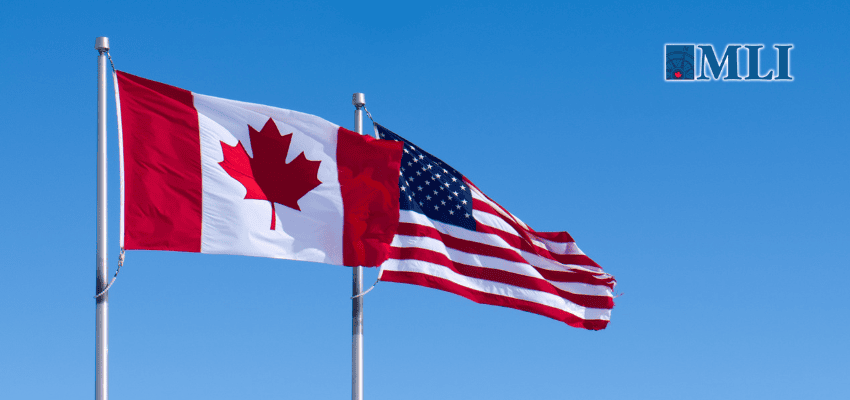
Image via Canva.

This article originally appeared in The Globe and Mail.

By Jerome Gessaroli, August 24, 2026

The Carney government should not be surprised that the U.S. administration is again using tariff threats to secure Canadian concessions.

Ottawa helped make itself predictable. Over the past year, Washington has learned that Canada is divided and that applying pressure can produce results.

Reacting when the White House announced additional tariffs in July, Prime Minister Mark Carney and the premiers were quick to offer words of national unity, and commitments to protect Canadian workers and families. But those words showed agreement on an objective, not on the strategy of getting there. Without a unified strategy, the objectives become harder to reach.

Mr. Carney’s priority should have been agreeing on a common plan with provincial leaders, which would include establishing credible countermeasures. Instead, premiers Doug Ford of Ontario, Danielle Smith of Alberta and Scott Moe of Saskatchewan went public with their own conflicting positions. Mr. Ford stated that Canada is an “energy powerhouse” and should “hit them back as hard as we can” if negotiations fail, while Ms. Smith and Mr. Moe categorically ruled out using energy or potash as potential bargaining chips.

The country could not even find common ground on keeping U.S. liquor products off retail shelves, a relatively high-impact and low-cost measure for the provinces. It’s no surprise that Canada is now buckling altogether, with Mr. Carney asking premiers to allow American liquor back.

Those public disagreements had weakened Canada’s bargaining position and conveyed to Washington which economic tools Canada was unlikely to use.

More damaging than provincial disagreements were Mr. Carney’s responses to coercive threats. In June, 2025, U.S. President Donald Trump suspended trade talks over Canada’s 3 per cent digital services tax (DST) on large technology companies. Almost immediately, Canada abandoned the tax along with amounts owing without making any durable progress toward a broader agreement.

The U.S. administration’s threat to block the opening of the Gordie Howe Bridge is another example. Canada financed the entire $6.4-billion project with an agreement to keep all tolls until its investment was recovered. The U.S. administration withdrew its threat after Canada agreed to share net toll revenue for the first 15 years after deducting operating expenses, but not interest or debt costs.

While Canada does not need to dig its heels in over every policy (the DST may not have been worth defending), the concessions made in both cases should have been exchanged for a durable U.S. commitment. Mr. Carney’s weakness has been allowing the U.S. to bank one concession then move onto another demand.

As this country continues trying to hash out a permanent deal, Canada has options it can use, but they are limited and costly. Trade action has to be limited in scope and scale to avoid an all-out trade war. Currently, Washington may doubt Ottawa can implement and sustain such countermeasures. In other words, the threats lack credibility.

While Mr. Carney has spent substantial effort on trade diversification, that will not help Canada in the short term. It is essential to develop new markets and lessen dependence on the U.S., but those are medium- to long-term activities.

Ottawa’s immediate task is to improve co-ordination with the provinces before the premiers publicly voice conflicting positions. The point is not to stop Ms. Smith, Mr. Ford and the other premiers from speaking up for their own constituencies. They will do so. Rather, it is to find agreement on which trade measures are truly available before publicly ruling them out. Once agreed upon, the measures should remain private and only be announced once their use becomes imminent.
Ottawa should act directly on measures within its jurisdiction that will have little provincial impact. But measures requiring provincial co-operation will need an agreement with the affected provinces before they are included in Canada’s trade toolkit.

For example, Ottawa could co-ordinate with the provinces to implement common procurement restrictions on U.S. suppliers bidding on government contracts. The scope, triggers and duration could all be agreed upon. This would improve credibility and negotiating leverage compared with the piecemeal procurement policies several provinces have adopted.

When such measures impose costs concentrated on a specific sector or province, Ottawa can financially support that affected sector or province to sustain the countermeasure.

While Canada cannot change its power imbalance with Washington, it can use its leverage more effectively. If Ottawa agrees to further isolated concessions and the premiers publicly voice contradictory views over strategy, Washington will see a green light for even more threats.


Jerome Gessaroli is a senior fellow at the Macdonald-Laurier Institute and leads the Sound Economic Policy Project.

Source: The Globe and Mail

Related Posts

Weak business investment frustrates Carney’s plan: Philip Cross in the Financial Post
Economic Policy

The best response to tariffs is competitive tax policy: Jack Mintz in the Financial Post

August 24, 2026
Universities should drop the wokeness or brace for conservative reforms: Christopher Dummitt in the National Post
Education

Canada has its own academic fakery problem: Christopher Dummitt in the National Post

August 24, 2026
Canada’s dairy industry in decline: Peter Copeland and Sylvain Charlebois on Inside Policy Talks
Agriculture and Agri-Food

Canada’s dairy industry in decline: Peter Copeland and Sylvain Charlebois on Inside Policy Talks

August 21, 2026
Next Post
Universities should drop the wokeness or brace for conservative reforms: Christopher Dummitt in the National Post

Canada has its own academic fakery problem: Christopher Dummitt in the National Post

Newsletter Signup

  Thank you for Signing Up
  Please correct the marked field(s) below.
Email Address  *
1,true,6,Contact Email,2
First Name *
1,true,1,First Name,2
Last Name *
1,true,1,Last Name,2
*
*Required Fields

Follow us on

Macdonald-Laurier Institute

323 Chapel Street, Suite #300
Ottawa, Ontario, K1N 7Z2 Canada

613.482.8327

info@macdonaldlaurier.ca
MLI directory

Support Us

Support the Macdonald-Laurier Institute to help ensure that Canada is one of the best governed countries in the world. Click below to learn more or become a sponsor.

Support Us

  • Inside Policy Magazine
  • Annual Reports
  • Jobs
  • Privacy Policy

© 2023 Macdonald-Laurier Institute. All Rights reserved.

This site uses cookies. By continuing to browse the site you are agreeing to our use of cookies.

Privacy Preference Center

Consent Management

Necessary

Advertising

Analytics

Other

No Result
View All Result
  • Home
  • About
    • Who We Are
    • Who Makes MLI Work
    • Fifteenth Anniversary
  • Experts
    • Experts Directory
    • In Memoriam
  • Issues
    • Domestic Policy
      • Economic Policy
      • Justice
      • Rights and Freedoms
      • Assisted Suicide (MAID)
      • Health Care
      • COVID-19
      • Gender Identity
      • Canada’s Political Tradition
      • AI, Technology and Innovation
      • Media and Telecoms
      • Housing
      • Immigration
      • Agriculture and Agri-Food
      • Competition Policy
    • Energy Policy
      • Energy
      • Environment
    • Foreign Policy
      • Israel-Hamas War
      • Ukraine
      • Taiwan
      • China
      • Europe and Russia
      • Indo-Pacific
      • Middle East and North Africa
      • North America
      • Foreign Interference
      • National Defence
      • National Security
      • Foreign Affairs
    • Indigenous Affairs
  • Projects
    • CNAPS (Center for North American Prosperity and Security)
    • The Promised Land
    • Dragon at the door
    • Justice Report Card
    • DisInfoWatch.org
    • Managing Indigenous Prosperity
    • Judicial Foundations
    • Landmark Cases Council
    • Closing Canada’s Border, Policing, and Legal Gaps
    • Reforming the University
    • Digital Policy & Connectivity
    • Defending The Marketplace of Ideas
    • Letter to a minister
    • Past Projects
      • The Great Energy Crisis
      • Canada on top of the world
      • Double Trouble
      • Canada and the Indo-Pacific Initiative
      • The Transatlantic Program
      • COVID Misery Index
      • Speak for Ourselves
      • The Eavesdropping Dragon: Huawei
      • Talkin’ in the Free World with Mariam Memarsadeghi
      • An Intellectual Property Strategy for Canada
      • Munk Senior Fellows
      • A Mandate for Canada
      • Confederation Series
      • Fiscal Reform
      • The Canadian Century project
      • Fixing Canadian health care
      • Internal trade
      • From a mandate for change
      • Size of government in Canada
      • Straight Talk
      • Labour Market Report
      • Leading Economic Indicator
      • Centre for Advancing Canada’s Interests Abroad
      • Indigenous Prosperity at a Crossroads
  • Events
    • Voices that Inspire: The Macdonald-Laurier Vancouver Speaker Series
    • Upcoming Events
    • Past Events
      • MLI Dinners
      • Great Canadian Debates
  • Latest News
  • Libraries
    • Columns
    • Commentary
    • Papers
    • Books
    • Video
  • Donate

© 2023 Macdonald-Laurier Institute. All Rights reserved.