Saturday, December 13, 2025
No Result
View All Result
  • Media
Macdonald-Laurier Institute
  • Home
  • About
    • Who We Are
    • Who Makes MLI Work
    • Fifteenth Anniversary
  • Experts
    • Experts Directory
    • In Memoriam
  • Issues
    • Domestic Policy
      • Economic Policy
      • Justice
      • Rights and Freedoms
      • Assisted Suicide (MAID)
      • Health Care
      • COVID-19
      • Gender Identity
      • Canada’s Political Tradition
      • AI, Technology and Innovation
      • Media and Telecoms
      • Housing
      • Immigration
      • Agriculture and Agri-Food
      • Competition Policy
    • Energy Policy
      • Energy
      • Environment
    • Foreign Policy
      • Israel-Hamas War
      • Ukraine
      • Taiwan
      • China
      • Europe and Russia
      • Indo-Pacific
      • Middle East and North Africa
      • North America
      • Foreign Interference
      • National Defence
      • National Security
      • Foreign Affairs
    • Indigenous Affairs
  • Projects
    • CNAPS (Center for North American Prosperity and Security)
    • The Promised Land
    • Voices that Inspire: The Macdonald-Laurier Vancouver Speaker Series
    • Dragon at the door
    • Canada on top of the world
    • Letter to a minister
    • Justice Report Card
    • The Great Energy Crisis
    • DisInfoWatch.org
    • Managing Indigenous Prosperity
    • Judicial Foundations
    • Landmark Cases Council
    • Defending The Marketplace of Ideas
    • Reforming the University
    • Past Projects
      • Digital Policy & Connectivity
      • Double Trouble
      • Canada and the Indo-Pacific Initiative
      • The Transatlantic Program
      • COVID Misery Index
        • Provincial COVID Misery Index
        • Beyond Lockdown
        • COVID and after: A mandate for recovery
      • Speak for Ourselves
      • The Eavesdropping Dragon: Huawei
      • Talkin’ in the Free World with Mariam Memarsadeghi
      • An Intellectual Property Strategy for Canada
      • Munk Senior Fellows
      • A Mandate for Canada
      • Confederation Series
      • Fiscal Reform
      • The Canadian Century project
      • Fixing Canadian health care
      • Internal trade
      • From a mandate for change
      • Size of government in Canada
      • Straight Talk
      • Labour Market Report
      • Leading Economic Indicator
      • Centre for Advancing Canada’s Interests Abroad
      • Indigenous Prosperity at a Crossroads
        • Aboriginal Canada and Natural Resources
  • Events
    • Upcoming Events
    • Past Events
      • MLI Dinners
      • Great Canadian Debates
  • Latest News
  • Libraries
    • Columns
    • Commentary
    • Papers
    • Books
    • Video
  • Donate
  • Home
  • About
    • Who We Are
    • Who Makes MLI Work
    • Fifteenth Anniversary
  • Experts
    • Experts Directory
    • In Memoriam
  • Issues
    • Domestic Policy
      • Economic Policy
      • Justice
      • Rights and Freedoms
      • Assisted Suicide (MAID)
      • Health Care
      • COVID-19
      • Gender Identity
      • Canada’s Political Tradition
      • AI, Technology and Innovation
      • Media and Telecoms
      • Housing
      • Immigration
      • Agriculture and Agri-Food
      • Competition Policy
    • Energy Policy
      • Energy
      • Environment
    • Foreign Policy
      • Israel-Hamas War
      • Ukraine
      • Taiwan
      • China
      • Europe and Russia
      • Indo-Pacific
      • Middle East and North Africa
      • North America
      • Foreign Interference
      • National Defence
      • National Security
      • Foreign Affairs
    • Indigenous Affairs
  • Projects
    • CNAPS (Center for North American Prosperity and Security)
    • The Promised Land
    • Voices that Inspire: The Macdonald-Laurier Vancouver Speaker Series
    • Dragon at the door
    • Canada on top of the world
    • Letter to a minister
    • Justice Report Card
    • The Great Energy Crisis
    • DisInfoWatch.org
    • Managing Indigenous Prosperity
    • Judicial Foundations
    • Landmark Cases Council
    • Defending The Marketplace of Ideas
    • Reforming the University
    • Past Projects
      • Digital Policy & Connectivity
      • Double Trouble
      • Canada and the Indo-Pacific Initiative
      • The Transatlantic Program
      • COVID Misery Index
        • Provincial COVID Misery Index
        • Beyond Lockdown
        • COVID and after: A mandate for recovery
      • Speak for Ourselves
      • The Eavesdropping Dragon: Huawei
      • Talkin’ in the Free World with Mariam Memarsadeghi
      • An Intellectual Property Strategy for Canada
      • Munk Senior Fellows
      • A Mandate for Canada
      • Confederation Series
      • Fiscal Reform
      • The Canadian Century project
      • Fixing Canadian health care
      • Internal trade
      • From a mandate for change
      • Size of government in Canada
      • Straight Talk
      • Labour Market Report
      • Leading Economic Indicator
      • Centre for Advancing Canada’s Interests Abroad
      • Indigenous Prosperity at a Crossroads
        • Aboriginal Canada and Natural Resources
  • Events
    • Upcoming Events
    • Past Events
      • MLI Dinners
      • Great Canadian Debates
  • Latest News
  • Libraries
    • Columns
    • Commentary
    • Papers
    • Books
    • Video
  • Donate
No Result
View All Result
Macdonald-Laurier Institute

Beijing’s blueprint for breaking Canada-U.S. unity: Stephen Nagy for Inside Policy

This isn’t about choosing between independence and alliance. It’s about understanding how Canada’s adversaries weaponize that false choice.

November 20, 2025
in Foreign Affairs, China: The dragon at the door, Inside Policy, Foreign Policy, Latest News, Indo-Pacific, Taiwan, North America, Stephen Nagy
Reading Time: 5 mins read
A A
Beijing’s blueprint for breaking Canada-U.S. unity: Stephen Nagy for Inside Policy

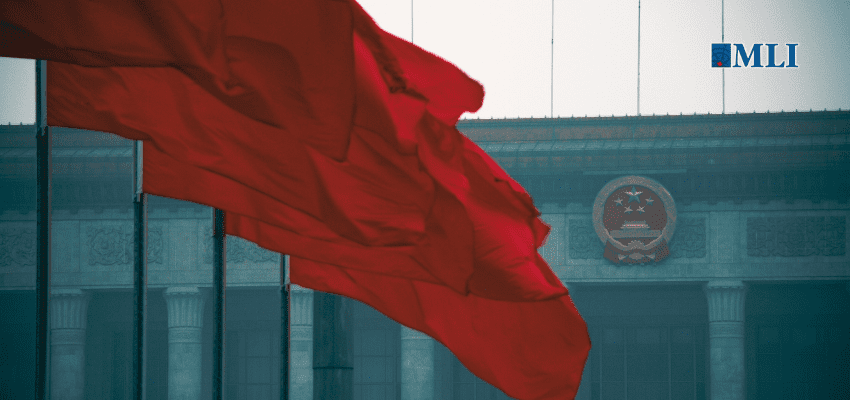
Image via Canva.

By Stephen Nagy, November 20, 2025

For several decades, China has pursued a sophisticated campaign to fracture the world’s most integrated defense partnership—that between Canada and the United States.

Beijing’s strategy goes beyond typical diplomatic pressure: it systematically exploits every Canada-US disagreement, transforming routine alliance friction into seemingly irreconcilable divisions. This has become a degree of magnitude easier under US President Donald Trump, with his mercurial policy shifts towards Ottawa. The revelations about Chinese interference in Canadian elections from the Security and Intelligence Threats to Elections (SITE) Task Force – a body comprised of Canadian government and security officials which monitors elections threats – illuminate only one dimension of this comprehensive assault on North American solidarity.

Beijing’s strategic logic is to divide and conquer. By portraying Canada as sacrificing sovereignty for American interests while simultaneously painting legitimate Canadian security concerns as US-driven paranoia, Beijing paralyzes Ottawa’s decision-making and undermines continental defense cooperation.

The 2018 arrest of Huawei CFO Meng Wanzhou crystallized China’s approach. When Canada honored its extradition treaty with the US by detaining Meng at the Vancouver airport, Beijing immediately framed this routine legal cooperation as evidence of Canadian subservience. Chinese state media didn’t simply criticize the arrest, they specifically portrayed Canada as “a pathetic clown” and “running dog of the US.”

Within nine days, China retaliated by detaining Michael Kovrig and Michael Spavor, holding them for 1,019 days. But Beijing’s messaging revealed its true objective. Chinese diplomats repeatedly demanded Canada “correct its mistake” by defying the U.S. extradition request. Ambassador Lu Shaye explicitly stated Canada could resolve the crisis by demonstrating “independence” from Washington.

The economic pressure followed the same pattern. China banned canola imports from two major Canadian companies in March 2019, citing “pests” but Chinese officials privately linked the ban to the Meng case. When targeting Canadian meat exports, Beijing’s timing again coincided with moments of US-Canada cooperation on Huawei restrictions.

China’s wedge strategy extends beyond retaliation to proactive exploitation of bilateral tensions. During the Keystone XL pipeline disputes, Chinese state media amplified Canadian grievances while offering Beijing as an “alternative partner” for energy exports. When the Biden administration cancelled the pipeline in 2021, Chinese diplomats and media immediately highlighted American “betrayal” of Canadian interests.

Similarly, during US-Canada disputes over softwood lumber tariffs and Buy American provisions, Chinese officials consistently present themselves as more reliable economic partners. The message is always the same: American protectionism harms Canadian workers, while China offers stable market access conveniently omitting Beijing’s own coercive trade practices.

On defense, China exploits Canadian concerns about Arctic sovereignty vis-à-vis the United States. When Washington challenges Canada’s claims over the Northwest Passage, Chinese media amplify these disagreements while positioning Beijing as respecting Canadian Arctic sovereignty – even as China declares itself a “near-Arctic state” and seeks military access to the region.

Recent intelligence revelations confirm China’s systematic attempts to influence Canadian politics specifically to create US-Canada friction. According to CSIS documents, Chinese intelligence assessed that a Liberal minority government would be less likely to follow Washington’s harder line on China. Beijing’s interference operations during the 2019 and 2021 elections specifically targeted Conservative candidates perceived as pro-American on China policy.

The Chinese United Front Work Department cultivates Canadian political and business figures through seemingly innocent organizations. A 2020 National Security and Intelligence Committee report found these groups specifically encouraged narratives about American “bullying” of Canada and promoted “made-in-Canada” foreign policies that coincidentally aligned with Chinese interests.

Chinese diplomats regularly exploit Canadian media to amplify anti-American sentiments. During USMCA negotiations, Chinese officials gave exclusive interviews to Canadian outlets sympathizing with “American strong-arm tactics.” When Canada considered banning Huawei from 5G networks, Chinese embassy officials published op-eds in Canadian newspapers warning against following “US tech hegemony.”

China’s wedge strategy carries profound implications for NORAD and continental defense. By creating friction between Ottawa and Washington, Beijing undermines the trust essential for integrated aerospace warning and maritime domain awareness. Chinese military academics have explicitly written about exploiting contradictions in US-Canada defense relations to complicate American force projection.

The stakes are rising as Arctic ice melts. China’s 2018 Arctic strategy specifically mentions differences between Arctic states as creating opportunities for Chinese involvement. Every US-Canada disagreement over Arctic waters provides Beijing openings to position itself as a stakeholder in North American approaches.

Canada and the United States must recognize that their occasional disagreements, normal in any alliance, are systematically weaponized by Beijing. In light of this, at least four responses are essential.

First, Canada and the United States should establish a joint commission on foreign interference that specifically monitors and publicly exposes attempts to exploit bilateral tensions. When China amplifies US-Canada disagreements, coordinated responses can demonstrate alliance resilience rather than division.

Second, create alliance resilience mechanisms that automatically trigger consultations when third parties attempt to exploit bilateral disputes. The Two Michaels crisis revealed how Beijing uses hostage-taking to pressure alliance relationships. A joint response protocol could reduce such leverage.

Third, strengthen Track II dialogues between Canadian and American civil society, business, and academic communities. These networks can maintain relationship continuity even during governmental tensions, reducing Beijing’s ability to exploit temporary political friction.

Fourth, develop coordinated strategic communications that acknowledge legitimate bilateral differences while emphasizing shared values and interests. Honest discussion of disagreements, paired with clear statements about alliance solidarity, can inoculate against external manipulation.

Canada faces the delicate balance of maintaining sovereign decision-making while recognizing that Beijing systematically exploits any daylight between Ottawa and Washington. This isn’t about choosing between independence and alliance. It’s about understanding how Canada’s adversaries weaponize that false choice.

The empirical evidence is clear. From the Meng affair to election interference, from trade coercion to Arctic maneuvering, China consistently pursues the same objective: transforming America from Canada’s closest ally into a source of resentment and suspicion. Every success in this strategy weakens not just bilateral ties but the entire democratic alliance system.

As the Chinese saying goes, 笑里藏刀—a dagger hidden behind a smile. While professing respect for Canadian sovereignty and offering economic partnerships, Beijing wages sophisticated political warfare designed to isolate democratic allies from each other. Recognizing this strategy is the first step toward defeating it. The strength of North American democracy lies not in the absence of disagreements but in the ability to resolve them without external exploitation. In an era of systemic rivalry, the US-Canada partnership must evolve from unconscious integration to conscious solidarity – as different nations with sovereign interests, but united in defending democratic values against authoritarian manipulation.


Stephen Nagy is a professor of politics and international studies at the International Christian University in Tokyo, and a senior fellow at the Macdonald Laurier Institute.  The tentative title for his forthcoming monograph is “Navigating U.S. China Strategic Competition: Japan as an International Adapter Middle Power.”
Related Posts

Breakthrough Nation with Karen Restoule: Crystal Smith, Ep. 1
Energy

Breakthrough Nation with Karen Restoule: Crystal Smith, Ep. 1

December 12, 2025
Asia Map
Latest News

Survival in Trump, Xi and Putin’s ‘great power’ world: Stephen Nagy in the Japan Times

December 12, 2025
Westminster parliament
Domestic Policy

Dec. 11 is the day Canada gained autonomy. Progressives want us to forget: Christopher Dummitt in the National Post

December 11, 2025
Next Post
Canadian law enforcement can’t get the basic data it needs: John Gilmour and Christopher Coates for Inside Policy Talks

Canadian law enforcement can’t get the basic data it needs: John Gilmour and Christopher Coates for Inside Policy Talks

Newsletter Signup

  Thank you for Signing Up
  Please correct the marked field(s) below.
Email Address  *
1,true,6,Contact Email,2
First Name *
1,true,1,First Name,2
Last Name *
1,true,1,Last Name,2
*
*Required Fields

Follow us on

Macdonald-Laurier Institute

323 Chapel Street, Suite #300
Ottawa, Ontario, K1N 7Z2 Canada

613.482.8327

info@macdonaldlaurier.ca
MLI directory

Support Us

Support the Macdonald-Laurier Institute to help ensure that Canada is one of the best governed countries in the world. Click below to learn more or become a sponsor.

Support Us

  • Inside Policy Magazine
  • Annual Reports
  • Jobs
  • Privacy Policy

© 2023 Macdonald-Laurier Institute. All Rights reserved.

No Result
View All Result
  • Home
  • About
    • Who We Are
    • Who Makes MLI Work
    • Fifteenth Anniversary
  • Experts
    • Experts Directory
    • In Memoriam
  • Issues
    • Domestic Policy
      • Economic Policy
      • Justice
      • Rights and Freedoms
      • Assisted Suicide (MAID)
      • Health Care
      • COVID-19
      • Gender Identity
      • Canada’s Political Tradition
      • AI, Technology and Innovation
      • Media and Telecoms
      • Housing
      • Immigration
      • Agriculture and Agri-Food
      • Competition Policy
    • Energy Policy
      • Energy
      • Environment
    • Foreign Policy
      • Israel-Hamas War
      • Ukraine
      • Taiwan
      • China
      • Europe and Russia
      • Indo-Pacific
      • Middle East and North Africa
      • North America
      • Foreign Interference
      • National Defence
      • National Security
      • Foreign Affairs
    • Indigenous Affairs
  • Projects
    • CNAPS (Center for North American Prosperity and Security)
    • The Promised Land
    • Voices that Inspire: The Macdonald-Laurier Vancouver Speaker Series
    • Dragon at the door
    • Canada on top of the world
    • Letter to a minister
    • Justice Report Card
    • The Great Energy Crisis
    • DisInfoWatch.org
    • Managing Indigenous Prosperity
    • Judicial Foundations
    • Landmark Cases Council
    • Defending The Marketplace of Ideas
    • Reforming the University
    • Past Projects
      • Digital Policy & Connectivity
      • Double Trouble
      • Canada and the Indo-Pacific Initiative
      • The Transatlantic Program
      • COVID Misery Index
      • Speak for Ourselves
      • The Eavesdropping Dragon: Huawei
      • Talkin’ in the Free World with Mariam Memarsadeghi
      • An Intellectual Property Strategy for Canada
      • Munk Senior Fellows
      • A Mandate for Canada
      • Confederation Series
      • Fiscal Reform
      • The Canadian Century project
      • Fixing Canadian health care
      • Internal trade
      • From a mandate for change
      • Size of government in Canada
      • Straight Talk
      • Labour Market Report
      • Leading Economic Indicator
      • Centre for Advancing Canada’s Interests Abroad
      • Indigenous Prosperity at a Crossroads
  • Events
    • Upcoming Events
    • Past Events
      • MLI Dinners
      • Great Canadian Debates
  • Latest News
  • Libraries
    • Columns
    • Commentary
    • Papers
    • Books
    • Video
  • Donate

© 2023 Macdonald-Laurier Institute. All Rights reserved.