Friday, September 4, 2026
No Result
View All Result
  • Media
Macdonald-Laurier Institute
  • Home
  • About
    • Who We Are
    • Who Makes MLI Work
    • Fifteenth Anniversary
  • Experts
    • Experts Directory
    • In Memoriam
  • Issues
    • Domestic Policy
      • Economic Policy
      • Justice
      • Rights and Freedoms
      • Assisted Suicide (MAID)
      • Health Care
      • COVID-19
      • Gender Identity
      • Canada’s Political Tradition
      • AI, Technology and Innovation
      • Media and Telecoms
      • Housing
      • Immigration
      • Agriculture and Agri-Food
      • Competition Policy
    • Energy Policy
      • Energy
      • Environment
    • Foreign Policy
      • Israel-Hamas War
      • Ukraine
      • Taiwan
      • China
      • Europe and Russia
      • Indo-Pacific
      • Middle East and North Africa
      • North America
      • Foreign Interference
      • National Defence
      • National Security
      • Foreign Affairs
    • Indigenous Affairs
  • Projects
    • CNAPS (Center for North American Prosperity and Security)
    • The Promised Land
    • Dragon at the door
    • Justice Report Card
    • DisInfoWatch.org
    • Managing Indigenous Prosperity
    • Judicial Foundations
    • Landmark Cases Council
    • Closing Canada’s Border, Policing, and Legal Gaps
    • Reforming the University
    • Digital Policy & Connectivity
    • Defending The Marketplace of Ideas
    • Letter to a minister
    • Past Projects
      • The Great Energy Crisis
      • Canada on top of the world
      • Double Trouble
      • Canada and the Indo-Pacific Initiative
      • The Transatlantic Program
      • COVID Misery Index
        • Provincial COVID Misery Index
        • Beyond Lockdown
        • COVID and after: A mandate for recovery
      • Speak for Ourselves
      • The Eavesdropping Dragon: Huawei
      • Talkin’ in the Free World with Mariam Memarsadeghi
      • An Intellectual Property Strategy for Canada
      • Munk Senior Fellows
      • A Mandate for Canada
      • Confederation Series
      • Fiscal Reform
      • The Canadian Century project
      • Fixing Canadian health care
      • Internal trade
      • From a mandate for change
      • Size of government in Canada
      • Straight Talk
      • Labour Market Report
      • Leading Economic Indicator
      • Centre for Advancing Canada’s Interests Abroad
      • Indigenous Prosperity at a Crossroads
        • Aboriginal Canada and Natural Resources
  • Events
    • Voices that Inspire: The Macdonald-Laurier Vancouver Speaker Series
    • Upcoming Events
    • Past Events
      • MLI Dinners
      • Great Canadian Debates
  • Latest News
  • Libraries
    • Columns
    • Commentary
    • Papers
    • Books
    • Video
  • Donate
  • Home
  • About
    • Who We Are
    • Who Makes MLI Work
    • Fifteenth Anniversary
  • Experts
    • Experts Directory
    • In Memoriam
  • Issues
    • Domestic Policy
      • Economic Policy
      • Justice
      • Rights and Freedoms
      • Assisted Suicide (MAID)
      • Health Care
      • COVID-19
      • Gender Identity
      • Canada’s Political Tradition
      • AI, Technology and Innovation
      • Media and Telecoms
      • Housing
      • Immigration
      • Agriculture and Agri-Food
      • Competition Policy
    • Energy Policy
      • Energy
      • Environment
    • Foreign Policy
      • Israel-Hamas War
      • Ukraine
      • Taiwan
      • China
      • Europe and Russia
      • Indo-Pacific
      • Middle East and North Africa
      • North America
      • Foreign Interference
      • National Defence
      • National Security
      • Foreign Affairs
    • Indigenous Affairs
  • Projects
    • CNAPS (Center for North American Prosperity and Security)
    • The Promised Land
    • Dragon at the door
    • Justice Report Card
    • DisInfoWatch.org
    • Managing Indigenous Prosperity
    • Judicial Foundations
    • Landmark Cases Council
    • Closing Canada’s Border, Policing, and Legal Gaps
    • Reforming the University
    • Digital Policy & Connectivity
    • Defending The Marketplace of Ideas
    • Letter to a minister
    • Past Projects
      • The Great Energy Crisis
      • Canada on top of the world
      • Double Trouble
      • Canada and the Indo-Pacific Initiative
      • The Transatlantic Program
      • COVID Misery Index
        • Provincial COVID Misery Index
        • Beyond Lockdown
        • COVID and after: A mandate for recovery
      • Speak for Ourselves
      • The Eavesdropping Dragon: Huawei
      • Talkin’ in the Free World with Mariam Memarsadeghi
      • An Intellectual Property Strategy for Canada
      • Munk Senior Fellows
      • A Mandate for Canada
      • Confederation Series
      • Fiscal Reform
      • The Canadian Century project
      • Fixing Canadian health care
      • Internal trade
      • From a mandate for change
      • Size of government in Canada
      • Straight Talk
      • Labour Market Report
      • Leading Economic Indicator
      • Centre for Advancing Canada’s Interests Abroad
      • Indigenous Prosperity at a Crossroads
        • Aboriginal Canada and Natural Resources
  • Events
    • Voices that Inspire: The Macdonald-Laurier Vancouver Speaker Series
    • Upcoming Events
    • Past Events
      • MLI Dinners
      • Great Canadian Debates
  • Latest News
  • Libraries
    • Columns
    • Commentary
    • Papers
    • Books
    • Video
  • Donate
No Result
View All Result
Macdonald-Laurier Institute

Don’t count on Europe to save us, Canada: Ed Fast and Richard Shimooka in The Hub

The prime minister’s misguided pivot to Europe misses some key realities.

September 4, 2026
in Foreign Affairs, Latest News, Columns, Foreign Policy, In the Media, Europe and Russia, Indo-Pacific, Ed Fast, Richard Shimooka
Reading Time: 5 mins read
A A
Photo by Lars Hagberg, via pm.gc.ca

Photo by Lars Hagberg, via pm.gc.ca

This article originally appeared in The Hub.

By Ed Fast and Richard Shimooka, September 4, 2026

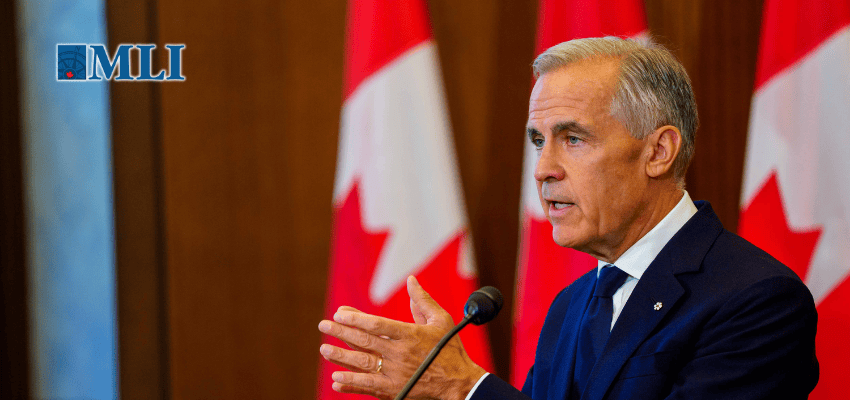
As tensions rise and trade relations worsen between Canada and the U.S., Prime Minister Mark Carney is poised to address the European Parliament on Sept. 17.—an emphatic statement about the government’s priorities moving forward: diversifying away from America.

“This fall we will begin intense discussions with the European Union, the world’s second-largest economy, to build a much stronger and deeper economic and security partnership,” he said in a press conference following the collapse of Canada-U.S. trade talks.

A year-and-a-half into his premiership, Carney has backed up his diversification rhetoric with international effort, jet-setting around the world to gin up tariff and trade agreements with China, the ASEAN countries, the UAE, Indonesia, and India. His clearest focus, however, has been on Europe—after all, the international order will be “rebuilt out of Europe,” he claimed this spring in Armenia, where he became the first non-European leader to participate in the European Political Community summit.
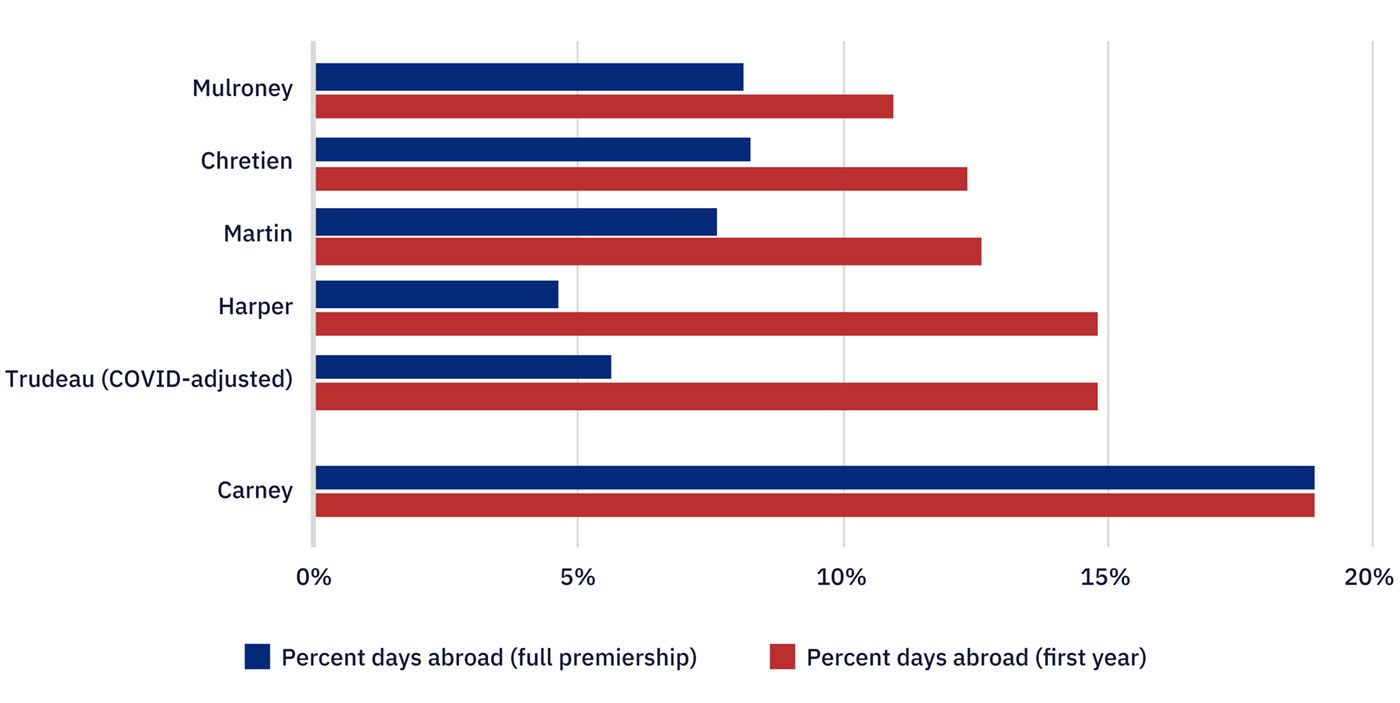
Carney is broadly backed by the Canadian public amidst the trade tiff, and it has been to his political advantage not to take the uncertainty and antagonisms emanating from the White House lying down.

But is this the right strategy?

At the end of the day, there are some hard realities here that Canada must contend with. While there are benefits to trade and security diversification efforts, there are some significant risks to such a pivot that have so far flown under the radar.

Not so fast

Canada already has existing frameworks for cooperation with Europe. On trade, there’s the Comprehensive Economic and Trade Agreement (CETA) and the Canada-European Free Trade Association (EFTA). On defence, the North Atlantic Treaty Organization (NATO). While both have produced significant positive effects on our bilateral relationship, they both essentially represent the natural limit of trade and defence relations between Canada and Europe.

Economically, there are deep-seated structural barriers that will inhibit businesses, particularly small- and medium-sized enterprises, from fully taking advantage of CETA’s opportunities: non-tariff barriers, regulatory divergence, and sheer distance limit how much deeper integration can actually deliver. The EU is not a monolith or a reliable single actor. With 27 member states having divergent interests (agricultural protectionism, different China and immigration policies, unwieldy decision-making processes), the EU is a slow, unpredictable partner for Canada’s rapidly evolving strategic needs in areas such as critical minerals and defence procurement.

To this end, geography and trade gravity are hard to override. Pursuing further European integration will deliver diminishing returns and quickly incur significant costs that will outweigh any potential benefit. The EU is an ocean away with its own entrenched bias toward internal suppliers. Its regulatory model (agri-food standards, digital/data rules, carbon border adjustments) differs substantially from North American norms. Harmonizing with them would impose real adjustment costs on Canadian industry and introduce new conflicts between competing U.S. and EU standards.

For all the roadblocks now apparent, the U.S. will nevertheless remain Canada’s dominant, contiguous market with integrated supply chains in areas like autos, energy, and agri-food.
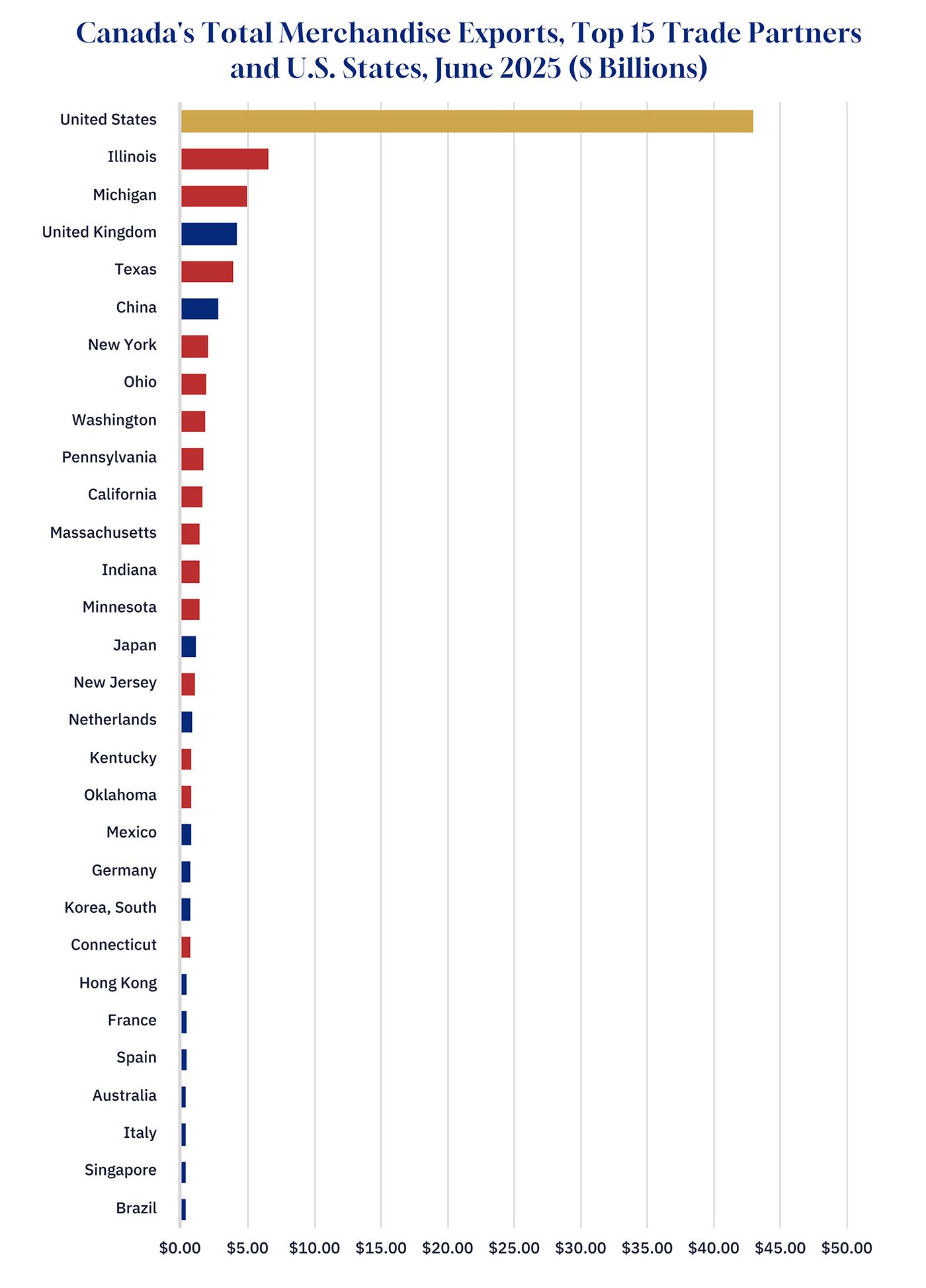
The situation is even more stark in defence, where Canada’s military capabilities are minimal and largely unable to defend the country from any major threat alone: U.S. support is essential to provide air and missile defence, or to defend against undersea platforms. With defence spending at 2, 3.5, or even 5 percent of GDP, Canada would still be unable to defend its vast territory alone, and risks becoming a continental vulnerability that adversaries would ruthlessly exploit in a conflict with the U.S.

Defence and security integration with the U.S. is unavoidable. Take Canadian arms exports, where continental Europe only accounts for 17 percent compared to 63 percent for the U.S. While exports to the former have increased by 77 percent in recent years, much of that can be accounted for by shipments to Ukraine to serve its voracious war needs. Exports to the rest of Europe have remained relatively flat, which reflects how their defence markets remain regionally focused, highly protectionist, and designed to sustain domestic industries.

Last, there is the opportunity cost. Canada’s West Coast, Pacific presence, and large Indo-Canadian diasporas make partners in the Indo-Pacific much more natural partners than almost every European state. Resources spent on greater EU integration compete with our Indo-Pacific engagement, such as CPTPP expansion and deepened trade with our ASEAN or Indian partners. The latter offer faster-growing markets and better alignment with Canada’s commodity and resource export profile.

Many states in the Asia-Pacific region are also keen to develop deeper defence ties to shore up their own security environments, as the Trump administration retreats from its historic support of and partnership with these countries.

How to respond

Canada’s best strategy is to play for time. The Trump administration’s policies towards the economy, defence, and its allies have become deeply unpopular with most Americans.

While a complete policy “snap-back” may not be realistic after President Trump leaves office, Canada should be optimistic that a significant number of these policies will be repudiated by the next administration, whether it be a Republican or Democrat.

Even the forthcoming mid-term elections and the likely Democratic control of one or both houses of Congress will likely significantly alter the country’s trade and security trajectory. In the meantime, entrenching highly inefficient economic policies, or an ineffective defence policy that is unable to deal with the actual day-to-day challenges that face the country, should be avoided.

In the end, Ottawa’s strategy to diversify Canada’s economy is the right one, but one that must recognize where the country’s immediate and long-term economic and security interests lie. They largely lie with our American partners. While we should continue to value and deepen ties with our European friends, their contribution to our prosperity and security will never match that of the U.S., even if the accommodation we eventually come to is more hard-edged than the status quo we’ve become accustomed to.

This is not a call to roll over to American bullying. Canadians are right to be angry and to push back against unreasonable demands. But now is the time for cold logic and clear-headed foresight, not emotional and ultimately empty appeals that feel good in the moment but will damage Canada’s interests long-term. Trump will not last forever. In the meantime, nobody is coming to save Canada. Strengthening the country’s own position within the existing continental framework is a must. The sooner Canadians accept that, the better off they’ll be.

Canada has no realistic substitute for America’s security umbrella or market. Its only choice is to increase its leverage within the existing relationship by increasing its own capabilities and bolstering the economy. Diversification can be part of that story. Being clear about the benefits and rewards of this effort, and navigating around those realities, should guide Canada’s foreign policies, not a romantic and myopic view of Europe’s role in the world.


The Hon. Ed Fast served as Canada’s minister of international trade from 2011-2015, leading free trade negotiations with the European Union, the Trans-Pacific Partnership countries, South Korea, and Ukraine. He is also a distinguished fellow at the Macdonald-Laurier Institute.

Richard Shimooka is a Hub contributing writer and a senior fellow at the Macdonald-Laurier Institute who writes on defence policy.

Source: The Hub

Related Posts

Geography trumps geopolitics — Canada cannot play Beijing off Washington: Khanh Vu Duc in the Western Standard
Foreign Policy

Geography trumps geopolitics — Canada cannot play Beijing off Washington: Khanh Vu Duc in the Western Standard

September 4, 2026
How diversity requirements reduced productivity for Canada’s research chairs: Peter Copeland and Eric Kaufmann on Inside Policy Talks
Education

How diversity requirements reduced productivity for Canada’s research chairs: Peter Copeland and Eric Kaufmann on Inside Policy Talks

September 4, 2026
Eric Kaufmann responds to allegations MLI paper is “racist and sexist”
Social Issues

Eric Kaufmann responds to allegations MLI paper is “racist and sexist”

September 3, 2026

Newsletter Signup

  Thank you for Signing Up
  Please correct the marked field(s) below.
Email Address *
1,true,6,Contact Email,2
First Name *
1,true,1,First Name,2
Last Name *
1,true,1,Last Name,2
*Required Fields

Follow us on

Macdonald-Laurier Institute

323 Chapel Street, Suite #300
Ottawa, Ontario, K1N 7Z2 Canada

613.482.8327

info@macdonaldlaurier.ca
MLI directory

Support Us

Support the Macdonald-Laurier Institute to help ensure that Canada is one of the best governed countries in the world. Click below to learn more or become a sponsor.

Support Us

  • Inside Policy Magazine
  • Annual Reports
  • Jobs
  • Privacy Policy

© 2023 Macdonald-Laurier Institute. All Rights reserved.

This site uses cookies. By continuing to browse the site you are agreeing to our use of cookies.

Privacy Preference Center

Consent Management

Necessary

Advertising

Analytics

Other

No Result
View All Result
  • Home
  • About
    • Who We Are
    • Who Makes MLI Work
    • Fifteenth Anniversary
  • Experts
    • Experts Directory
    • In Memoriam
  • Issues
    • Domestic Policy
      • Economic Policy
      • Justice
      • Rights and Freedoms
      • Assisted Suicide (MAID)
      • Health Care
      • COVID-19
      • Gender Identity
      • Canada’s Political Tradition
      • AI, Technology and Innovation
      • Media and Telecoms
      • Housing
      • Immigration
      • Agriculture and Agri-Food
      • Competition Policy
    • Energy Policy
      • Energy
      • Environment
    • Foreign Policy
      • Israel-Hamas War
      • Ukraine
      • Taiwan
      • China
      • Europe and Russia
      • Indo-Pacific
      • Middle East and North Africa
      • North America
      • Foreign Interference
      • National Defence
      • National Security
      • Foreign Affairs
    • Indigenous Affairs
  • Projects
    • CNAPS (Center for North American Prosperity and Security)
    • The Promised Land
    • Dragon at the door
    • Justice Report Card
    • DisInfoWatch.org
    • Managing Indigenous Prosperity
    • Judicial Foundations
    • Landmark Cases Council
    • Closing Canada’s Border, Policing, and Legal Gaps
    • Reforming the University
    • Digital Policy & Connectivity
    • Defending The Marketplace of Ideas
    • Letter to a minister
    • Past Projects
      • The Great Energy Crisis
      • Canada on top of the world
      • Double Trouble
      • Canada and the Indo-Pacific Initiative
      • The Transatlantic Program
      • COVID Misery Index
      • Speak for Ourselves
      • The Eavesdropping Dragon: Huawei
      • Talkin’ in the Free World with Mariam Memarsadeghi
      • An Intellectual Property Strategy for Canada
      • Munk Senior Fellows
      • A Mandate for Canada
      • Confederation Series
      • Fiscal Reform
      • The Canadian Century project
      • Fixing Canadian health care
      • Internal trade
      • From a mandate for change
      • Size of government in Canada
      • Straight Talk
      • Labour Market Report
      • Leading Economic Indicator
      • Centre for Advancing Canada’s Interests Abroad
      • Indigenous Prosperity at a Crossroads
  • Events
    • Voices that Inspire: The Macdonald-Laurier Vancouver Speaker Series
    • Upcoming Events
    • Past Events
      • MLI Dinners
      • Great Canadian Debates
  • Latest News
  • Libraries
    • Columns
    • Commentary
    • Papers
    • Books
    • Video
  • Donate

© 2023 Macdonald-Laurier Institute. All Rights reserved.