Friday, July 31, 2026
No Result
View All Result
  • Media
Macdonald-Laurier Institute
  • Home
  • About
    • Who We Are
    • Who Makes MLI Work
    • Fifteenth Anniversary
  • Experts
    • Experts Directory
    • In Memoriam
  • Issues
    • Domestic Policy
      • Economic Policy
      • Justice
      • Rights and Freedoms
      • Assisted Suicide (MAID)
      • Health Care
      • COVID-19
      • Gender Identity
      • Canada’s Political Tradition
      • AI, Technology and Innovation
      • Media and Telecoms
      • Housing
      • Immigration
      • Agriculture and Agri-Food
      • Competition Policy
    • Energy Policy
      • Energy
      • Environment
    • Foreign Policy
      • Israel-Hamas War
      • Ukraine
      • Taiwan
      • China
      • Europe and Russia
      • Indo-Pacific
      • Middle East and North Africa
      • North America
      • Foreign Interference
      • National Defence
      • National Security
      • Foreign Affairs
    • Indigenous Affairs
  • Projects
    • CNAPS (Center for North American Prosperity and Security)
    • The Promised Land
    • Dragon at the door
    • Justice Report Card
    • DisInfoWatch.org
    • Managing Indigenous Prosperity
    • Judicial Foundations
    • Landmark Cases Council
    • Closing Canada’s Border, Policing, and Legal Gaps
    • Reforming the University
    • Digital Policy & Connectivity
    • Defending The Marketplace of Ideas
    • Letter to a minister
    • Past Projects
      • The Great Energy Crisis
      • Canada on top of the world
      • Double Trouble
      • Canada and the Indo-Pacific Initiative
      • The Transatlantic Program
      • COVID Misery Index
        • Provincial COVID Misery Index
        • Beyond Lockdown
        • COVID and after: A mandate for recovery
      • Speak for Ourselves
      • The Eavesdropping Dragon: Huawei
      • Talkin’ in the Free World with Mariam Memarsadeghi
      • An Intellectual Property Strategy for Canada
      • Munk Senior Fellows
      • A Mandate for Canada
      • Confederation Series
      • Fiscal Reform
      • The Canadian Century project
      • Fixing Canadian health care
      • Internal trade
      • From a mandate for change
      • Size of government in Canada
      • Straight Talk
      • Labour Market Report
      • Leading Economic Indicator
      • Centre for Advancing Canada’s Interests Abroad
      • Indigenous Prosperity at a Crossroads
        • Aboriginal Canada and Natural Resources
  • Events
    • Voices that Inspire: The Macdonald-Laurier Vancouver Speaker Series
    • Upcoming Events
    • Past Events
      • MLI Dinners
      • Great Canadian Debates
  • Latest News
  • Libraries
    • Columns
    • Commentary
    • Papers
    • Books
    • Video
  • Donate
  • Home
  • About
    • Who We Are
    • Who Makes MLI Work
    • Fifteenth Anniversary
  • Experts
    • Experts Directory
    • In Memoriam
  • Issues
    • Domestic Policy
      • Economic Policy
      • Justice
      • Rights and Freedoms
      • Assisted Suicide (MAID)
      • Health Care
      • COVID-19
      • Gender Identity
      • Canada’s Political Tradition
      • AI, Technology and Innovation
      • Media and Telecoms
      • Housing
      • Immigration
      • Agriculture and Agri-Food
      • Competition Policy
    • Energy Policy
      • Energy
      • Environment
    • Foreign Policy
      • Israel-Hamas War
      • Ukraine
      • Taiwan
      • China
      • Europe and Russia
      • Indo-Pacific
      • Middle East and North Africa
      • North America
      • Foreign Interference
      • National Defence
      • National Security
      • Foreign Affairs
    • Indigenous Affairs
  • Projects
    • CNAPS (Center for North American Prosperity and Security)
    • The Promised Land
    • Dragon at the door
    • Justice Report Card
    • DisInfoWatch.org
    • Managing Indigenous Prosperity
    • Judicial Foundations
    • Landmark Cases Council
    • Closing Canada’s Border, Policing, and Legal Gaps
    • Reforming the University
    • Digital Policy & Connectivity
    • Defending The Marketplace of Ideas
    • Letter to a minister
    • Past Projects
      • The Great Energy Crisis
      • Canada on top of the world
      • Double Trouble
      • Canada and the Indo-Pacific Initiative
      • The Transatlantic Program
      • COVID Misery Index
        • Provincial COVID Misery Index
        • Beyond Lockdown
        • COVID and after: A mandate for recovery
      • Speak for Ourselves
      • The Eavesdropping Dragon: Huawei
      • Talkin’ in the Free World with Mariam Memarsadeghi
      • An Intellectual Property Strategy for Canada
      • Munk Senior Fellows
      • A Mandate for Canada
      • Confederation Series
      • Fiscal Reform
      • The Canadian Century project
      • Fixing Canadian health care
      • Internal trade
      • From a mandate for change
      • Size of government in Canada
      • Straight Talk
      • Labour Market Report
      • Leading Economic Indicator
      • Centre for Advancing Canada’s Interests Abroad
      • Indigenous Prosperity at a Crossroads
        • Aboriginal Canada and Natural Resources
  • Events
    • Voices that Inspire: The Macdonald-Laurier Vancouver Speaker Series
    • Upcoming Events
    • Past Events
      • MLI Dinners
      • Great Canadian Debates
  • Latest News
  • Libraries
    • Columns
    • Commentary
    • Papers
    • Books
    • Video
  • Donate
No Result
View All Result
Macdonald-Laurier Institute

Canada cannot trade away the danger of a Russia-China alliance: Marcus Kolga and Charles Burton in the National Post

National security must come before greater economic engagement.

July 31, 2026
in Foreign Affairs, Latest News, Columns, China: The dragon at the door, Foreign Policy, In the Media, Europe and Russia, Indo-Pacific, Charles Burton, Marcus Kolga
Reading Time: 9 mins read
A A
Canada cannot trade away the danger of a Russia-China alliance: Marcus Kolga and Charles Burton in the National Post

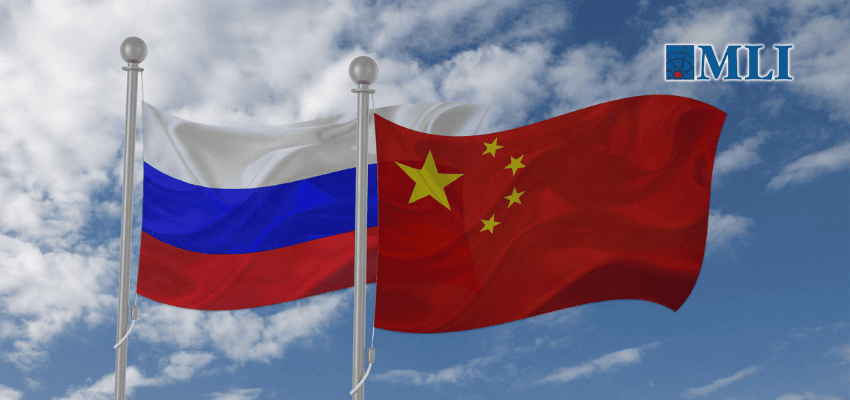
Image via Canva.

This article originally appeared in the National Post.

By Marcus Kolga and Charles Burton, July 31, 2026

Canada’s debates about Russia, China and national security often remain trapped between two false assumptions.

The first is that Ukraine is too distant to matter and that helping defend it against Russia is an act of charity. The second is that renewed engagement with China will strengthen Canada’s economy against U.S. tariffs and reshoring without creating new risks.

Together, these assumptions ignore how closely national security and trade are connected, especially when Canada’s economic choices intersect with the Russia-China strategic alignment.

In January, Prime Minister Mark Carney announced a strategic partnership with Beijing, arguing closer economic ties can diversify Canada’s trade. But Canada cannot simply treat China as a market while ignoring Beijing’s support for Russia’s war against Ukraine and the growing military and technological co-operation between the two regimes.

Ukraine is not a distant conflict for Canada. It is the central battlefield in Moscow’s campaign to overturn Europe’s security order and a testing ground for threats Canada may face in the Arctic, cyberspace, space and through information warfare.

Recent reporting by The Insider, Le Monde and Der Spiegel describes how Beijing is helping sustain Russia’s war and military-industrial base while gaining access to battlefield experience that strengthens the capabilities of both countries.

Chinese exports of dual-use technology and components help Russia produce the weapons it needs. Russia is providing Beijing with lessons in drone warfare, electronic warfare, cyberattacks, sanctions evasion and the disruption of critical infrastructure. These capabilities will not likely remain confined to Ukraine. They will likely inform Chinese and Russian planning against NATO, North America and the Arctic.

Canada’s allies have already drawn the same connection. Canada’s G7 partners have warned that China’s support is helping fuel Russia’s war, while NATO has identified China as a “decisive enabler” of Moscow’s aggression.

According to reports, Russian and Chinese officials have formally discussed co-operation to develop weapons and hybrid-warfare capabilities designed to evade Western defences and disrupt satellite communications.

One example is a proposed method for disabling Western satellite systems such as Starlink, which has played an important role in Ukraine’s defence. Disabling satellites could disrupt military operations, emergency services and civilian communications, while debris from their destruction could threaten other objects in orbit.

For Canada, that threat is inseparable from Arctic security.

Satellite communications are essential across the Canadian Arctic. During a military confrontation, climate-related crisis or security emergency, those systems would be vital to Northern communities, emergency responders and Canadian Armed Forces.

China-Russia co-operation is already testing Canada’s Arctic security. The two countries have conducted joint bomber operations near Alaska, as well as naval and coast-guard patrols in northern waters. Those operations remained in international airspace and waters, but they show growing military co-ordination near North America’s northern approaches.

Russia brings geography, military infrastructure and decades of Arctic experience; China brings technology, industrial capacity and capital. Their interests differ and distrust remains, but their shared objective of weakening Western power is drawing them closer.

Economic engagement with China is not, by itself, the problem. The danger is allowing short-term trade concessions to obscure strategic risks. Beijing has repeatedly used market access, investment and economic dependence as tools of political pressure.

Prime Minister Carney has said that Canada must be “clear-eyed” about its differences with China. That must mean assessing Beijing not only as Canada’s second-largest trading partner, but also as the principal economic and technological enabler of the country waging Europe’s largest war since 1945.

Calling China a strategic partner while Beijing helps Russia strengthen capabilities that could eventually be directed against Canada arguably already undermines Canadian interests. National security must come before greater economic engagement.

That means treating China’s support for Russia as a factor in trade, investment and procurement decisions. Canada must scrutinize Chinese investment in Arctic infrastructure, telecommunications, energy and critical minerals, reduce dependence on Chinese-controlled supply chains in strategic sectors, and strengthen export controls preventing Canadian and allied technology from reaching Russia through third countries.

Canada must also accelerate investments to develop resilient northern communications, Arctic surveillance and defence infrastructure. Declarations of sovereignty mean little without the ability to detect, deter and respond to threats.

Continued support for Ukraine is an essential part of that effort. It is not charity or distant idealism. It is forward defence against a Russian regime that has repeatedly challenged Canada and its allies — and against the wider authoritarian alignment sustaining it.

The lessons being learned in Ukraine are already shaping the strategic environment in the Arctic, in space and across digital networks. Canada must not ignore Beijing’s role in that process for short-term commercial gains.


Marcus Kolga is a senior fellow at the Macdonald-Laurier Institute and co-founder of the Global Centre for Democratic Resilience.

Charles Burton is a former diplomat at Canada’s embassy in Beijing, a senior fellow at Sinopsis.cz, a China-focused think tank based in Prague, and author of The Beaver and the Dragon: How China Out-Manoeuvred Canada’s Diplomacy, Security and Sovereignty
Source: National Post

Related Posts

Euthanasia, transgenderism, and transgression: Peter Copeland and Carl Trueman for Inside Policy Talks
Domestic Policy

Euthanasia, transgenderism, and transgression: Peter Copeland and Carl Trueman for Inside Policy Talks

July 30, 2026
Doug Ford is wrong – Why doing nothing at all is Canada’s best response to Trump’s tariffs: Trevor Tombe in The Hub
Economic Policy

Doug Ford is wrong – Why doing nothing at all is Canada’s best response to Trump’s tariffs: Trevor Tombe in The Hub

July 30, 2026
Canada’s golden opportunity – ours to lose?: Heather Exner-Pirot on This Is Mining with Amber Mac
Energy

Canada’s golden opportunity – ours to lose?: Heather Exner-Pirot on This Is Mining with Amber Mac

July 29, 2026

Newsletter Signup

  Thank you for Signing Up
  Please correct the marked field(s) below.
Email Address  *
1,true,6,Contact Email,2
First Name *
1,true,1,First Name,2
Last Name *
1,true,1,Last Name,2
*
*Required Fields

Follow us on

Macdonald-Laurier Institute

323 Chapel Street, Suite #300
Ottawa, Ontario, K1N 7Z2 Canada

613.482.8327

info@macdonaldlaurier.ca
MLI directory

Support Us

Support the Macdonald-Laurier Institute to help ensure that Canada is one of the best governed countries in the world. Click below to learn more or become a sponsor.

Support Us

  • Inside Policy Magazine
  • Annual Reports
  • Jobs
  • Privacy Policy

© 2023 Macdonald-Laurier Institute. All Rights reserved.

This site uses cookies. By continuing to browse the site you are agreeing to our use of cookies.

Privacy Preference Center

Consent Management

Necessary

Advertising

Analytics

Other

No Result
View All Result
  • Home
  • About
    • Who We Are
    • Who Makes MLI Work
    • Fifteenth Anniversary
  • Experts
    • Experts Directory
    • In Memoriam
  • Issues
    • Domestic Policy
      • Economic Policy
      • Justice
      • Rights and Freedoms
      • Assisted Suicide (MAID)
      • Health Care
      • COVID-19
      • Gender Identity
      • Canada’s Political Tradition
      • AI, Technology and Innovation
      • Media and Telecoms
      • Housing
      • Immigration
      • Agriculture and Agri-Food
      • Competition Policy
    • Energy Policy
      • Energy
      • Environment
    • Foreign Policy
      • Israel-Hamas War
      • Ukraine
      • Taiwan
      • China
      • Europe and Russia
      • Indo-Pacific
      • Middle East and North Africa
      • North America
      • Foreign Interference
      • National Defence
      • National Security
      • Foreign Affairs
    • Indigenous Affairs
  • Projects
    • CNAPS (Center for North American Prosperity and Security)
    • The Promised Land
    • Dragon at the door
    • Justice Report Card
    • DisInfoWatch.org
    • Managing Indigenous Prosperity
    • Judicial Foundations
    • Landmark Cases Council
    • Closing Canada’s Border, Policing, and Legal Gaps
    • Reforming the University
    • Digital Policy & Connectivity
    • Defending The Marketplace of Ideas
    • Letter to a minister
    • Past Projects
      • The Great Energy Crisis
      • Canada on top of the world
      • Double Trouble
      • Canada and the Indo-Pacific Initiative
      • The Transatlantic Program
      • COVID Misery Index
      • Speak for Ourselves
      • The Eavesdropping Dragon: Huawei
      • Talkin’ in the Free World with Mariam Memarsadeghi
      • An Intellectual Property Strategy for Canada
      • Munk Senior Fellows
      • A Mandate for Canada
      • Confederation Series
      • Fiscal Reform
      • The Canadian Century project
      • Fixing Canadian health care
      • Internal trade
      • From a mandate for change
      • Size of government in Canada
      • Straight Talk
      • Labour Market Report
      • Leading Economic Indicator
      • Centre for Advancing Canada’s Interests Abroad
      • Indigenous Prosperity at a Crossroads
  • Events
    • Voices that Inspire: The Macdonald-Laurier Vancouver Speaker Series
    • Upcoming Events
    • Past Events
      • MLI Dinners
      • Great Canadian Debates
  • Latest News
  • Libraries
    • Columns
    • Commentary
    • Papers
    • Books
    • Video
  • Donate

© 2023 Macdonald-Laurier Institute. All Rights reserved.