Wednesday, July 29, 2026
No Result
View All Result
  • Media
Macdonald-Laurier Institute
  • Home
  • About
    • Who We Are
    • Who Makes MLI Work
    • Fifteenth Anniversary
  • Experts
    • Experts Directory
    • In Memoriam
  • Issues
    • Domestic Policy
      • Economic Policy
      • Justice
      • Rights and Freedoms
      • Assisted Suicide (MAID)
      • Health Care
      • COVID-19
      • Gender Identity
      • Canada’s Political Tradition
      • AI, Technology and Innovation
      • Media and Telecoms
      • Housing
      • Immigration
      • Agriculture and Agri-Food
      • Competition Policy
    • Energy Policy
      • Energy
      • Environment
    • Foreign Policy
      • Israel-Hamas War
      • Ukraine
      • Taiwan
      • China
      • Europe and Russia
      • Indo-Pacific
      • Middle East and North Africa
      • North America
      • Foreign Interference
      • National Defence
      • National Security
      • Foreign Affairs
    • Indigenous Affairs
  • Projects
    • CNAPS (Center for North American Prosperity and Security)
    • The Promised Land
    • Dragon at the door
    • Justice Report Card
    • DisInfoWatch.org
    • Managing Indigenous Prosperity
    • Judicial Foundations
    • Landmark Cases Council
    • Closing Canada’s Border, Policing, and Legal Gaps
    • Reforming the University
    • Digital Policy & Connectivity
    • Defending The Marketplace of Ideas
    • Letter to a minister
    • Past Projects
      • The Great Energy Crisis
      • Canada on top of the world
      • Double Trouble
      • Canada and the Indo-Pacific Initiative
      • The Transatlantic Program
      • COVID Misery Index
        • Provincial COVID Misery Index
        • Beyond Lockdown
        • COVID and after: A mandate for recovery
      • Speak for Ourselves
      • The Eavesdropping Dragon: Huawei
      • Talkin’ in the Free World with Mariam Memarsadeghi
      • An Intellectual Property Strategy for Canada
      • Munk Senior Fellows
      • A Mandate for Canada
      • Confederation Series
      • Fiscal Reform
      • The Canadian Century project
      • Fixing Canadian health care
      • Internal trade
      • From a mandate for change
      • Size of government in Canada
      • Straight Talk
      • Labour Market Report
      • Leading Economic Indicator
      • Centre for Advancing Canada’s Interests Abroad
      • Indigenous Prosperity at a Crossroads
        • Aboriginal Canada and Natural Resources
  • Events
    • Voices that Inspire: The Macdonald-Laurier Vancouver Speaker Series
    • Upcoming Events
    • Past Events
      • MLI Dinners
      • Great Canadian Debates
  • Latest News
  • Libraries
    • Columns
    • Commentary
    • Papers
    • Books
    • Video
  • Donate
  • Home
  • About
    • Who We Are
    • Who Makes MLI Work
    • Fifteenth Anniversary
  • Experts
    • Experts Directory
    • In Memoriam
  • Issues
    • Domestic Policy
      • Economic Policy
      • Justice
      • Rights and Freedoms
      • Assisted Suicide (MAID)
      • Health Care
      • COVID-19
      • Gender Identity
      • Canada’s Political Tradition
      • AI, Technology and Innovation
      • Media and Telecoms
      • Housing
      • Immigration
      • Agriculture and Agri-Food
      • Competition Policy
    • Energy Policy
      • Energy
      • Environment
    • Foreign Policy
      • Israel-Hamas War
      • Ukraine
      • Taiwan
      • China
      • Europe and Russia
      • Indo-Pacific
      • Middle East and North Africa
      • North America
      • Foreign Interference
      • National Defence
      • National Security
      • Foreign Affairs
    • Indigenous Affairs
  • Projects
    • CNAPS (Center for North American Prosperity and Security)
    • The Promised Land
    • Dragon at the door
    • Justice Report Card
    • DisInfoWatch.org
    • Managing Indigenous Prosperity
    • Judicial Foundations
    • Landmark Cases Council
    • Closing Canada’s Border, Policing, and Legal Gaps
    • Reforming the University
    • Digital Policy & Connectivity
    • Defending The Marketplace of Ideas
    • Letter to a minister
    • Past Projects
      • The Great Energy Crisis
      • Canada on top of the world
      • Double Trouble
      • Canada and the Indo-Pacific Initiative
      • The Transatlantic Program
      • COVID Misery Index
        • Provincial COVID Misery Index
        • Beyond Lockdown
        • COVID and after: A mandate for recovery
      • Speak for Ourselves
      • The Eavesdropping Dragon: Huawei
      • Talkin’ in the Free World with Mariam Memarsadeghi
      • An Intellectual Property Strategy for Canada
      • Munk Senior Fellows
      • A Mandate for Canada
      • Confederation Series
      • Fiscal Reform
      • The Canadian Century project
      • Fixing Canadian health care
      • Internal trade
      • From a mandate for change
      • Size of government in Canada
      • Straight Talk
      • Labour Market Report
      • Leading Economic Indicator
      • Centre for Advancing Canada’s Interests Abroad
      • Indigenous Prosperity at a Crossroads
        • Aboriginal Canada and Natural Resources
  • Events
    • Voices that Inspire: The Macdonald-Laurier Vancouver Speaker Series
    • Upcoming Events
    • Past Events
      • MLI Dinners
      • Great Canadian Debates
  • Latest News
  • Libraries
    • Columns
    • Commentary
    • Papers
    • Books
    • Video
  • Donate
No Result
View All Result
Macdonald-Laurier Institute

Canada must confront Russia’s Arctic aspirations: Alexander Dalziel and Sergey Sukhankin in the National Post

The region can't be ceded to authoritarians.

July 29, 2026
in Foreign Affairs, Columns, Foreign Policy, National Defence, Latest News, In the Media, Europe and Russia, Alexander Dalziel, Arctic
Reading Time: 14 mins read
A A
Canada must confront Russia’s Arctic aspirations: Alexander Dalziel and Sergey Sukhankin in the National Post

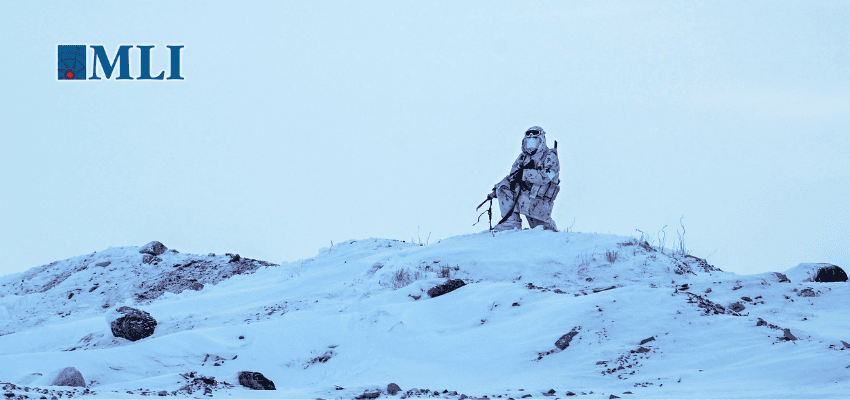
Photo by Master Corporal Sarah Morley, Imagery Technician, 4th Canadian Division Support Base Petawawa | Combat camera via Flickr.

This article originally appeared in the National Post.

By Alexander Dalziel and Sergey Sukhankin, July 29, 2026

As the U.S.-Iran conflict pulls eyes to the Middle East, Canadians need to maintain a steady gaze north. When it comes to protecting sea lanes, not all the action is in the Straits of Hormuz. At the recent NATO summit in Turkey, Canada and its allies pledged to strengthen maritime security in the Arctic and North Atlantic oceans. But dealing with Vladimir Putin’s authoritarian Arctic ambitions will require Canada to act at home and abroad.

Russia is determined to control access, setting the terms for exploiting regional shipping and resources. It wants to extend command over stretches of Arctic water, with little justification under international law. If Canada wants stronger maritime security — as the Canadian Coast Guard’s transfer to the Department of National Defence last September suggests — it must grasp Russia’s Arctic plans and the long-term persistent threat they pose.

The Arctic is central to Russia’s deepening partnership with China and its broader authoritarian agenda. Moscow is courting Chinese investment while giving Beijing access denied by Arctic democracies. China is using Arctic waters to diversify its export routes while gaining experience operating in the region. The Canadian Security Intelligence Service says that both countries are increasing their espionage activities.

Russia’s strategy is layered presence and power. The most lethal layer is its navy’s formidable nuclear submarines — and yet another one of these is under construction. Another is positioning the paramilitary Russian Coast Guard to exert control over access to the Northern Sea Route, which runs north of Russia and borders on the United States in the east and Norway in the west.

Civilian fleets are in on the act, including Russia’s eight nuclear icebreakers, with three more under construction. They are core to Russia’s commercial pitch to promote Arctic shipping year-round — and its assertion of power in the region.

Fishing fleets and cargo ships add to the picture. Russia just launched its second homebuilt ice-class liquefied natural gas carrier; these vessels are suspected of smuggling and of having security service oversight. Russian fishing companies have been sanctioned by Norwegian and European Union authorities for possible espionage and infrastructure sabotage.

Russia is forging an economic model around these sea lanes. Its proposed “Transarctic Transport Corridor” would connect southern industrial centres and Siberian resource projects to foreign markets through the Northern Sea Route. The seabed is also on the agenda — offshore drilling and underwater mining are supposed to alleviate dwindling resources on land.

Propaganda wraps all these layers. Putin’s regime pretends it has a plan for the economy’s future, all running through the north. It portrays Arctic sea lanes as a frontier for national greatness, where trailblazing women captain nuclear icebreakers and where Russians develop innovative technologies like electric vehicles. At the same time, state media deride any Canadian, U.S. or Danish development in the North American Arctic as inherently hostile, a “bridgehead” to threaten Russia — despite almost three decades of its own Arctic military buildup.

Multiple factors hinder these grandiose ambitions. Sanctions limit access to foreign polar tech and know-how. Ukrainian drones batter Russian shipyards. Nearly half of the state budget may be going to military expenditures and the Ukraine war.

But whatever setbacks Russia incurs, it will prioritize Arctic power.

That’s because complex elite networks extending well beyond the Kremlin’s walls drive these policies. In addition to the large energy, mining, nuclear energy and shipbuilding sectors that extract the region’s wealth, regional governments, civil society groups and the Russian Orthodox Church promote national dominance in the north. Even after the war in Ukraine or Putin’s exit from the scene, Moscow is likely to augment its power in Arctic waters — its elites are not about to lose interest.

Canada is one of Russia’s primary strategic competitors, not just for resources and sea lanes, but for Arctic legitimacy. Russia’s multilayered capabilities will set an authoritarian tone for the region’s development if Canada doesn’t get its house in order.

Arctic maritime security therefore calls for an all-of-society strategy. New Canadian Coast Guard icebreakers and Royal Canadian Navy submarines will offer flexible tools to monitor and manage activity. Community-grounded institutions on remote coasts like the Canadian Coast Guard Auxiliary and the Canadian Rangers can inform smarter operations. Arctic science is also important in creating strong fundamentals for security policy.

Our ace card is democracy. Russia’s Arctic strategy is a top-down authoritarian affair. In Canada, formulating security with provincial, territorial and Indigenous partners optimizes our presence in the region. If done well, it lends a legitimacy that no Kremlin propaganda will match.


Alexander Dalziel is a senior fellow at the Macdonald-Laurier Institute.

Sergey Sukhankin is a senior fellow at the Jamestown Foundation
Source: National Post
Tags: Sergey Sukhankin

Related Posts

Jews are leaving Canada in droves: Casey Babb in The Free Press
The Promised Land

Jews are leaving Canada in droves: Casey Babb in The Free Press

July 28, 2026
The UN’s Refugee Convention finds itself at a crossroads 75 years later – because of how it’s being interpreted: Michael Barutciski in The Globe and Mail
Immigration

The UN’s Refugee Convention finds itself at a crossroads 75 years later – because of how it’s being interpreted: Michael Barutciski in The Globe and Mail

July 28, 2026
Arresting Netanyahu in America would be illegal: Brian L. Cox & John Spencer in Real Clear World
The Promised Land

Arresting Netanyahu in America would be illegal: Brian L. Cox & John Spencer in Real Clear World

July 28, 2026

Newsletter Signup

  Thank you for Signing Up
  Please correct the marked field(s) below.
Email Address  *
1,true,6,Contact Email,2
First Name *
1,true,1,First Name,2
Last Name *
1,true,1,Last Name,2
*
*Required Fields

Follow us on

Macdonald-Laurier Institute

323 Chapel Street, Suite #300
Ottawa, Ontario, K1N 7Z2 Canada

613.482.8327

info@macdonaldlaurier.ca
MLI directory

Support Us

Support the Macdonald-Laurier Institute to help ensure that Canada is one of the best governed countries in the world. Click below to learn more or become a sponsor.

Support Us

  • Inside Policy Magazine
  • Annual Reports
  • Jobs
  • Privacy Policy

© 2023 Macdonald-Laurier Institute. All Rights reserved.

This site uses cookies. By continuing to browse the site you are agreeing to our use of cookies.

Privacy Preference Center

Consent Management

Necessary

Advertising

Analytics

Other

No Result
View All Result
  • Home
  • About
    • Who We Are
    • Who Makes MLI Work
    • Fifteenth Anniversary
  • Experts
    • Experts Directory
    • In Memoriam
  • Issues
    • Domestic Policy
      • Economic Policy
      • Justice
      • Rights and Freedoms
      • Assisted Suicide (MAID)
      • Health Care
      • COVID-19
      • Gender Identity
      • Canada’s Political Tradition
      • AI, Technology and Innovation
      • Media and Telecoms
      • Housing
      • Immigration
      • Agriculture and Agri-Food
      • Competition Policy
    • Energy Policy
      • Energy
      • Environment
    • Foreign Policy
      • Israel-Hamas War
      • Ukraine
      • Taiwan
      • China
      • Europe and Russia
      • Indo-Pacific
      • Middle East and North Africa
      • North America
      • Foreign Interference
      • National Defence
      • National Security
      • Foreign Affairs
    • Indigenous Affairs
  • Projects
    • CNAPS (Center for North American Prosperity and Security)
    • The Promised Land
    • Dragon at the door
    • Justice Report Card
    • DisInfoWatch.org
    • Managing Indigenous Prosperity
    • Judicial Foundations
    • Landmark Cases Council
    • Closing Canada’s Border, Policing, and Legal Gaps
    • Reforming the University
    • Digital Policy & Connectivity
    • Defending The Marketplace of Ideas
    • Letter to a minister
    • Past Projects
      • The Great Energy Crisis
      • Canada on top of the world
      • Double Trouble
      • Canada and the Indo-Pacific Initiative
      • The Transatlantic Program
      • COVID Misery Index
      • Speak for Ourselves
      • The Eavesdropping Dragon: Huawei
      • Talkin’ in the Free World with Mariam Memarsadeghi
      • An Intellectual Property Strategy for Canada
      • Munk Senior Fellows
      • A Mandate for Canada
      • Confederation Series
      • Fiscal Reform
      • The Canadian Century project
      • Fixing Canadian health care
      • Internal trade
      • From a mandate for change
      • Size of government in Canada
      • Straight Talk
      • Labour Market Report
      • Leading Economic Indicator
      • Centre for Advancing Canada’s Interests Abroad
      • Indigenous Prosperity at a Crossroads
  • Events
    • Voices that Inspire: The Macdonald-Laurier Vancouver Speaker Series
    • Upcoming Events
    • Past Events
      • MLI Dinners
      • Great Canadian Debates
  • Latest News
  • Libraries
    • Columns
    • Commentary
    • Papers
    • Books
    • Video
  • Donate

© 2023 Macdonald-Laurier Institute. All Rights reserved.