Tuesday, June 23, 2026
No Result
View All Result
  • Media
Macdonald-Laurier Institute
  • Home
  • About
    • Who We Are
    • Who Makes MLI Work
    • Fifteenth Anniversary
  • Experts
    • Experts Directory
    • In Memoriam
  • Issues
    • Domestic Policy
      • Economic Policy
      • Justice
      • Rights and Freedoms
      • Assisted Suicide (MAID)
      • Health Care
      • COVID-19
      • Gender Identity
      • Canada’s Political Tradition
      • AI, Technology and Innovation
      • Media and Telecoms
      • Housing
      • Immigration
      • Agriculture and Agri-Food
      • Competition Policy
    • Energy Policy
      • Energy
      • Environment
    • Foreign Policy
      • Israel-Hamas War
      • Ukraine
      • Taiwan
      • China
      • Europe and Russia
      • Indo-Pacific
      • Middle East and North Africa
      • North America
      • Foreign Interference
      • National Defence
      • National Security
      • Foreign Affairs
    • Indigenous Affairs
  • Projects
    • CNAPS (Center for North American Prosperity and Security)
    • Justice Report Card
    • The Promised Land
    • Dragon at the door
    • Canada on top of the world
    • Letter to a minister
    • The Great Energy Crisis
    • DisInfoWatch.org
    • Managing Indigenous Prosperity
    • Judicial Foundations
    • Landmark Cases Council
    • Defending The Marketplace of Ideas
    • Reforming the University
    • Digital Policy & Connectivity
    • Past Projects
      • Double Trouble
      • Canada and the Indo-Pacific Initiative
      • The Transatlantic Program
      • COVID Misery Index
        • Provincial COVID Misery Index
        • Beyond Lockdown
        • COVID and after: A mandate for recovery
      • Speak for Ourselves
      • The Eavesdropping Dragon: Huawei
      • Talkin’ in the Free World with Mariam Memarsadeghi
      • An Intellectual Property Strategy for Canada
      • Munk Senior Fellows
      • A Mandate for Canada
      • Confederation Series
      • Fiscal Reform
      • The Canadian Century project
      • Fixing Canadian health care
      • Internal trade
      • From a mandate for change
      • Size of government in Canada
      • Straight Talk
      • Labour Market Report
      • Leading Economic Indicator
      • Centre for Advancing Canada’s Interests Abroad
      • Indigenous Prosperity at a Crossroads
        • Aboriginal Canada and Natural Resources
  • Events
    • Voices that Inspire: The Macdonald-Laurier Vancouver Speaker Series
    • Upcoming Events
    • Past Events
      • MLI Dinners
      • Great Canadian Debates
  • Latest News
  • Libraries
    • Columns
    • Commentary
    • Papers
    • Books
    • Video
  • Donate
  • Home
  • About
    • Who We Are
    • Who Makes MLI Work
    • Fifteenth Anniversary
  • Experts
    • Experts Directory
    • In Memoriam
  • Issues
    • Domestic Policy
      • Economic Policy
      • Justice
      • Rights and Freedoms
      • Assisted Suicide (MAID)
      • Health Care
      • COVID-19
      • Gender Identity
      • Canada’s Political Tradition
      • AI, Technology and Innovation
      • Media and Telecoms
      • Housing
      • Immigration
      • Agriculture and Agri-Food
      • Competition Policy
    • Energy Policy
      • Energy
      • Environment
    • Foreign Policy
      • Israel-Hamas War
      • Ukraine
      • Taiwan
      • China
      • Europe and Russia
      • Indo-Pacific
      • Middle East and North Africa
      • North America
      • Foreign Interference
      • National Defence
      • National Security
      • Foreign Affairs
    • Indigenous Affairs
  • Projects
    • CNAPS (Center for North American Prosperity and Security)
    • Justice Report Card
    • The Promised Land
    • Dragon at the door
    • Canada on top of the world
    • Letter to a minister
    • The Great Energy Crisis
    • DisInfoWatch.org
    • Managing Indigenous Prosperity
    • Judicial Foundations
    • Landmark Cases Council
    • Defending The Marketplace of Ideas
    • Reforming the University
    • Digital Policy & Connectivity
    • Past Projects
      • Double Trouble
      • Canada and the Indo-Pacific Initiative
      • The Transatlantic Program
      • COVID Misery Index
        • Provincial COVID Misery Index
        • Beyond Lockdown
        • COVID and after: A mandate for recovery
      • Speak for Ourselves
      • The Eavesdropping Dragon: Huawei
      • Talkin’ in the Free World with Mariam Memarsadeghi
      • An Intellectual Property Strategy for Canada
      • Munk Senior Fellows
      • A Mandate for Canada
      • Confederation Series
      • Fiscal Reform
      • The Canadian Century project
      • Fixing Canadian health care
      • Internal trade
      • From a mandate for change
      • Size of government in Canada
      • Straight Talk
      • Labour Market Report
      • Leading Economic Indicator
      • Centre for Advancing Canada’s Interests Abroad
      • Indigenous Prosperity at a Crossroads
        • Aboriginal Canada and Natural Resources
  • Events
    • Voices that Inspire: The Macdonald-Laurier Vancouver Speaker Series
    • Upcoming Events
    • Past Events
      • MLI Dinners
      • Great Canadian Debates
  • Latest News
  • Libraries
    • Columns
    • Commentary
    • Papers
    • Books
    • Video
  • Donate
No Result
View All Result
Macdonald-Laurier Institute

Trans Mountain proves the business case for a West Coast pipeline: Heather Exner-Pirot in The Hub

Don't listen to the naysayers—the success of the TMX is undeniable.

June 23, 2026
in Energy Policy, Resources, Latest News, Columns, In the Media, Heather Exner-Pirot
Reading Time: 7 mins read
A A
Trans Mountain proves the business case for a West Coast pipeline: Heather Exner-Pirot in The Hub

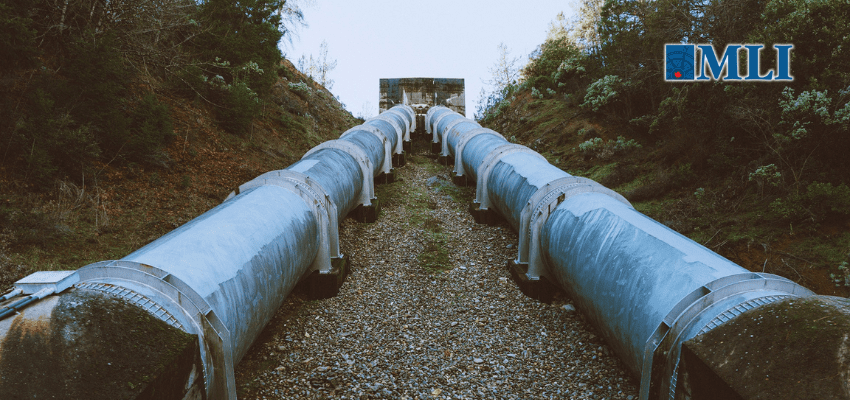
Image via Canva.

This article originally appeared in The Hub.

By Heather Exner-Pirot, June 23, 2026

The Trans Mountain Expansion (TMX) pipeline celebrated its second birthday, and its gift to its owners, the taxpayers of Canada, is that it is already full. In industry speak, it was “apportioned” in June for the first time ever; the pipeline could not accommodate all the requests of oil shippers to use it.

While the pipeline had an ignominious start—a $34 billion boondoggle—the ability to get Canadian oil to Pacific tidewater has proven to be priceless. This is all relevant, of course, because another pipeline to the West Coast will be proposed by Alberta by the end of the month. The professional naysayer class is already undermining its long term viability. The undeniable success of TMX makes their case difficult to make.

TMX: From tired to wired

The TMX was the twinning of an oil pipeline from Edmonton to Burnaby, beside Vancouver. It started from a Special Act of Parliament, which incorporated the Trans Mountain Oil Pipeline Company in March 1951. Engineering and construction occurred quickly, with the first shipments of oil arriving at the Burnaby terminal just 30 months later, in October 1953.

The idea to twin Trans Mountain—add 590,000 barrels a day (bpd) on top of the original 300,000 bpd pipeline—was proposed by its then-owner, Kinder Morgan, in 2012, a response to booming Alberta oilsands development and the need to break a bottlenecked energy market.

Despite being approved by the federal regulator in 2016, TMX soon became a perfect storm of regulatory, political, and financial risk due to disputes over the pipeline between B.C. and Alberta and litigation from Burnaby, Vancouver, and First Nations.

The Trudeau government, believing the project to be in the national interest and lamenting the “unnecessary and politically motivated delays [which] created a level of uncertainty around the project’s future,” agreed to purchase the assets from Kinder Morgan for $4.5 billion in May 2018 to ensure its continued construction.

The pipeline was embroiled in challenges, delays, and cost overruns. The constitutional duty to consult and accommodate principle was tested, a pandemic erupted, and floods raged. At one point, work in one section was stopped for four months over the summer (also known in Canada as “construction season”) because some nests from a common hummingbird species were discovered.

TMX did not go billions over budget; it went tens of billions over budget. Alongside the political rejection of the Northern Gateway pipeline in 2018, a red warning light flashed over Canada to any prospective proponent or investor: you cannot build pipelines here. The passing of the “no more pipelines” Bill C-69, the Impact Assessment Act, and the “no more tankers” C-48 Oil Tanker Moratorium added insult to injury, and it was widely expected that TMX, which finally entered operations in May 2024, would be the last new oil pipeline to the West Coast in Canada, so poisoned was the well.

But then Donald Trump came along and threatened to annex Canada and make it the 51st state. And the easiest way for Canada to diversify exports—building a million-barrel oil pipeline to reach Asian markets—became not only palatable, but popular. We were going to become an energy superpower.

Second chance at a first impression

Some pockets of Canadians are still opposed, of course. Of their favourite arguments, a few are on repeat: there is no private proponent; we shouldn’t use taxpayer money for pipelines; and there is no demand/need. The case of TMX helps counter these.

At the outset, let me say that of course it would be better if the West Coast pipeline had a private proponent and didn’t need government de-risking in the form of loans or equity. We have that, already, in the Enbridge Mainline Optimization (400,000 bpd) and the South Bow-Bridger pipeline on part of the old Keystone XL route (550,000 bpd), which have already attracted commitments from shippers. If we were satisfied with just sending more oil to the U.S., we could be laissez-faire.

But we aren’t, and we shouldn’t be, because we sell oil into that market at a discount to global prices; because optionality is an asset, especially as wild cards like tariffs and Venezuelan heavy oil production come up; and because oil is a powerful tool for bolstering alliances and exerting soft power.

So we need the pipeline on a route that goes through B.C. that is at risk of political and legal opposition, significant cost overruns,  and—don’t forget—still has an oil tanker moratorium at the end of it. No private proponent is yet willing to take on that risk, and so, like the original Trans Mountain as well as its expansion, there is a need for governments to step up.

The path is clear from the Alberta-Canada implementation agreement: Alberta will be the proponent and submit its proposal by July 1; Canada will refer it to the Major Projects Office and pursue its designation as a project of national interest by October 1; the duty to consult will be completed, and, should all go well, the pipeline could be approved as early as September 1, 2027, and enter into service sometime in 2032–33.

One should not expect that Canadian taxpayers will lose out from the pipeline. Far from it. In the case of TMX, the pipeline is a profitable asset that the Crown owns and receives dividends from. In the first quarter of 2026, an aggregate of $448 million was paid to the Government of Canada, consisting of $148 million in interest payments and $300 million in cash dividends. Trans Mountain has returned $2.2 billion in cash to Canada since May 2024, and that number will rise as it receives higher tolls from expanded usage.

The pipeline has not been bought with taxpayers’ money, but rather financed with the federal government’s AAA credit rating and paid for through the tolls from oil producers that use it. The pipeline’s exorbitant cost means it will take a few extra years than desired for those tolls to pay off the debt. But it will be paid off with revenues—not taxes.

While the tolls cover the costs of TMX, it is the billions in taxes and royalties from the additional 590,000 kbd in production itself; and from every Canadian barrel being worth about $7–8 more, due to the narrowing in the differential between the Canadian WCS crude benchmark and the American WTI crude benchmark that global market access provided, that makes the venture worth it for Canadians economically. And what’s better than royalties and taxes from a 590,000 bpd pipeline? Royalties and taxes from a one-million-barrel pipeline.

The now full Trans Mountain is already planning to expand by 90,000 bpd by early 2027, and another 210,000 bpd by the end of 2028. But we will still need that other West Coast pipeline eventually. Customers in China, South Korea, India, and Singapore have developed an appetite for Canadian heavy oil, and the disruption of the Strait of Hormuz has incentivized them to look even more closely at the West Coast pipeline opportunity.

China—TMX’s biggest buyer—continues to invest in refining capacity for heavy sour crudes, and India expects massive oil demand in the coming decade, accounting for as much as half of global incremental growth, followed closely by growth out of Southeast Asia. For its part, South Korea is tripling its oil imports from Canada to reduce dependence on the Middle East, and Japan is looking to diversify as well. It will not be hard for Asian energy markets to absorb a million barrels of Canadian crude.

But it will be expensive at the outset, and will require de-risking in the form of financial support from probably both the Alberta and federal governments. The upside from tolls, taxes, and royalties, as we know from TMX, makes it a slam dunk on the economic side.

The trickier part may be incentivizing Canada’s producers to invest in enough upstream production to fill a new million-barrel West Coast oil pipeline on top of the other, more advanced projects, which will absorb most of the lower-cost production still available in the oilsands. The burden of the Pathways Alliance and the industrial carbon tax is pushing up the bar which must be met—the breakeven price of the barrel—to attract sufficient investment into new greenfield oilsands production and pay what will inevitably be high tolls.

Alberta is likely preparing to tip the scales in the West Coast pipeline’s favour with its Bitumen Royalty-in-Kind program, which allows it to take physical barrels instead of cash royalties from producers, so it can strategically market them itself.

But ultimately, the answer must involve bringing Canada in line with the more competitive tax treatment offered in the U.S., in the form of capital cost allowances and depreciation regimes, and following the playbook from the original oilsands build-out of the last commodity cycle. The massive geopolitical and economic prize warrants it.


Heather Exner-Pirot is director of energy, natural resources and environment at the Macdonald-Laurier Institute.
Source: The Hub

Related Posts

Terror shouldn’t pay in Canada: Sarah Teich for the Bureau
Foreign Affairs

Terror shouldn’t pay in Canada: Sarah Teich for the Bureau

June 23, 2026
Toward ethical populism: Eric Kaufmann in First Things
Political Tradition

Toward ethical populism: Eric Kaufmann in First Things

June 23, 2026
United in hate – The unlikely “red–green–brown” alliance behind rising antisemitism in Canada: Sheryl Saperia and Ches W. Parsons
Social Issues

United in hate – The unlikely “red–green–brown” alliance behind rising antisemitism in Canada: Sheryl Saperia and Ches W. Parsons

June 23, 2026
Next Post
United in hate – The unlikely “red–green–brown” alliance behind rising antisemitism in Canada: Sheryl Saperia and Ches W. Parsons

United in hate - The unlikely “red–green–brown” alliance behind rising antisemitism in Canada: Sheryl Saperia and Ches W. Parsons

Newsletter Signup

  Thank you for Signing Up
  Please correct the marked field(s) below.
Email Address  *
1,true,6,Contact Email,2
First Name *
1,true,1,First Name,2
Last Name *
1,true,1,Last Name,2
*
*Required Fields

Follow us on

Macdonald-Laurier Institute

323 Chapel Street, Suite #300
Ottawa, Ontario, K1N 7Z2 Canada

613.482.8327

info@macdonaldlaurier.ca
MLI directory

Support Us

Support the Macdonald-Laurier Institute to help ensure that Canada is one of the best governed countries in the world. Click below to learn more or become a sponsor.

Support Us

  • Inside Policy Magazine
  • Annual Reports
  • Jobs
  • Privacy Policy

© 2023 Macdonald-Laurier Institute. All Rights reserved.

This site uses cookies. By continuing to browse the site you are agreeing to our use of cookies.

Privacy Preference Center

Consent Management

Necessary

Advertising

Analytics

Other

No Result
View All Result
  • Home
  • About
    • Who We Are
    • Who Makes MLI Work
    • Fifteenth Anniversary
  • Experts
    • Experts Directory
    • In Memoriam
  • Issues
    • Domestic Policy
      • Economic Policy
      • Justice
      • Rights and Freedoms
      • Assisted Suicide (MAID)
      • Health Care
      • COVID-19
      • Gender Identity
      • Canada’s Political Tradition
      • AI, Technology and Innovation
      • Media and Telecoms
      • Housing
      • Immigration
      • Agriculture and Agri-Food
      • Competition Policy
    • Energy Policy
      • Energy
      • Environment
    • Foreign Policy
      • Israel-Hamas War
      • Ukraine
      • Taiwan
      • China
      • Europe and Russia
      • Indo-Pacific
      • Middle East and North Africa
      • North America
      • Foreign Interference
      • National Defence
      • National Security
      • Foreign Affairs
    • Indigenous Affairs
  • Projects
    • CNAPS (Center for North American Prosperity and Security)
    • Justice Report Card
    • The Promised Land
    • Dragon at the door
    • Canada on top of the world
    • Letter to a minister
    • The Great Energy Crisis
    • DisInfoWatch.org
    • Managing Indigenous Prosperity
    • Judicial Foundations
    • Landmark Cases Council
    • Defending The Marketplace of Ideas
    • Reforming the University
    • Digital Policy & Connectivity
    • Past Projects
      • Double Trouble
      • Canada and the Indo-Pacific Initiative
      • The Transatlantic Program
      • COVID Misery Index
      • Speak for Ourselves
      • The Eavesdropping Dragon: Huawei
      • Talkin’ in the Free World with Mariam Memarsadeghi
      • An Intellectual Property Strategy for Canada
      • Munk Senior Fellows
      • A Mandate for Canada
      • Confederation Series
      • Fiscal Reform
      • The Canadian Century project
      • Fixing Canadian health care
      • Internal trade
      • From a mandate for change
      • Size of government in Canada
      • Straight Talk
      • Labour Market Report
      • Leading Economic Indicator
      • Centre for Advancing Canada’s Interests Abroad
      • Indigenous Prosperity at a Crossroads
  • Events
    • Voices that Inspire: The Macdonald-Laurier Vancouver Speaker Series
    • Upcoming Events
    • Past Events
      • MLI Dinners
      • Great Canadian Debates
  • Latest News
  • Libraries
    • Columns
    • Commentary
    • Papers
    • Books
    • Video
  • Donate

© 2023 Macdonald-Laurier Institute. All Rights reserved.