This article originally appeared in The Globe and Mail.
By Aurel Braun, June 15, 2025
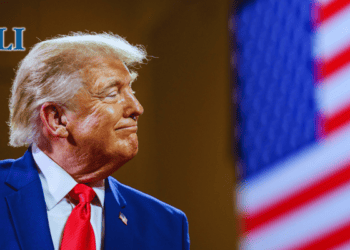
The confrontation still shocks: “You don’t have the cards … without us you don’t have any cards,” bellowed U.S. President Donald Trump at Ukrainian President Volodymyr Zelensky in the Oval Office in February, 2025. Within the hour, the Ukrainian delegation was unceremoniously ushered out, the plated lunch abandoned cold.
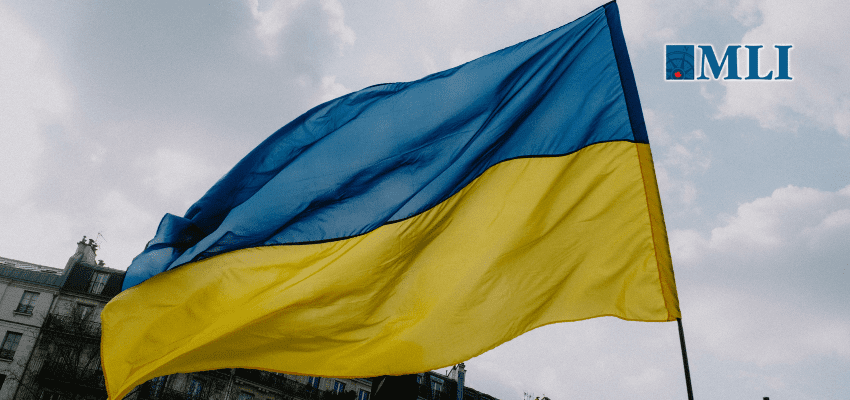
Just a little over a year later, as Vladimir Putin hosted the lavish International Economic Forum in St. Petersburg, the “Russian Davos,” the attendees from 100 countries were looking at enormous plumes of smoke billowing from nearby Russian military bases as Ukrainian drones repeatedly hit their targets 1,000 kilometres away. Clearly, Ukraine has some impressive “cards.”
This may not yet be a turning point, where Russia is forced to negotiate a good-faith peace agreement that ensures Ukrainian sovereignty and security. Too often optimism regarding Ukraine has turned to despondency. Nonetheless, the turnaround is striking.
February 2025 was a watershed. Mr. Trump, a President bereft of real strategy, often displaying nauseating narcissism intertwined with petty vindictiveness and an evanescent attention span, proceeded to cut Ukraine loose by ending funding and limiting help to minimum intelligence co-operation, with U.S. weapons sales restricted to those purchased with European funds.
Further, Washington pressed Mr. Zelensky to reach a settlement and to accept many of the dangerous maximalist demands of Mr. Putin.
Concurrently, an unrestrained Russia used its advantages of geography, manpower and utter disregard for lives to try to crush Ukrainian resistance. This past winter, there were doubts in many quarters that Ukraine could survive the relentless Russian assaults and that even if it did, it could face a devastating all-out massive attack in the Spring.
Now, we are discerning a dramatic shift that is underpinned by two crucial parallel developments.
First, regarding Ukraine, evaluations of Russian military superiority and advances underestimated Ukrainian military resiliency, weapons production ingenuity and growing military prowess. Ukraine successfully managed to build up its domestic military industries, which currently supplies more than 70 per cent of military needs. Ukrainian innovation in drone warfare has made the country the world leader in both drone offensive and defensive warfare where Arab Gulf states have turned to Kyiv for help. Notably, the Europeans have agreed to provide an enormous aid package of €90-billion to Ukraine. Key defence partners in Europe, have embarked on joint production and investment in the Ukrainian defence industries.
Second, almost imperceptibly, the ground has begun to shift under Mr. Putin’s dictatorship. The Russian economy is showing major stresses under the sanctions regime, with high inflation and virtually no growth. The Russian military, in the war’s fifth year, is nearing 1.5 million in casualties, both dead and wounded. It is also beginning to lose ground in Ukraine. The Russian population, sullen but seemingly quiescent, is nonetheless manifesting certain signs of deep dissatisfaction, sometimes expressed through protests about internet restrictions.
An emboldened Ukraine, with rapidly growing long-range capacity, unencumbered by American constraints and unafraid of Russian nuclear threats, is now moving to significant strategic offence, striking sensitive targets deep inside Russia that have an impact on both Russia’s military and economy. Further, France, Britain and Germany have just pledged to greatly increase support for Ukraine and, contrary to Trumpian policy, to support Ukraine’s right to freely choose alliance memberships, including NATO.
Last, externally, Russia has lost a key ally in Venezuela, its position in Cuba may collapse, its relationship with China is more that of a supplicant than an equal and it increasingly relies on rogue states such as North Korea and Iran.
This does not mean that the Putin regime verges on collapse. Nonetheless, what is happening in Russia is highly corrosive. And history shows that strong-looking dictatorships first corrode and then explode.
For now, Mr. Putin will do everything to maintain power, pursuing regime perpetuity and even infinite personal longevity.
Consequently, much continues to depend on Ukrainian determination and ingenuity, support from the European states and Canada as they simultaneously need to transform their own militaries into potent deterrent forces, and on possible positive shifts in American policy. There are signs that even a supine Republican party in Congress, partly pushing for Ukraine aid and more sanctions on Russia, is beginning to recognize that Mr. Trump’s diplomatic malfeasance regarding Ukraine is acutely harmful to long-term American strategic interests.
Though this may not yet be a turning point, we may well be on the cusp of it. Mr. Putin appears to sense this as his arrogance seems increasingly tinged with desperation. Ukraine and democracies now have a realistic opportunity to bring about that milestone. Hopefully, the leaders of the great G7 democracies meeting in France this week will take note.
Aurel Braun is a professor of international relations and political science at the University of Toronto, an associate of the Davis Center at Harvard University, and advisory council member at the Macdonald-Laurier Institute.