Monday, May 25, 2026
No Result
View All Result
  • Media
Macdonald-Laurier Institute
  • Home
  • About
    • Who We Are
    • Who Makes MLI Work
    • Fifteenth Anniversary
  • Experts
    • Experts Directory
    • In Memoriam
  • Issues
    • Domestic Policy
      • Economic Policy
      • Justice
      • Rights and Freedoms
      • Assisted Suicide (MAID)
      • Health Care
      • COVID-19
      • Gender Identity
      • Canada’s Political Tradition
      • AI, Technology and Innovation
      • Media and Telecoms
      • Housing
      • Immigration
      • Agriculture and Agri-Food
      • Competition Policy
    • Energy Policy
      • Energy
      • Environment
    • Foreign Policy
      • Israel-Hamas War
      • Ukraine
      • Taiwan
      • China
      • Europe and Russia
      • Indo-Pacific
      • Middle East and North Africa
      • North America
      • Foreign Interference
      • National Defence
      • National Security
      • Foreign Affairs
    • Indigenous Affairs
  • Projects
    • CNAPS (Center for North American Prosperity and Security)
    • Justice Report Card
    • The Promised Land
    • Voices that Inspire: The Macdonald-Laurier Vancouver Speaker Series
    • Dragon at the door
    • Canada on top of the world
    • Letter to a minister
    • The Great Energy Crisis
    • DisInfoWatch.org
    • Managing Indigenous Prosperity
    • Judicial Foundations
    • Landmark Cases Council
    • Defending The Marketplace of Ideas
    • Reforming the University
    • Past Projects
      • Digital Policy & Connectivity
      • Double Trouble
      • Canada and the Indo-Pacific Initiative
      • The Transatlantic Program
      • COVID Misery Index
        • Provincial COVID Misery Index
        • Beyond Lockdown
        • COVID and after: A mandate for recovery
      • Speak for Ourselves
      • The Eavesdropping Dragon: Huawei
      • Talkin’ in the Free World with Mariam Memarsadeghi
      • An Intellectual Property Strategy for Canada
      • Munk Senior Fellows
      • A Mandate for Canada
      • Confederation Series
      • Fiscal Reform
      • The Canadian Century project
      • Fixing Canadian health care
      • Internal trade
      • From a mandate for change
      • Size of government in Canada
      • Straight Talk
      • Labour Market Report
      • Leading Economic Indicator
      • Centre for Advancing Canada’s Interests Abroad
      • Indigenous Prosperity at a Crossroads
        • Aboriginal Canada and Natural Resources
  • Events
    • Upcoming Events
    • Past Events
      • MLI Dinners
      • Great Canadian Debates
  • Latest News
  • Libraries
    • Columns
    • Commentary
    • Papers
    • Books
    • Video
  • Donate
  • Home
  • About
    • Who We Are
    • Who Makes MLI Work
    • Fifteenth Anniversary
  • Experts
    • Experts Directory
    • In Memoriam
  • Issues
    • Domestic Policy
      • Economic Policy
      • Justice
      • Rights and Freedoms
      • Assisted Suicide (MAID)
      • Health Care
      • COVID-19
      • Gender Identity
      • Canada’s Political Tradition
      • AI, Technology and Innovation
      • Media and Telecoms
      • Housing
      • Immigration
      • Agriculture and Agri-Food
      • Competition Policy
    • Energy Policy
      • Energy
      • Environment
    • Foreign Policy
      • Israel-Hamas War
      • Ukraine
      • Taiwan
      • China
      • Europe and Russia
      • Indo-Pacific
      • Middle East and North Africa
      • North America
      • Foreign Interference
      • National Defence
      • National Security
      • Foreign Affairs
    • Indigenous Affairs
  • Projects
    • CNAPS (Center for North American Prosperity and Security)
    • Justice Report Card
    • The Promised Land
    • Voices that Inspire: The Macdonald-Laurier Vancouver Speaker Series
    • Dragon at the door
    • Canada on top of the world
    • Letter to a minister
    • The Great Energy Crisis
    • DisInfoWatch.org
    • Managing Indigenous Prosperity
    • Judicial Foundations
    • Landmark Cases Council
    • Defending The Marketplace of Ideas
    • Reforming the University
    • Past Projects
      • Digital Policy & Connectivity
      • Double Trouble
      • Canada and the Indo-Pacific Initiative
      • The Transatlantic Program
      • COVID Misery Index
        • Provincial COVID Misery Index
        • Beyond Lockdown
        • COVID and after: A mandate for recovery
      • Speak for Ourselves
      • The Eavesdropping Dragon: Huawei
      • Talkin’ in the Free World with Mariam Memarsadeghi
      • An Intellectual Property Strategy for Canada
      • Munk Senior Fellows
      • A Mandate for Canada
      • Confederation Series
      • Fiscal Reform
      • The Canadian Century project
      • Fixing Canadian health care
      • Internal trade
      • From a mandate for change
      • Size of government in Canada
      • Straight Talk
      • Labour Market Report
      • Leading Economic Indicator
      • Centre for Advancing Canada’s Interests Abroad
      • Indigenous Prosperity at a Crossroads
        • Aboriginal Canada and Natural Resources
  • Events
    • Upcoming Events
    • Past Events
      • MLI Dinners
      • Great Canadian Debates
  • Latest News
  • Libraries
    • Columns
    • Commentary
    • Papers
    • Books
    • Video
  • Donate
No Result
View All Result
Macdonald-Laurier Institute

China doesn’t even have to pressure Canada to keep Liberals in line: Joe Varner in the National Post

Direct coercion may not be largest threat from Beijing.

May 25, 2026
in Foreign Affairs, Latest News, Columns, Foreign Policy, In the Media, Indo-Pacific, Taiwan, Joe Varner
Reading Time: 9 mins read
A A
China doesn’t even have to pressure Canada to keep Liberals in line: Joe Varner in the National Post

Image via Canva.

This article originally appeared in the National Post.

By Joe Varner, May 25, 2026

Remarks from Conservative MP Michael Chong on his recent Taiwan visit should not have required saying.

“Canada is an independent, sovereign country. We do not take direction from foreign governments on where MPs can travel internationally,” stated Chong on May 17, a day prior to his departure.

Yet Beijing’s Ambassador’s response — accusing Canadian parliamentarians of sending “a wrong message of support for Taiwan independence” that “gravely contravene(s)” Canada’s One China policy as defined by Beijing — illustrates the growing effort by the Chinese state to define the acceptable boundaries of Canadian political behaviour.

The larger concern is not simply China’s pressure campaign, but whether Ottawa is gradually conditioning itself to avoid actions that may provoke Beijing before pressure even needs to be applied.

There’s a growing tendency in western democracies to speak about China in carefully calibrated language designed to avoid unnecessary confrontation. China is not simply a strategic competitor. It is also a major trading partner, a critical manufacturing hub, and an increasingly important actor in global supply chains. For middle powers such as Canada, the economic consequences of deteriorating relations with Beijing are real.

But there is a danger in allowing economic caution to evolve into strategic hesitation. Over time, governments can begin moderating not only their rhetoric, but their willingness to act, respond, or even acknowledge security realities that risk upsetting Beijing. The result is not necessarily open alignment with China, but something subtler and potentially more dangerous: strategic self-deterrence. When governments begin limiting their own sovereign behaviour out of fear of economic retaliation or diplomatic friction, external pressure no longer needs to be directly applied. Canada increasingly risks falling into that trap.

As tensions periodically rise between Ottawa and Washington over trade, industrial policy, or sovereignty questions, some voices within Canada’s political and business establishment advocate reducing dependence on the United States through expanded engagement with China. Diversification is a legitimate objective for any trading nation. But there is a profound difference between diversifying economic relationships and strategically repositioning Canada toward a power whose interests increasingly conflict with those of our principal ally and security partner.

Canada’s prosperity and security architecture remain fundamentally anchored to the United States through geography, trade integration, intelligence sharing, continental defence, energy systems, and military cooperation. Attempting to offset friction with Washington through greater accommodation of Beijing risks creating a strategic imbalance in which economic considerations gradually erode clarity on national security priorities. That tension has become increasingly visible in Ottawa’s approach to China.

Recent comments by China’s ambassador to Canada, Wang Di — warning that relations would be “damaged” if Canadian parliamentarians continued travelling to Taiwan or if Ottawa sent additional naval vessels through the Taiwan Strait — should concern Canadians regardless of political affiliation. These remarks went beyond normal diplomatic disagreement. They reflected an effort to define political and military boundaries for acceptable Canadian behaviour based on Beijing’s strategic sensitivities rather than Canada’s sovereign decision-making.

Against this backdrop, reports that government MPs were asked earlier this year to cut short a Taiwan trip ahead of Prime Minister Mark Carney’s Beijing visit risk reinforcing the perception that Ottawa is increasingly calibrating its actions to avoid provoking Beijing. Similarly, Defence Minister David McGuinty’s refusal to affirm whether Canada would continue freedom of navigation transits through the Taiwan Strait sends an unfortunate signal of hesitation precisely when allies are demonstrating resolve.

Canadian military aircraft enforcing United Nations sanctions monitoring operations against North Korea have faced dangerous intercepts by the People’s Liberation Army Air Force in the past. The United States, Australia, and Japan routinely identify and condemn such behaviour publicly. Canada has done so in the past. But now Ottawa’s growing reluctance to publicly “name and shame” similar actions raises legitimate concerns that caution toward Beijing is beginning to shape operational messaging and deterrence.

The same pattern appears in Canada’s human rights posture. In the past, Ottawa has repeatedly condemned forced labour involving Uyghur populations in Xinjiang, yet political hesitation increasingly accompanies meaningful action. Carney recently sought to downplay Liberal MP Michael Ma’s remarks questioning witness testimony about China and forced labour, while Industry Minister Mélanie Joly declined to answer questions regarding stronger measures on forced labour and affected supply chains. Earlier controversies surrounding parliamentary votes on Uyghur genocide recognition similarly reflected the government’s reluctance to take positions certain to provoke Beijing.

China’s greatest leverage over Western states may not come through direct coercion alone. It may come from shaping the calculations governments make before decisions are even taken. When policymakers begin asking first how Beijing may react economically before considering the underlying security, democratic, or moral issue, strategic leverage in China’s favour has already been achieved.

It increasingly appears Canada has become reluctant to defend lawful military operations, confront foreign interference, protect democratic institutions, or speak openly about coercive behaviour for fear of China’s economic retaliation. The greatest danger is not necessarily open alignment with Beijing, but the gradual normalization of hesitation until Canada begins limiting its own sovereign behaviour before Chinese pressure tactics are even applied.


Joe Varner is a senior fellow at the Macdonald-Laurier Institute, and the Center for North American Prosperity and Security in Washington, D.C.

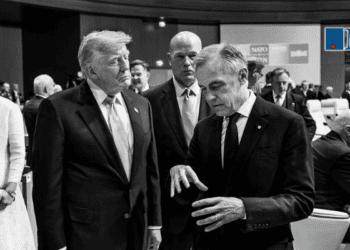
Source: National Post

Related Posts

Should Canada scrap the NORAD agreement?: J.L. Granatstein in The Hub
National Defence

The Canadian Armed Forces are right to experiment around recruitment: Charlotte Duval-Lantoine and Richard Shimooka in The Globe and Mail

May 25, 2026
Reconciliation on the rocks?: Ken Coates for Inside Policy
Indigenous Affairs

Reconciliation on the rocks?: Ken Coates for Inside Policy

May 22, 2026
The Muslim Brotherhood’s covert presence in the West: Lorenzo Vidino and Casey Babb for Inside Policy Talks
Inside Policy

The Muslim Brotherhood’s covert presence in the West: Lorenzo Vidino and Casey Babb for Inside Policy Talks

May 21, 2026
Next Post
Should Canada scrap the NORAD agreement?: J.L. Granatstein in The Hub

The Canadian Armed Forces are right to experiment around recruitment: Charlotte Duval-Lantoine and Richard Shimooka in The Globe and Mail

Newsletter Signup

  Thank you for Signing Up
  Please correct the marked field(s) below.
Email Address  *
1,true,6,Contact Email,2
First Name *
1,true,1,First Name,2
Last Name *
1,true,1,Last Name,2
*
*Required Fields

Follow us on

Macdonald-Laurier Institute

323 Chapel Street, Suite #300
Ottawa, Ontario, K1N 7Z2 Canada

613.482.8327

info@macdonaldlaurier.ca
MLI directory

Support Us

Support the Macdonald-Laurier Institute to help ensure that Canada is one of the best governed countries in the world. Click below to learn more or become a sponsor.

Support Us

  • Inside Policy Magazine
  • Annual Reports
  • Jobs
  • Privacy Policy

© 2023 Macdonald-Laurier Institute. All Rights reserved.

This site uses cookies. By continuing to browse the site you are agreeing to our use of cookies.

Privacy Preference Center

Consent Management

Necessary

Advertising

Analytics

Other

No Result
View All Result
  • Home
  • About
    • Who We Are
    • Who Makes MLI Work
    • Fifteenth Anniversary
  • Experts
    • Experts Directory
    • In Memoriam
  • Issues
    • Domestic Policy
      • Economic Policy
      • Justice
      • Rights and Freedoms
      • Assisted Suicide (MAID)
      • Health Care
      • COVID-19
      • Gender Identity
      • Canada’s Political Tradition
      • AI, Technology and Innovation
      • Media and Telecoms
      • Housing
      • Immigration
      • Agriculture and Agri-Food
      • Competition Policy
    • Energy Policy
      • Energy
      • Environment
    • Foreign Policy
      • Israel-Hamas War
      • Ukraine
      • Taiwan
      • China
      • Europe and Russia
      • Indo-Pacific
      • Middle East and North Africa
      • North America
      • Foreign Interference
      • National Defence
      • National Security
      • Foreign Affairs
    • Indigenous Affairs
  • Projects
    • CNAPS (Center for North American Prosperity and Security)
    • Justice Report Card
    • The Promised Land
    • Voices that Inspire: The Macdonald-Laurier Vancouver Speaker Series
    • Dragon at the door
    • Canada on top of the world
    • Letter to a minister
    • The Great Energy Crisis
    • DisInfoWatch.org
    • Managing Indigenous Prosperity
    • Judicial Foundations
    • Landmark Cases Council
    • Defending The Marketplace of Ideas
    • Reforming the University
    • Past Projects
      • Digital Policy & Connectivity
      • Double Trouble
      • Canada and the Indo-Pacific Initiative
      • The Transatlantic Program
      • COVID Misery Index
      • Speak for Ourselves
      • The Eavesdropping Dragon: Huawei
      • Talkin’ in the Free World with Mariam Memarsadeghi
      • An Intellectual Property Strategy for Canada
      • Munk Senior Fellows
      • A Mandate for Canada
      • Confederation Series
      • Fiscal Reform
      • The Canadian Century project
      • Fixing Canadian health care
      • Internal trade
      • From a mandate for change
      • Size of government in Canada
      • Straight Talk
      • Labour Market Report
      • Leading Economic Indicator
      • Centre for Advancing Canada’s Interests Abroad
      • Indigenous Prosperity at a Crossroads
  • Events
    • Upcoming Events
    • Past Events
      • MLI Dinners
      • Great Canadian Debates
  • Latest News
  • Libraries
    • Columns
    • Commentary
    • Papers
    • Books
    • Video
  • Donate

© 2023 Macdonald-Laurier Institute. All Rights reserved.