
Wednesday, May 20, 2026
No Result
View All Result
  • Media
Macdonald-Laurier Institute
  • Home
  • About
    • Who We Are
    • Who Makes MLI Work
    • Fifteenth Anniversary
  • Experts
    • Experts Directory
    • In Memoriam
  • Issues
    • Domestic Policy
      • Economic Policy
      • Justice
      • Rights and Freedoms
      • Assisted Suicide (MAID)
      • Health Care
      • COVID-19
      • Gender Identity
      • Canada’s Political Tradition
      • AI, Technology and Innovation
      • Media and Telecoms
      • Housing
      • Immigration
      • Agriculture and Agri-Food
      • Competition Policy
    • Energy Policy
      • Energy
      • Environment
    • Foreign Policy
      • Israel-Hamas War
      • Ukraine
      • Taiwan
      • China
      • Europe and Russia
      • Indo-Pacific
      • Middle East and North Africa
      • North America
      • Foreign Interference
      • National Defence
      • National Security
      • Foreign Affairs
    • Indigenous Affairs
  • Projects
    • CNAPS (Center for North American Prosperity and Security)
    • Justice Report Card
    • The Promised Land
    • Voices that Inspire: The Macdonald-Laurier Vancouver Speaker Series
    • Dragon at the door
    • Canada on top of the world
    • Letter to a minister
    • The Great Energy Crisis
    • DisInfoWatch.org
    • Managing Indigenous Prosperity
    • Judicial Foundations
    • Landmark Cases Council
    • Defending The Marketplace of Ideas
    • Reforming the University
    • Past Projects
      • Digital Policy & Connectivity
      • Double Trouble
      • Canada and the Indo-Pacific Initiative
      • The Transatlantic Program
      • COVID Misery Index
        • Provincial COVID Misery Index
        • Beyond Lockdown
        • COVID and after: A mandate for recovery
      • Speak for Ourselves
      • The Eavesdropping Dragon: Huawei
      • Talkin’ in the Free World with Mariam Memarsadeghi
      • An Intellectual Property Strategy for Canada
      • Munk Senior Fellows
      • A Mandate for Canada
      • Confederation Series
      • Fiscal Reform
      • The Canadian Century project
      • Fixing Canadian health care
      • Internal trade
      • From a mandate for change
      • Size of government in Canada
      • Straight Talk
      • Labour Market Report
      • Leading Economic Indicator
      • Centre for Advancing Canada’s Interests Abroad
      • Indigenous Prosperity at a Crossroads
        • Aboriginal Canada and Natural Resources
  • Events
    • Upcoming Events
    • Past Events
      • MLI Dinners
      • Great Canadian Debates
  • Latest News
  • Libraries
    • Columns
    • Commentary
    • Papers
    • Books
    • Video
  • Donate
  • Home
  • About
    • Who We Are
    • Who Makes MLI Work
    • Fifteenth Anniversary
  • Experts
    • Experts Directory
    • In Memoriam
  • Issues
    • Domestic Policy
      • Economic Policy
      • Justice
      • Rights and Freedoms
      • Assisted Suicide (MAID)
      • Health Care
      • COVID-19
      • Gender Identity
      • Canada’s Political Tradition
      • AI, Technology and Innovation
      • Media and Telecoms
      • Housing
      • Immigration
      • Agriculture and Agri-Food
      • Competition Policy
    • Energy Policy
      • Energy
      • Environment
    • Foreign Policy
      • Israel-Hamas War
      • Ukraine
      • Taiwan
      • China
      • Europe and Russia
      • Indo-Pacific
      • Middle East and North Africa
      • North America
      • Foreign Interference
      • National Defence
      • National Security
      • Foreign Affairs
    • Indigenous Affairs
  • Projects
    • CNAPS (Center for North American Prosperity and Security)
    • Justice Report Card
    • The Promised Land
    • Voices that Inspire: The Macdonald-Laurier Vancouver Speaker Series
    • Dragon at the door
    • Canada on top of the world
    • Letter to a minister
    • The Great Energy Crisis
    • DisInfoWatch.org
    • Managing Indigenous Prosperity
    • Judicial Foundations
    • Landmark Cases Council
    • Defending The Marketplace of Ideas
    • Reforming the University
    • Past Projects
      • Digital Policy & Connectivity
      • Double Trouble
      • Canada and the Indo-Pacific Initiative
      • The Transatlantic Program
      • COVID Misery Index
        • Provincial COVID Misery Index
        • Beyond Lockdown
        • COVID and after: A mandate for recovery
      • Speak for Ourselves
      • The Eavesdropping Dragon: Huawei
      • Talkin’ in the Free World with Mariam Memarsadeghi
      • An Intellectual Property Strategy for Canada
      • Munk Senior Fellows
      • A Mandate for Canada
      • Confederation Series
      • Fiscal Reform
      • The Canadian Century project
      • Fixing Canadian health care
      • Internal trade
      • From a mandate for change
      • Size of government in Canada
      • Straight Talk
      • Labour Market Report
      • Leading Economic Indicator
      • Centre for Advancing Canada’s Interests Abroad
      • Indigenous Prosperity at a Crossroads
        • Aboriginal Canada and Natural Resources
  • Events
    • Upcoming Events
    • Past Events
      • MLI Dinners
      • Great Canadian Debates
  • Latest News
  • Libraries
    • Columns
    • Commentary
    • Papers
    • Books
    • Video
  • Donate
No Result
View All Result
Macdonald-Laurier Institute

The Alberta-Ottawa pipeline agreement gets Canada off the starting blocks: Heather Exner-Pirot in The Hub

With the hard negotiations behind us, what are the main takeaways from the Alberta-Canada agreement?

May 20, 2026
in Environment, Energy Policy, Resources, Latest News, Heather Exner-Pirot
Reading Time: 5 mins read
A A
The Alberta-Ottawa pipeline agreement gets Canada off the starting blocks: Heather Exner-Pirot in The Hub

This article originally appeared in The Hub.

By Heather Exner-Pirot, May 20, 2026

With more weariness than fanfare, Alberta Premier Danielle Smith and Prime Minister Mark Carney assembled in Calgary last Friday to announce the conclusion of negotiations on the Memorandum of Understanding (MOU) they had reached in November 2025.

Although the MOU has often been portrayed as being about a pipeline, for industry watchers, it was about much more. Clarity has now been provided on a number of fronts.

What it means

The first and most important element was scrapping the proposed oil and gas emissions cap back in November. Although never enacted and almost certainly unconstitutional, the mere threat of the cap meant the sector could not grow. It posed an existential threat to the viability of the Canadian oil and gas industry.

After the federal government made clear the cap would not be implemented, signs of life in the sector appeared. In November, Enbridge announced it would optimize its Mainline pipeline system to the United States by 430,000 barrels per day, and Trans Mountain announced it would expand its capacity to the West Coast by 300,000 barrels per day. LNG Canada Phase 2 and Ksi Lisims LNG have both gained momentum. The impact was material.

Alberta and Canada then agreed to an equivalency agreement on federal methane regulations in March, meaning that rather than impose the punitive federal standards, Ottawa would recognize Alberta’s approach, which has been successful in significantly reducing emissions while not overly burdening the natural gas sector.

The November MOU further gave Alberta a carve-out for the federal Clean Electricity Regulations, which effectively prevent the building of any new natural gas power generating facilities. In the middle of an AI race, with electricity becoming both more scarce and expensive, this was a preposterous impediment to Alberta, which has some of the world’s cheapest and most abundant natural gas and a deregulated electricity market poised to capitalize on the data centre boom. Alas, the carve-out came with a caveat: it was subject to a successful negotiation on the industrial carbon price.

The industrial carbon price thus became the most important source of uncertainty and negotiation leading up to Friday’s agreement. It affected not only upstream oil production, but also natural gas and electricity and other heavy industrial sectors as well. These disparate sectors have somewhat different interests and concerns. While many upstream oil producers made clear in recent weeks that they didn’t want any industrial carbon price, that has never been the position of the electricity sector.

If one accepts the premise of a carbon price—and not all do—the resolution seems reasonable. At any rate, the federal government has the constitutional authority to impose one and is intent on doing so. The agreement means that in Alberta, the price of carbon will remain at $95 per tonne, the level at which Alberta froze it last year, for the remainder of 2026 and will increase by $5, to $100 per tonne, starting in 2027 until 2030. It will then reach $130 per tonne by 2035 and grow by 1.5 percent a year thereafter to 2040 (roughly the pace of inflation).

More important than that headline price, the agreement defers to Alberta’s TIER (their industrial carbon pricing framework) but imposes a price floor for carbon credits traded in their carbon market. Environmentalists have long complained that the credit price, which has generally hovered between $20–$50, is too low to incentivize emissions reductions. The agreement instigates a price floor of $60 starting in 2030, rising to $110 in 2040. Although it doesn’t kick in for a while, it imposes a significant future increase in cost for the big heavy oil producers, and explains why they were decidedly unenthused on Friday.

The crux of the matter is that while most brownfield expansions will remain economic under these terms, greenfield projects will become even more difficult to advance—and at some point we will run out of brownfield.

Clarity on the emissions cap, methane regulations, industrial carbon price and clean electricity regulations carve-out were things the energy sector needed to plan and grow today. I expect we may see a wave of Final Investment Decisions (FIDs) for power generation, midstream and upstream projects in the coming months, for which agreement on the terms of the Alberta-Canada MOU was a necessary (if insufficient) condition to move ahead.

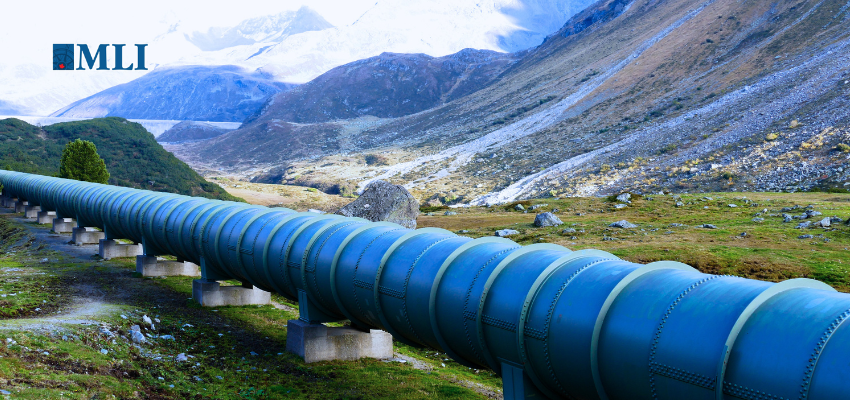
This left Alberta and Ottawa to set the terms for a new West Coast oil pipeline, which, it must be said, has become primarily a politically driven project. In addition to the Mainline and Trans Mountain expansions, it has been revealed since the November MOU that the South Bow-Bridger pipeline, a Keystone Light if you will, is being advanced by the private sector. It has an initial capacity of 550,000 barrels per day, with potential to expand to a million, has received the necessary presidential permits from Donald Trump, is still approved on the Canadian side, and is now seeking the appropriate permits in Montana and Wyoming.

If you just wanted to grow production, Canadian oil producers have quite a bit of runway. But if you wanted to double production, expand Asian alliances, double non-U.S. exports, and be an energy superpower—goals of either or both the Smith and Carney governments—you need the West Coast oil pipeline.

Clarity has been provided there as well. Alberta is the proponent for now and will submit a proposal before July 1, 2026. The federal government will seek to designate it as a project of national interest by October 1, 2026, and approval will be pursued by September 1, 2027. Alberta has indicated it hopes to see the pipeline enter into service by 2033–34. As for the Pathways Alliance carbon capture project, the quid pro quo, it is sequenced to come online after the oil pipeline, with the first phase operating by 2035.

Takeaways

With the hard negotiations behind us, what are the main takeaways from the Alberta-Canada agreement?

First, with neither the UCP nor the Liberal base particularly happy with the agreement, it can be argued that Carney and Smith found a middle ground where not a lot of space existed, and for their troubles are taking political heat. I personally am inclined to show deference to political leaders who seek solutions in the public interest, act pragmatically and in good faith, and make hard decisions. Everyone can point to different outcomes that would have favoured their side; I doubt they can articulate how they would have made those acceptable to the opposing one.

Second, the agreement provides clarity on a number of issues that will allow capital to flow into the Canadian energy sector in the near term, which it wants to do at current prices. Electricity and natural gas are likely content. But as usual, Canadian heavy oil producers will bear the brunt of federal climate policies. While they’ve been whittled down meaningfully from the Trudeau era, the agreement is comprised exclusively of sticks for oil producers. If Ottawa and Edmonton want to fill their West Coast oil pipeline, they will need to provide carrots at some point.

Finally, it seems to me it is time to move on. We are in the middle of the worst energy crisis the world has ever faced, our allies are asking for our help, and there’s a broad public consensus that we should produce, generate, and export more oil and gas. At some point, we have to move beyond the politics and focus on the ground game.

The Alberta-Canada agreement will leave some projects uneconomic and some barrels in the ground. For those of us anxious for Canada to maximize the value of its resource endowment, it may be disappointing.

But given the scale of Canada’s resource base and the strength of global demand, there is still an extraordinary opportunity ahead of us. We have spent a decade debating whether Canada should develop its energy resources. We’ve finally made progress on figuring out how.


Heather Exner-Pirot is the director of energy, natural resources and environment at the Macdonald-Laurier Institute.

Source: The Hub

Related Posts

MAID Committee hearings exposed a deeper problem: Ramona Coelho in The Hill Times
Domestic Policy

MAID Committee hearings exposed a deeper problem: Ramona Coelho in The Hill Times

May 20, 2026
Short circuit – Lessons for Canada from Europe’s tech regulation: Jon Hartley
AI, Technology and Innovation

Short circuit – Lessons for Canada from Europe’s tech regulation: Jon Hartley

May 20, 2026
Affordability trumps productivity in Australian budget: Jack Mintz in the Financial Post
Domestic Policy

Affordability trumps productivity in Australian budget: Jack Mintz in the Financial Post

May 19, 2026
Next Post
MAID Committee hearings exposed a deeper problem: Ramona Coelho in The Hill Times

MAID Committee hearings exposed a deeper problem: Ramona Coelho in The Hill Times

Newsletter Signup

  Thank you for Signing Up
  Please correct the marked field(s) below.
Email Address  *
1,true,6,Contact Email,2
First Name *
1,true,1,First Name,2
Last Name *
1,true,1,Last Name,2
*
*Required Fields

Follow us on

Macdonald-Laurier Institute

323 Chapel Street, Suite #300
Ottawa, Ontario, K1N 7Z2 Canada

613.482.8327

info@macdonaldlaurier.ca
MLI directory

Support Us

Support the Macdonald-Laurier Institute to help ensure that Canada is one of the best governed countries in the world. Click below to learn more or become a sponsor.

Support Us

  • Inside Policy Magazine
  • Annual Reports
  • Jobs
  • Privacy Policy

© 2023 Macdonald-Laurier Institute. All Rights reserved.

No Result
View All Result
  • Home
  • About
    • Who We Are
    • Who Makes MLI Work
    • Fifteenth Anniversary
  • Experts
    • Experts Directory
    • In Memoriam
  • Issues
    • Domestic Policy
      • Economic Policy
      • Justice
      • Rights and Freedoms
      • Assisted Suicide (MAID)
      • Health Care
      • COVID-19
      • Gender Identity
      • Canada’s Political Tradition
      • AI, Technology and Innovation
      • Media and Telecoms
      • Housing
      • Immigration
      • Agriculture and Agri-Food
      • Competition Policy
    • Energy Policy
      • Energy
      • Environment
    • Foreign Policy
      • Israel-Hamas War
      • Ukraine
      • Taiwan
      • China
      • Europe and Russia
      • Indo-Pacific
      • Middle East and North Africa
      • North America
      • Foreign Interference
      • National Defence
      • National Security
      • Foreign Affairs
    • Indigenous Affairs
  • Projects
    • CNAPS (Center for North American Prosperity and Security)
    • Justice Report Card
    • The Promised Land
    • Voices that Inspire: The Macdonald-Laurier Vancouver Speaker Series
    • Dragon at the door
    • Canada on top of the world
    • Letter to a minister
    • The Great Energy Crisis
    • DisInfoWatch.org
    • Managing Indigenous Prosperity
    • Judicial Foundations
    • Landmark Cases Council
    • Defending The Marketplace of Ideas
    • Reforming the University
    • Past Projects
      • Digital Policy & Connectivity
      • Double Trouble
      • Canada and the Indo-Pacific Initiative
      • The Transatlantic Program
      • COVID Misery Index
      • Speak for Ourselves
      • The Eavesdropping Dragon: Huawei
      • Talkin’ in the Free World with Mariam Memarsadeghi
      • An Intellectual Property Strategy for Canada
      • Munk Senior Fellows
      • A Mandate for Canada
      • Confederation Series
      • Fiscal Reform
      • The Canadian Century project
      • Fixing Canadian health care
      • Internal trade
      • From a mandate for change
      • Size of government in Canada
      • Straight Talk
      • Labour Market Report
      • Leading Economic Indicator
      • Centre for Advancing Canada’s Interests Abroad
      • Indigenous Prosperity at a Crossroads
  • Events
    • Upcoming Events
    • Past Events
      • MLI Dinners
      • Great Canadian Debates
  • Latest News
  • Libraries
    • Columns
    • Commentary
    • Papers
    • Books
    • Video
  • Donate

© 2023 Macdonald-Laurier Institute. All Rights reserved.