By Kevin Vuong and Christopher Coates, May 13, 2026
Canada has quietly emerged as a consequential security partner to the Philippines. It is now among the top contributors in maritime domain awareness in the region, providing dark vessel detection capabilities at no cost. But this is strategic, not merely charitable.
The geopolitical centre of gravity in Southeast Asia is shifting, and the Philippines now sits squarely at its fulcrum. For decades, internal security challenges consumed Manila’s bandwidth, particularly communist and Islamic insurgencies in its south. Today, the Philippine state has stabilized its internal security environment and is confronting a much more consequential threat: external coercion from China.
This pivot matters because it marks the Philippines’ transition from a domestically preoccupied state with a largely land-based military to a frontline maritime defender of the rules-based international order and the United Nations Convention on the Law of the Sea (UNCLOS) in the Indo-Pacific.
Nowhere is this more evident than in the West Philippine Sea. The reality, though uncomfortable, is stark. China has established de facto control over large swaths of contested waters. The People’s Liberation Army Navy (PLAN) and maritime militia maintain a persistent presence across key features, including the Scarborough Shoal. This territorial dispute has become a test of whether international law, particularly UNCLOS, still holds.
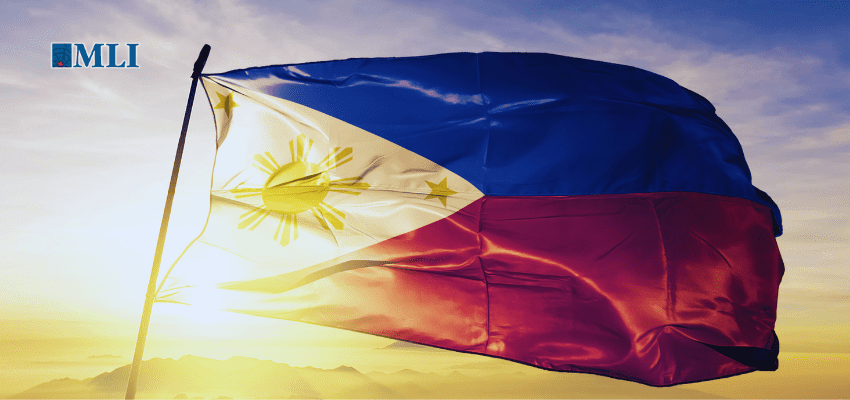
And yet, the Philippines has not acquiesced. It continues to assert its sovereignty, often with limited resources but with growing international backing. This is precisely why it has become the “tip of the spear” for the free world in Southeast Asia. It is the among the most visible, consistent, and credible states pushing back against this coercion.
The stakes extend far beyond Southeast Asia. Roughly one-third of global maritime trade (valued at more than $3 trillion annually) transits the South China Sea. The Taiwan Strait, a critical chokepoint linking Northeast Asia to global markets, carries an additional share of global commerce, including a substantial portion of the world’s container shipping and energy flows. Any disruption in these waterways would reverberate across global supply chains, driving up costs, constraining energy supplies, and destabilizing markets.
For Canada, this is not an abstract concern. Canada is a maritime trading nation and a significant portion of our trade with key Asian partners – Japan, South Korea, and increasingly Southeast Asia – passes through these contested waters. Freedom of navigation is an absolute necessity. If coercion or unilateral control were to redefine access to these routes, Canada’s economic security would be directly affected.
As Canadians, we have a vested interest in ensuring maritime norms are upheld in the West Philippine Sea and the South China Sea, not least because similar dynamics are unfolding closer to home in the Arctic, where great power competition involving the United States, China, and Russia is intensifying. Chinese research vessels in Arctic waters are the leading edge of the insidious spread of Chinese presence, which needs to be prevented from converting into threats to sovereignty.
The depth of Canada’s engagement in the Philippines underscores this strategic alignment. After the United States, Canada’s second-largest diplomatic mission is in Manila. This is not simply a function of diaspora politics – though the ties are undeniably deep, with roughly one in forty Canadians of Filipino heritage, and cities like Winnipeg hosting the highest density (1 in 10) of Filipinos outside the Philippines. Rather, it reflects a convergence of values: a shared commitment to sovereignty, rule of law, and a stable international order.
This partnership is also evolving rapidly on the defence front. Just three years ago, Canada had no defence attaché in Manila. Today, the Canadian Armed Forces footprint at the embassy is growing, and is soon expected to number 20 personnel. This represents a structural shift, signalling a long-term commitment to security co-operation.
Still, the Philippines faces structural constraints that complicates its strategic posture. Its economy remains highly concentrated, with a small number of powerful families dominating key industries. Energy security is another acute vulnerability. With the Strait of Hormuz blockaded, the country has been reduced to less than two months of gasoline and diesel supply and other fuels have similarly diminished as it relies heavily – 98 per cent of their energy needs are imported from the Middle East – on imported crude from the region. This relationship is so deep that its refining infrastructure is also primed for Persian Gulf-sourced oil. These dependencies create pressure points that adversaries can exploit.
At the same time, Manila is grappling with a less visible but equally insidious challenge of foreign malign influence from China within its borders. Information operations, economic leverage, and political interference are all part of a broader effort to shape Philippine decision-making. With a young population, a median age of 26, and the world’s most online population – spending on average 8 hours a day on social media – building resilience in the information domain is as critical as strengthening naval capacity.

Against this backdrop, there is a broader strategic question for partners like Canada: how should the Philippines be positioned within the Indo-Pacific architecture? Canada has already designated Singapore as the trade hub and Japan as our political anchor in the region. The Philippines presents a different opportunity. It may not yet rival Singapore economically or Japan politically, but it is a country with nearly three times the population of Canada and occupies a unique space as a frontline maritime nation whose actions have outsized implications for regional stability.
Investing in the Canada–Philippines partnership – through defence co-operation, capacity building, energy security, and governance support – would not only strengthen the Philippines but also reinforce the broader rules-based order. Canada’s leaders appear to have come to the same conclusion, as the CAF’s footprint at the embassy grows.
The Philippines did not choose to be on the frontlines of great power competition. Geography and geopolitics made that decision for it. That may sound familiar for Canadians. In stepping up to defend its sovereignty, the Philippines has taken on a role that extends far beyond its shores. For the free world, the message should be clear: if the Philippines is the tip of the spear, then it cannot – and should not – stand alone.
Kevin Vuong, the former Member of Parliament for Toronto’s Spadina-Fort York, is a senior fellow at the Macdonald-Laurier Institute. He recently took part in a familiarization visit to the Philippines with the assistant deputy minister (public affairs) at the Department of National Defence.
Lt.-Gen.(ret’d) Christopher Coates is director of Foreign Policy, National Defence, and National Security at the Macdonald-Laurier Institute and previously served as commander of the Canadian Joint Operations Command.